Astrium reveals results of automatic Moon landing study

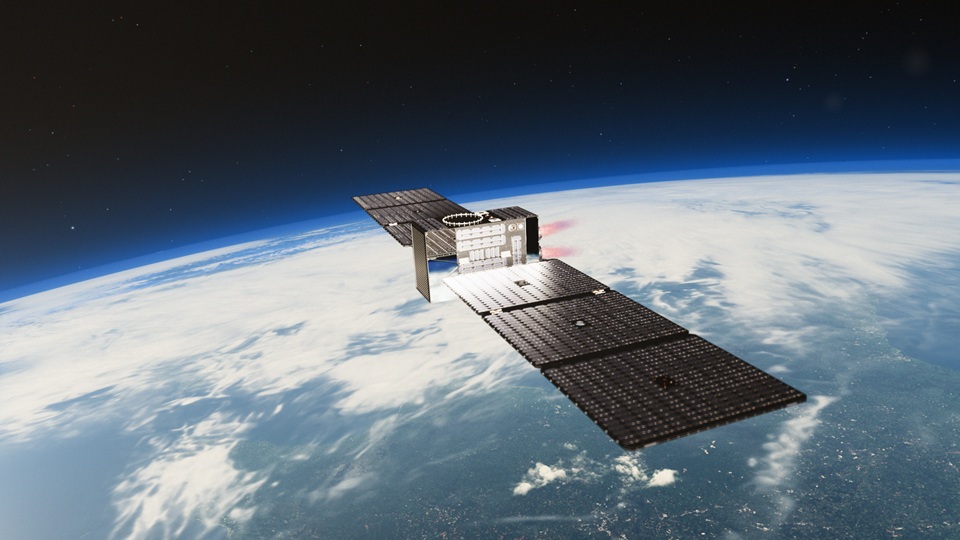
The study has consolidated the mission concept for automatic landing near the Moon’s south pole in 2019 as well as the provisional design of the lunar lander vehicle.
As part of the study, Astrium also confirmed the schedule for the mission and calculated total mission costs at some 500 million euros, including validation of technologies, 300 to 350 million euros for the development, manufacturing and testing of the Moonlander, as well as launcher services and operations. The upcoming ESA ministerial conference in November 2012 will decide how to proceed with the development of a lunar lander. Following this Phase B1 study, which was commissioned in September 2010, the next step would be Phase B2, which completes the spacecraft design phase and culminate with the Preliminary Design Review.

This present study works out and tests the key technologies for an automatic, soft and precise landing. Including very advanced features allowing to detect and avoid possible surface hazards (boulders, craters, steep slopes) an automatic lunar landing as envisaged in the study involves a series of technological challenges. To land softly and precisely on the Moon calls for key technologies such as an autonomous navigation system, based on visual navigation, and a complex propulsion system. Most of these technologies have been tested during the study: for instance, propulsion system components were put through their paces on Astrium’s test benches in Lampoldshausen. Meanwhile, the TRON (Testbed for Robotical Optical Navigation) and LAMA (Landing and Mobility Test Facility) facilities at the DLR Institute of Space Systems in Bremen were employed to test the navigation system hardware and landing legs in a realistic simulated lunar landscape.
“As a demonstration of technology, the ATV mission proves the skills and experience which Astrium has in automated rendezvous and docking procedures. This study’s concept is based on ATV technology, and our unique expertise will enable us to develop the key technologies essential to landing an automated vehicle on the Moon,” said Dr. Michael Menking, Senior Vice President Orbital Systems and Exploration at Astrium. ATV is the biggest supply vehicle servicing the international space station, built by Astrium.
Relying exclusively on solar energy for operation on the Moon surface, the lander will place a small Moon rover and various stationary experiments on the lunar surface to conduct scientific research over a period of about six months (basic mission), with the results determined in situ being transmitted to Earth. These results will provide an initial understanding of the Moon’s polar region, as well as supplying basic information for future human exploration missions.