Dstl's Richard Hollins recognised for lifetime contribution to optronics

Above:
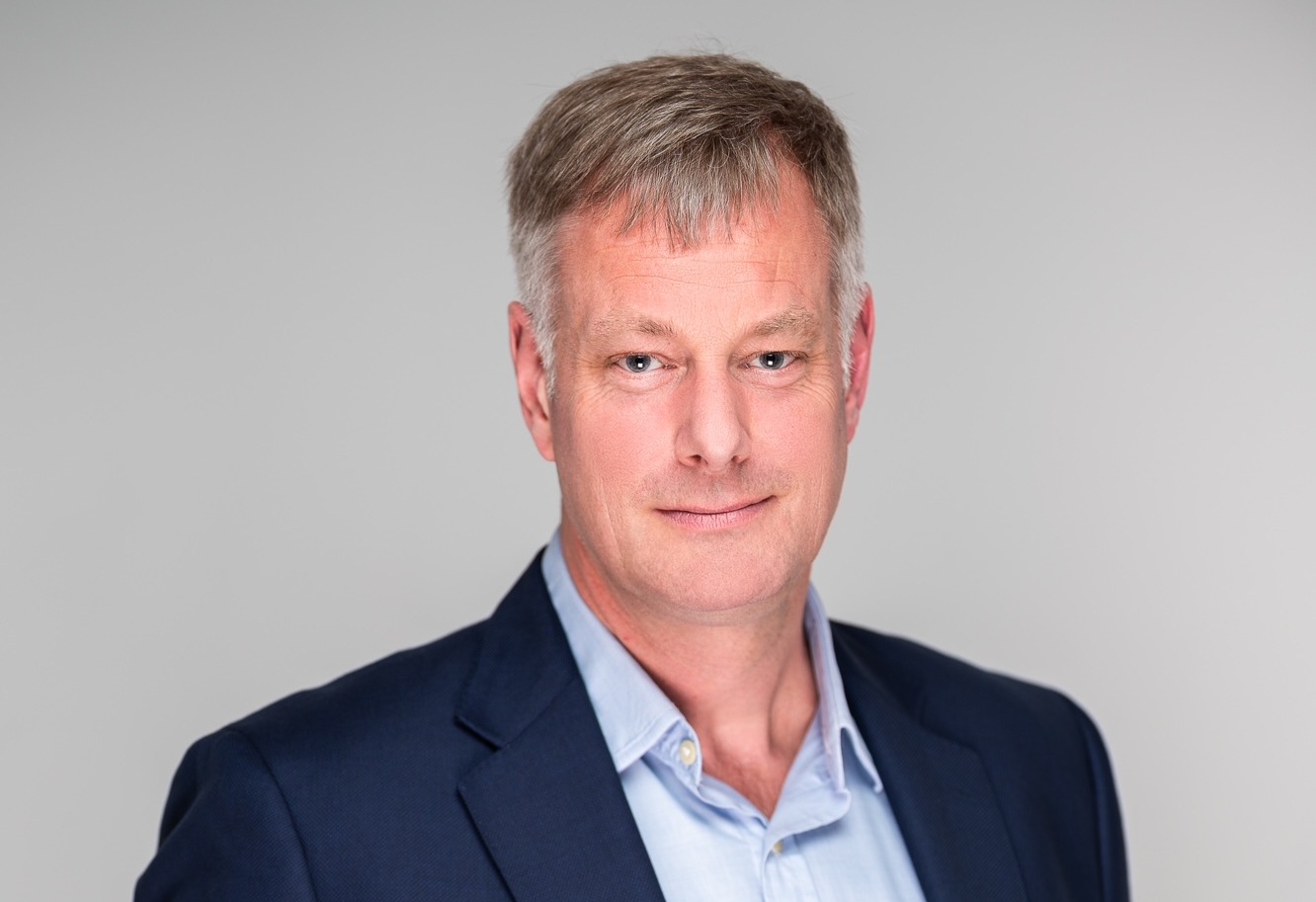
Richard with his lifetime achievement award.
At a special award ceremony earlier this month, Dr Hollins was presented with the lifetime achievement award from OPTRO – the international symposium on optronics for defence and security - which recognises a significant contribution in the field of optronics.

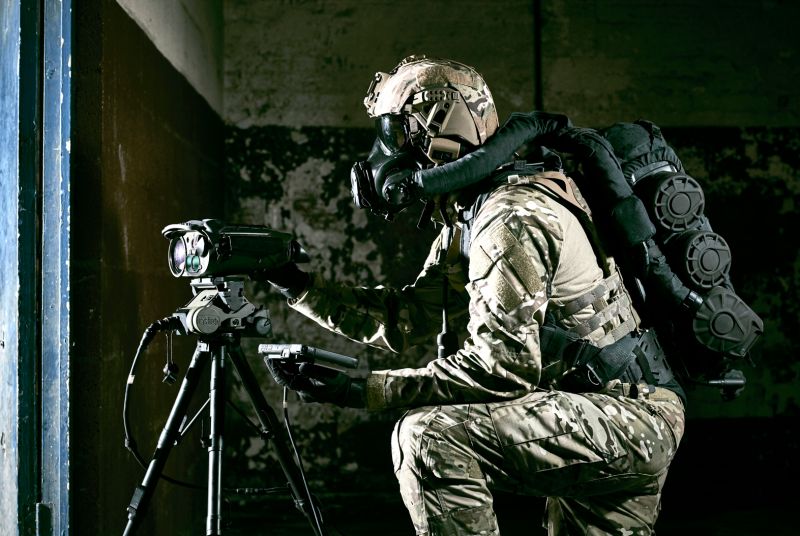
Optronics covers all the technologies that use light for information and processing – it includes lasers, detectors, cameras, sensors, optical communications.
Richard brought new insights to the search for protection measures against lasers of any wavelength – a requirement which becomes ever more important as the variety of available laser wavelengths continues to increase. Some of his work has contributed to the revision of international laser safety standards, which control the use of lasers in laboratories around the world.
It was the senior fellow’s work in this and other areas which have contributed to innovation in optronics over several decades. Optronics provides what the eye can’t see; imagery at a longer range than the eye can master, thermal images, infrared, radar, even camera images from low level light like star light – all vital for gathering information about an area or accurately identifying a target.
Richard said: "I’m very pleased to have the recognition of my career – I certainly didn’t expect to get it – I expect I’ll be retiring soon and I don’t know how many more chances I’d have for an award like that. I’ve been fortunate to work with many colleagues at Dstl, in industry and academia, and in foreign government organisations and I’m grateful for all their contributions to the work.
"Things have changed a huge amount – in the days when I started, lasers were inefficient, we were trying to develop them into things that we could use, but they’ve needed to change considerably to the efficient compact devices we know today. I used to have to build 50,000 volt power supplies and today’s devices use 10 volts or less. Lasers have found their way into many much smaller devices. Cameras themselves have also become much better and smaller – I have recollections of when you saw a TV camera or a thermal imager, it was a big thing with scanning optics that had to be wheeled around, and today all that complexity has been replaced by a small hand-held camera, and costs have come down."
The future of optronics continues to evolve – as a communications channel, optics is starting to offer secure directional communications with much higher bandwidth to open up new possibilities. It’s always been difficult communicating with submarines as most electromagnetic wavelengths don’t go through sea water – but lasers are now sufficiently good that progress is being made in this direction. Richard is still actively involved in physics at Dstl.
He said: "I don’t get into the lab much these days but I still inspire people as a mentor and help to work out how we should address new challenges. I take a lot of interest from understanding new scientific challenges through simple calculations. I produce simple theoretical models that are written on a few pieces of paper, and which relate the inputs to the outputs via the underpinning physics - and to me that’s a really powerful way of understanding. More complex computer-based models can be useful too, but everybody should try my simple approach first.
"Dstl provides opportunities for a career with plenty of challenge: providing the science and technology required for our security and defence. We can’t do all the work internally, but we select and work with the best partners. Our own work must be of the highest standard in order to understand the problem, to define the requirement and identify solutions, to manage the work as it proceeds, and to evaluate the products. My own career has enabled me to find ways to harness new developments in electro-optic technology to meet new military challenges. My award demonstrates the respect with which Dstl science is viewed within the scientific community."