Glasgow engineers up periscope on a century of submarine innovation

Above:
Royal Navy submarine M3 was fitted with the first FY1 No.1 periscope.
Courtesy MoD
Govan-based Thales delivered the first submarine periscope, the FY1, to the submarine M3 in late summer 1917. Since then, every class of RN submarine has been fitted with a periscope or optronics mast designed and built by Thales’ engineers in Glasgow.


Above:
Defence Minister Harriett Baldwin speaking at Thales today.
Courtesy MoD
Defence Procurement Minister, Harriett Baldwin said: "This anniversary marks a proud record of Scottish engineering contributing directly to UK defence and national security by providing the eyes and ears for our nuclear deterrent and attack submarines.
"Generations of highly skilled engineers across Scotland have applied battle winning technologies to meet the needs of their UK armed forces, as well as exporting their innovations to dozens of navies around the world."
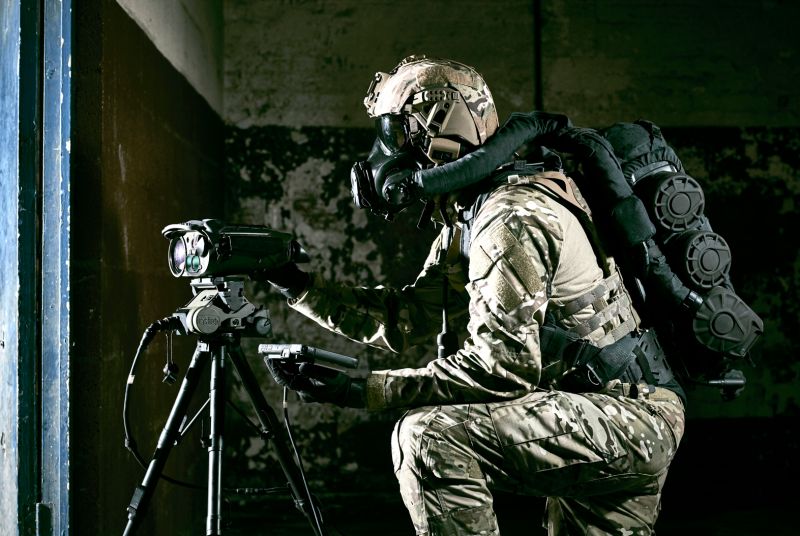
Today Thales’ state-of-the-art optronics masts support submarines navigation, warfare and communications systems, including provide thermal imaging and night vision capabilities. The masts can complete a full 360° sweep of the horizon, looking for potential threats, in only a few seconds, providing high definition images of the battle space to commanders before they are detected by an adversary.

Above:
Thales optronics masts are fitted in all of the Royal Navy's Astute class attack submarines.
Courtesy MoD
Victor Chavez, CEO, Thales UK, commented: "Arguably our greatest single innovation was introducing a night vision capability to allow submarines to navigate and gather intelligence 24/7.
"However, our latest full remote control, non-hull penetrating optronics systems give naval architects more design flexibility by not restricting them to co-locating the fin and the control room via a 50ft long periscope. These options, combined with the digital inboard control and display system, provide commanders with a leap forward in submarine capability."
Optronics masts are electronic imaging systems and do not penetrate a submarine’s hull but are contained in the conning tower or ‘fin’. They are fitted to all seven of the new Astute-class submarines, the first three of which are already in service from HM Naval Base Clyde.
Thales are currently bidding competitively to have their optronics masts procured for the BAE Systems Maritime build of four new Dreadnought nuclear deterrent submarines which will come into service in the 2030s. The company will conduct sea trials of their latest mast in 2018.
Thales’ site at Glasgow has 129 years heritage and currently employs 600 people, mainly very highly skilled technical and engineering jobs, designing and building optronics systems for the Royal Navy, Army and Royal Air Force.
From 2020 Scotland’s HM Naval Base Clyde will be home to the entire UK Submarine Service of seven hunter killer and four deterrent submarines.