Influential military panel promote joined-up approach to future training
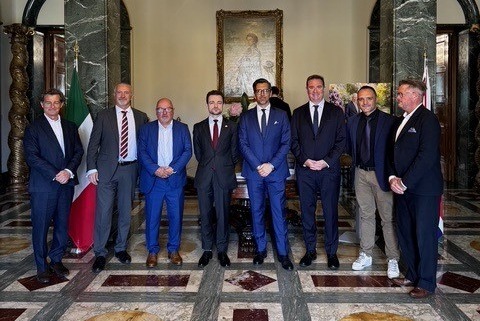
Conference chairman and head of avionic systems at Alenia Aermacchi Cristiano Montrucchio welcomed a packed room of delegates from around the world, before introducing a panel of military experts comprising: Major General David Elmo, deputy chief of staff, mobilisation and reserve affairs, United States Army Europe; Rear Admiral David Brogi, deputy commander, logistics command, Italian Navy; Major General Mike Riddell-Webster, director of the UK Defence Academy; and Lorenzo Fiori, senior vice president of Strategy at Finmeccanica.

The keynote address was led by Lieutenant General Carlo Magrassi, chief of staff of the Italian Air Force & air squadron deputy commander. Using civil aviation as an example of the challenges facing the training community, he explained how the traditional role of a pilot has evolved in line with technology and considered the wider impact this will have on the MS&T sectors. In the senior officers' panel session which followed, Magrassi went on to highlight the potential for cross-over applications of MS&T into the civilian sector - as clearly demonstrated by the provision of military expertise to the medical community. "This sector will provide wider progress to mankind," said Magrassi, "as the military sphere is leading simulation and training and leading the way for other sectors [such as emergency healthcare]."
The panel also emphasised the growing importance of interoperability, given the unprecedented constraints affecting national defence budgets. Brogi explained: "Synthetic environment and simulation training collaboration is the most important theme in the MS&T field." In this regard, Elmo offered insight into NATO's 'Connected Forces Initiative' and the 'Smart Defence' programme. The CFI is an innovative NATO concept focused on harnessing operational experience from recent deployments, such as Iraq and Afghanistan, while Smart Defence promotes a collaborative, cost-effective and adaptive approach to training. In the general's opinion, both examples are symptomatic of the revolutionary improvements which have transformed the MS&T community in the last three years, prompting his verdict that "the best way for training objectives to be achieved is through creative training, simulation and modelling programmes".
The discussion evolved to explore the impact of cyber security on MS&T programmes, stressing the importance of cultural training and raising the promise of psychological preparation in the future. Fiori countered that intelligent tutoring and cognitive blending solutions will be particularly necessary in the near future, not only to assess a trainee's consciousness and improve training efficiency, but also to advance troops' psychological preparation and align it with specific scenarios. The use of 'trust' simulation exercises, it was suggested, will prove crucial for troops preparing to deploy in international partnering or peacekeeping roles. Following a number of perceptive contributions from the floor, the panel agreed that multinational, cloud-based (as opposed to server-based) training is set to be the future of the military simulation and training community, encouraging industry to continue its support via increased collaboration, to prepare and educate troops for an increasingly complex world. "We need to educate our people as never before to deliver a blended, do-it-anywhere approach to training," said Webster.
Meanwhile on a busy opening day ITEC 2013 welcomed over 1,300 visitors and 140 exhibiting organisations.Forty-five countries were represented at the show including representatives from traditional defence markets - such as the USA, UK, Canada, France and Russia - as well as a significant number from key emerging markets including, but not limited to; Brazil, China, India, Israel, Japan, Saudi Arabia, Singapore, Turkey and the UAE. ITEC concludes today.