Look no hands - first unmanned flight over British airspace
In April 2013, a Jetstream research aircraft completed a 500-mile flight through UK airspace while under the command of a ground-based pilot and control of NATS air traffic controllers.
The return journey from Preston, North West England, to Inverness, Scotland, was staged in conjunction with NATS (the UK's En-Route Air Traffic Control Service provider), with the pilot, based at Warton, Lancashire, using advanced sensors and on-board robotic systems to control the aircraft once in the air.

Cobham is part of a consortium of seven major companies leading the £62m project and is developing an automatic in-flight refuelling system that could allow unmanned aircraft to operate for extended periods of time, for example while undertaking SAR operations far out at sea.
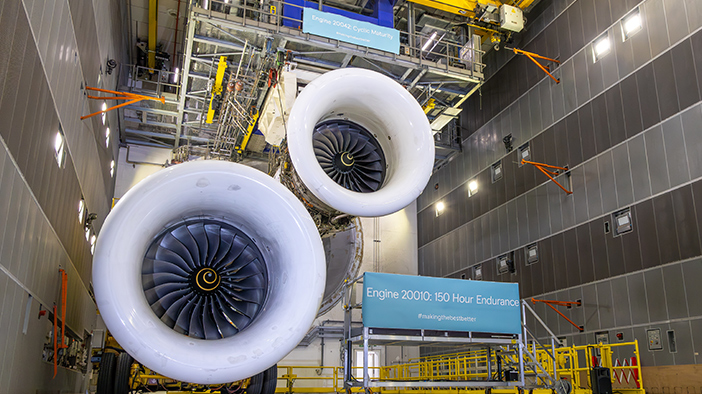
The flight is one of a number of significant technology demonstrations conducted in recent weeks by ASTRAEA, a world-leading UK research programme into the future of civilian unmanned aircraft. Others include a pilot simultaneously coordinating two small, unmanned aircraft in a simulated search and rescue (SAR) mission; a team of specially equipped vehicles replicating the demands of a secure and robust communications network whilst driving through remote and mountainous Welsh countryside; work to develop an automatic in-flight refuelling system that could allow unmanned aircraft to operate for extended periods of time for example while undertaking SAR operations far out at sea; and the conversion of an engine test bed into an intelligent and integrated power systems rig, successfully demonstrating the complete autonomous operation of an unmanned aircraft's propulsion and electrical system from start up to shut down, including 'self-healing' to ensure the safety of the aircraft.
A key focal point in programme has been the development of a Detect and Avoid (DAA) capability for unmanned aircraft that is able to reliably perform both separation provision & collision avoidance functions. A prototype system has been developed in cognisance of the overarching requirement for unmanned aircraft to operate in accordance with the rules and obligations that apply to manned aircraft. The system architecture has benefited from significant input from air safety experts as well as the Civil Aviation Authority (CAA).
These tests, a result of seven years research, will in future help British aerospace companies compete in the emerging civilian unmanned aircraft market.
ASTRAEA (Autonomous Systems Technology Related Airborne Evaluation & Assessment) was created in 2006 to research and demonstrate how an unmanned aircraft could safely integrate itself into airspace shared with other aircraft. It is unique in its holistic approach to the problem, addressing the human-side of the equation (legislation and the operational control of unmanned aircraft), not just the technical challenges. Indeed, it is likely that many emerging technologies could be used to make current manned aircraft operations even safer.

Courtesy BAE Systems
A consortium of seven major companies led the £62m project: AOS, BAE Systems, Cassidian, Cobham, QinetiQ, Rolls-Royce and Thales. The UK government through the Department for Business, Innovation and Skills has provided grant support - encouraging both industry and the regulatory authorities (the CAA) to ensure that the new technologies and processes realise their potential and demonstrate at least equivalence with manned aircraft safety standards.
To date more than 100 companies and universities have contributed to, and benefited from, the programme, including many small to medium sized enterprises. ASTRAEA has filed 12 multi-faceted patents and earned four prestigious industry awards including the Institute of Engineering & Technology's Award for Innovation in Telecommunications.
Commenting on the programme to date Business and Energy Minister Michael Fallon said: "We welcome this pioneering flight at the end of the ASTRAEA programme. ASTRAEA has made significant achievements, placing the UK industry in a good position globally on unmanned aircraft and the development of regulations for their civil use."
Speaking to the way forward Simon Jewell, ASTRAEA steering board chairman said: "In order to build on the momentum generated by ASTRAEA over the last seven years and preserve the unitary approach to supporting the evolving regulatory environment in this important area, the ASTRAEA consortium intend to continue to work closely with the regulatory authorities in the UK, Europe and globally."

Courtesy BAE Systems
The BAE Systems' Jetstream, known as 'The Flying Testbed', is an aerial laboratory. It's a unique aircraft which has been developed to be flown by pilots or as an Uninhabited Air Vehicle (UAV). Racks of computers and control systems in the rear of the aircraft, together with satellite communications, mean it can fly as if it were a UAV without any input from the pilots. This year it will trial a range of new technologies to be developed under the ASTRAEA programme, including what is believed to be the world's first autonomous weather avoidance system, in addition to 'sense and avoid' technologies and an autonomous emergency landing system.