Advancing UK Aerospace, Defence, Security & Space Solutions Worldwide
  • Home
  • /
  • Space
  • /
  • New findings eight years on from Huygens Titan touchdown

Space

New findings eight years on from Huygens Titan touchdown

Eight years since ESA's Huygens bounced, slid and wobbled its way to rest on the surface of Saturn's moon Titan - the first time a probe had touched down on an alien world in the outer Solar System, new results reveal that on first contact with Titan's surface, Huygens dug a hole 12 cm deep, before bouncing out and sliding 30–40 centimetres across a flat surface.

Above: Huygens Landing.
Credit: ESA–C. Carreau/Schröder, Karkoschka et al (2012).

A ‘fluffy’ dust-like material – most likely organic aerosols that are known to drizzle out of the Titan atmosphere – was thrown up and suspended for around four seconds around the probe following the impact. The dust was easily lifted, suggesting it was most likely dry and that there had not been any ‘rain’ of liquid ethane or methane for some time prior to the landing.

Advertisement
ODU RT

Huygens was released from the international Cassini spacecraft on Christmas Day 2004. It arrived at Titan three weeks later, with a British-built sensor being the very first part of Huygens to touch the planet’s surface. Cassini has been in orbit around Saturn since July 2004, and will continue operations until 2017.

The UK has been at the forefront of the design, engineering and science of the Cassini-Huygens mission, with key involvement from space organisations and universities from all over the country.


Above:
A view of BepiColombo’s components separating at Mercury.
Credit: Astrium.

Saturn isn’t the only body in our solar system that the UK has explored; we have also been involved in missions to explore Mars, Venus, the Moon and the Sun. Our next planetary targets are Mercury and Jupiter - two fascinating planets that can teach us a great deal about our solar system.

BepiColombo will be only the third spacecraft to visit Mercury in the history of space exploration. A joint venture between Europe and Japan, it will help our understanding of the formation of the Solar System and its inner rocky planets, including Earth.

Advertisement
ODU RT

Above: Artist impression of JUICE.

Due to launch in 2015 and to arrive at Mercury in 2020, BepiColombo has significant UK involvement. Much of the spacecraft will be built in Britain in partnership with several UK science teams. The UK's involvement in the mission is funded by the UK Space Agency. More information about the UK involvement can be found in our missions section of the website.

The goal of the JUICE mission is to study the emergence of habitable worlds around gas giant planets. It will look to answer such questions as: What have been the conditions for the formation of the Jupiter system? How does Jupiter work? Is Europa habitable?

Launch is scheduled for 2022 at the earliest, with arrival at Jupiter in 2030. The UK has strong involvement in the Space Science Team as well as leadership of the mission

 

Advertisement
General Atomics LB
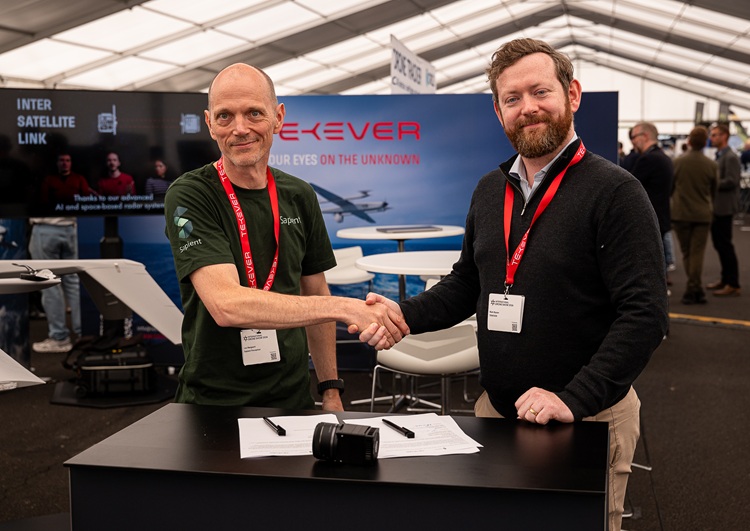
Tekever and Sapient Perception to explore airborne ISR sensing integration

Aerospace Security Space

Tekever and Sapient Perception to explore airborne ISR sensing integration

9 June 2026

Tekever and Sapient Perception have signed a Memorandum of Understanding to explore the integration and evaluation of Sapient Perception’s 10K camera system on Tekever uncrewed aerial systems.

NewOrbit to open Earth’s last empty orbit

Space

NewOrbit to open Earth’s last empty orbit

8 June 2026

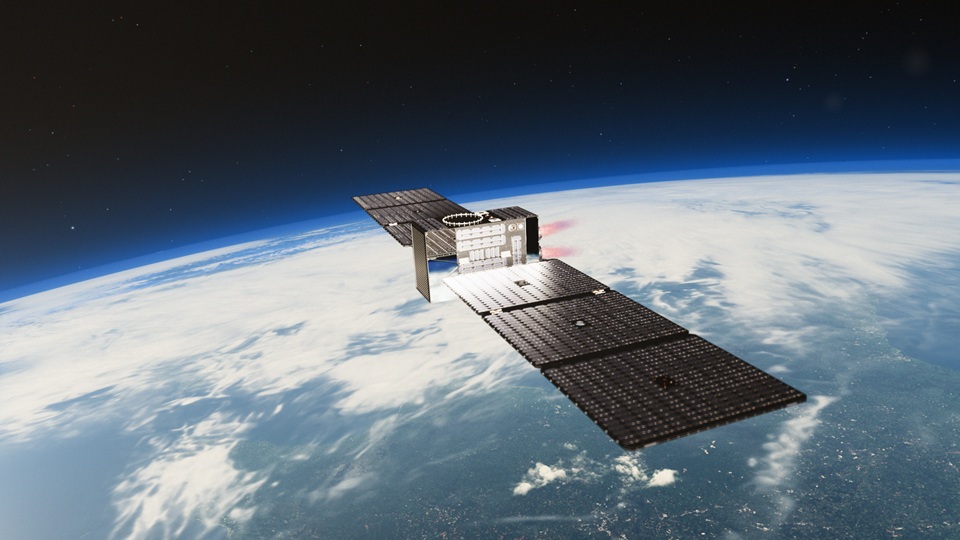
Between commercial aircraft at 10 km and conventional satellites at 500 km lies a band of near-Earth space, called very low earth orbit (or VLEO), which until now, has not been accessible for commercial space flight.

Britain’s Mars lander plaques land across the UK

Space

Britain’s Mars lander plaques land across the UK

5 June 2026

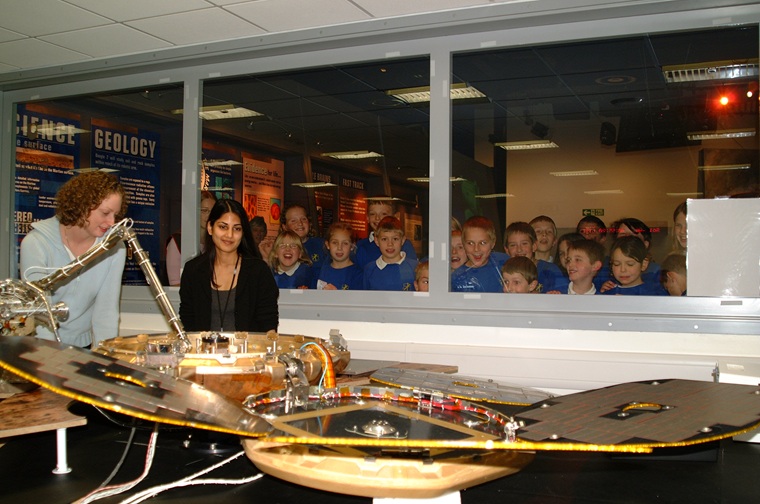
A series of commemorative red plaques will tell the story of Beagle 2, the pioneering British spacecraft that, against all odds, made it to the surface of Mars.

DSEI Germany adds fourth exhibition hall

Defence Security Space Events

DSEI Germany adds fourth exhibition hall

3 June 2026

The organisers of DSEI Germany have announced that, due to unprecedented industry demand, they will be opening a fourth exhibition hall ahead of its debut in March 2027.

Advertisement
ODU RT
A.R.T. partners with Space East to launch networking event

Space Events

A.R.T. partners with Space East to launch networking event

3 June 2026

One of Europe’s longest-running IPC Certification Centres, Advanced Rework Technology Ltd (A.R.T.), has partnered with Space East, the East of England’s space cluster organisation, to host the Connect, Collaborate, Launch networking event on 2nd July 2026.

Surrey Space Institute appoints Dr Paul Bate as a Professor in Practice

Space

Surrey Space Institute appoints Dr Paul Bate as a Professor in Practice

2 June 2026

The former CEO of the UK Space Agency, Dr Paul Bate, is joining the University of Surrey as a Professor in Practice and will support the newly established Surrey Space Institute to develop international partnerships.

Advertisement
ODU RT
Advertisement
General Atomics LB