UK Galileo satellite Patrick to go into space

Above:
Patrick Galvin and his winning picture.
Courtesy UK Space Agency (picture Steven Watson)
The award ceremony announcing Patrick as the winner of the Europe-wide drawing competition was held the morning of the 17 February at the European Commission in London.

Emma Lord (above), the UK Space Agency’s Director of Policy and Operations, presented Patrick with a scale model trophy representing the satellite named after him and a certificate signed by Jonathan Scheele, Head of Representation at the European Commission. Earlier in the week Patrick was also invited to Guildford to take a tour of Surrey Satellite Technology Ltd, the company building the payloads for 14 of the Galileo satellites.

Emma Lord said: “Space fascinates and inspires people of all ages and the UK Space Agency are particularly keen to enthuse students and encourage them to study science, technology, engineering and maths at school. We want to ensure that the next generation of space scientists and engineers comes through the education system so that we can continue to do world-class research and develop cutting-edge technology right here in the UK."
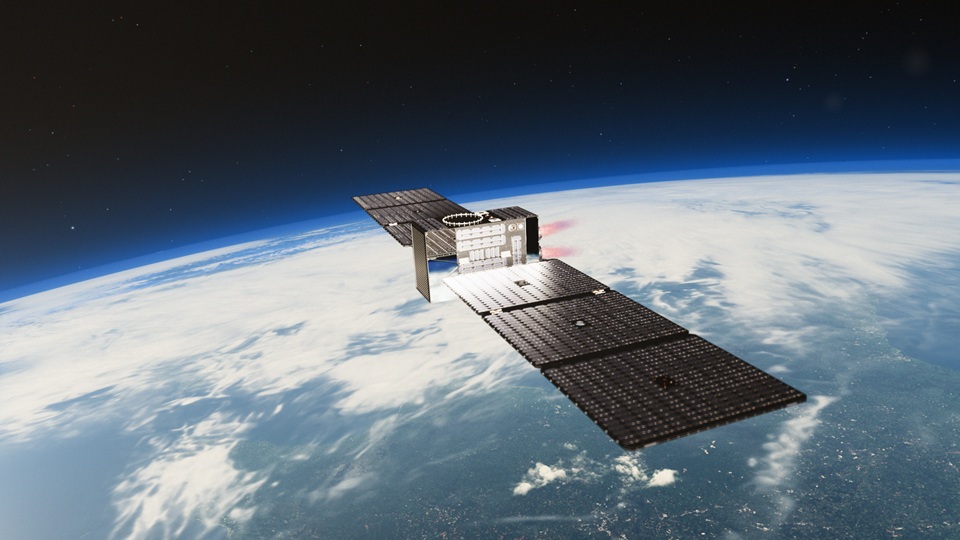
At least 27 satellites will be launched as part of the Galileo programme, allowing Europe to remain at the forefront of space-related technologies. Each satellite represents a member state of the EU and each satellite is named after the winner from that country. Hundreds of nine to eleven year olds from across the UK were inspired to submit a piece of artwork based on the theme 'Space and Aeronautics'. The entries were judged by space scientist Dr. Maggie Aderin-Pocock, Laurie Winkless Higher Research Scientist at the National Physical Laboratory and Nicky Cox, Editor of First News.
Galileo is Europe’s answer to the American GPS constellation. It will work as an independent satellite navigation system but will be compatible with GPS and for some services also interoperable. Galileo will have many applications including transportation management, high precision agriculture, aviation and mobile phone use.
Patrick and the other Galileo Programme Satellites are scheduled to be launched in phases from 2011 until the constellation is complete. The UK has made substantial investment in the project and have been involve in the technological development from the first test Satellite GIOVE-A through to the latest stages of the programme.