World's first 'phonesat' goes into orbit

Above:
Attaching solar panels to STRaND-1.
Courtesy SSTL
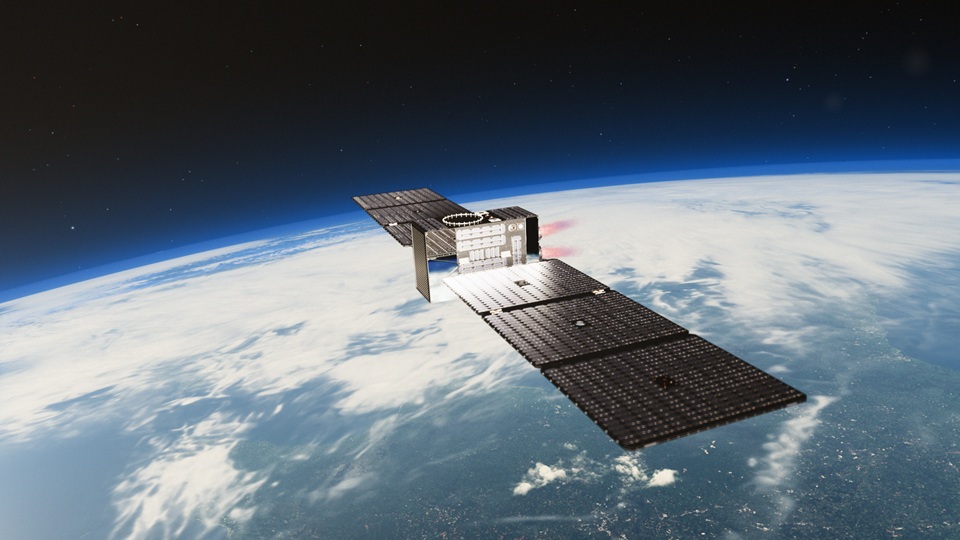
Launched into a 785km Sun-synchronous orbit on ISRO’s PSLV launcher, the spacecraft is an innovative 3U CubeSat (10cm x 30cm) weighing 4.3 kg and is the world’s first 'phonesat' to go into orbit, as well as the first UK CubeSat to be launched. Developed by a team from the University of Surrey’s Surrey Space Centre (SSC) and Surrey Satellite Technology Limited (SSTL), STRaND-1 is a training and demonstration mission, designed to test commercial off-the-shelf technologies in space.

Professor Sir Martin Sweeting, SSC director and also executive chairman of SSTL, said: “STRaND-1 from SSC and SSTL is an example of the real synergy of academic research linked to commercial development and exploitation that is the hallmark of Surrey. This mission is a fantastic achievement and a great tribute to the hard work of the engineers involved. The UK’s first nanosatellite SNAP-1, also built by SSC & SSTL and launched in 2000, was the world’s most advanced nanosatellite at the time – STRaND-1 continues that story with the latest technologies available to us in 2013.
“This launch is SSTL’s first with ISRO and I am looking forward to exploring opportunities for further launches and a wider collaboration on space projects in the future.”

Above:
STRaND-1 flight ready in SSTL cleanroom.
Courtesy SSTL
During the first phase of the mission, STRaND-1 will be controlled by the satellite’s attitude control system and a new high-speed linux-based CubeSat computer. During phase two the STRaND-1 team plans to switch many of the satellite’s in-orbit operations to the smartphone, a Google Nexus One which uses the Android operating system, thereby testing the capabilities of many standard smartphone components for a space environment. The smartphone has also been loaded with a number of experimental ‘Apps’, some serious and some just for fun.
STRaND-1 is flying innovative new technologies such as a ‘WARP DRiVE’ (Water Alcohol Resistojet Propulsion Deorbit Re-entry Velocity Experiment) and electric Pulsed Plasma Thrusters (PPTs); both ‘firsts’ to fly on a nanosatellite. The WARP DRiVE propulsion system is designed to deorbit the satellite at the end of its useful lifetime.
STRaND-1 is being commissioned and operated from the Surrey Space Centre’s ground station at the University of Surrey and amateur radio operators can track it from all over the world. Details of the downlink frequency are available at www.amsat-uk.org and SSTL invites radio amateurs worldwide to track STRaND-1.
Commissioning is expected to take approximately two weeks, with the switchover to the smartphone and the Apps having to wait until all the other systems onboard the satellite have been fully tested.