US Army awards contract to iRocket for laser-guided Hydra-70 rockets
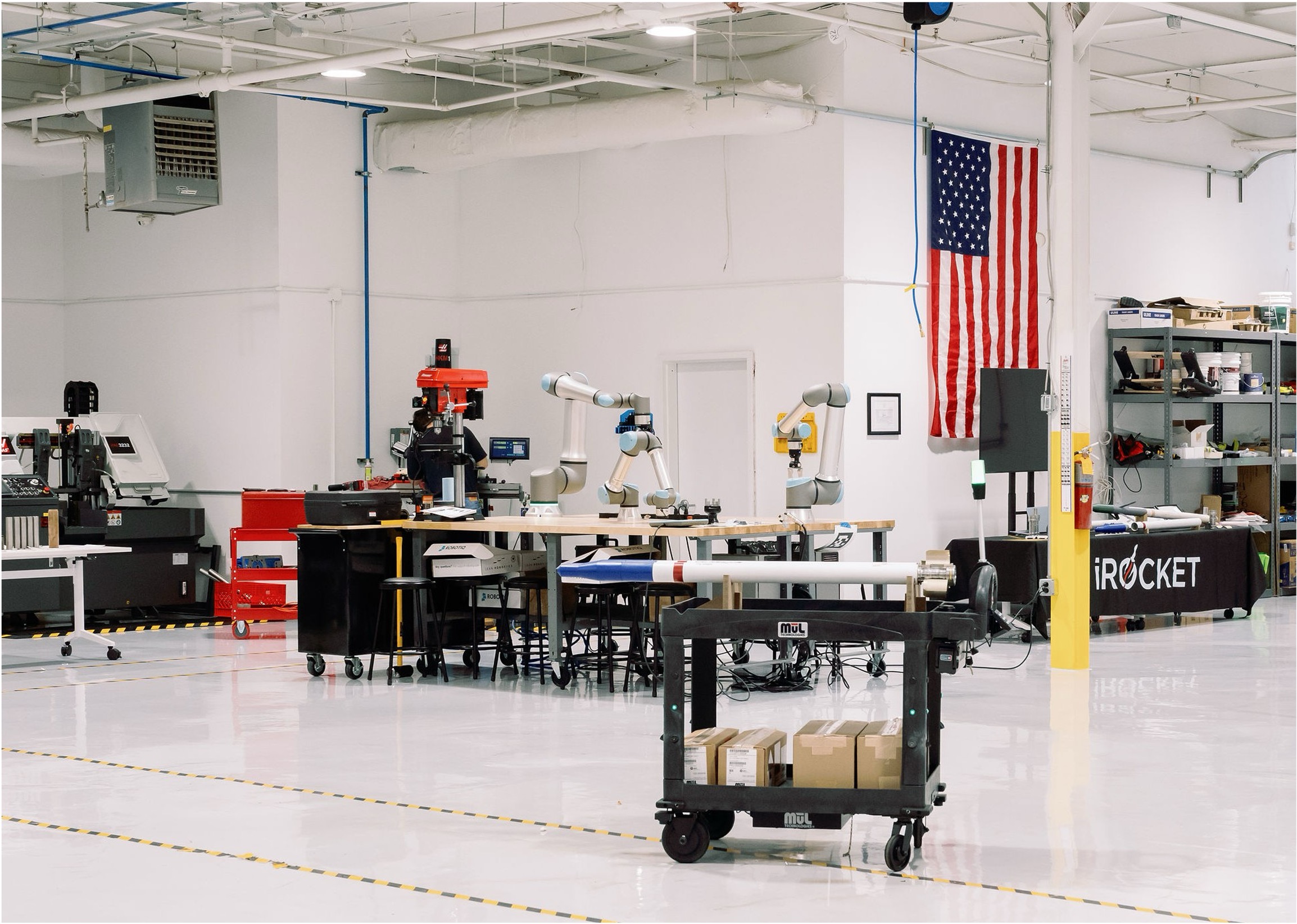
Above: Hydra-70 rockets being produced at mass scale in an automated factory.
Courtesy iRocket
The core objective of the contract is to bridge the gap between expensive HELLFIRE missiles ($150-200 thousand per unit) and cheap, unguided rockets by transforming Hydra-70 rockets into laser-guided, precision missiles, creating a more affordable and scalable 'middle ground' munition. The modified Hydra-70 rockets will become a critical munition for the US Army’s growing counter-UAS capability.

Recent conflicts have underscored a widening gap between the weapons the US relies on and the threats it faces. In many cases, forces are compelled to use high-cost interceptors against inexpensive drones, creating an unsustainable cost dynamic while straining already limited stockpiles.
Through its Factory ONE of the Future concept the company is applying automation, robotics and digitally integrated production systems to accelerate the manufacturing of guided rocket components and C-UAS missile capabilities. The goal is build better systems and ensure they can be produced in the volumes and timelines required. In doing so, iRocket is meeting US Government demand to build a more robust supply chain for Hydra-70 rockets that is flexible enough to handle surge requirements and adapt to evolving operational needs.
Asad Malik, CEO of iRocket, said: “This award reflects a vital shift in how modern conflicts are being fought and won. Our forces are facing increasingly asymmetric threats, where low-cost drones are being deployed at scale and the traditional response model is no longer sustainable. At iRocket, we are focused on changing that equation - delivering precision-guided rocket capabilities that are not only effective, but affordable and produced at the speed and volume today’s operational environment demands.”
The company’s production model is designed to reduce bottlenecks, shorten manufacturing cycles and enable rapid scaling - addressing a core challenge in today’s defense industrial base: the inability to replenish critical munitions quickly enough to sustain operations or deter future conflict.
“Through our Factory ONE of the Future approach, we are rethinking how munitions are built, enabling a more agile, resilient supply chain that ensures war-fighters have access to the systems they need, when and where they need them, continues Malik. Our new facility is designed to produce one propellant every five minutes, putting us on track to manufacture up to 97,000 units annually and play a meaningful role in rebuilding the Arsenal of Freedom.”