

Royal Navy-backed maritime drone trials demonstrate persistent surveillance


Britain is moving closer to deploying integrated autonomous systems at sea after a series of trials demonstrated how uncrewed surface vessels and drones can work together to provide persistent surveillance without putting sailors in harm’s way.
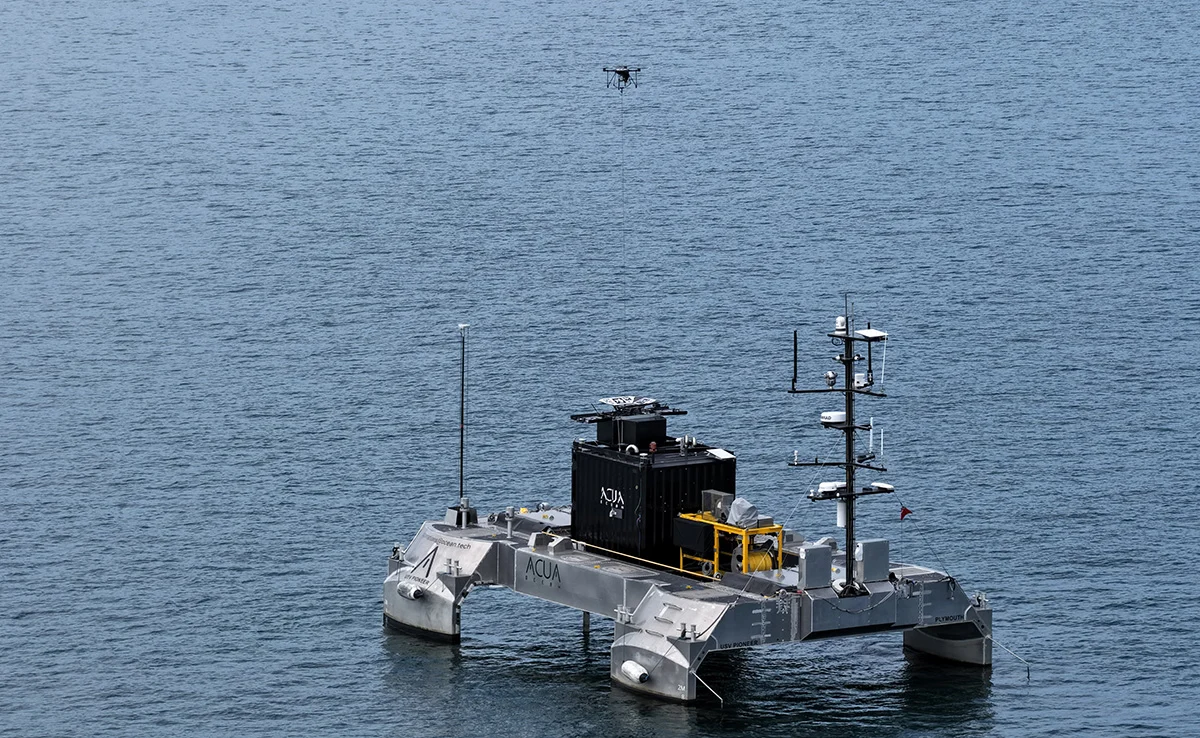
The latest milestone came in Plymouth, where ACUA Ocean and Teledyne FLIR Defense completed two days of demonstrations for the UK Ministry of Defence and offshore industry partners, successfully operating a tethered uncrewed aerial system from an uncrewed surface vessel (USV).
The trials were supported through funding from UK Defence Innovation, the Ministry of Defence’s organisation responsible for accelerating new military technologies into service.
The demonstrations are the latest in a series of Royal Navy-backed autonomy projects that are steadily expanding the role of uncrewed systems above and below the waterline.
Earlier this month, the Royal Navy also completed trials in which an uncrewed surface vessel was parachuted from an Airbus A400M transport aircraft into the North Sea under Project Beehive, demonstrating a new way of rapidly deploying maritime drones into contested areas.
Taken together, the projects illustrate how the Royal Navy is developing a networked approach to maritime operations, combining autonomous surface vessels, aerial surveillance platforms and remote operators into a single system capable of extending surveillance while reducing the need for crewed assets.
Tethered drone gives uncrewed vessel persistent surveillance
The Plymouth demonstration centred on Pioneer, ACUA Ocean’s remotely operated uncrewed surface vessel, and SkyCarrier, Teledyne FLIR Defense’s autonomous launch and recovery system for the SkyRanger R70 drone.
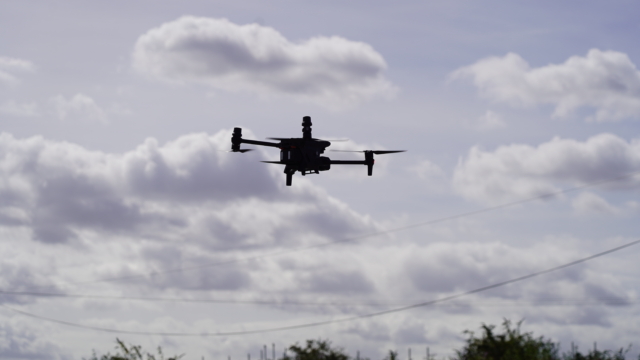
During the trials, the SkyCarrier automatically launched the drone from the deck of Pioneer, with the aircraft remaining connected to the vessel through a power and data tether.
Unlike a conventional battery-powered drone, which is limited by flight endurance, the tether provides a continuous supply of electrical power while maintaining a live data link between the aircraft and the vessel.
The result is a surveillance platform capable of remaining airborne for extended periods while continuously monitoring the surrounding maritime environment.
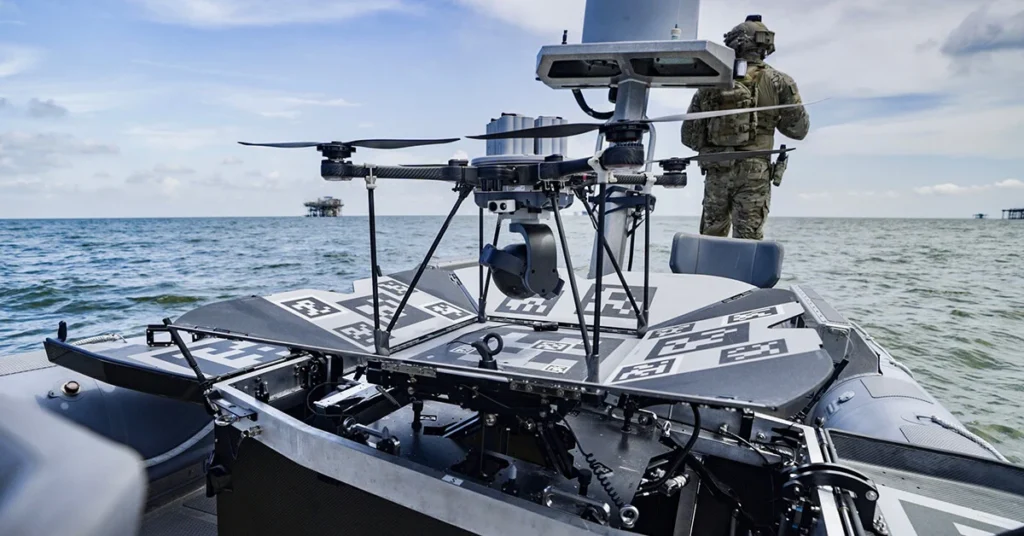
The aircraft’s electro-optical, infrared and radar sensors streamed imagery directly to operators, allowing the system to extend the vessel’s field of view well beyond the horizon.
The companies said the integrated system is intended for intelligence, surveillance and reconnaissance missions as well as support for mine countermeasures, anti-submarine warfare, maritime security and the protection of critical offshore infrastructure.
Neil Tinmouth, Chief Executive Officer of ACUA Ocean, said integrating the two systems had created a new operational capability.
“Integrating the SkyRanger R70 with the Pioneer creates something genuinely new: a persistent, deployable multi-domain ISR capability that the Royal Navy can put to sea today.”
Richard Cunha, Principal Product Director for Unmanned Aerial Systems at Teledyne FLIR Defense, said combining the SkyRanger with the Pioneer expanded the range of missions the aircraft could perform.
“Pairing it with the Pioneer Mk2’s exceptional sea-keeping capability and endurance opens up a new class of persistent maritime ISR mission that simply wasn’t possible before.”
Royal Navy explores rapid maritime drone deployment
The latest demonstration builds on a series of Royal Navy experiments designed to increase the flexibility of uncrewed maritime operations.
Earlier this month, Project Beehive supported successful trials in which a Kraken K3 Scout uncrewed surface vessel was dropped by parachute from an A400M transport aircraft into the North Sea.
The trials demonstrated that a crewless vessel could survive an airdrop before immediately beginning operations without relying on a nearby port or support ship.
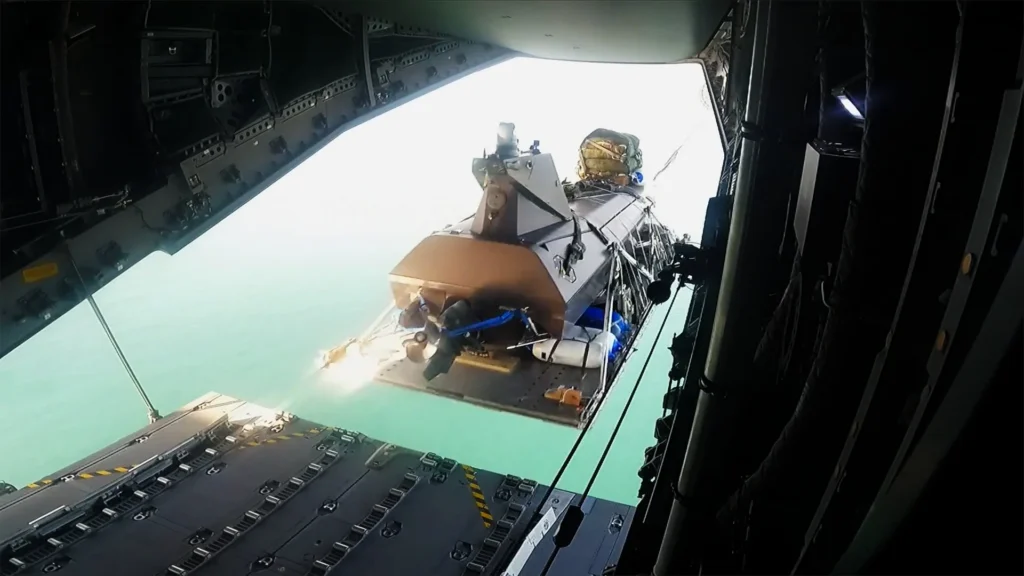
According to the Royal Navy, the concept could significantly reduce the time needed to deploy autonomous vessels during military operations or humanitarian missions while extending their operating range. Captain Adam Ballard, who is involved in Project Beehive, said the work was intended to develop new methods of deploying uncrewed surface vessels rapidly around the world.
While the A400M trials focused on getting autonomous vessels into operational areas more quickly, the Plymouth demonstrations addressed another challenge: how those vessels can maintain continuous surveillance once they arrive.
Together, the two programmes point towards a future in which autonomous systems can be deployed rapidly by air before operating independently at sea while supporting wider naval operations.
Autonomous systems reshape future maritime operations
The Royal Navy has steadily increased investment in autonomous and remotely operated systems as it seeks to expand surveillance capability while reducing operational costs and limiting risks to personnel.
The Pioneer platform has already participated in Royal Navy intelligence, surveillance, reconnaissance and anti-submarine warfare demonstrations.
Earlier this year, ACUA Ocean reported that the vessel successfully operated in wave heights of more than four metres, with significantly lower roll rates than conventional monohull designs.
The latest trials also reflect a broader shift taking place across NATO navies, where uncrewed surface vessels are increasingly being paired with autonomous aircraft to create persistent surveillance networks capable of monitoring large maritime areas for extended periods.
Such systems are expected to play an increasingly important role in protecting critical national infrastructure, offshore energy installations, undersea communications cables and busy shipping routes, while also supporting naval missions including mine countermeasures and anti-submarine warfare.
Sign up for our newsletter and get our latest content in your inbox.
Similar Reads


Sign up for our newsletter. Select all sectors relevant to you.
Related