Warwickshire Police turns to AI to review the quality of investigations


Warwickshire Police is using artificial intelligence to assess investigation records for weaknesses in victim care and risk assessment, enabling checks on a scale the force says would be impractical manually.
The system examines documentation against investigative standards once an investigation has been filed and a decision made. Its findings help senior officers identify areas where training or changes in practice may be needed.
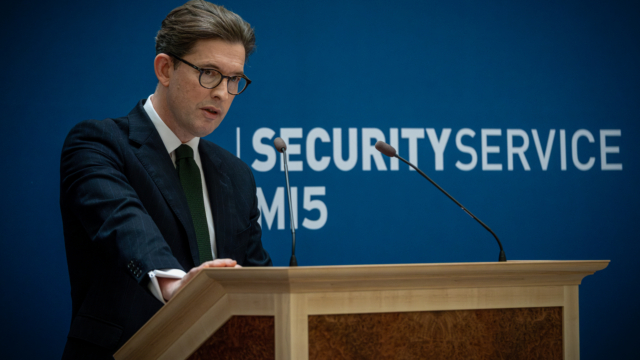
Speaking at the Digital Leaders AI Week event on 13 October, Alex Taft, technical business analyst and agentic AI developer at Warwickshire Police, outlined the approach alongside Jack Perschke, CEO and co-founder of technology partner Great Wave AI.
The audit workflow combines eight AI agents, software components assigned particular tasks, to review records from the force’s crime reporting system.
“It will be looking for key things like have we served the victim well?” Taft said. The assessment also examines whether investigations have thoroughly considered risks to victims, suspects and others involved, before grading their quality.
Coupling the system with robotic process automation has enabled a volume of audits that would not have been feasible manually, according to Taft. Results feed into a dashboard where senior officers can examine patterns and target weaker areas through training and internal communications.
The force began its AI programme in July 2025, initially targeting three use cases. By the webinar, its portfolio had expanded to 12, with six live and another two expected to follow shortly.
While Great Wave AI initially led development, Warwickshire sought to establish its own capability.
“We didn’t want to outsource the innovation. We wanted to build a capability within force that we owned,” Taft said.
Human accountability in AI adoption
Warwickshire’s experience comes as AI adoption receives national backing. In June, the Home Office launched PoliceAI, a centre supporting the development, testing and wider deployment of AI across policing in England and Wales, with £75 million over three years.
Its priorities include pilots to help officers triage, disclose and summarise digital evidence. The government said AI models would undergo independent testing for accuracy and bias.
For Warwickshire, Taft said governance arrangements were established before deployment, including executive approval for certain agents, ethics committee scrutiny where appropriate and a responsible AI checklist.
“Don’t see governance as a hurdle. See it as an enabler,” he said.

Perschke emphasised the work needed to make AI usable within organisations, including defining acceptable performance, proving it through evaluation and auditing what agents do.
Taft said deployment also required continuing supervision: “They almost need to be treated as if they’re new employees that have been onboarded when they go live.”
Users can provide feedback on individual interactions, helping the team identify problems and refine performance. The force has also developed monitoring to compare agents’ operating costs with the time saved.
The webinar did not provide accuracy figures or quantify improvements in investigative outcomes. Taft nevertheless stressed that responsibility remained with officers and staff.
“They’re giving you the tools to do your job better and quicker. They’re not replacing the decision-making,” he said. “AI guides, but it never decides.”
Sign up for our newsletter and get our latest content in your inbox.
Similar Reads




Sign up for our newsletter. Select all sectors relevant to you.
Related