Bristol Airport submits plans for bigger and better airport
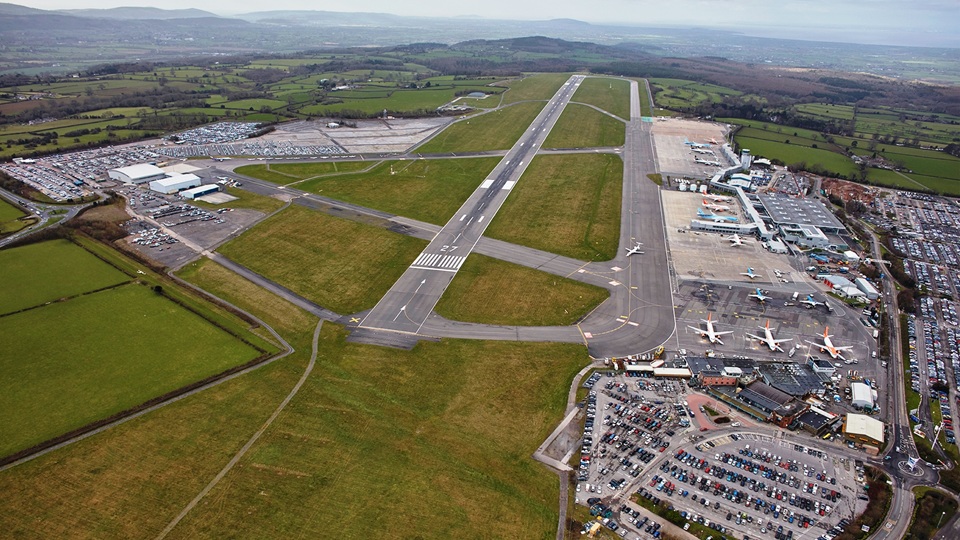
Image courtesy Bristol Airport
The proposal, submitted to North Somerset Council last month, would enable the airport to provide more destinations, including world cities within Europe and beyond with a limited number of new longer-haul flights to North America, Middle East, with connections to Asia and beyond.
Fewer local people and business travellers would need to rely on travelling to London airports and could instead explore places further afield from their local airport, while also enabling businesses to reach new markets and the tourism sector to benefit from more international visitors exploring our region.
The plans would see an additional 1,000 on-site Airport jobs for local people including roles such as engineers, mechanics, airline crew, retail assistants and caterers. A total of 36,000 jobs would be supported in the South West and South Wales within the supply chain with wider economy benefits. Additionally, partnerships with local colleges providing support to get people into work, skills training and apprenticeships for local people have been proposed.
The plans would see around £500 million invested in improvements at the airport and local infrastructure. These include extending the runway to accommodate larger aircraft and increasing capacity of the terminal that includes a number of improvements to enhance the customer experience, including more space, a wider choice of retail and restaurants and the ability to walk onto aircraft without getting on a bus.
Dave Lees, Chief Executive of Bristol Airport, said: “Our proposals deliver what customers have told us they want to see at their local Airport. We will open up opportunities to visit places further afield and for businesses to expand into new international markets.
“This would improve international connectivity to key world cities enhancing trade, supporting high value sectors and improving inward investment, as well as supporting our world-leading universities in their research and innovation endeavours.
“It is also about connecting family and friends – something that’s important for the West of England where 30% of people now have close family members living abroad.”
Supporting regional growth
The Airport’s plans come six months after the West of England’s Growth Strategy was published setting out opportunities for economic development in the region, which has the fastest growing and most productive regional economy outside of London.
Work is already under way in North Somerset on Epic System’s 90-acre technology campus that will be the base for the US firm’s European headquarters providing jobs and contributing significantly to the local economy. Investment has begun on Bristol Temple Quarter that will provide the city’s next era of economic growth, and South Gloucestershire’s Aviva Arena, as part of YTL’s Brabazon development – all of which would benefit from international connectivity enhancing trade and inward investment.
Mr Lees added: “There is an incredible amount of economic investment in the West of England and it’s an exciting time for the region with so much opportunity. At Bristol Airport we have a responsibility to meet that level of ambition and ensure we have an Airport that connects our region and meets demand from a growing population for air travel.”
Bristol Airport’s plans include:
- A larger terminal with more space, more shops and restaurants. A bigger immigration hall and baggage handling facilities.
- Runway and taxiway improvements incorporating changes to approach lights to allow for larger aircraft to connect the region directly with North America and the Middle East.
- Customer improvements including travelators to help passengers get to their gates and the ability to walk to and from aircraft without catching a bus.
- Significant increase in the number of passengers travelling by public transport alongside additional car parking spaces.
- Highway improvements on the A38, and a new bus lane making travel more reliable between the north and south side.
- Expanded car hire facility – to serve the increase in inbound visitors and business travellers.
- A maintenance hangar – creating high-skill jobs and preventing the need for aircraft based at Bristol Airport to fly elsewhere for maintenance.
As part of the plans, the Airport is applying for permission to increase the current passenger cap of 12 million passengers per annum to 15 million passengers per annum, which it expects to reach in the late 2030s. Currently 10.8 million people use Bristol Airport. The increase of 3 million passengers per annum equates to 1% of the total number of passenger journeys made through UK airports in the last year.
Aircraft movements would increase from 85,990 to 100,000 per year in the longer term to meet demand for air travel. On a busy day in peak period this would result in 35 extra aircraft movements. While night flying restrictions would remain, the Airport is proposing to increase night flights by 1,000 per year – on average, four per night on a busy night in the peak period.
Bristol Airport has worked closely with airlines to improve the type of aircraft operating from the Airport. It has actively encouraged quieter new engine option aircrafts, which have a 50% reduction in noise compared to standard aircraft. One major airline has its highest number of quieter aircrafts operating from Bristol Airport compared to its other UK bases.
Under the proposals, targets would see one in four people using public transport to travel to and from the airport; more bus routes utilising the Airport’s new £60m Public Transport Interchange alongside junction improvements and an additional bus lane on the A38.
It is expected there would be an additional three million passengers per year using the airport by the late 2030s, which can be delivered within the UK’s climate change obligations. The Airport’s plans deliver the clear ambition set out in Government aviation policy, making best use of existing runways to deliver significant economic growth.
Environmental enhancements include a 10% net gain in biodiversity, new hedgerows, tree planting and bat roosts. A dedicated community fund for nearest communities would see investment in community facilities and support for local projects.
In 2024, Bristol Airport consulted on its Master Plan that set out the long-term growth plans and a supplementary consultation took place last year on proposals to modify runway approach lighting that would see lights installed on part of Felton Common in small fenced off areas of land, while maintaining access to the open space. Around 3,000 people engaged in the consultation process.
Bristol Airport’s detailed plans, including a full range of impact assessments and consultation analysis, are expected to be published on North Somerset Council’s planning webpage in the next fortnight. The Council will then set out how local people and organisations can view the application and submit comments, which will be considered before the council makes a decision later this year.
Sign up for our newsletter and get our latest content in your inbox.
Similar Reads

Sign up for our newsletter. Select all sectors relevant to you.
Related