UK-built X-ray instrument begins work as BepiColombo reaches Mercury

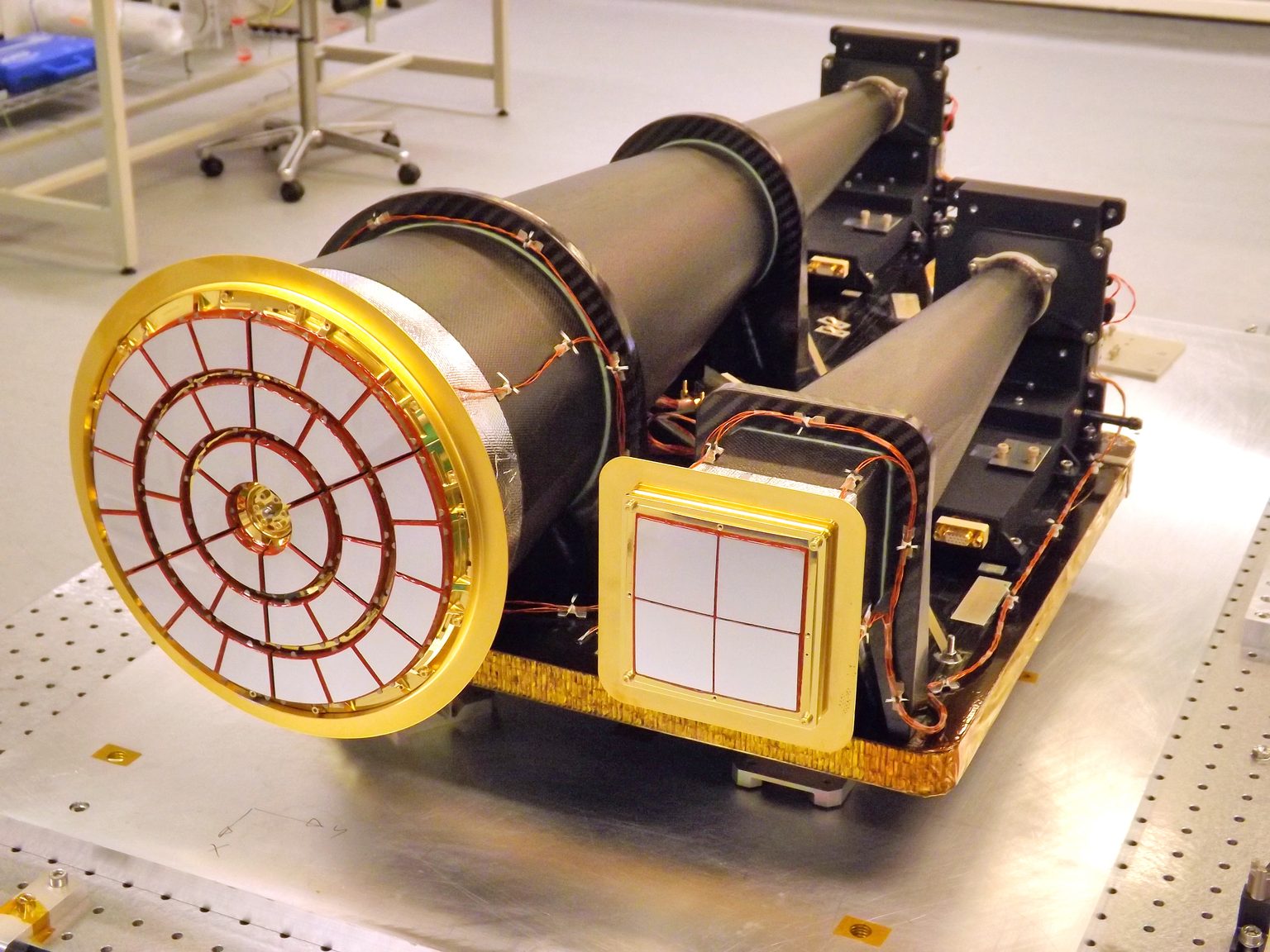
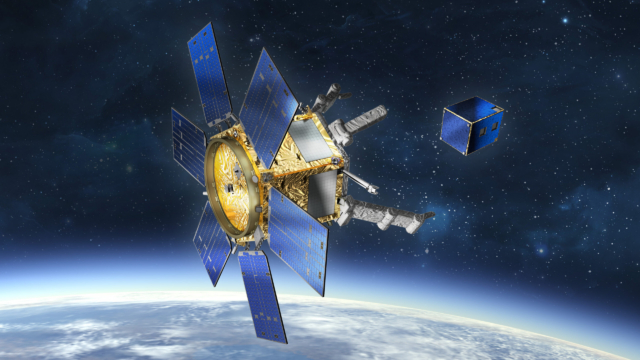
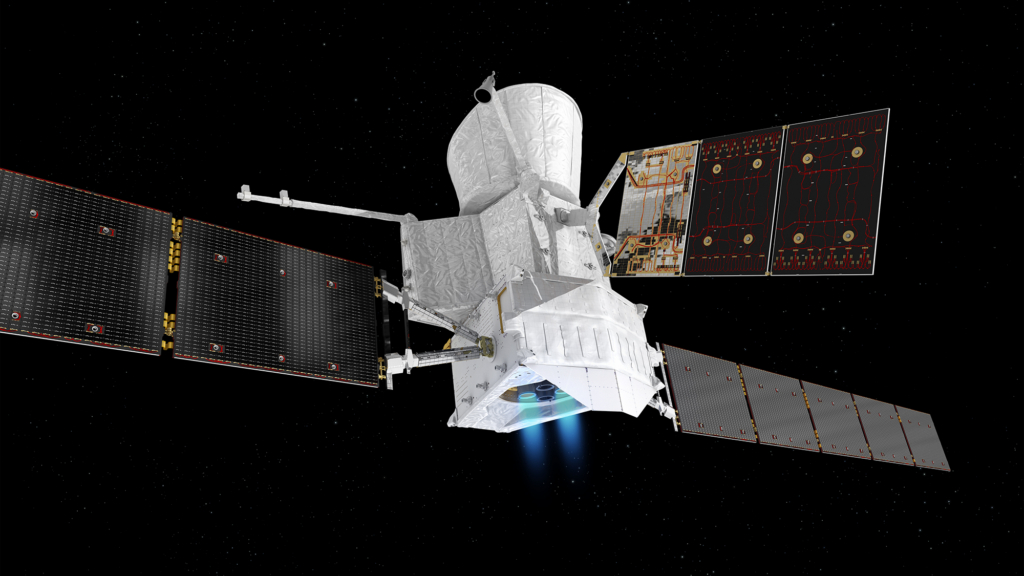
A UK-built X-ray instrument aboard the European-Japanese BepiColombo spacecraft is preparing to study Mercury after the mission successfully entered orbit around the planet on 21 November, completing an eight-year journey through the inner Solar System.
The Mercury Imaging X-ray Spectrometer (MIXS), developed by a European consortium led by the University of Leicester, has already returned its first observations from space. Tests conducted before the spacecraft’s arrival showed that the instrument was performing slightly better than during its last laboratory measurements in 2015.
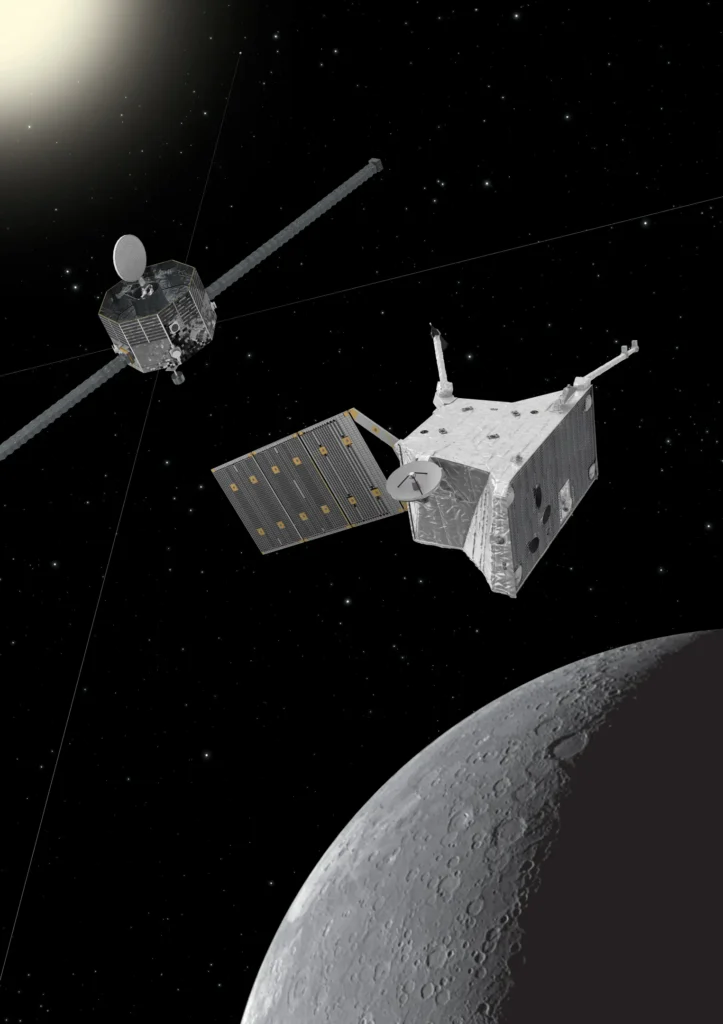
BepiColombo, a joint mission of the European Space Agency (ESA) and the Japan Aerospace Exploration Agency (JAXA), achieved orbital capture following a critical engine manoeuvre. Flight controllers at ESA’s operations centre in Germany subsequently confirmed that the spacecraft had entered orbit around Mercury.
However, the spacecraft faced a “software issue” during the manoeuvre.
The ESA said that, “During the manoeuvre, the thruster burn was shorter than planned following a software issue. The spacecraft is safe and teams at ESOC are working to understand what happened.”
The mission carries two scientific orbiters, which will separate in December before beginning detailed observations in April 2027.
MIXS is the mission’s only UK-led scientific instrument. Supported by the UK Space Agency, it will examine the chemical composition of Mercury’s surface and help scientists understand how the planet formed.
Leicester instrument passes its first test
The instrument’s first observations were not of Mercury but of the Crab Nebula, an X-ray source approximately 6,500 light-years from Earth.
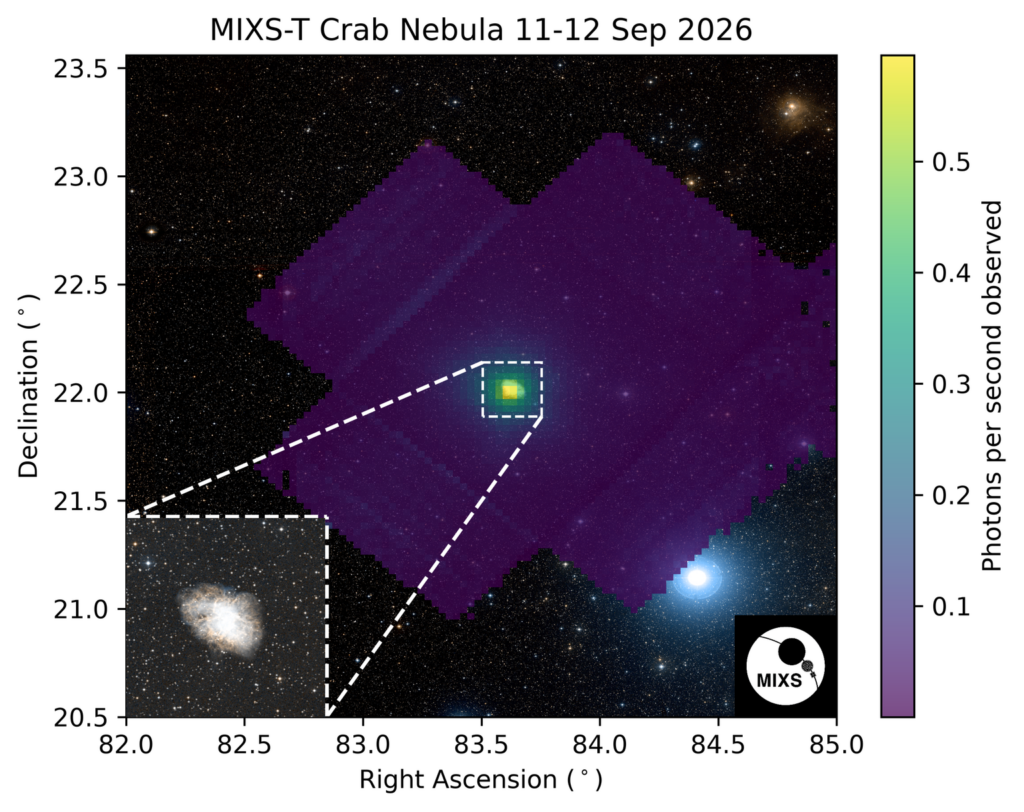
Scientists selected the nebula because its X-ray emissions are well understood, allowing them to assess the instrument’s performance before it begins studying the planet.
During observations on 11 and 12 September, MIXS collected 39 hours of data while the spacecraft carried out 55 changes in pointing direction.
The results showed that its angular resolution, which determines how clearly it can distinguish features, was slightly better than measurements made in Leicester more than a decade earlier.
Professor Emma Bunce, MIXS principal investigator and Director of the Institute for Space at the University of Leicester, said the results were encouraging.
“We have waited a long time to make measurements with MIXS and it is fantastic to see it operating brilliantly in space,” she said.
“This is testament to our engineering and technical team, and our international partners who we have worked with over many years to build this incredible instrument. 80% of the technology on MIXS is new!”
Bunce said the instrument had suffered no radiation damage during its eight years in space. Engineers had identified some effects requiring further study, but these could be addressed during commissioning.
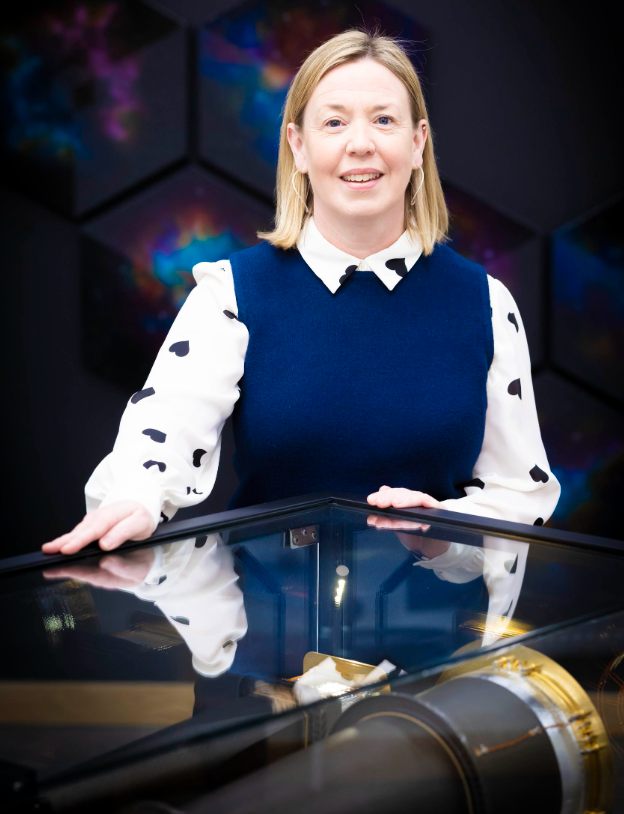
“During our calibration observations, we have determined that MIXS is generally performing fantastically well in space! We have no effects in our images that are associated with ‘stray light’ (optical photons getting in when they should not),” Bunce said.
“We continue to see effects of galactic cosmic rays as we did during cruise, but we understand these and can filter them out. We see some self-fluorescence which appears when the Sun is illuminating the optic, but this won’t affect our dayside observations of Mercury’s surface. And the detector has suffered no radiation damage after 8 years in space.
How MIXS will study Mercury
MIXS will measure X-rays emitted by rocks on Mercury’s surface when they are exposed to high-energy radiation from the Sun.
Different chemical elements produce characteristic X-ray signals. By analysing them, scientists can determine which elements are present and build detailed maps of the planet’s surface composition.
The instrument will work alongside other equipment aboard ESA’s Mercury Planetary Orbiter, including the Solar Intensity X-ray and Particle Spectrometer, which measures incoming solar radiation.
MIXS will also investigate X-rays produced when charged particles interact with Mercury’s surface on the planet’s nightside.
The instrument has been developed with contributions from organisations across Europe. UK partners include the University of Leicester, The Open University, RAL and Magna Parva.
Funding has come from the UK Space Agency, the Science and Technology Facilities Council, ESA and the University of Leicester.
A project spanning more than two decades
The mission has particular significance for researchers who have worked on MIXS since its early development.
Dr Adrian Martindale, instrument scientist at the University of Leicester, joined the project as an undergraduate in 2003.
“This first data is mind-blowing to me,” he said. “The last time we could see through this telescope it was in the basement under the School of Physics and Astronomy in Leicester, but after a rocket launch, eight years in space and 10 billion kilometres travelled it looks just the same.”
The instrument also carries the legacy of Professor George Fraser, its original principal investigator, who died in March 2014. Fraser played a leading role in developing its X-ray optics.
“We are thinking of George as we operate MIXS fully in space for the first time and know that he would be very, very proud of the team and delighted at our first light observations,” Bunce said.
What happens next?
BepiColombo was launched aboard an Ariane 5 rocket in October 2018. Its journey included flybys of Earth, Venus and Mercury, together with long periods of electric propulsion. Mercury remains one of the least explored planets in the Solar System.
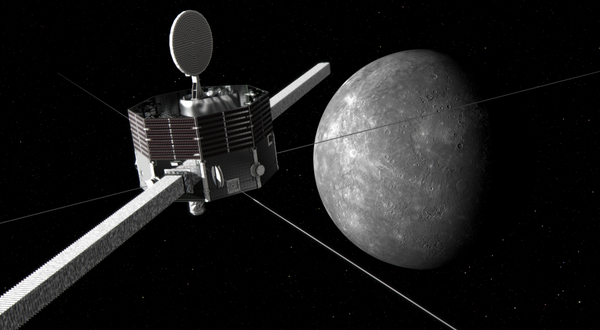
The two orbiters will separate on 9–10 December.
ESA’s Mercury Planetary Orbiter will investigate the planet’s surface and interior, while JAXA’s Mio spacecraft will examine its magnetic field and surrounding space environment.
The European orbiter is scheduled to reach its final scientific orbit in March 2027, with the main science phase beginning in April.
Sign up for our newsletter and get our latest content in your inbox.
Similar Reads


Sign up for our newsletter. Select all sectors relevant to you.
Related