General Atomics

World first ‘pairwise’ separation standard deployed

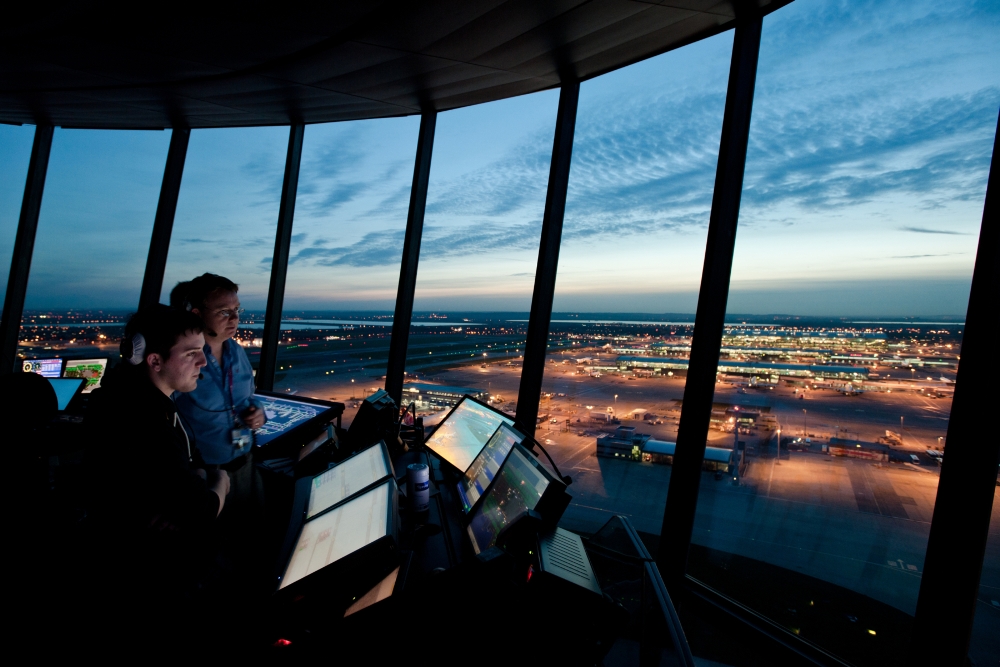
A new way of separating arriving aircraft flying into Heathrow Airport will help boost on-time performance and cut carbon emissions, according to the air traffic service, NATS.


Above: Heathrow Airport Control Tower.
Courtesy NATS


Called Pairwise separation, it was deployed in December 2024 as a world first at NATS’ Swanwick air traffic control centre. Early indications show that the technology will increase landing rates, something that would cut airborne holding and make a significant carbon reduction over the course of its deployment.

While the overall number of flights at Heathrow is capped, being able to land more aircraft per hour will provide valuable additional tactical capacity, helping the airport to minimise delays and recover more quickly in the event of disruption.

Pairwise works by introducing a totally new way of calculating the minimum separation between arriving pairs of aircraft. Traditionally, separation is based on six categories taking into account an aircraft’s weight and the amount of wake it creates as it flies. Pairwise separation is calculated using the specific characteristics of each individual aircraft type.

Tailoring the separation in this far more granular way means air traffic controllers can safely reduce the gap between some pairs of aircraft and increase the overall flow of traffic.


Kelly Stone, Head of Airport Operations, Heathrow said: “Deploying innovative technology like Pairwise separation at Heathrow makes a real difference to our operation’s overall resilience. Passengers will benefit from an optimised landing process ensuring that aircraft are holding for as limited a time as possible, and this in turn, directly supports our commitment of being a responsible neighbour to those living closest to Heathrow. NATS’ ongoing commitment to continuous improvement is warmly welcomed and it is fantastic to see the latest iteration of the Intelligent Approach tool land at Heathrow.”

Chris Norsworthy, NATS Director Airspace & Future Operations, said: “The introduction of Pairwise as part of Intelligent Approach is another world first and testament to our continuous efforts to improve the quality of the service we provide to our airport and airline customers. Delivering additional operational resilience for Heathrow will make a real positive difference to airline punctuality, helping to improve the passenger experience and reduce carbon emissions.”

Working closely with NATS and Think Research, Leidos provides the technology for Intelligent Approach. Graham Emmons, MD Leidos Innovations UK, said: “Pairwise marks another new milestone in the advancement of the Intelligent Approach tool, advancing this world-leading solution to deliver even greater benefits for airports, airlines, passengers and importantly the environment.”

Pairwise is part of the Intelligent Approach tool, developed jointly with Leidos UK and initially deployed at Heathrow as a world first in 2015. Its use of dynamically calculated time-based separation as opposed to static, distance-based gaps has cut headwind delays by more than 60% and reduced airborne holding by 230,000 minutes per annum, saving over 45,000 tonnes of CO2. Pairwise will add to these benefits.

Intelligent Approach has since been deployed at Toronto Pearson and Amsterdam Schiphol airports where it has delivered similar improvements to operational resilience and environmental benefits.

Research on Pairwise separation was carried out by NATS as part of the SESAR Programme.

Related

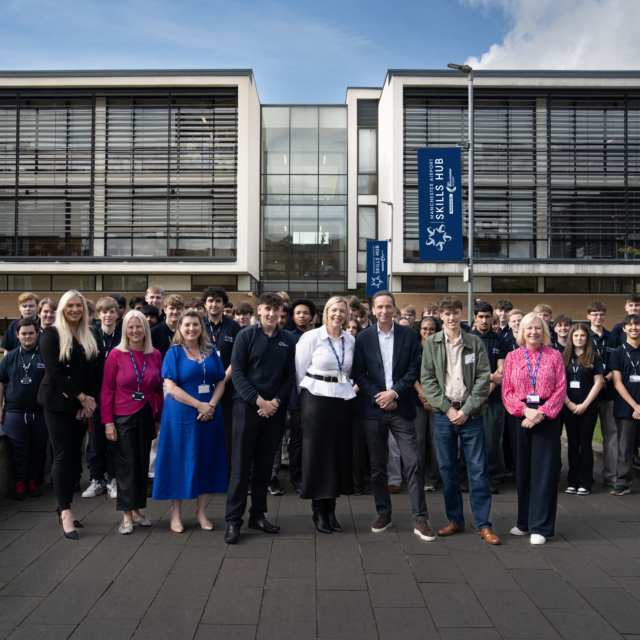
Enhanced aviation programme to help college students into airport careers
TSCG and MAG aviation course launch 08.10.2026
Enhanced aviation programme to help college students into airport careers
Manchester Airports Group (MAG) is building on its partnership with Trafford & Stockport College to bring industry insights into the classroom and enable young people to get hands-on experience relevant to today's aviation sector.
Aerospace

13 Oct 2026

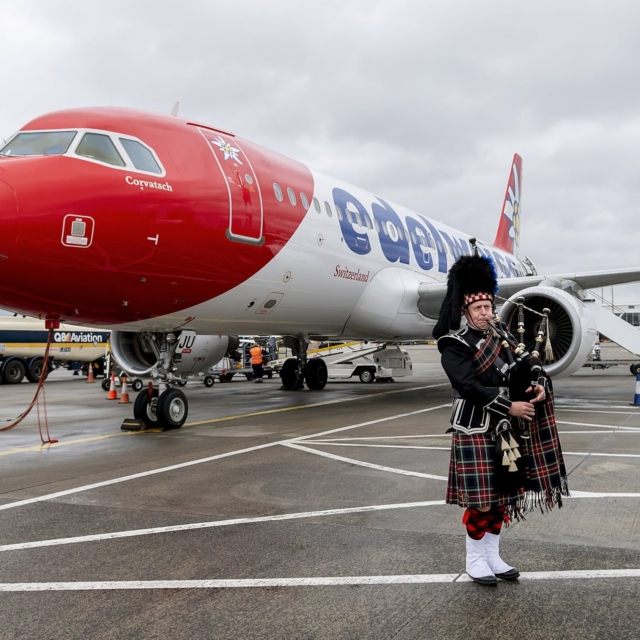
3 innovative technologies selected for trial at Glasgow Airport
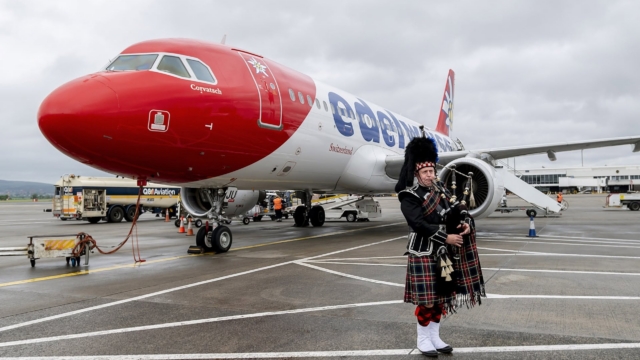
Glasgow Airport with Edelweiss aircraft
3 innovative technologies selected for trial at Glasgow Airport
The companies selected are part of an initiative supporting the development and adoption of new technologies across the UK’s aviation sector.
Aerospace

13 Oct 2026

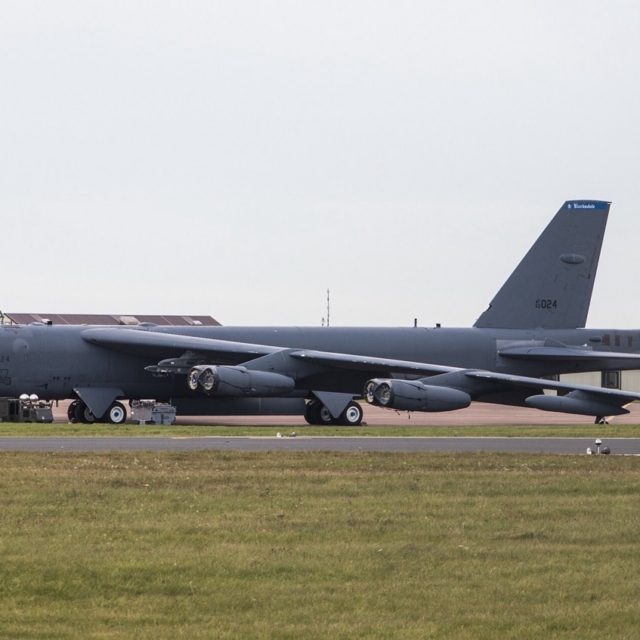
UK blames Iran’s Revolutionary Guards for RAF Fairford ‘bomb plot’
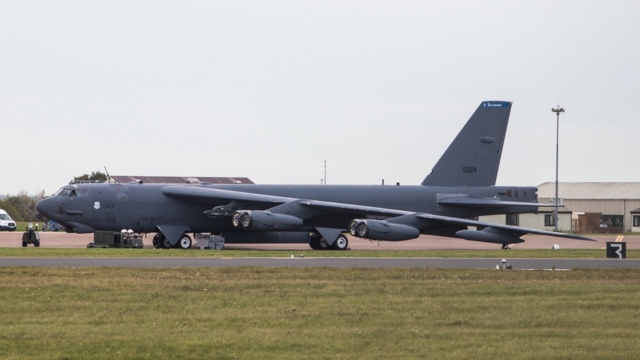
Boeing B-52H Stratofortress USAF at RAF Fairford
UK blames Iran’s Revolutionary Guards for RAF Fairford ‘bomb plot’
UK government accuses Iran's Revolutionary Guards of directing a suspected plot targeting RAF Fairford, following seven arrests.
Aerospace Defence Security

13 Oct 2026

MI5 warns UK defence businesses to strengthen security
Sir Ken McCallum, MI5 chief giving annual threat update at Thames House
MI5 warns UK defence businesses to strengthen security
Defence suppliers and critical infrastructure operators must strengthen protection against sabotage, cyber attacks and drone threats, MI5 chief Sir Ken McCallum has warned.
Defence Security

13 Oct 2026

UK firm MARSS wins £370m Kuwait counter-drone contract, creating 100 jobs
MARSS signs £370 million contract for nationwide counter-drone defence of Kuwait
UK firm MARSS wins £370m Kuwait counter-drone contract, creating 100 jobs
MARSS will deploy a nationwide AI-enabled counter-drone network for Kuwait under a £370m contract, creating around 100 skilled jobs in the UK.
Defence

13 Oct 2026

UK blames Iran’s Revolutionary Guards for RAF Fairford ‘bomb plot’
Boeing B-52H Stratofortress USAF at RAF Fairford
UK blames Iran’s Revolutionary Guards for RAF Fairford ‘bomb plot’
UK government accuses Iran's Revolutionary Guards of directing a suspected plot targeting RAF Fairford, following seven arrests.
Aerospace Defence Security

13 Oct 2026

UK and Germany back SaxaVord in new European space launch deal
SaxaVord Spaceport, Shetland
UK and Germany back SaxaVord in new European space launch deal
The UK and Germany have agreed to deepen space launch cooperation, with Scotland's SaxaVord Spaceport securing European access to orbit.
Aerospace Defence Space

9 Oct 2026

Excelerate Technology to build UK CNI robotic security solution
Satellite in Earth orbit
Excelerate Technology to build UK CNI robotic security solution
In a project co-funded by the European Space Agency Business Applications and Space Solutions (ESA BASS) and supported by the UK Space Agency, Excelerate Technology will build and demonstrate how space-enabled assets can provide innovative safety and security solutions, including protection of Critical National Infrastructure (CNI) at a site in the UK.
World Space Week: How British technology will help ESA return to the Moon
ESA Argonaut
World Space Week: How British technology will help ESA return to the Moon
As Europe prepares to return to the Moon, British-developed LEIA LiDAR technology will help ESA's Argonaut lander autonomously identify safe touchdown zones on the lunar surface.
Space

5 Oct 2026

MI5 warns UK defence businesses to strengthen security
Sir Ken McCallum, MI5 chief giving annual threat update at Thames House
MI5 warns UK defence businesses to strengthen security
Defence suppliers and critical infrastructure operators must strengthen protection against sabotage, cyber attacks and drone threats, MI5 chief Sir Ken McCallum has warned.
Defence Security

13 Oct 2026

Two in five UK workers lack training on AI-powered cyber threats
Cyber security being done by a man on a computer
Two in five UK workers lack training on AI-powered cyber threats
Adding AI to the already complex business of cyber security has the potential to make attacks more sophisticated and harder to spot.
Security

13 Oct 2026

UK blames Iran’s Revolutionary Guards for RAF Fairford ‘bomb plot’
Boeing B-52H Stratofortress USAF at RAF Fairford
UK blames Iran’s Revolutionary Guards for RAF Fairford ‘bomb plot’
UK government accuses Iran's Revolutionary Guards of directing a suspected plot targeting RAF Fairford, following seven arrests.
Aerospace Defence Security

13 Oct 2026