General Atomics

World Space Week: How British technology will help ESA return to the Moon

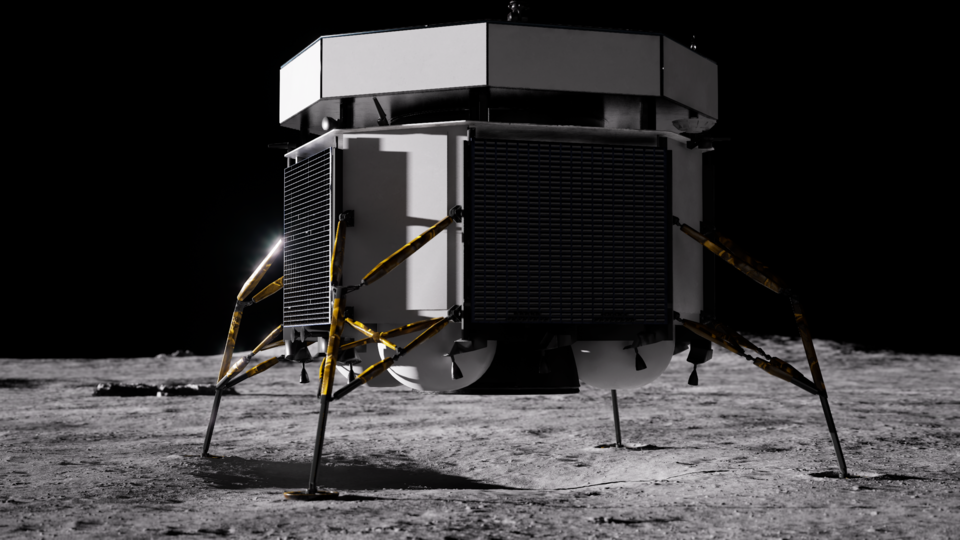
As Europe prepares to return to the Moon, British-developed LEIA LiDAR technology will help ESA's Argonaut lander autonomously identify safe touchdown zones on the lunar surface.

ESA Argonaut
Image: ESA

During World Space Week 2026 (4-10 October), attention is once again turning to the technologies that could shape the next era of lunar exploration.

Among them is LEIA, a British-developed LiDAR sensor selected by OHB for ESA’s Argonaut lunar lander.

Designed to support autonomous landings on the Moon, LEIA will provide a detailed three-dimensional view of the terrain beneath the spacecraft, helping it identify hazards and select a safe landing site without intervention from Earth.

The selection was announced during Farnborough International Air Show 2026, where OHB confirmed it had chosen MDA Space UK’s LEIA LiDAR sensor to become part of Argonaut’s hazard-detection system.

How LiDAR helps spacecraft land safely on the Moon

LiDAR (short for Light Detection and Ranging) works by sending laser pulses towards the surface and measuring the time taken for the reflected light to return. By collecting large numbers of measurements, the sensor can build up a detailed representation of the terrain.

For Argonaut, this capability could prove critical during the final stages of descent. The LEIA sensor (LiDAR for Extra-terrestrial Imaging Applications) will scan the lunar surface in three dimensions, allowing the spacecraft to construct a real-time terrain map as it approaches the ground.

Rather than relying solely on pre-existing maps or images taken from orbit, Argonaut will be able to assess the landing area directly as it flies towards it.

The system can help identify features such as craters, rocks and uneven or unsuitable ground. This information can then feed into the lander’s hazard-detection and autonomous navigation systems, enabling Argonaut to select a safer landing location within the available landing area.

Why autonomous lunar landings are so challenging

Autonomous hazard detection is particularly important because communication delays and the distance between Earth and the Moon make direct, real-time control from mission teams impractical during the critical final moments of a landing.

The spacecraft therefore needs the ability to sense its surroundings, interpret the terrain and react quickly without waiting for instructions from Earth.
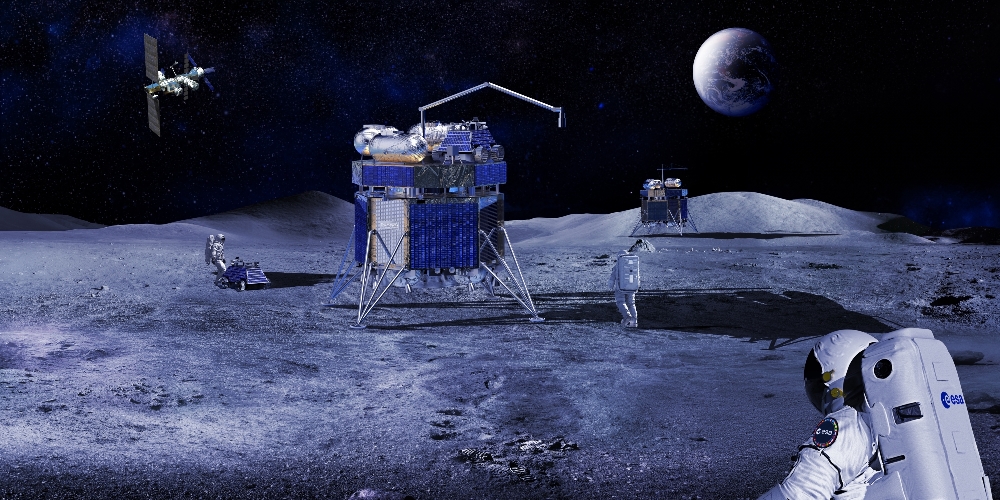
ESA space mission
Image: ESA

The British technology behind ESA’s Argonaut mission

The selection of LEIA also highlights the growing role of the UK space industry in Europe’s plans for lunar exploration. MDA Space UK is developing the sensor as a compact solution for space-based terrain perception, while OHB is leading the development of Argonaut for the European Space Agency.

ESA’s Argonaut programme is intended to provide Europe with an independent capability to deliver cargo and other payloads to the lunar surface. Future missions could support scientific investigations, technology demonstrations and preparations for longer-term human activity around the Moon.

Why LEIA could be critical to a successful Moon landing

For a lander operating in such a challenging environment, the ability to understand the surface immediately below it could be just as important as its propulsion and navigation systems.

A detailed 3D view of the terrain gives Argonaut another layer of information when deciding where it is safe to land.

The integration of LEIA therefore represents more than the addition of a sensor. It is a key element of the spacecraft’s ability to make autonomous decisions during one of the most critical phases of its mission.

What it means for future exploration missions

World Space Week highlights the international technologies making future exploration missions possible.

While rockets and astronauts often take centre stage, systems such as LEIA demonstrate how advanced sensors, autonomy and precision navigation are becoming critical to the next generation of lunar missions.

Related

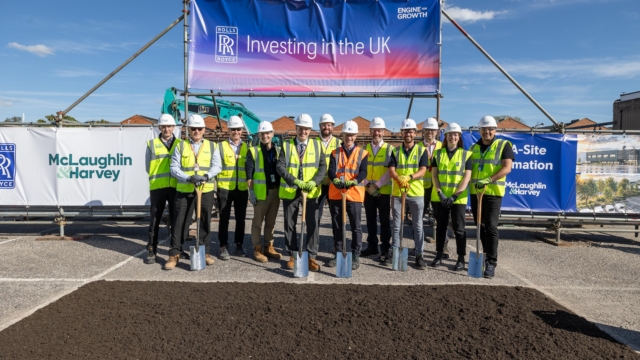
McLaughlin & Harvey breaks ground on Rolls-Royce Derby facility
Integral to Rolls-Royce's £140 million investment at its Derby site, the new facility will support future growth of the UK’s advanced manufacturing sector and strengthen its aerospace and sovereign defence capability.
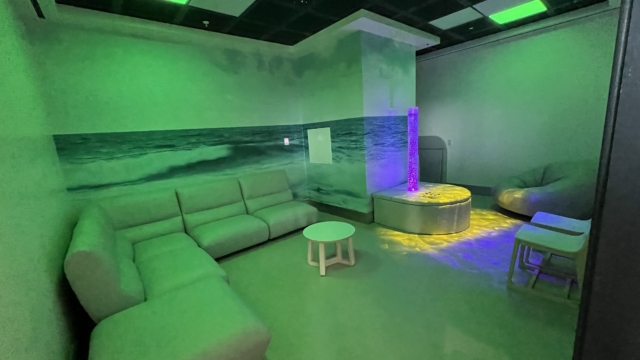
Manchester Airport opens new hi-tech sensory zone for autistic and neurodivergent passengers
Manchester Airport hi-tech sensory zone in T2
Manchester Airport opens new hi-tech sensory zone for autistic and neurodivergent passengers
The new Sunflower Room provides sensory and quiet spaces designed to support autistic and other neurodivergent passengers, as well as people with non-visible disabilities and additional assistance needs.
Aerospace

5 Oct 2026

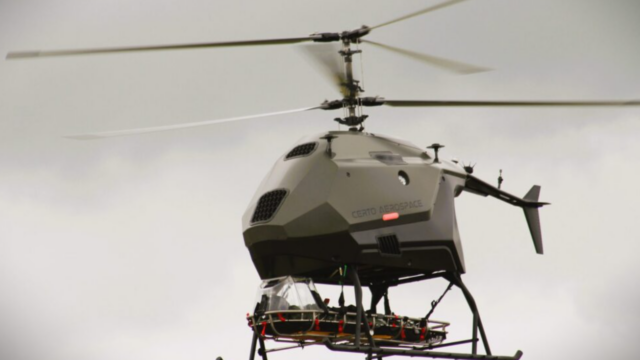
Certo Aerospace raises £5m to accelerate Capstone heavy-lift UAS
Capstone heavy-lift uncrewed aircraft
Certo Aerospace raises £5m to accelerate Capstone heavy-lift UAS
Certo Aerospace has secured £5m to expand operations in Somerset and Wiltshire and move its Capstone heavy-lift UAS closer to service.
Aerospace Defence

5 Oct 2026

McLaughlin & Harvey breaks ground on Rolls-Royce Derby facility
Integral to Rolls-Royce's £140 million investment at its Derby site, the new facility will support future growth of the UK’s advanced manufacturing sector and strengthen its aerospace and sovereign defence capability.
Certo Aerospace raises £5m to accelerate Capstone heavy-lift UAS
Capstone heavy-lift uncrewed aircraft
Certo Aerospace raises £5m to accelerate Capstone heavy-lift UAS
Certo Aerospace has secured £5m to expand operations in Somerset and Wiltshire and move its Capstone heavy-lift UAS closer to service.
Aerospace Defence

5 Oct 2026

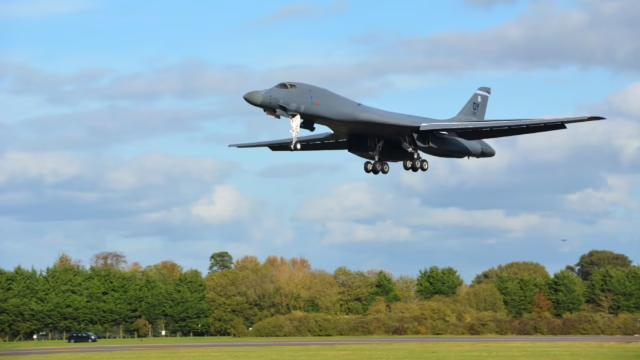
US withdraws B-1 bombers from RAF Fairford amid “new threats”
USAF B-1B Lancer at RAF Fairford
US withdraws B-1 bombers from RAF Fairford amid “new threats”
The US has withdrawn its B-1B Lancer bombers from RAF Fairford amid security concerns following an alleged Iran-linked plot targeting the base.
Defence

5 Oct 2026

Airbus delivers first next-generation satellites for OneWeb constellation
OneWeb satellites in transport container at Airbus
Airbus delivers first next-generation satellites for OneWeb constellation
A new generation of OneWeb spacecraft is heading for launch, helping Eutelsat sustain and expand its low Earth orbit connectivity network for governments, businesses and institutions worldwide.
Member News Space

5 Oct 2026

Serco’s NadirEO to provide operational insights from Earth Observation data
The new NadirEO platform turns Earth Observation data into operational insight, bringing together multiple data sources, analytics and specialist partners to help organisations assess risk, monitor assets and make evidence-based decisions.
Member News Space

4 Oct 2026

SatVu’s HotSat-3 launches on SpaceX mission to double thermal satellite capacity
SAtVu HotSat
SatVu’s HotSat-3 launches on SpaceX mission to double thermal satellite capacity
SatVu has launched HotSat-3 aboard SpaceX’s Transporter-18 rideshare mission, adding capacity for high-resolution thermal intelligence from space.
Member News Space

2 Oct 2026

New report names UK as Europe’s most targeted country for state-backed cyberattacks
Lockheed martin cybersecurity
New report names UK as Europe’s most targeted country for state-backed cyberattacks
Microsoft’s latest Digital Defence Report warns that AI is accelerating cyber threats, while hostile states increasingly target critical infrastructure and essential services across the UK.
Security

5 Oct 2026

HMP Addiewell becomes first Scottish prison to launch secure digital learning for prisoners 
James Tweed
HMP Addiewell becomes first Scottish prison to launch secure digital learning for prisoners 
The introduction of digital learning at HMP Addiewell makes it the first prison in Scotland to provide secure Coracle laptops and tech training to prisoners.
Member News Security

5 Oct 2026

Cohort appoints Richard Mills as Group Strategy Director
Richard Mills
Cohort appoints Richard Mills as Group Strategy Director
Former Boeing executive Richard Mills will lead the growth strategy of Cohort and its seven subsidiaries which specialise in defence and security technology across the UK, Germany, Portugal and Australia.