

Southampton students win Icarus Cup with pedal-powered aircraft


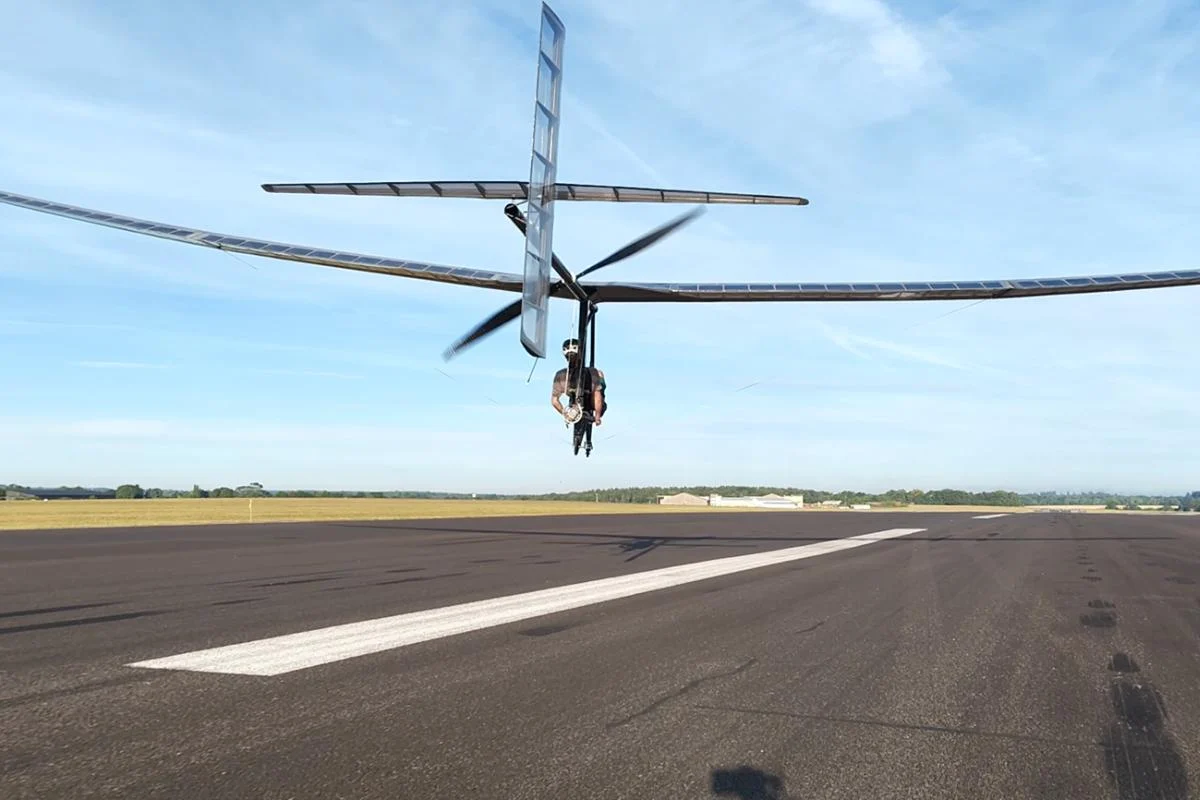
A human-powered aircraft designed, built and flown by University of Southampton students has secured two major competition honours, demonstrating how practical projects can help develop the UK’s next generation of aerospace engineers.
The Southampton University Human Powered Aircraft Society (SUHPA) won the two principal awards at the 2026 Icarus Cup after nine days of flying at Lasham Airfield in Hampshire.
Third-year aerospace engineering student Leith Bowman received the Icarus Cup as the competition’s leading pilot, while the team’s AeroLazarus aircraft won the Roper Shield as the highest-scoring aircraft. It is the first time SUHPA has claimed the Icarus Cup since the present-day society was established in 2018.
Six human-powered aircraft participated in challenges designed to test endurance, speed and manoeuvrability. These included precision landings, unassisted take-offs and a slalom requiring pilots to cross the runway centreline repeatedly over 500 metres.
Engineering an aircraft powered by its pilot
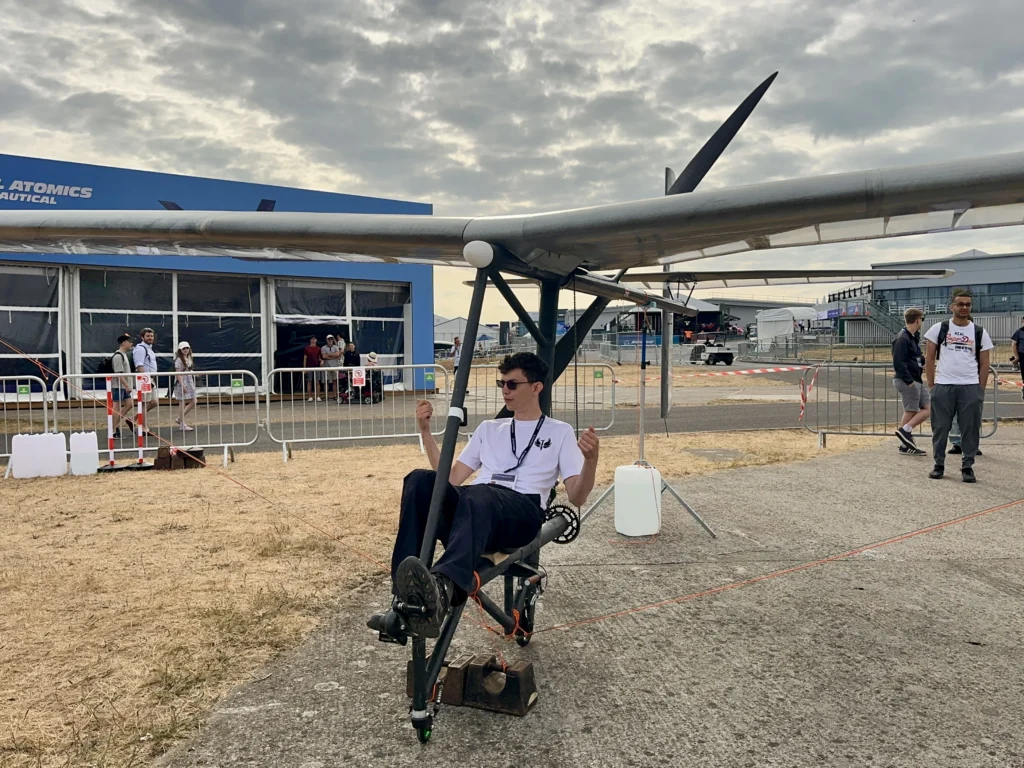
AeroLazarus has a wingspan comparable to that of a business jet but weighs only around 40 kg. The pilot powers a rear-mounted propeller using a bicycle-style pedal system.
Three ground crew members usually assist its launch, keeping the long wings level and helping the aircraft accelerate towards its flying speed of approximately 20 mph. Bowman also completed an unassisted take-off, during which the crew stabilised the wings without pushing the aircraft.
AeroLazarus flew the length of Lasham’s nearly mile-long runway and remained airborne for around two-and-a-half minutes.
“Winning the cup was a great feeling of accomplishment, having spent hundreds of hours building the aircraft,” Bowman said. “The aircraft performed perfectly and came home in one piece, a first for our team.”
The aircraft was displayed at Farnborough International Airshow following its competition success.
Students target an English Channel crossing
SUHPA is now using AeroLazarus to develop an aircraft capable of crossing the English Channel, a feat last completed under human power by Bryan Allen in the Gossamer Albatross in 1979.
The proposed aircraft would have a wingspan of around 32 metres. The team expects to replace AeroLazarus’ existing fuselage and add substantial wing extensions while keeping its overall weight close to that of the current aircraft.
The project continues a long University of Southampton association with human-powered flight. In 1961, its SUMPAC aircraft completed the world’s first recognised human-powered flight involving an unassisted take-off.
Beyond competition and record ambitions, SUHPA gives students experience across aircraft design, manufacturing, integration, testing and flight operations.
“It’s a brilliant learning tool for aerospace students,” said SUHPA vice-president James Denton. “You actually get to build a proper aircraft.”
For an industry seeking skilled engineers with practical experience, AeroLazarus demonstrates the value of giving students the opportunity to take an aircraft from classroom calculations to successful flight.
Sign up for our newsletter and get our latest content in your inbox.
Similar Reads