

How London Stansted handled a record 693 flights in one day

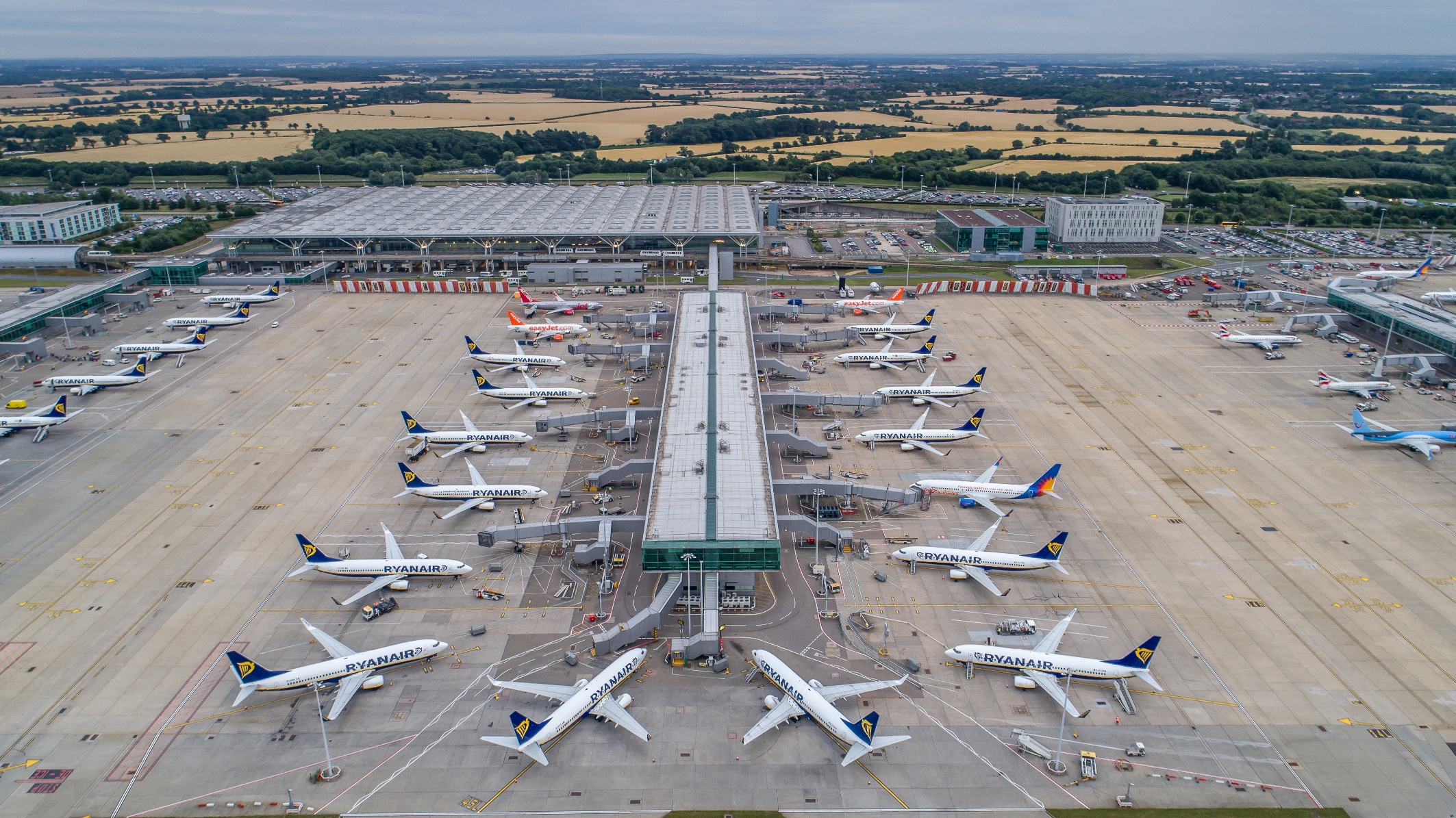
London Stansted has revealed how hundreds of airport workers handled a record 693 aircraft movements in 24 hours during the peak summer getaway.
The milestone was reached on 20 July, when almost 700 aircraft took off from or landed on Stansted’s single runway. It came during the busiest month in the airport’s history, with more than 3.1 million passengers passing through the terminal.
July also brought a monthly record for departures, with 8,977 passenger flights leaving the airport.
Stansted released the figures to mark National Aviation Day, which recognises the work of pilots, engineers, mechanics, ground staff, flight crews and others involved in keeping aviation moving.
Planning Stansted’s busiest-ever flying day
Delivering the record day required planning that began almost a year earlier, when airlines started building schedules around the capacity available at the airport.
Once those schedules became operational, responsibility passed to hundreds of people working across air traffic control, airlines, security, ground handling and the airfield.
The challenge is particularly acute at Stansted because all arriving and departing aircraft share one runway. Air traffic controllers must sequence departures efficiently while maintaining the required separation between incoming flights.
Ground teams must then complete tightly coordinated aircraft turnarounds, including unloading baggage, refuelling, cleaning, catering and boarding passengers for the next service.
Flight crews also help maintain the flow by approaching at the correct speed and minimising the time aircraft occupy the runway, subject to safety and operational requirements.

Nick Millar, operations director at London Stansted, said the airport’s busiest day demonstrated the scale and complexity of the work taking place behind the scenes.
“Handling 693 aircraft movements in a single day is a fantastic achievement and reflects the hard work of hundreds of people across the airport and the careful planning that goes into making a day like this possible,” he said.
“The planning starts almost a year in advance, when schedules are built around the capacity we have available. Then, on the day itself, it takes constant coordination between our air traffic controllers, airlines, flight crews, ground teams and everyone else across the airport to turn that plan into reality.”
Single runway demands careful coordination
Stansted describes itself as Europe’s busiest single-terminal, single-runway airport. It operates flights to more than 200 destinations and serves more European destinations than any other UK airport.
“Most passengers don’t see that side of the operation, but it takes a huge amount of planning, precision and teamwork to manage an airport of this scale, especially during the busy summer period,” Millar added.
The record illustrates how runway capacity depends not only on physical infrastructure, but on close coordination between the teams responsible for each stage of an aircraft’s arrival, turnaround and departure.
Sign up for our newsletter and get our latest content in your inbox.
Similar Reads



Sign up for our newsletter. Select all sectors relevant to you.
Related