

UK project to beam power from the ground to PHASA-35 in bid for year-round stratospheric flight


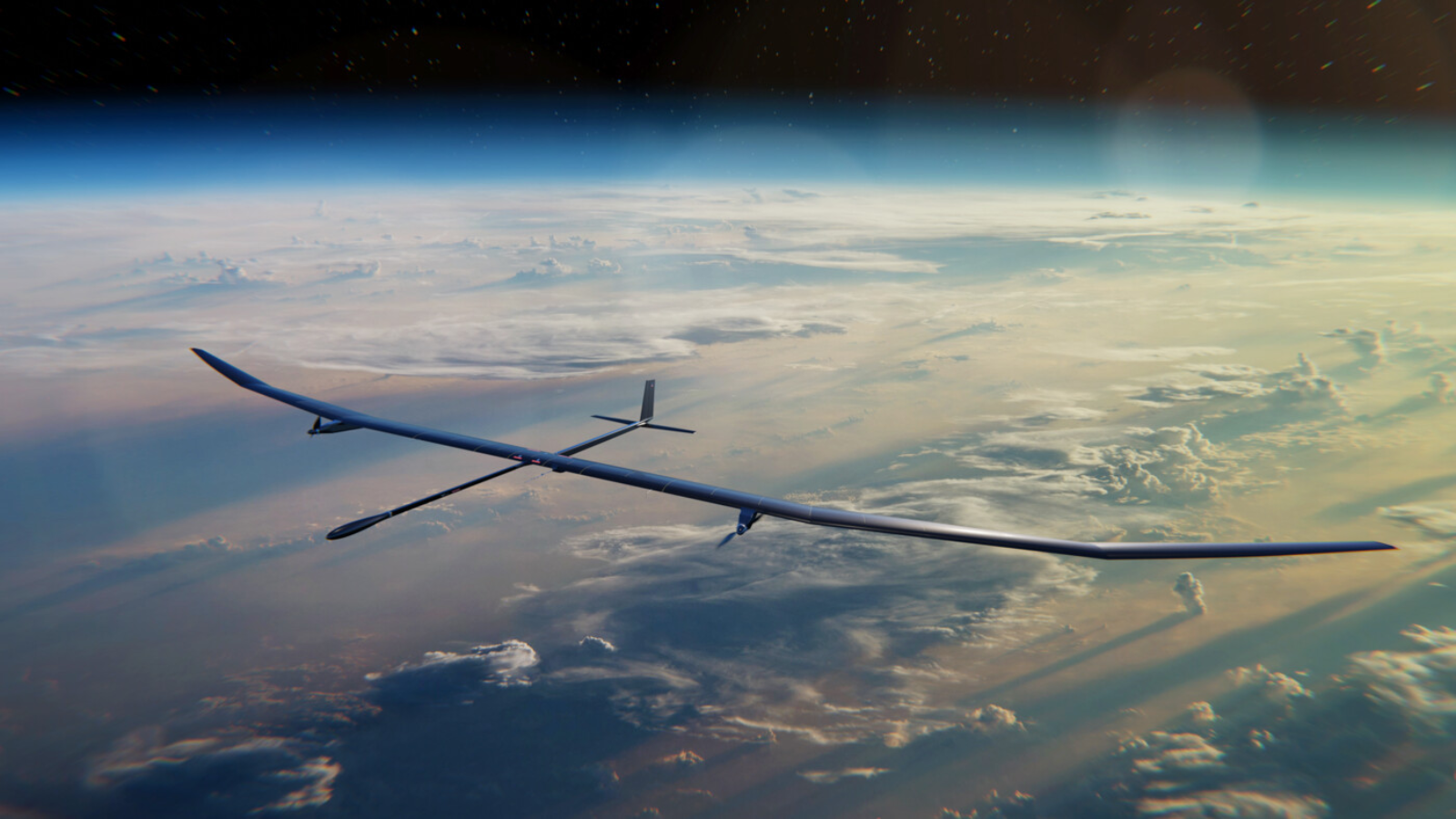
A UK project will attempt to beam electrical power from the ground to a PHASA-35 high-altitude Uncrewed Aerial System (UAS), tackling one of the biggest obstacles to keeping solar-powered platforms flying through the UK’s long winter nights.
Harwell-based Space Solar has secured a £1.3 million contract from the Advanced Research + Invention Agency (ARIA) for Project HAWK, which will develop a radio-frequency power system capable of transmitting energy to an aircraft operating in the stratosphere.
Rather than trying to carry ever-larger batteries, HAWK moves part of the energy supply off the aircraft. A ground transmitter will send power at 5.8 GHz to a lightweight receiving antenna, known as a rectenna, integrated into the aircraft’s wing.
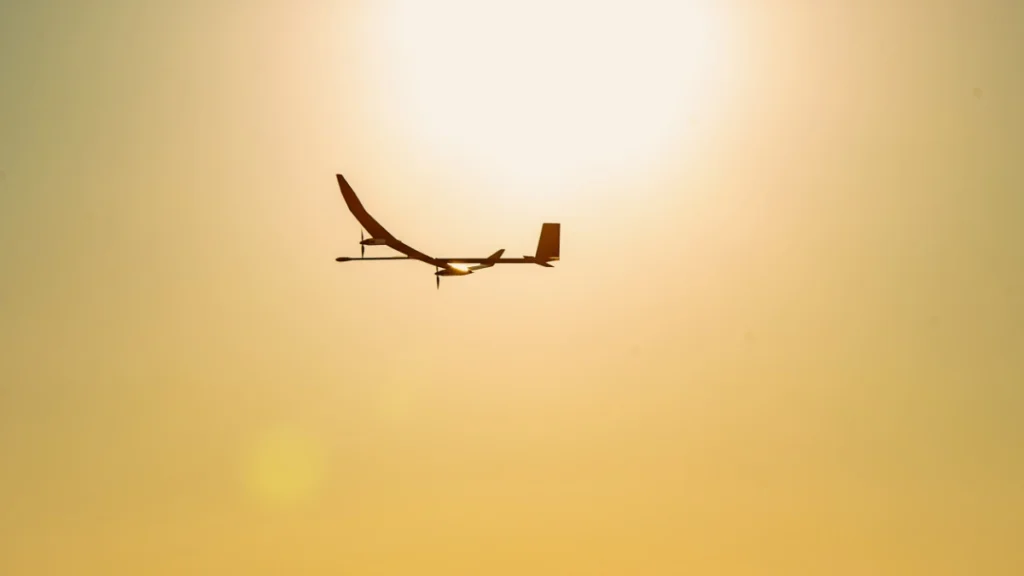
The three-year project is due to culminate in a flight demonstration using PHASA-35, the solar-electric High Altitude Pseudo-Satellite developed by BAE Systems subsidiary Prismatic.
The work forms part of ARIA’s £70 million Enduring Atmospheric Platforms programme, which is funding 18 research teams looking at ways of making persistent stratospheric operations practical.
The problem is particularly acute over the UK. High-altitude solar aircraft rely on sunlight to power the aircraft during the day while charging batteries for overnight flight. During a UK winter, shorter days and long nights leave much less energy available.
Research being funded separately under the same ARIA programme describes many HAPS as solar-powered ultralight aircraft with limited battery capacity and says they face “acute power challenges” during long UK winter nights.
How Project HAWK aims to beam power to PHASA-35 from the ground
Project HAWK approaches that problem differently.
Space Solar will develop a conformal rectenna that can receive RF energy transmitted from the ground and convert it back into usable electrical power aboard the aircraft.
If the concept works at the required scale, the aircraft would no longer depend entirely on the solar energy collected by its own photovoltaic cells and stored in batteries.
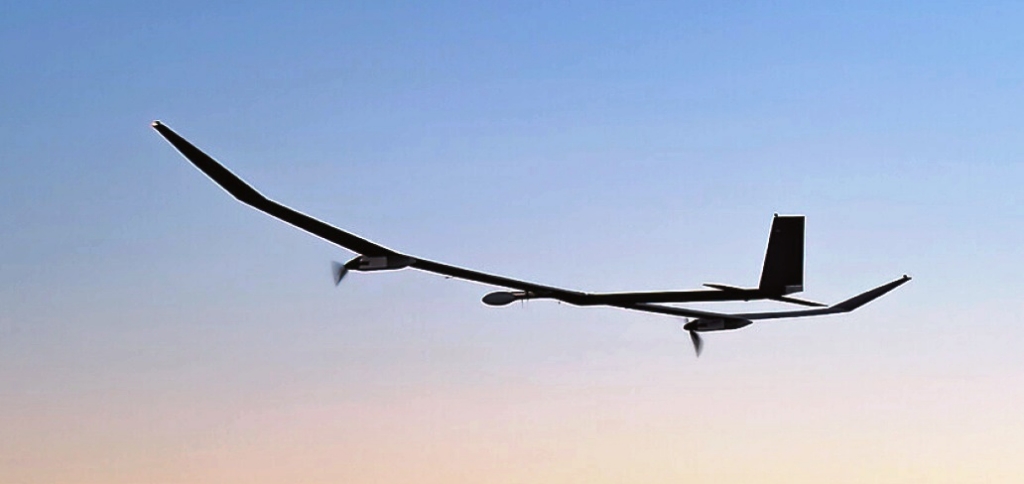
That could allow additional energy to be supplied at night or when solar generation is inadequate, potentially extending missions that would otherwise be constrained by the aircraft’s onboard energy budget.
“Project HAWK applies our core power beaming technology to one of the most compelling near-term markets: persistent stratospheric flight,” Space Solar co-chief executive Martin Soltau said.
“Energy is one of the central constraints for HAPS. With ARIA funding, we can take our rectenna technology from the laboratory towards an integrated flight demonstration, while building the UK capability needed to manufacture and scale the technology.”
Space Solar will work with Prismatic and British microwave technology company MuWave. Prismatic provides the aircraft, while MuWave is developing the ground transmitter.
The programme will advance Space Solar’s rectenna technology from Technology Readiness Level 3 towards TRL 7 over 36 months, a substantial jump from experimental proof-of-concept work towards a system demonstrated in an operationally relevant environment.
Why PHASA-35 was chosen for the wireless power flight demonstration
PHASA-35 gives HAWK an existing British HAPS programme on which to demonstrate the technology.
Developed by Prismatic with BAE Systems, the unmanned solar-electric aircraft is designed to operate in the stratosphere for extended periods while carrying communications, surveillance or other payloads.
HAPS occupy the space between conventional aviation and satellites. Typically operating at altitudes of roughly 10–25 km, they can remain over a region to provide communications or remote sensing without the cost and distance associated with putting a spacecraft into orbit.
Endurance, however, determines much of their usefulness.
ARIA’s programme is therefore not concentrating on a single solution to the winter-energy problem. Instead, the 18 teams are exploring different technologies that could keep aircraft operating reliably and economically in the stratosphere.
One of those alternatives illustrates how differently the problem can be attacked.
The University of Bath has received £1.9 million under the programme for STRAT-NAV, which proposes using atmospheric gravity waves to reduce the energy an aircraft needs in the first place.
Gravity waves form when air is pushed upwards by terrain or deep convection and subsequently moves up and down under gravity. Bath researchers plan to forecast those waves and route HAPS through rising air so the aircraft can extract energy in much the same way that birds use thermals.
Researchers estimate the resulting energy saving could be equivalent to carrying a battery 20–40% larger, without actually adding that battery and its weight. Britain could be particularly suitable because gravity-wave activity increases during winter, just as available solar energy reaches its minimum.
HAWK attacks the other side of the equation: instead of reducing the aircraft’s energy requirement, it aims to supply additional energy remotely.
ARIA targets continuous power delivery for UK stratospheric aircraft
The wider programme has set a specific target for power beaming.
ARIA wants to demonstrate net delivery of 300 watts of continuous DC power to a 20 kg payload at stratospheric altitude for at least a week. It is targeting an operating cost below £500 an hour by the end of the programme, with a pathway towards less than £100 an hour.
Those numbers put the Space Solar project into perspective. HAWK is not initially intended to replace the entire energy system of a large aircraft from the ground. It is intended to prove that useful quantities of energy can be transmitted reliably to a lightweight airborne receiver over an extended period.
HAWK is one of several approaches being funded
HAWK is not the only route ARIA is pursuing to address the challenges of persistent stratospheric operations.
Alongside Space Solar’s RF power-beaming concept, the Enduring Atmospheric Platforms programme is supporting laser-based power transmission, advanced energy-storage and fuel-cell technologies, atmospheric navigation techniques are designed to reduce power consumption, and a range of novel aircraft concepts.
The agency’s strategy is to back multiple approaches in parallel, increasing the likelihood of identifying practical and cost-effective solutions for long-duration stratospheric operations over the UK.
The engineering challenges of beaming power to a stratospheric aircraft
The beam has to remain accurately directed towards a moving aircraft. The receiving system must be lightweight enough that its benefit is not cancelled by additional mass. The system also needs to convert received RF energy efficiently while fitting within the aerodynamic structure of the aircraft.
Space Solar already has experience with the first of those challenges.
Its HARRIER prototype uses a retrodirective phased array capable of steering its beam through 360 degrees. Tests at Queen’s University Belfast’s anechoic chamber were used to compare the hardware with the company’s digital models and provide a basis for developing the system at 5.8 GHz.
HAWK will now take that work out of the laboratory and towards flight.
How Project HAWK supports the UK’s space-based solar power ambitions
There is a second reason the programme matters to Space Solar.
The company’s principal ambition is space-based solar power: collecting solar energy in orbit and transmitting it wirelessly to receivers elsewhere. HAWK uses the same broad principle on a much smaller scale and over a shorter transmission distance.
That makes the PHASA-35 demonstration a potentially useful intermediate step. Instead of waiting for a full orbital power system before proving key elements of wireless energy transfer, Space Solar can develop receivers, beam control and manufacturing techniques through an atmospheric application.
For ARIA, the immediate objective remains closer to Earth.
Its Enduring Atmospheric Platforms programme ultimately aims to keep communications payloads operating in the stratosphere above the UK for a week. Other technologies being developed alongside power beaming include atmospheric navigation and methods of reducing aircraft energy consumption.
Bath’s STRAT-NAV team, for example, plans to use AI-enhanced high-resolution atmospheric modelling to forecast gravity waves as much as 72 hours ahead, before directing aircraft towards areas where they can exploit rising air while maintaining communications coverage. Field campaigns are due in late 2026 and 2027 before flight trials later in the programme.
Sign up for our newsletter and get our latest content in your inbox.
Similar Reads


Sign up for our newsletter. Select all sectors relevant to you.
Related