

ClearSpace to advance ESA’s Phoenix GEO life-extension mission

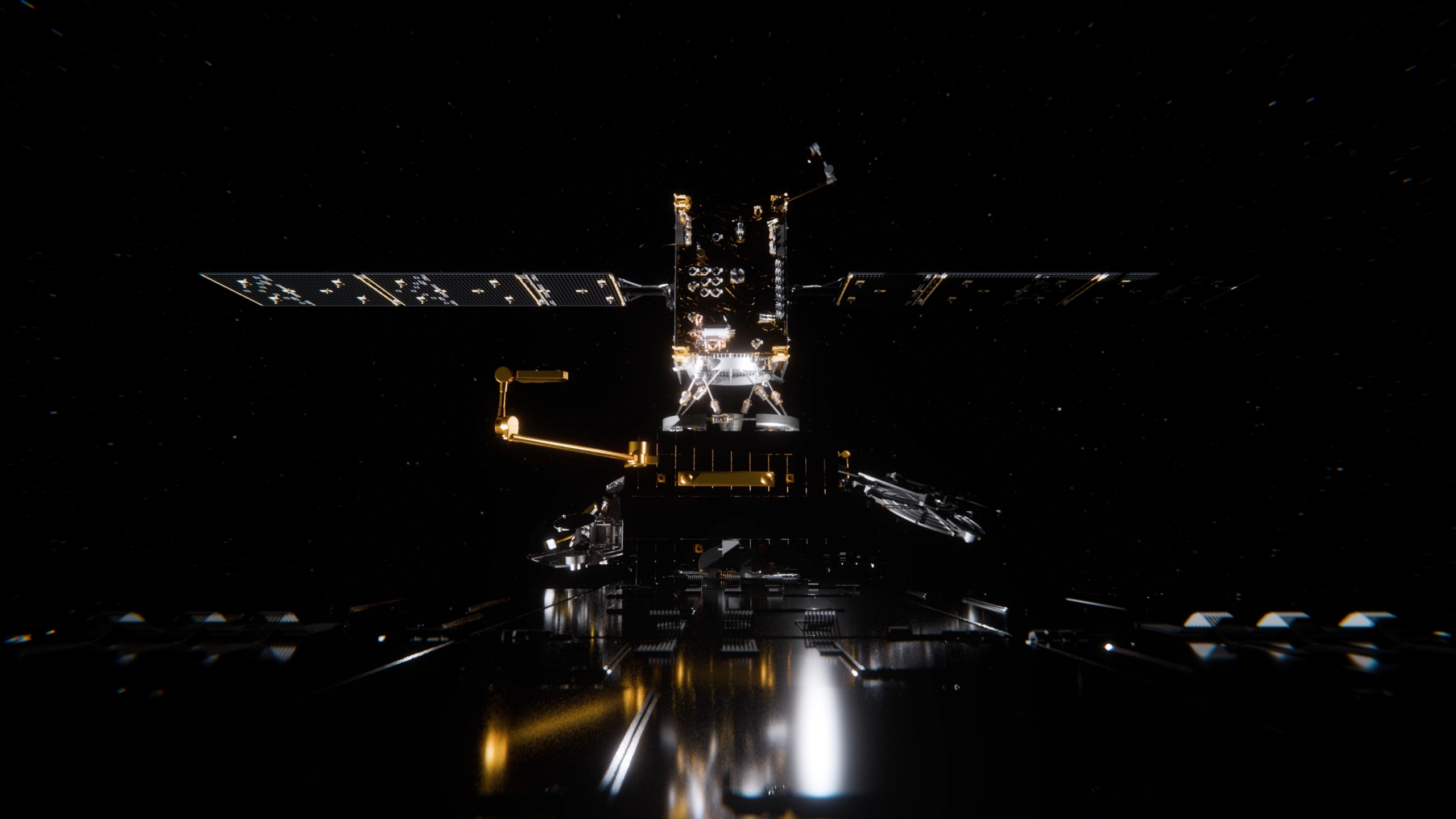
ClearSpace has signed a contract with the European Space Agency (ESA) for the next phase of Phoenix, its GEO satellite life-extension mission.
Phoenix is being developed to enable a servicing spacecraft to rendezvous with and dock to an operational satellite, providing additional propulsion and attitude-control capability. By taking over functions such as station-keeping and repositioning, Phoenix is designed to help satellite operators extend the useful life and operational value of assets already in orbit, while also supporting responsible end-of-life operations.
The broader Phoenix development programme is currently estimated at approximately €100 million. The newly signed contract supports the next stage of this development, advancing the mission architecture and the core rendezvous, proximity operations, docking and servicing technologies required for future commercial operations. The activity is funded under ESA’s Industrial Competitiveness programme line within the Agency’s Advanced Research in Telecommunications Systems (ARTES) programme.
How the next stage of Phoenix’s development will deliver clear benefits for Europe’s space industry
Laurent Jaffart, Director of Resilience, Navigation and Connectivity at ESA said: “ESA is dedicated to helping Europe build the capabilities needed for the next generation of in-orbit services. In cooperation with our Member States and European industry, we’re taking Phoenix to the next level by working to mature the dual-use technologies that will deliver clear benefits for sustainability, resilience and the competitiveness of Europe’s space industry. Together, we will strengthen our position in this emerging market.”
The agreement marks an important progression for Phoenix, building on the programme’s development so far by ClearSpace. Founded in Switzerland and headquartered in Luxembourg, with teams operating across Europe in the United Kingdom, Germany and France, ClearSpace is an in-orbit services company developing technologies and missions that enable safe, sustainable and economically valuable operations in space. Its capabilities span inspection, rendezvous and proximity operations, capture, active debris removal and satellite life extension with missions including ClearSpace-1 ESA’s Active Debris Removal mission, PRELUDE, an in-orbit inspection and proximity operations mission.
At the centre of Phoenix is ClearSpace’s docking system, designed to allow a servicing spacecraft to establish a safe and secure mechanical connection with a satellite already operating in geostationary orbit. Early support from Luxembourg enabled ClearSpace and its industrial partners to develop the Phoenix concept, establish its technical foundations and demonstrate the potential of satellite life extension as a future in-orbit service. The new phase under ESA ARTES provides a European framework through which these technologies can be further matured and brought closer to commercial deployment.
Why the extension of satellite operations relies on reliable docking capabilities
Reliable docking is a critical capability for satellite life extension. Once connected, a servicing spacecraft can provide propulsion and attitude-control support for station-keeping, repositioning and end-of-life operations, opening the possibility of extending the productive lifetime of valuable space assets.
Luc Piguet, CEO and co-founder of ClearSpace, said: “Phoenix is the result of a shared ambition to make in-orbit servicing a practical and valuable capability for satellite operators. We are deeply grateful to ESA, to Luxembourg and the Luxembourg Space Agency and to the Member States whose continued commitment to European space capabilities has made this progress possible. Their support has allowed ambitious ideas to be transformed into technologies, missions and increasingly tangible services. We are fully committed to the mission: working with ESA, its Member States, our industrial partners and our customers to build a safe, competitive and commercially sustainable European in-orbit servicing capability.”
Phoenix is being developed around an adaptable servicing architecture designed to work across different spacecraft platforms and operational scenarios. This flexibility is important to the commercial model: the same core servicing technologies must be capable of addressing a diverse GEO satellite fleet and evolving alongside future spacecraft platforms. The next phase of development under the European Space Agency’s ARTES programme, will develop the technologies and further mature the mission architecture, docking system and associated rendezvous and proximity operations, that are required to deliver reliable, commercially viable, GEO servicing.
Sign up for our newsletter and get our latest content in your inbox.
Similar Reads