Royal Navy to launch Northrop Grumman’s Talon Blue CCA from aircraft carrier in 2027

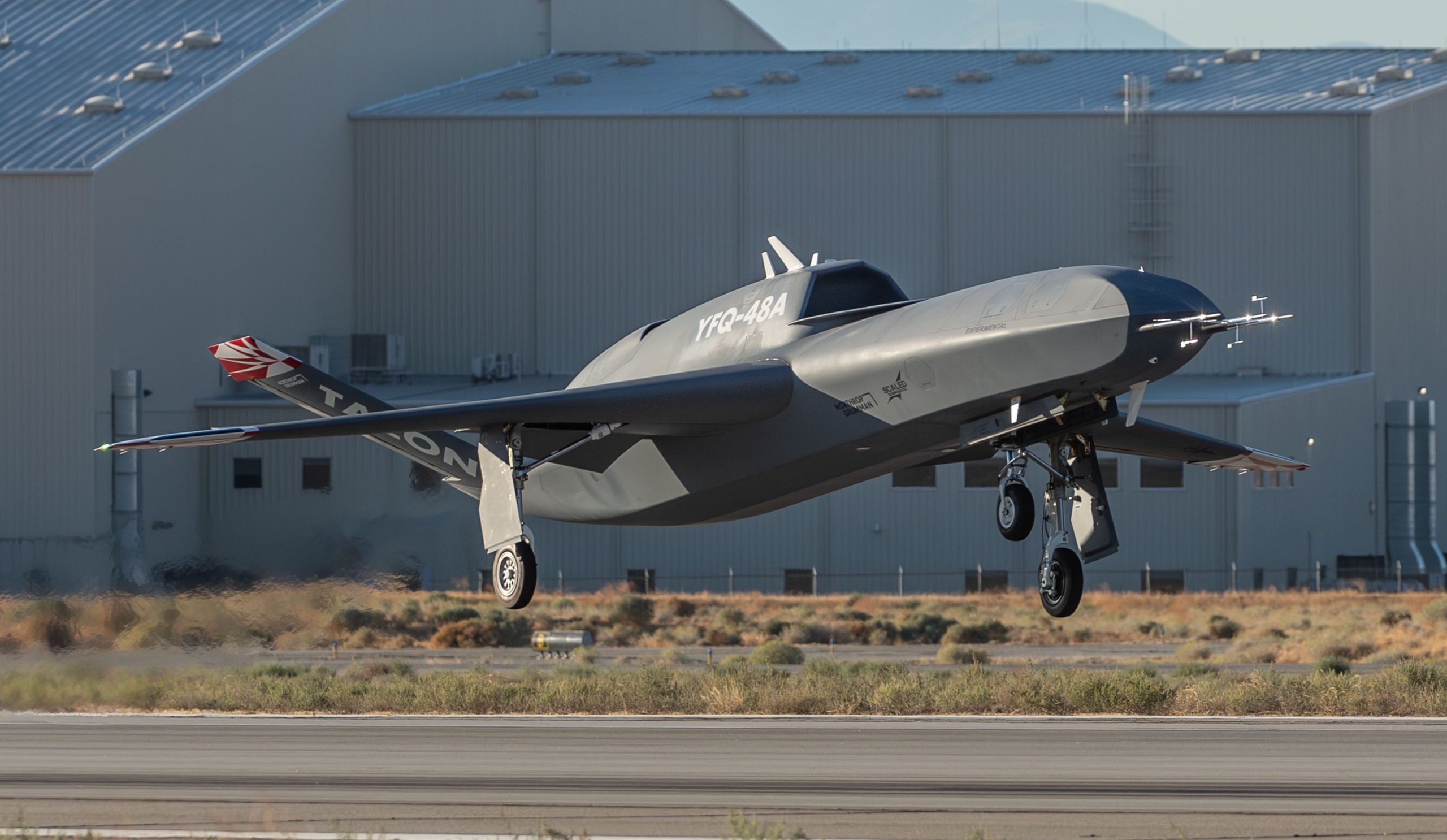
The Royal Navy is preparing to demonstrate Northrop Grumman’s YFQ-48A Talon Blue – a company-funded Collaborative Combat Aircraft (CCA) demonstrator – from a Queen Elizabeth-class aircraft carrier in 2027, marking a significant step towards the integration of jet-powered autonomous aircraft into the service’s future carrier air wings.
The plans were announced on 10 November by First Sea Lord General Sir Gwyn Jenkins at the International Sea Power Conference 2026 (ISPC26), which was held aboard the Royal Navy’s second Queen Elizabeth-class carrier, HMS Prince of Wales (R09), in Oslo, Norway.
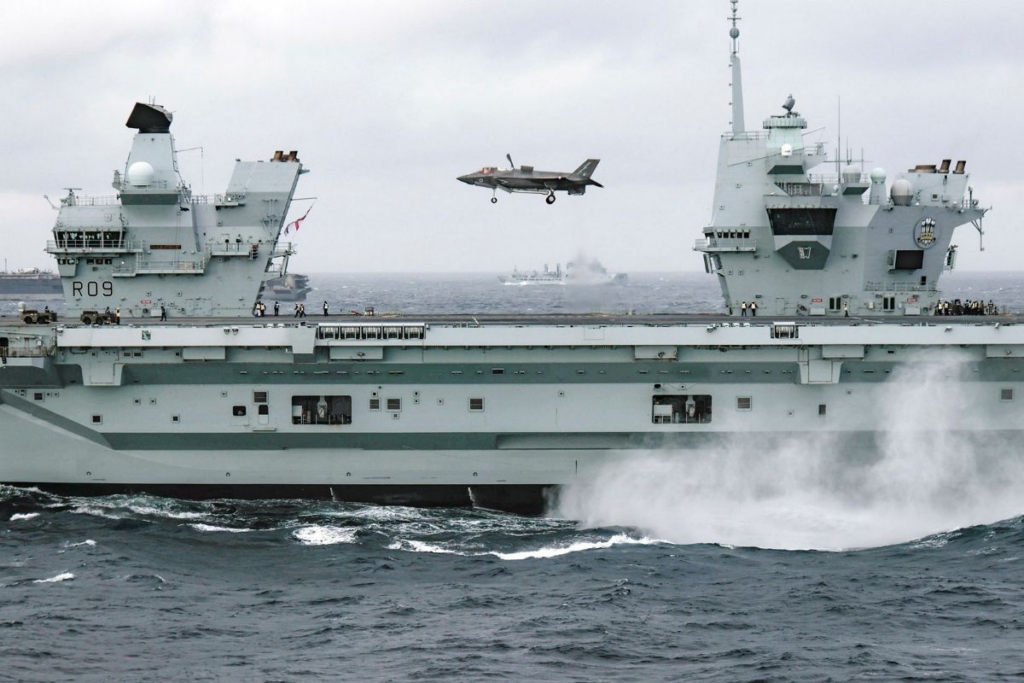
Jenkins confirmed that the Royal Navy will work with Northrop Grumman to prepare the Talon Blue demonstrator for trials as part of the service’s Project Vanquish, with a demonstration in UK waters scheduled to take place in 2027. Such trials will include the launch of the CCA from one of the Navy’s two Queen Elizabeth-class ‘flattops’.
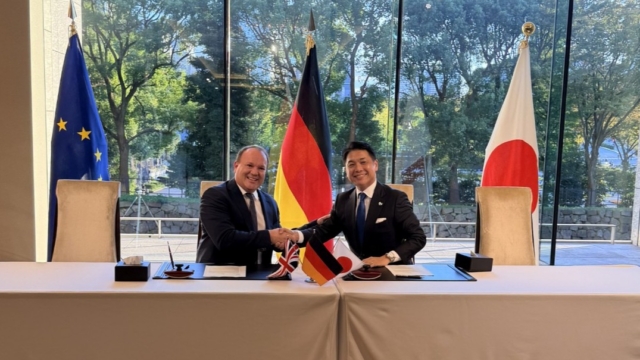
“In two days’ time, on this carrier [Prince of Wales], I will sign a statement of intent with our friends at Northrop Grumman to prepare their Talon demonstrator for trials with the Royal Navy under Project Vanquish,” Jenkins told delegates while delivering remarks at ISPC26.
He added that the trials would provide the evidence needed to understand how uncrewed combat aircraft could operate safely and effectively alongside the Royal Navy’s existing carrier air wing. The statement of intent is scheduled to be signed on 12 November, also aboard HMS Prince of Wales.
Project Vanquish: Building a ‘Hybrid Carrier Air Wing’ for the Royal Navy
The demonstration forms part of the Royal Navy’s wider ambition to develop its ‘Hybrid Navy’ concept, which aims to combine crewed platforms with increasingly capable autonomous systems across its maritime operations.
As part of its Maritime Aviation Transformation programme, the service is looking to introduce uncrewed aircraft alongside its existing fleet of short take-off and vertical landing (STOVL)-capable F-35B Lightning II fifth-generation multi-role stealth fighters, Merlin HM2 anti-submarine warfare (ASW) and maritime surveillance helicopters, and Wildcat HMA2 multi-role maritime helicopters.
Project Vanquish intends to explore the potential of jet-powered autonomous aircraft operating from the Navy’s two Queen Elizabeth-class aircraft carriers, which are equipped with ski-jump flight decks but do not have catapult launch systems or conventional arresting gear, like the Nimitz- and Ford-class ‘flattops’ operated by the US Navy.
The planned 2027 demonstration will provide an opportunity to assess how autonomous, jet-powered aircraft could operate within the demanding environment of a Queen Elizabeth-class ‘flattop’. Carrier operations present significant technical operational challenges, including limited flight deck space, ship movement, changing weather conditions and the need to coordinate multiple aircraft types safely.
The trial will establish how an aircraft such as the Talon Blue could be launched, controlled and potentially recovered at sea, although the precise scope of the demonstration – as well as which of the UK’s two Queen Elizabeth-class ‘flattops’ – has yet to be confirmed.
Talon Blue: What is Northrop Grumman’s new YFQ-48A CCA?
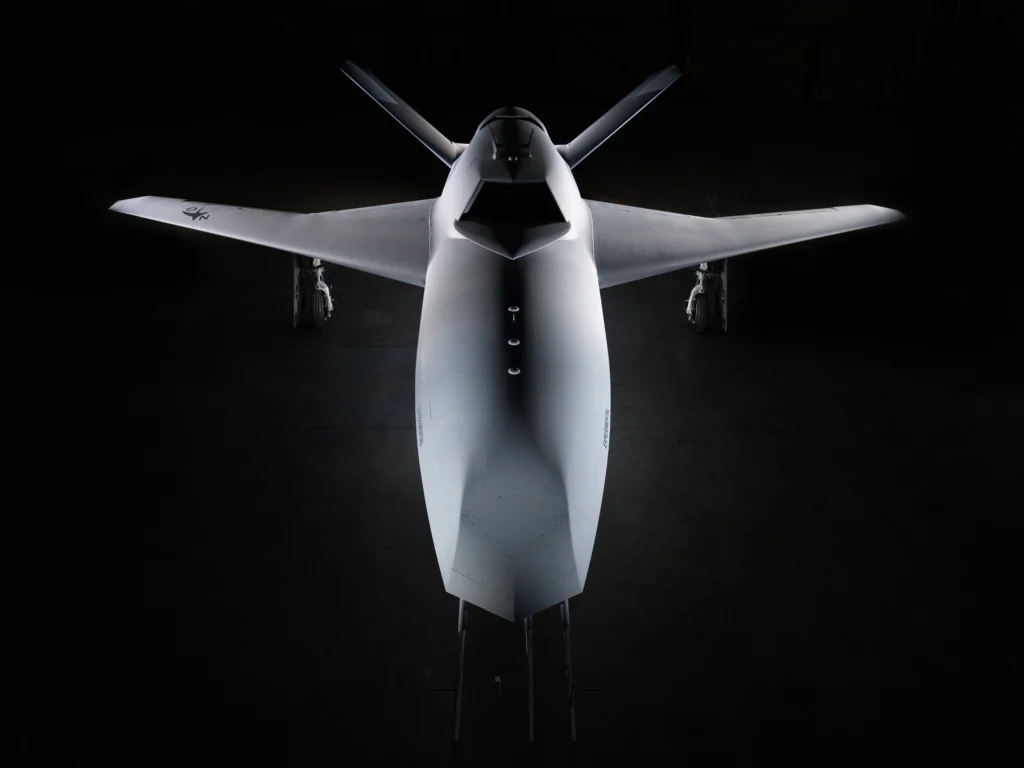
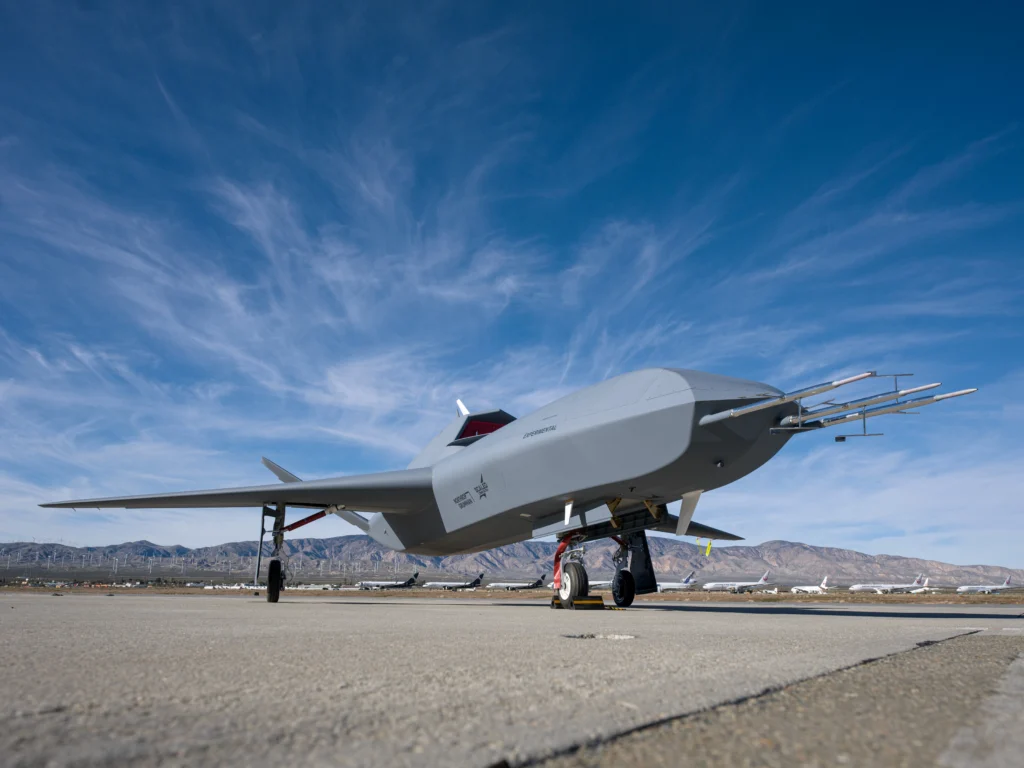
Developed by Northrop Grumman and its subsidiary, Scaled Composites, the innovative YFQ-48A Talon Blue is a company-funded CCA demonstrator that is designed to operate alongside crewed combat aircraft.
The US Air Force (USAF) designation reflects its intended role within the emerging CCA category, in which autonomous aircraft are expected to provide additional operational reach and force-multiplying combat capabilities, while complementing crewed fighters and increasing both crew survivability and the force’s overall mass.
Northrop Grumman describes the Talon Blue as a next-generation autonomous aircraft developed to support crewed fighters through a modular design, rapid development cycles and advanced manufacturing techniques.
The CCA features a swept, lambda-shaped wing, a V-shaped tail and a single PW500-series turbofan. Its aerodynamic shaping aims to reduce its overall radar signature, while its autonomous systems are designed to enable operations without an onboard pilot.
The YFQ-48A completed its maiden flight at the Mojave Air and Space Port in Mojave, California, on 3 October 2026, with Northrop Grumman reporting that the aircraft conducted the flight autonomously, from taxi through to landing.
The platform’s development forms part of the firm’s wider ambition to accelerate autonomous aircraft technology and provide affordable, rapidly deployable capabilities for future air combat operations.
Shaping a new chapter of British carrier-based air operations
The planned 2027 trial will be an important milestone for the Royal Navy’s Project Vanquish. However, it does not represent a firm procurement decision or commitment to introduce the Talon Blue into Fleet Air Arm (FAA) service.
In particular, whether the demonstration next year will include a recovery aboard the carrier, as well as a launch, remains unclear.
This is a significant technical consideration given the Queen Elizabeth-class warship’s lack of conventional arresting gear equipment and their relevant systems.
Nonetheless, the evidence gathered through Project Vanquish will help inform the Royal Navy’s future requirements for carrier-based autonomous jet-powered aircraft and the continued development of its planned ‘Hybrid Navy’ and ‘Hybrid Carrier Air Wing’.
Sign up for our newsletter and get our latest content in your inbox.
Similar Reads


Sign up for our newsletter. Select all sectors relevant to you.
Related