The British airliner that found a second life fighting fires

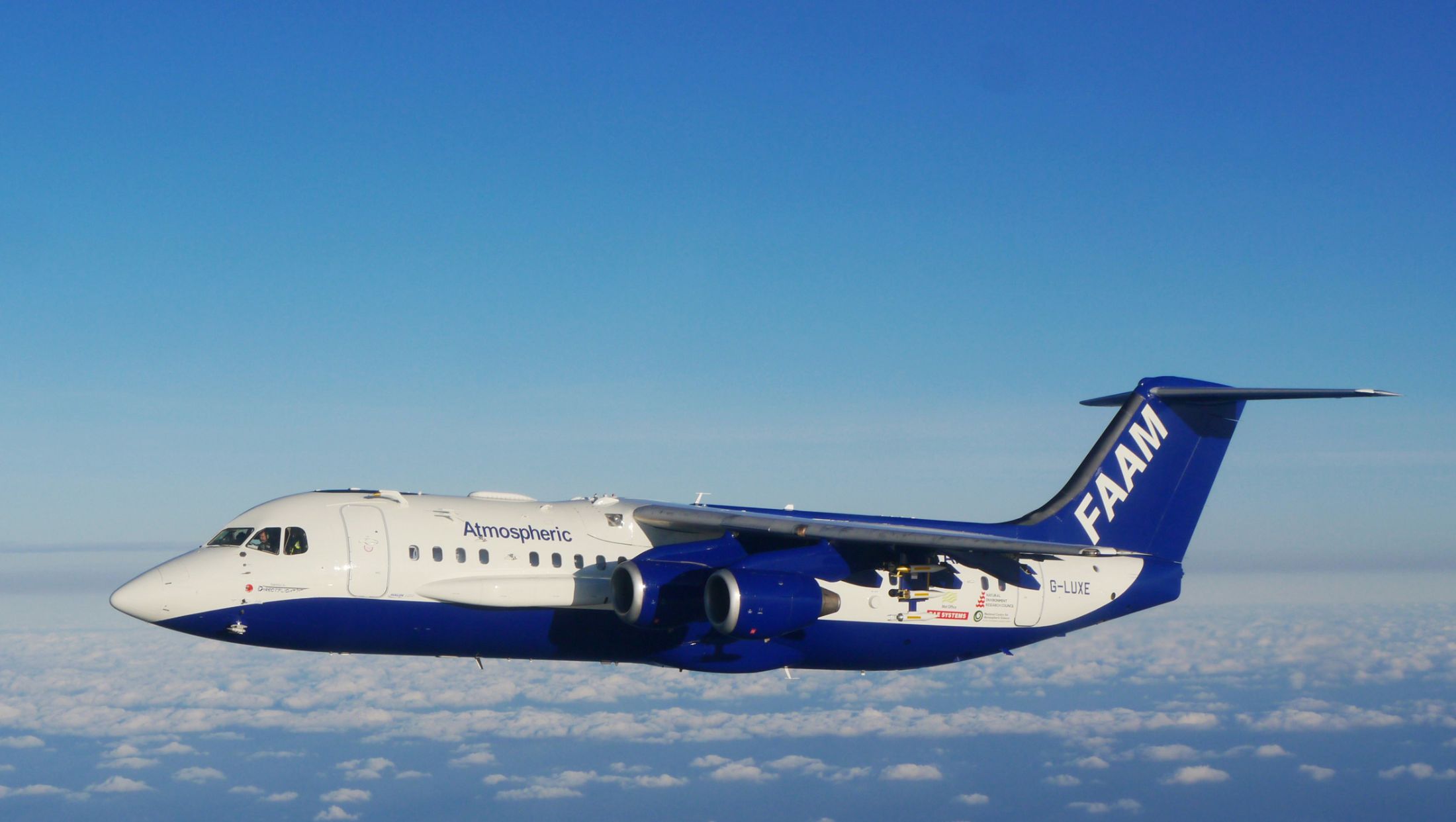
When British Aerospace began developing the BAe 146, few could have imagined that it would one day be tackling wildfires. The four-engined regional jet was designed for a far more familiar role, connecting smaller airports and carrying passengers on various popular short-haul routes.
But more than four decades after its first flight, it has found an entirely different purpose, taking on some of the most demanding flying conditions in aviation.
The story of the BAe 146 actually begins in the early 1970s, when Hawker-Siddeley started work on what was then known as the HS-146. The project was put on ice following the 1973 oil crisis, but it wasn’t forgotten.
After Hawker-Siddeley became part of British Aerospace, development got back underway. The prototype finally took to the skies on 3 September 1981, and the aircraft soon picked up the nickname ‘Whisperjet’, thanks to its remarkably low noise levels.
The BAe 146’s journey from Hatfield to the world’s airports
The first aircraft were built at Hatfield in Hertfordshire, with production later moving to Woodford in Cheshire. The BAe 146 went on to become a familiar sight at airports around the world, particularly those where its ability to operate from short runways and make steep approaches gave it an advantage.
Its four engines, mounted beneath a high wing, made for a rather unusual-looking regional jet, but that distinctive layout would eventually prove to be one of its biggest assets.
Why the BAe 146 was suited to aerial firefighting
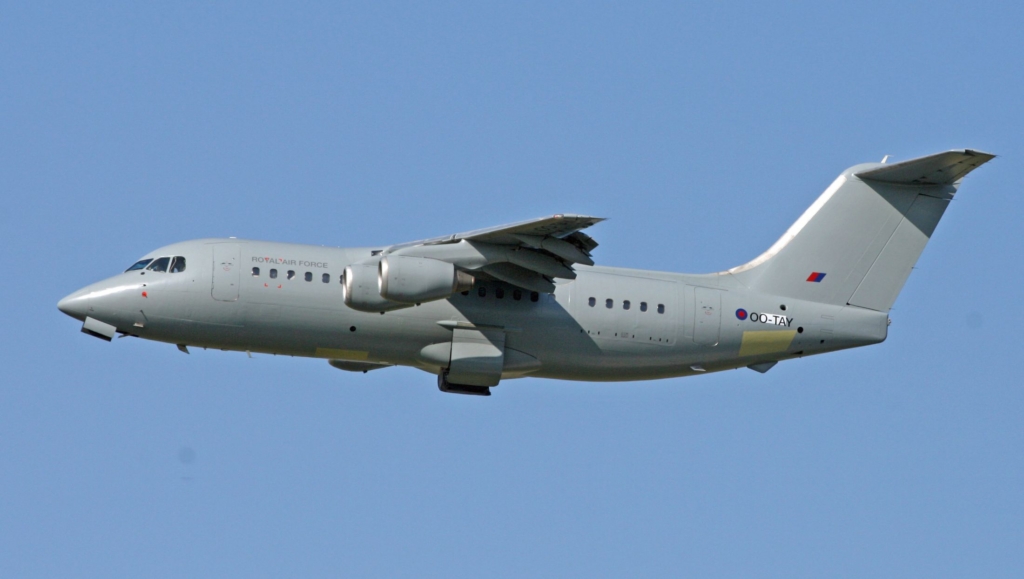
Fast forward to the early 2000s, and the BAe 146 was beginning to disappear from airline fleets, replaced by newer, more fuel-efficient regional jets and turboprops. However, while its airline career was winding down, operators in North America were facing a problem of their own.
Their aerial firefighting fleets included ageing piston-engined aircraft such as the Douglas DC-6, Consolidated Privateer and Lockheed Neptune, and suitable replacements were becoming increasingly difficult to find.
The BAe 146 turned out to be a rather good candidate. Its four jet engines gave it a cruising speed of around 380 knots, meaning it could reach a fire much faster than the older aircraft it was intended to replace. It could also operate from relatively short runways, an important consideration when trying to get as close as possible to a firefighting operation.
Its design offered some less obvious advantages, too. With the wings mounted high on the fuselage, the engines sit well clear of the ground, reducing the chances of dust, stones and other foreign object debris being sucked into the intakes.
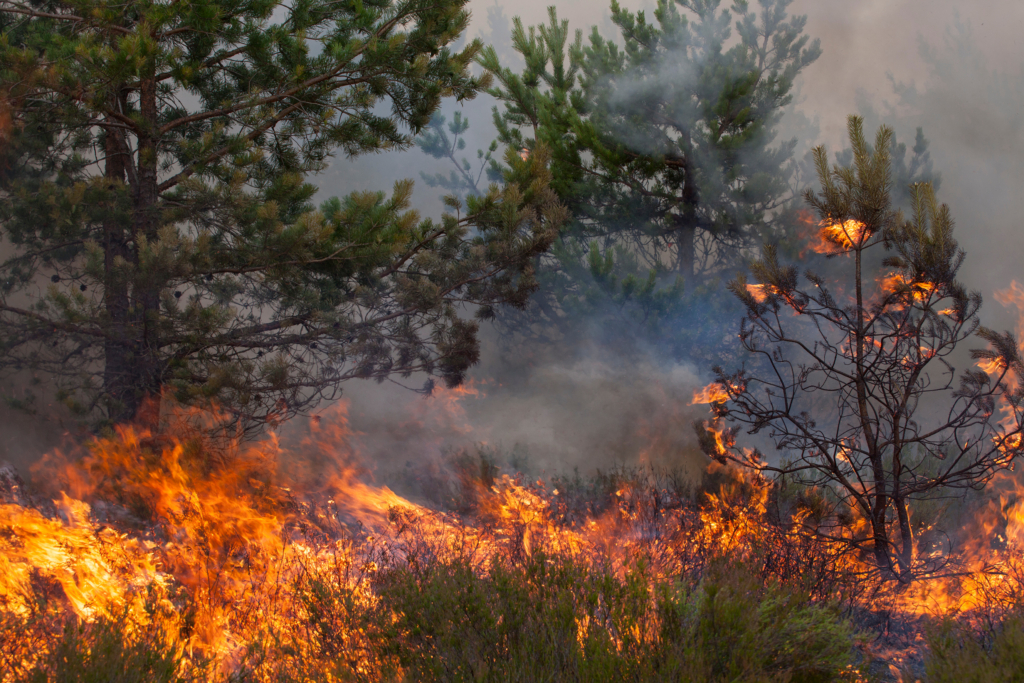
The sturdy airframe and excellent low-speed handling also made it well suited to the repeated manoeuvres involved in aerial firefighting.
Perhaps most importantly, the aircraft could cover the distance to a fire quickly before slowing down to make its drops. Retardant can be released at approximately 120 knots, giving pilots the control needed to place the load accurately where it is most effective.
Converting a passenger jet into an air tanker
Of course, turning a passenger airliner into a firefighting aircraft involves rather more than taking out the seats and filling the cabin with water. The interior has to be modified to accommodate a purpose-built tank system, typically capable of carrying around 3,000 US gallons of water or fire retardant.
A specialised system allows pilots to control exactly where the fire retardant is dropped, helping them target specific areas around a fire. Quick turnaround times are important, too, and the aircraft can be refilled in as little as eight minutes before heading back out to tackle the fire.
BAe 146 firefighting conversions enter service
The idea was put to the test during experimental flight trials in Nevada in September 2004. The results helped pave the way for dedicated tanker conversions, attracting operators including Air Spray, Minden Air, Neptune Aviation and Canada’s Conair. The first converted aircraft entered firefighting service in 2009.
Since then, the BAe 146 and its Avro RJ85 derivative have become established members of the North American aerial firefighting fleet, giving the aircraft a second career that its original designers could hardly have anticipated.
A new chapter for a British aviation classic
It’s quite a transformation for an aircraft that was originally designed to carry passengers between regional airports. But when you look at what made the BAe 146 such a good airliner, it’s easy to see why it has adapted so well to firefighting.
Its ability to use short runways, strong airframe, four engines and excellent handling have all proved just as useful when tackling wildfires.
Nowadays, the BAe 146 has swapped its passenger duties for a much more demanding job, helping firefighting crews tackle some of the world’s most destructive wildfires. It’s certainly a very different career for an aircraft that started life as one of the quietest jets in the sky.
Sign up for our newsletter and get our latest content in your inbox.
Similar Reads



Sign up for our newsletter. Select all sectors relevant to you.
Related