EasyJet completes APU-ZERO Project

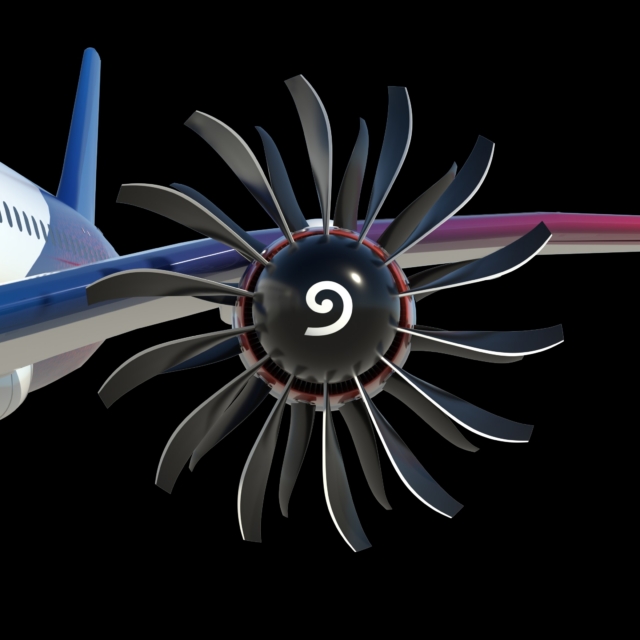
EasyJet's APU-ZERO Project saw the airline turn off the Auxiliary Power Unit (APU) - a gas turbine engine located at the aircraft's tail section which provides electrical power and air conditioning when turnarounds are in process - and replace it with a Pre-Conditioning Air Unit (PCA) which uses Fixed Electric Ground Power (FEGP) from the airport to provide heating, cooling air and power to a stationary aircraft’s cabin.


Image courtesy easyJet

The trial, conducted in collaboration with TCR, PCA manufacturer Guinault, and handler organisation Menzies Aviation, tested the performance of the PCA units alongside the installed reporting methods. This ensured a consistent cabin temperature, enhanced crew and passenger comfort and provided clear insights into turnaround performance.

Following the trial’s success, the mobile PCA solution will be gradually rolled out for use in easyJet’s operations at Milan Malpensa, with full implementation expected by May. EasyJet estimates the rollout will save ~1,150 tonnes of fuel annually for airline operations at Milan Malpensa Airport, equivalent to ~3,600 tonnes of CO2.*

The proof of concept, tested in September 2024, allows easyJet aircraft to switch off its Auxiliary Power Units – a gas turbine located at the tail of the plane.

The APU, one of many essential and intricate parts of a plane not only provides electric power and air conditioning to the aircraft during the turnaround process but also helps to start the engines when the aircraft is taxiing and preparing for take off.

However, when stationary during turnaround, APUs use a considerable amount of fuel which contributes to both noise and carbon emissions on the apron.

To solve this challenge and create a clean and quieter environment on the ground for both staff and passengers – easyJet and its partners TCR, PCA manufacturer Guinault and ground-handling partner Menzies, with the full cooperation of SEA Milan Airports, traded in the APU for electric and hybrid Pre-Conditioning Air Units.

PCAs, a mobile Ground Support Equipment solution connects to the airport’s Fixed Electrical Ground Power (FEGP) via the gate, instantly cutting down the noise and fuel burn that came with its predecessor while simultaneously providing filtered and conditioned air to passengers and crew during the boarding and deboarding process.

Following the trial on 57 aircraft operating out of and into Milan Malpensa’s Terminal 2, which is fully operated by easyJet, the airline saw a reduction in fuel use and carbon emissions. The airline estimates it’ll make an annual fuel saving of 1,115 tonnes – equivalent to 3,636 tonnes of Co2.

Speaking on the initiative, Lahiru Ranasinghe, Director of Sustainability at easyJet, said: “At easyJet we take a holistic approach to reducing our impact in the air and on the ground. This trial, part of our operational efficiencies workstream, resulted in fuel and emissions savings and a reduction in noise, without affecting our operation. This is yet another small but important step that contributes to our broader decarbonisation journey and is an excellent example of an initiative that provides both environmental and business benefits.”

“Following this successful proof of concept with our partners TCR, Guinault and Menzies we hope to replicate this model and deploy this initiative to many other bases that we operate in across our network.”

Katy Reid, Head of Sustainability & Corporate Responsibility, at Menzies Aviation added: “It’s fantastic to see this permanent switch to electric-powered Pre-Conditioning Air Units at Milan Malpensa Airport. AGS, Menzies Aviation’s partner at Milan Malpensa, has done us proud once again for adapting to new processes and equipment to deliver seamless operations for easyJet on the ground.

“This also highlights the strength of collaboration between airlines, airports and aviation services to reduce emissions from ground operations during aircraft turns and what can be achieved when partners support each other on their journey to meeting our aligned sustainability goals. The AGS and Menzies electric first approach has resulted in 81% of our motorised GSE fleet being electric at Malpensa Airport."

Kristof Philips, CEO of Airport Solutions at TCR, said: “The Collaboration between key stakeholders – Airbus, Guinault, easyJet and Menzies has enabled us to develop an integrated solution for actively managing APU usage on the ground.

“Witnessing the substantial reduction in APU runtime not only highlights carbon footprint reductions achieved but also considerable cost savings while supporting our customers in their sustainability journey."

In total, easyJet will be deploying 16 PCA units at Milan Malpensa with six units being added this month and another six in April, while the four remaining units will be added in May.

Since launching its roadmap to decarbonise its operations in 2022, easyJet continues to invest in several operational efficiencies to help lower its impact in both the air and the ground. Just recently easyJet achieved its best-ever per-passenger carbon intensity for 2024 – a 5.6% improvement versus the Net Zero baseline of 2019.

Related

Hexagon and Red Bull look beyond engineering degrees to find manufacturing’s future talent
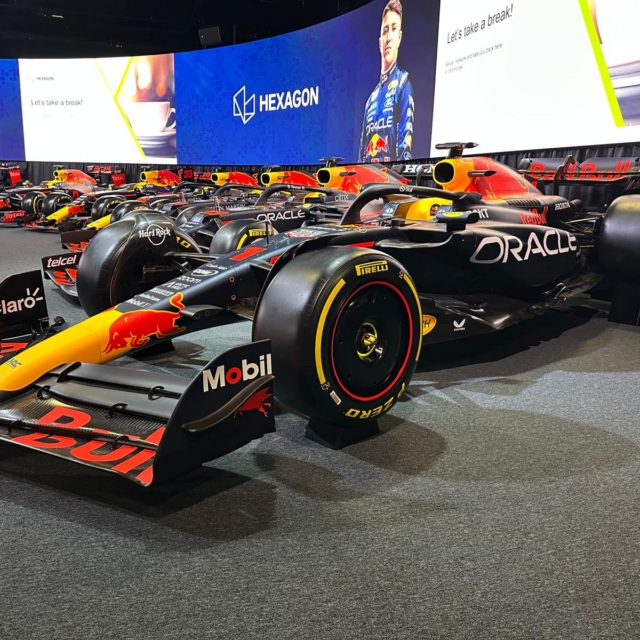
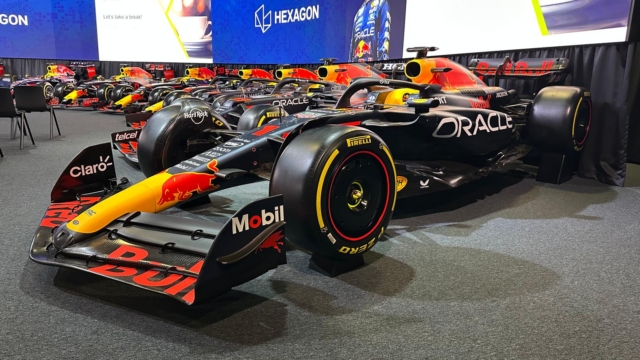
Formula 1 car at Red Bull's MK7 campus
Hexagon and Red Bull look beyond engineering degrees to find manufacturing’s future talent
At Red Bull’s Milton Keynes campus, Hexagon brought students and employers together to explore how interests in gaming, data and problem-solving could become a route into manufacturing — and what industry needs to do to open those doors.
Birmingham’s Brandauer continues expansion following MBO
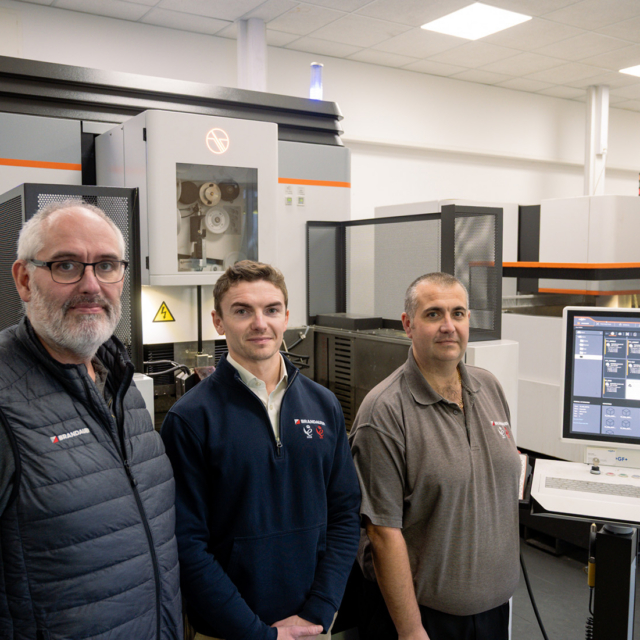
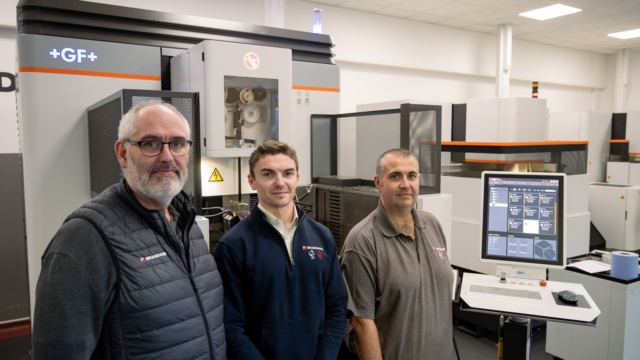
Rowan Crozier, Stuart Berry and Harry Champman
Birmingham’s Brandauer continues expansion following MBO
New contract wins across Europe and the US have seen Brandauer mark the first anniversary of its management buy-out with record £10 million sales for the first time in its 164-year history, underpinning its ambitious expansion plans.
Thompson Aero Seating completes inspection of China Southern Airlines’ A350-900 Business Class
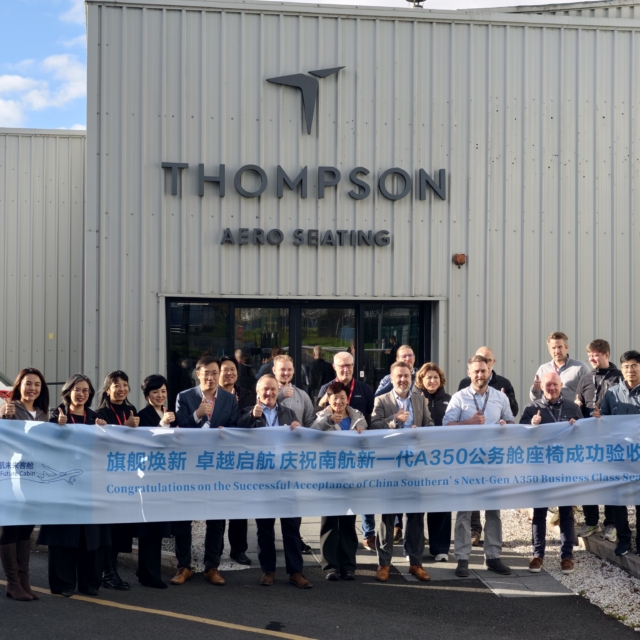
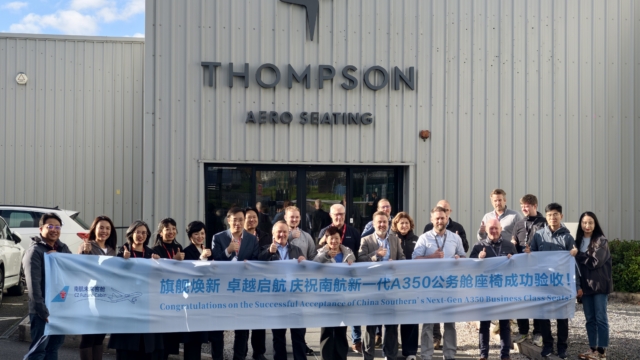
Thompson Aero Seating group photo
Thompson Aero Seating completes inspection of China Southern Airlines’ A350-900 Business Class
Northern Ireland based Thompson Aero Seating has completed the First Article Inspection (FAI) for the new Business Class seating, cabin monuments and branding panel system of China Southern Airlines' Airbus A350-900.
Aerospace Member News

19 Nov 2026

Roke appoints Chris Edwards as its first ever Chief Product Officer
Chris Edwards
Roke appoints Chris Edwards as its first ever Chief Product Officer
As part of its plans to drive product-led growth, Roke has appointed Chris Edwards as its first Chief Product Officer (CPO), to focus on transforming the company's intellectual property into deployable frontline capabilities at pace.
Defence Member News

19 Nov 2026

BAE Systems launches XTS Tactical solutions suite
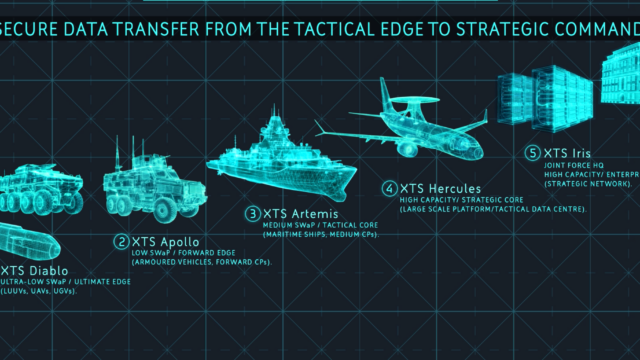
XTS ecosystem
BAE Systems launches XTS Tactical solutions suite
A multidomain solution has been launched by BAE Systems to protect sensitive intelligence data in high threat environments, being sent across networks operating at different security levels.
Defence Member News

19 Nov 2026

UK pledges 1,000-plus strike drones and two UK-built fast attack boats for Ukraine
Callen Lenz Nyan drone launching from Royal Navy ship
UK pledges 1,000-plus strike drones and two UK-built fast attack boats for Ukraine
More than £208 million of the drone funding is set to be spent in the UK, while Norway will meet half the cost of the vessels that will help protect Ukraine’s Black Sea exports.
Defence

19 Nov 2026

Hexagon and Red Bull look beyond engineering degrees to find manufacturing’s future talent
Formula 1 car at Red Bull's MK7 campus
Hexagon and Red Bull look beyond engineering degrees to find manufacturing’s future talent
At Red Bull’s Milton Keynes campus, Hexagon brought students and employers together to explore how interests in gaming, data and problem-solving could become a route into manufacturing — and what industry needs to do to open those doors.
University of Surrey develops electronic eye to monitor solar storms
HEPI prototype ‘electronic eye’ sensor
University of Surrey develops electronic eye to monitor solar storms
Under a £400,000 contract with the European Space Agency (ESA) and the UK Space Agency (UKSA), a team of researchers at the University of Surrey will develop an ultra-compact monitor to reveal the effects of radiation from solar storms on space infrastructure, aircraft and terrestrial systems like satellites.
Aerospace Space

18 Nov 2026

BAE Systems selected as NASA PRIMA partner
NASA’s PRIMA far-infrared space observatory, built on BAE Systems’ Evolve+ platform.
BAE Systems selected as NASA PRIMA partner
Alongside a number of international space industry providers, BAE Systems will support NASA’s PRIMA mission to survey the history and evolution of the universe and bridge current scientific gaps.
Member News Space

18 Nov 2026

Hexagon and Red Bull look beyond engineering degrees to find manufacturing’s future talent
Formula 1 car at Red Bull's MK7 campus
Hexagon and Red Bull look beyond engineering degrees to find manufacturing’s future talent
At Red Bull’s Milton Keynes campus, Hexagon brought students and employers together to explore how interests in gaming, data and problem-solving could become a route into manufacturing — and what industry needs to do to open those doors.
Expert shares what SMEs should do in the first two hours of an energy or cyber disruption
Server racks creating data center corridor 3d
Expert shares what SMEs should do in the first two hours of an energy or cyber disruption
Cyber attacks, grid failures and rising electricity demand are creating new business risks. Dr Phil Wu explains the three actions SMEs should take in the first two hours of a disruption.
Security

19 Nov 2026

UK seeks emergency Border Force cutters as ageing fleet faces service gap
Babcock Type 31
UK seeks emergency Border Force cutters as ageing fleet faces service gap
The UK Home Office is seeking two or three interim Border Force cutters to prevent a "critical capability gap" as its ageing fleet faces mounting maintenance issues ahead of permanent replacements arriving in 2032.
Defence Security

19 Nov 2026