University of Surrey develops electronic eye to monitor solar storms
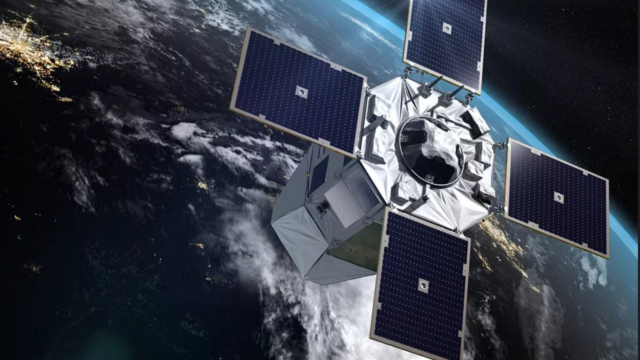
Under a £400,000 contract with the European Space Agency (ESA) and the UK Space Agency (UKSA), a team of researchers at the University of Surrey will develop an ultra-compact monitor to reveal the effects of radiation from solar storms on space infrastructure, aircraft and terrestrial systems like satellites.

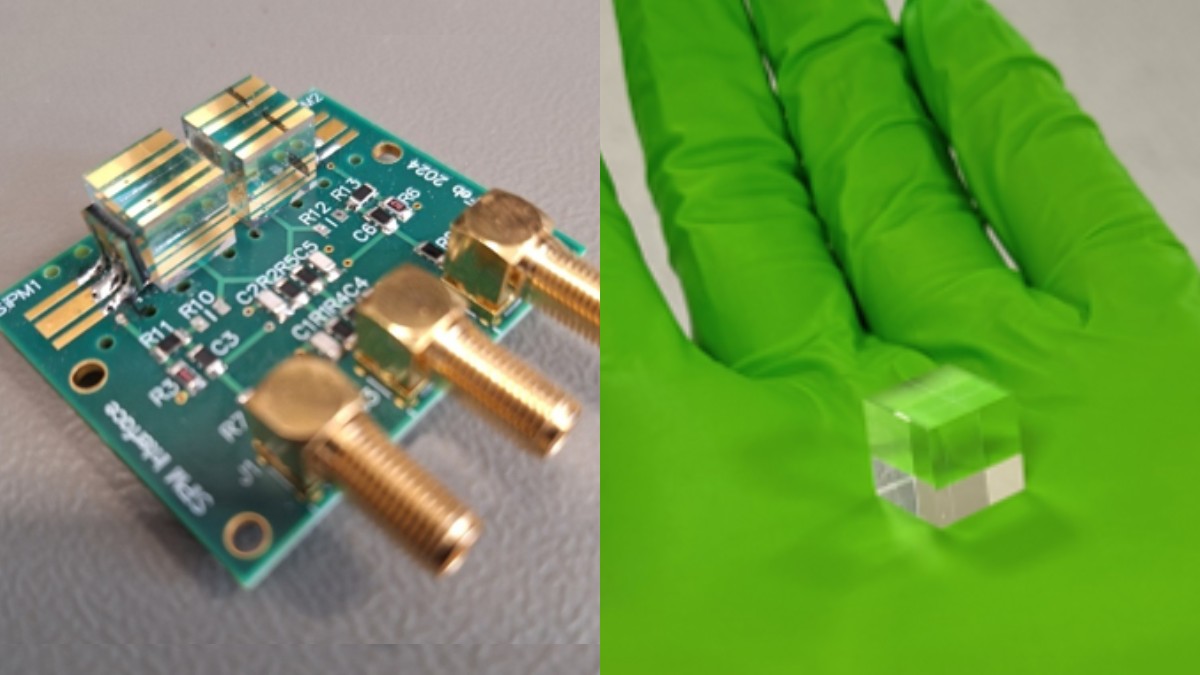
HEPI prototype ‘electronic eye’ sensor
Above: HEPI prototype ‘electronic eye’ sensor. Photo: Surrey Space Centre, University of Surrey

Researchers at the University of Surrey have secured a £400,000 contract with the European Space Agency (ESA) and UKSA to develop their High-Energy Particle Instrument (HEPI) into a pre-flight evaluation model, moving the technology from laboratory testing towards future space missions.

HEPI is an ultra-compact monitor designed to better characterise dangerous radiation emitted from solar storms, helping researchers better understand the threats posed to space infrastructure, aircraft and terrestrial systems such as satellites.

The instrument works by measuring tiny flashes of light produced when electrically charged particles travel faster than light can in a transparent material like glass. This is the same principle that causes astronauts to see occasional flashes when they close their eyes.

HEPI will detect the highest-energy particles emitted during solar storms, helping researchers better understand the radiation hazards created by severe space weather events. Due to their energy, these particles easily travel right though satellites and can even cause radiation increases to aircraft flying low in the Earth’s atmosphere.

Why gaining a greater understanding of the risks posed by solar storms is so important

Professor Keith Ryden, who leads the Space Environment and Protection Group at the Surrey Space Centre, University of Surrey, said: “Solar storms can pose a significant risk to satellites, aircraft and even critical infrastructure on the ground, while increasing radiation exposure for astronauts and aviation crews.

“HEPI will allow us to measure the high-energy radiation emitted during solar storms, thus improving our understanding of severe space weather while strengthening the resilience of technologies that modern society increasingly relies upon. It looks very promising in ground testing, so we are delighted to move ahead now and prepare for the first flight test.”

HEPI’s compact design makes it suitable for CubeSats and other small satellites, opening the possibility of future networks of sensors that could provide more detailed monitoring of hazardous space weather.

For ESA, Dr Giovanni Santin, the ESA technical manager for HEPI at ESA, said: “Thanks to the advanced technology used in detecting the Cerenkov signal, HEPI will provide very clean data in the high energy domain where traditional instruments are struggling and with very small size and mass it will be an ideal complement to the current space weather monitoring”

The new ESA contract, which uses funds from the UKSA’s General Support and Technology Programme (GSTP), will build on an early-stage HEPI prototyping activity which yielded good results in high energy beam tests.

Dr Melanie Heil, Space Weather Space Segment Coordinator at ESA, said: “By measuring the highest energy component of the solar particle spectrum, HEPI will be covering a crucial gap in our current ability to precisely monitor and warn of the impact of solar energetic particle storms on our systems.”

Building on space weather studies to examine radiation’s impact on satellites, aviation and ground-based systems

The project builds on Surrey’s internationally recognised expertise in space weather, radiation monitoring and space instrumentation.

The research team has recently led studies examining the impacts of extreme solar storms on satellites, aviation and ground-based systems, helping to improve understanding of one of the most significant natural hazards facing modern technological infrastructure.

Helen Roberts, Senior Programme Manager at UKSA, said: “We are proud to support innovative UK-developed capabilities that help address the challenges of operating in increasingly complex space environments through UK’s General Support Technology Programme.”

Related

Global commercial aircraft orders surge 88% in Q3 2026, says new ADS report
British Airways A319 taxis at London Heathrow, UK, 17 November 2010
Global commercial aircraft orders surge 88% in Q3 2026, says new ADS report
Global commercial aircraft orders surge as record demand creates major opportunities and production challenges for UK aerospace manufacturers.
Aerospace

17 Nov 2026

Farnborough Airshow 2028 reaches 93% capacity as earliest-ever sell-out looms
Farnborough International Airshow
Farnborough Airshow 2028 reaches 93% capacity as earliest-ever sell-out looms
With 93% of exhibition and chalet space already secured, the Farnborough International Airshow 2028 is heading towards a historic early sell-out.
Aerospace Defence Events

17 Nov 2026

First Light Fusion and STFC’s CLF partner on FLARE fast ignition
First Light Fusion team at STFC’s Central Laser Facility (CLF)
First Light Fusion and STFC’s CLF partner on FLARE fast ignition
A new collaboration between First Light Fusion and STFC’s Central Laser Facility (CLF) will develop the rapid heating stage of FLARE, advancing its progress towards low cost, high gain inertial fusion.
Royal Navy to deploy Arondite’s Cobalt AI software across UK Commando Force
Image: MOD Crown Copyright/LPhot Hutchins
Royal Navy to deploy Arondite’s Cobalt AI software across UK Commando Force
The Royal Navy has awarded Arondite a multi-million pound contract to equip the UK Commando Force with AI-enabled battlefield decision-making software.
Defence

18 Nov 2026

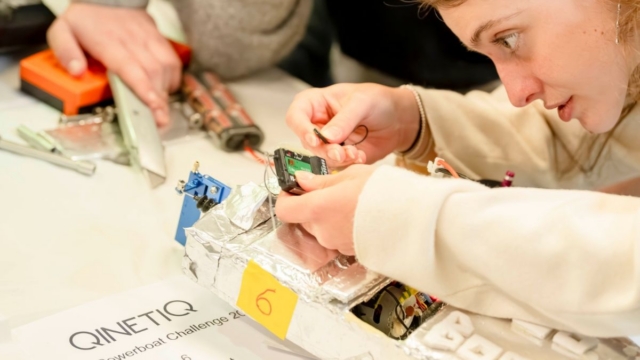
UK defence engineers showcase innovation at QinetiQ Powerboat Challenge
Teams competing in QinetiQ's Industry Powerboat Challenge 2026
UK defence engineers showcase innovation at QinetiQ Powerboat Challenge
10 industry teams tested their engineering skills at QintetiQ’s Industry Powerboat Challenge, highlighting innovation and the next generation of maritime talent.
Defence Member News

18 Nov 2026

HM King Charles opens new National Cyber Force HQ
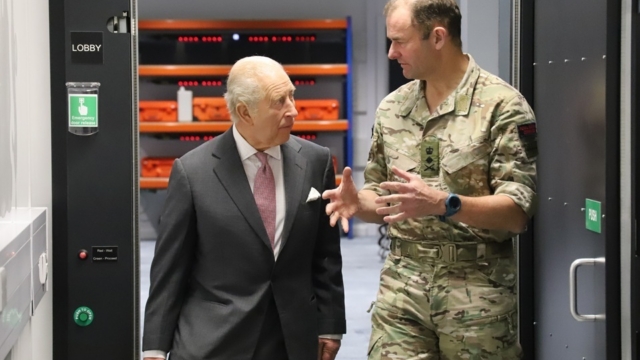
HM King Charles III opens new NCF HQ at Ribble House, Samlesbury, Lancashire.
HM King Charles opens new National Cyber Force HQ
The new headquarters of the National Cyber Force (NCF) at Ribble House in Lancashire has been officially opened by HM King Charles III, where he gained insights into the vital role of the NCF in strengthening the UK’s cyber capability.
Defence Security

17 Nov 2026

BAE Systems selected as NASA PRIMA partner
NASA’s PRIMA far-infrared space observatory, built on BAE Systems’ Evolve+ platform.
BAE Systems selected as NASA PRIMA partner
Alongside a number of international space industry providers, BAE Systems will support NASA’s PRIMA mission to survey the history and evolution of the universe and bridge current scientific gaps.
Member News Space

18 Nov 2026

First Light Fusion and STFC’s CLF partner on FLARE fast ignition
First Light Fusion team at STFC’s Central Laser Facility (CLF)
First Light Fusion and STFC’s CLF partner on FLARE fast ignition
A new collaboration between First Light Fusion and STFC’s Central Laser Facility (CLF) will develop the rapid heating stage of FLARE, advancing its progress towards low cost, high gain inertial fusion.
Airbus and Thales win €1.5bn IRIS military Earth observation satellites contract
The two IRIS optical Earth observation satellites are intended to progressively replace the three CSO satellites currently operating within the MUSIS system.
Airbus and Thales win €1.5bn IRIS military Earth observation satellites contract
France has selected Airbus and Thales Alenia Space to deliver its next-generation IRIS military satellites, with the programme remaining open to allies.
Defence Member News Space

16 Nov 2026

HM King Charles opens new National Cyber Force HQ
HM King Charles III opens new NCF HQ at Ribble House, Samlesbury, Lancashire.
HM King Charles opens new National Cyber Force HQ
The new headquarters of the National Cyber Force (NCF) at Ribble House in Lancashire has been officially opened by HM King Charles III, where he gained insights into the vital role of the NCF in strengthening the UK’s cyber capability.
Defence Security

17 Nov 2026

Getlink plans drive-through biometric border checks at Eurotunnel terminals
Image: Getlink Group
Getlink plans drive-through biometric border checks at Eurotunnel terminals
Getlink plans camera-supervised biometric passport and fingerprint checks at Folkestone and Calais to prevent disruption as the EU’s new border system arrives.
Security

17 Nov 2026

UK power outage: How businesses can prepare for 72 hours without electricity
Electricity pylons near the River Great Ouse
UK power outage: How businesses can prepare for 72 hours without electricity
Government contingency planning warns that a prolonged UK power outage could disrupt card payments, communications, transport, fuel supplies and essential services. Here's how businesses can prepare for a 72-hour blackout and maintain operations.
Security

17 Nov 2026