UK power outage: How businesses can prepare for 72 hours without electricity

Government contingency planning warns that a prolonged UK power outage could disrupt card payments, communications, transport, fuel supplies and essential services. Here's how businesses can prepare for a 72-hour blackout and maintain operations.

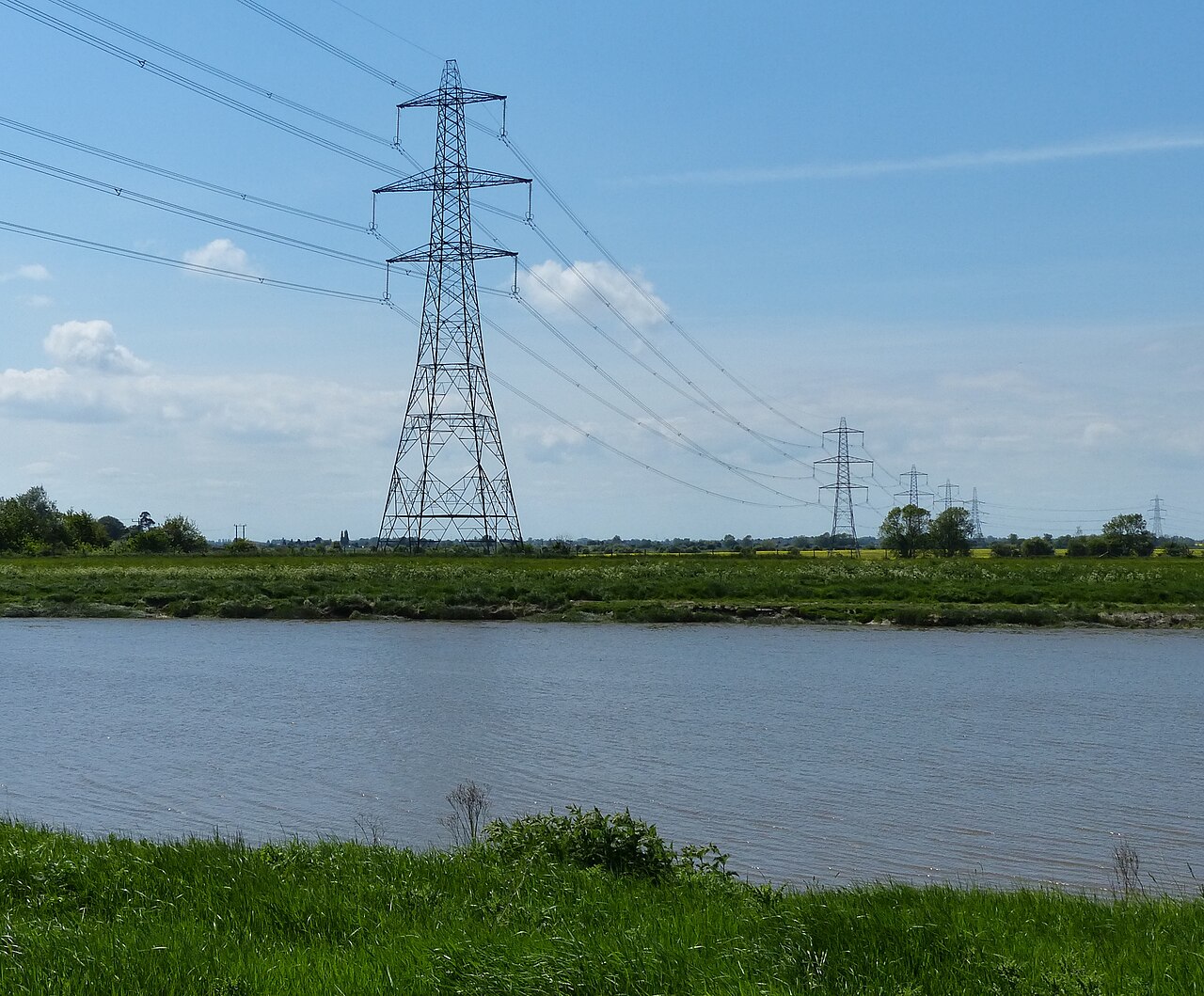
Electricity pylons near the River Great Ouse
Photo: Mat Fascione | Wikimedia Commons

In case of a prolonged power cut, UK businesses could lose access to card payments, phones, internet services and production equipment. Government guidance sets out how businesses can prepare for power loss and keep essential operations running.

A national blackout is unlikely, according to the government’s 2026 National Risk Register. However, its worst-case planning scenario shows why businesses need to look beyond their own electricity supply in their resilience planning.

Advance has previously reported on the BBC’s Black Sky emergency plans, which is a useful example of how one organisation is preparing for a major power failure.

What could happen in the first 72 hours of a UK power outage?

The National Risk Register’s national power outage scenario assumes a sudden loss of mains electricity across the country. Homes and businesses without their own backup supply would lose power. The effects of a major power outage could spread to telecoms, water and sewage services, fuel distribution, transport and financial services.

The government estimates that around 60% of electricity demand could be restored within two days. The remaining supply would return in stages. Some customers could face planned disconnections on days five and six while the network is stabilised. Full, stable restoration could take more than seven days.

That means a business with power restored after 48 hours could still face problems with payments, communications or deliveries.

Could your business operate without power?

A shop may have lighting but still be unable to take card payments. Offices could lose access to cloud systems or customer records if broadband fails. Factories may have to stop production and check equipment before restarting it.

close up of someone programming computers
Photo: Adobe Stock

The disruption could extend to suppliers. Warehouses, transport firms and fuel stations may also be without power, delaying deliveries even after electricity returns to a business’s premises.

Business contingency plans should account for these other potential disruptions. 

What does the government recommend?

The Cabinet Office’s guide to the National Risk Register advises businesses to check backup generators at critical sites and review supply chains that depend on a continuous electricity supply.

The government’s business continuity guide, Expecting the unexpected, recommends preparing for disruption by identifying essential activities, assigning responsibilities and drafting a plan to resume work.

The National Cyber Security Centre (NCSC) advises smaller organisations to back up important data, test that it can be recovered and keep essential plans and contact details accessible when normal systems are down.

Businesses should also check how long backup power will last. A generator needs fuel, safe installation and maintenance, and resilience plans should provide for these.

Government business continuity guidance recommends planning for alternative premises or working from home. Businesses should also check that staff can access the equipment, records and IT systems they need from those locations.

Ealing Council recommends keeping secure copies of important records off-site, agreeing how to contact staff and suppliers outside working hours, and identifying alternative equipment or premises. It also advises businesses to prepare an emergency pack with the information staff would need to manage a disruption.

Five questions every SME should ask

1. Power: Which equipment must stay on, and how long will the backup supply last?

2. Communications: How will staff and customers receive updates if phones or broadband fail?

3. Information: Can staff reach essential contacts, records and instructions without internet access?

4. Suppliers: Which services or deliveries might stop, and is there another option?

5. Recovery: Who decides when to close, what needs checking before reopening and which operations restart first?

Businesses can use a 72-hour power outage exercise to find gaps in their plans. The aim is to protect staff, keep essential work going where possible, and ensure operations can restart safely.

Related

First Light Fusion and STFC’s CLF partner on FLARE fast ignition
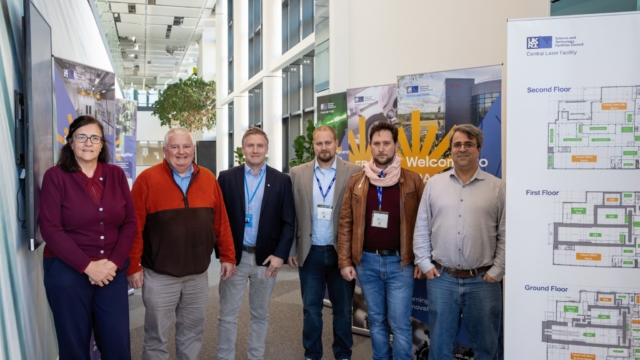
First Light Fusion team at STFC’s Central Laser Facility (CLF)
First Light Fusion and STFC’s CLF partner on FLARE fast ignition
A new collaboration between First Light Fusion and STFC’s Central Laser Facility (CLF) will develop the rapid heating stage of FLARE, advancing its progress towards low cost, high gain inertial fusion.
The Vickers VC10: The British airliner built for a different kind of flying
Vickers VC10
The Vickers VC10: The British airliner built for a different kind of flying
The VC10 remains a reminder of a time when British engineering took a different path from the competition and set a new level in design and comfort.
Aerospace

15 Nov 2026

Why the UK has so few domestic flights outside London
With fewer regional routes, strong competition from rail and airlines favouring more profitable international services, flying outside London has become increasingly difficult.
Aerospace

15 Nov 2026

Babcock and ST Engineering to develop new designs and maritime MRO
Babcock and ST Engineering sign MoU
Babcock and ST Engineering to develop new designs and maritime MRO
With greater integration of their design, engineering and shipbuilding capabilities, Babcock and ST Engineering are looking to pursue global market opportunities, from new build to through-life support.
Defence Member News

17 Nov 2026

BAE Systems develops ‘Ghost Radar’ that detects drones without giving away its position
BAE Systems 'ghost radar'
BAE Systems develops ‘Ghost Radar’ that detects drones without giving away its position
New passive radar technology developed in the UK uses TV and mobile phone signals to track drones, aircraft and airborne threats while remaining virtually invisible to adversaries.
Defence

17 Nov 2026

First Light Fusion and STFC’s CLF partner on FLARE fast ignition
First Light Fusion team at STFC’s Central Laser Facility (CLF)
First Light Fusion and STFC’s CLF partner on FLARE fast ignition
A new collaboration between First Light Fusion and STFC’s Central Laser Facility (CLF) will develop the rapid heating stage of FLARE, advancing its progress towards low cost, high gain inertial fusion.
First Light Fusion and STFC’s CLF partner on FLARE fast ignition
First Light Fusion team at STFC’s Central Laser Facility (CLF)
First Light Fusion and STFC’s CLF partner on FLARE fast ignition
A new collaboration between First Light Fusion and STFC’s Central Laser Facility (CLF) will develop the rapid heating stage of FLARE, advancing its progress towards low cost, high gain inertial fusion.
Airbus and Thales win €1.5bn IRIS military Earth observation satellites contract
The two IRIS optical Earth observation satellites are intended to progressively replace the three CSO satellites currently operating within the MUSIS system.
Airbus and Thales win €1.5bn IRIS military Earth observation satellites contract
France has selected Airbus and Thales Alenia Space to deliver its next-generation IRIS military satellites, with the programme remaining open to allies.
Defence Member News Space

16 Nov 2026

Construction begins on giant DUNE
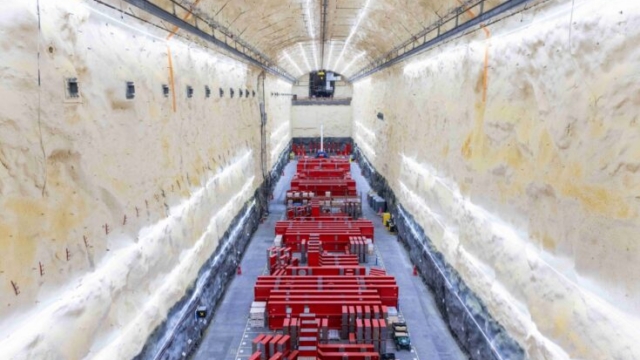
A portion of the 2,600 steel beams destined for DUNE's cryostats were transported nearly a mile underground and staged in the South Detector Cavern ahead of the installation.
Construction begins on giant DUNE
UK researchers are playing a pivotal role in the Deep Underground Neutrino Experiment (DUNE), which will investigate some of the mysteries of the Universe, including how the Universe evolved after the big bang and why it contains so much more matter than antimatter.
Space

16 Nov 2026

British Army reservists target replica Russian and Iranian attack drones in Finland exercise
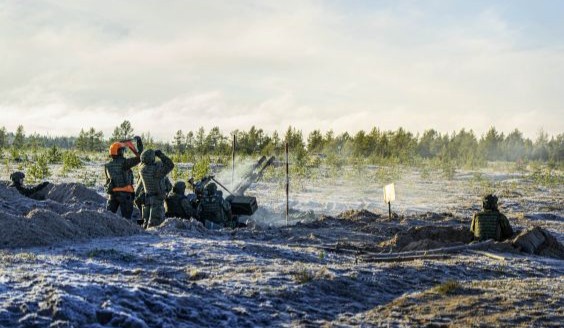
Live firing at Lohtaja during Exercise Mallet Strike 2/26.
British Army reservists target replica Russian and Iranian attack drones in Finland exercise
British Army reservists from 106 Regiment Royal Artillery are participating in NATO's Exercise Mallet Strike 2/26 in Finland, firing Starstreak and Martlet missiles at replicas of Russian and Iranian attack drones to test counter-drone capabilities in contested environments.
Defence Security

17 Nov 2026

UK dangerously underprepared for cyberattacks and major emergencies, Lords warn
Server farm programmers seeing hacking warning, working to secure systems from cyberattack accessing confidential data. Team of data center coworkers fighting virus during security breach, camera
UK dangerously underprepared for cyberattacks and major emergencies, Lords warn
A cross-party House of Lords committee has warned that the UK is dangerously underprepared for cyberattacks, hostile state threats, and cascading crises, calling for a dedicated resilience minister and urgent supply chain reforms.
Security

16 Nov 2026

UK flights impacted by US nationwide ground stop as knock-on effects continue
Heathrow Airport
UK flights impacted by US nationwide ground stop as knock-on effects continue
The US Transportation Secretary blamed ageing infrastructure and overloaded TDM routers for the nationwide FAA ground stop.
Aerospace Security

14 Nov 2026