BAE Systems develops ‘Ghost Radar’ that detects drones without giving away its position


As drone threats continue to challenge military bases, airports and critical national infrastructure, BAE Systems has revealed a new passive radar capability designed to detect and track targets without transmitting a signal of its own.
Dubbed ‘Ghost Radar’, BAE says the cost-effective technology turns everyday radio frequency emissions into a covert surveillance system capable of identifying airborne threats ranging from small drones to larger aircraft – while remaining hidden from adversaries.
The new technology is said to be up to ten times cheaper than many of the current passive radar options on the market.
Chris Shepherd, a product manager at BAE’s Digital Intelligence & Land business, said, “While people are sat at home watching TV, our new radar technology can use transmissions from TV and radio broadcasts without disturbance to keep crucial infrastructure such as power stations and air force bases safe from drone attacks.”

How does Ghost Radar work?
Traditional radar systems work by broadcasting radio waves and measuring the signals reflected back from a target. While highly effective, those transmissions can also alert adversaries to the radar’s location, making them vulnerable to detection or attack.
Ghost Radar takes a different approach. Instead of transmitting its own signal, it harnesses radio frequency emissions already present in the environment, from digital television broadcasts to mobile phone networks, and analyses how those signals are reflected by aircraft, drones and other objects.
In effect, the system uses existing broadcasts to illuminate the sky, allowing it to detect and track targets without revealing its own position.
The new system is designed to help protect critical infrastructure such as power plants and data centres. Shepherd said it allows police to protect Britons “far more cheaply and safely” than current passive radar systems.
The radar was originally developed for military use. However, it can also serve civilian demand, including at airports where active radar is often restricted. It can help monitor airports for drone threats without disrupting the airport’s electromagnetic activity.
It could offer armed forces a “boost” and allow soldiers to “monitor the battlefield undetected.”
Electronic emissions are one of the most revealing and dangerous aspects of modern war. The signal of a soldier operating a drone can be tracked, and the soldier targeted if the wrong equipment is used.

Meanwhile, radars are often at their most vulnerable when they turn on and start emitting. BAE explains, “Emitting a signal from a conventional radar can reveal its location to adversaries, passive radar removes that risk.”
The new passive radar gives armed forces a “real advantage” on the modern battlefield.
Using existing TV and mobile network signals
The new passive radar works by harnessing various existing transmitters in its environment, such as mobile networks and digital TV networks. It is small enough to be used on SUVs, including in urban environments.
These can be used to detect and track objects, allowing it to monitor airspace while remaining “entirely invisible in the radio frequency domain.”
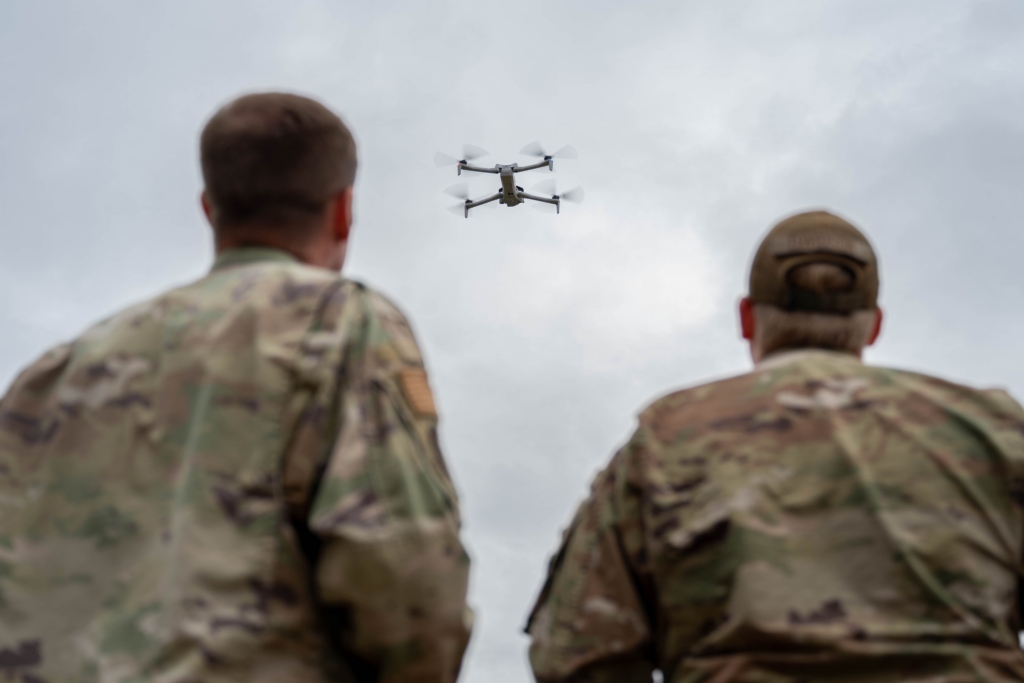
It is able to build a comprehensive 3D picture and track anything from small drones to larger aircraft. Information gathered on the targets includes target speed, heading, range, and altitude.
BAE states its new passive radar is scheduled to undergo live trials with law enforcement, defence, and critical infrastructure partners through 2027. Separately, BAE Systems has demonstrated its complete BATS counter-drone chain in Scotland.
Sign up for our newsletter and get our latest content in your inbox.
Similar Reads



Sign up for our newsletter. Select all sectors relevant to you.
Related