

GA-ASI introduces Wildfire UAS for civil and defence roles

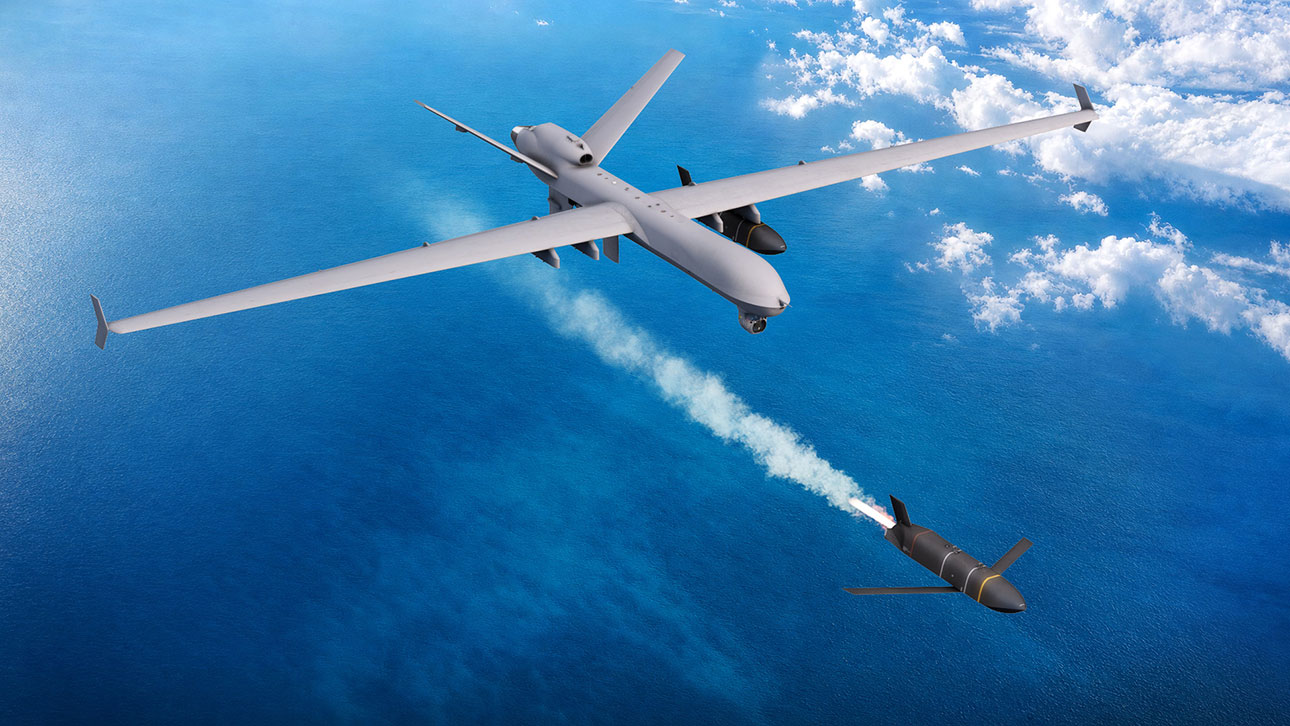
With what it calls a ground breaking Uncrewed Aircraft System (UAS), General Atomics Aeronautical Systems, Inc. (GA-ASI) has revealed its Wildfire UAS, a clean-sheet aircraft designed to maximise future investments in large uncrewed aircraft that incorporates lessons learned over decades of large-scale global UAS operations.
Wildfire draws upon more than 30 years of delivering more than 1,600 uncrewed aircraft, including the MQ-1B Predator, MQ-9A Reaper, MQ-9B SkyGuardian, MQ-20 Avenger and FQ-42A Collaborative Combat Aircraft. GA-ASI aircraft have amassed nearly 10 million total flight hours, mostly in combat and introduced many of the technologies and concepts now used around the world.
David R. Alexander President GA-ASI said: “This is exactly the right design for high-demand missions and cost-conscious customers. Our tailor-designed, attrition-tolerant Wildfire balances the high capability our aircraft are known for with huge flexibility and great scalability. There’s never been anything like it before.”
Why reimagined modularity and stronger hardpoints increase uncrewed aircraft capabilities
GA-ASI claims Wildfire is a new type of uncrewed aircraft, merging the best features of GA-ASI’s proven UAS with lower-cost components, tailored capabilities and reimagined modularity. For defence, this enables Wildfire to be fielded quickly in large numbers, take risk in kinetic battlefield roles and bring significant mass to the fight in ways that would have been prohibitive with other systems.
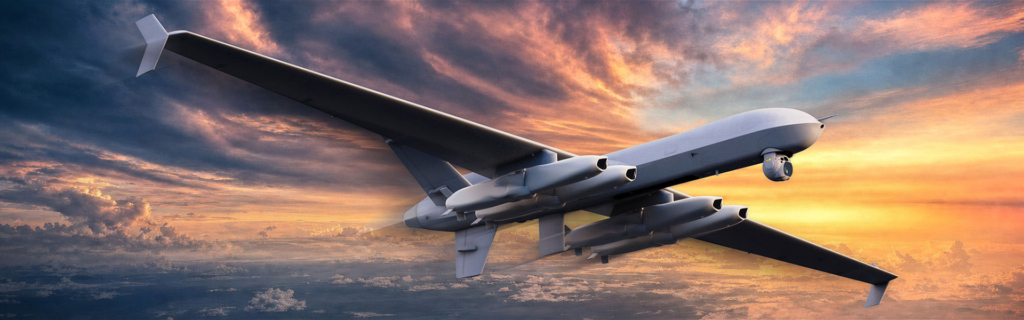
Photo: GA-ASI
In non-combat roles, Wildfire’s increased payload capacity and stronger hardpoints provide new options for heavy cargo delivery and other commercial activities.
“We’ve defined the top end of what medium-altitude, long-endurance uncrewed aircraft can do,” Alexander said. “Our MQ-9B is showing that it can do almost anything. Hunt for submarines, defend against drones, perform airborne early warning and many other missions and that won’t change. But Wildfire is different. It’s focused on core ISR, strike and similar roles. This is a high-volume, lower-cost airplane that does a few things really well.”
Wildfire will be highly autonomous and designed for collaborative operations on Day One, leveraging GA-ASI’s FQ-42A systems.
How advanced autonomous systems enable UAS to fly in formation
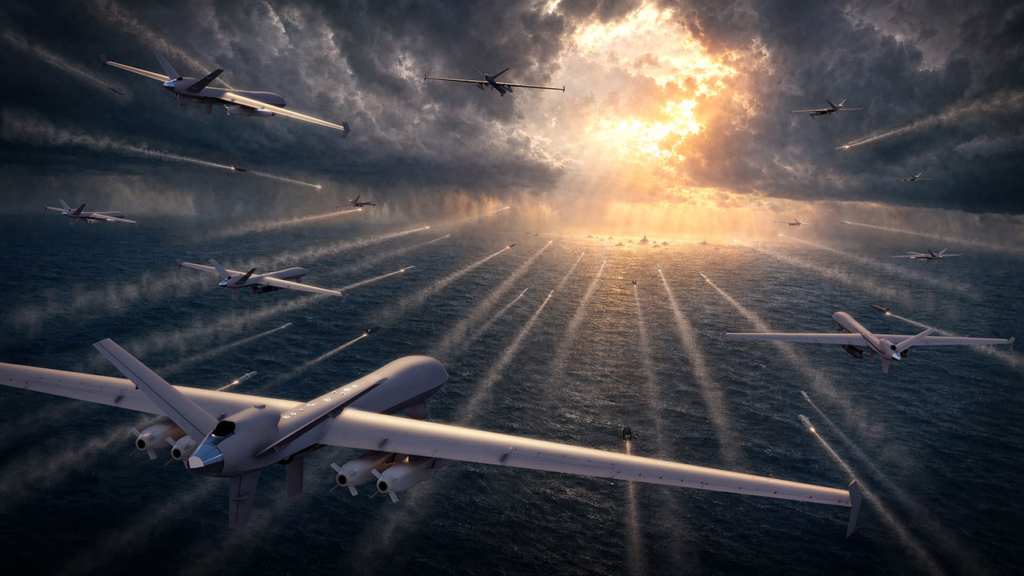
Photo: GA-ASI
GA-ASI has proposed Wildfire for the US Air Force’s Massed Modular Aircraft (MMA) competition within the Defense Innovation Unit (DIU), which aims to develop an alternative to the MQ-9A Reaper. Wildfire has been designed to meet or surpasses all requirements of that request, exceeding 8,000 nautical miles ferry range and capable of carrying two Long-Range Anti-Ship Missiles simultaneously for meaningful combat distance. Wildfire can also carry four Joint Strike Missiles simultaneously, or numerous other combinations of munitions, launched effects, sensors or other payloads.
Advanced autonomy provides for networked, collaborative combat control of dozens of Wildfires at once and the aircraft’s proliferated low-earth orbit satellite controls have already been proven on numerous GA-ASI aircraft flying today. GA-ASI says Wildfire can be delivered years earlier than the FY2031 timeline defined by DIU, producing more than twice as many aircraft in the same amount of time, using the company’s existing manufacturing footprint and network of suppliers, subcontractors and partners.
Sign up for our newsletter and get our latest content in your inbox.
Similar Reads