Northern Navies Initiative: Royal Navy and JEF allies move to deepen maritime integration

The Royal Navy and its JEF allies will deepen maritime integration, strengthen deterrence and improve collective responses to new and emerging threats in northern Europe as part of a historic new initiative.

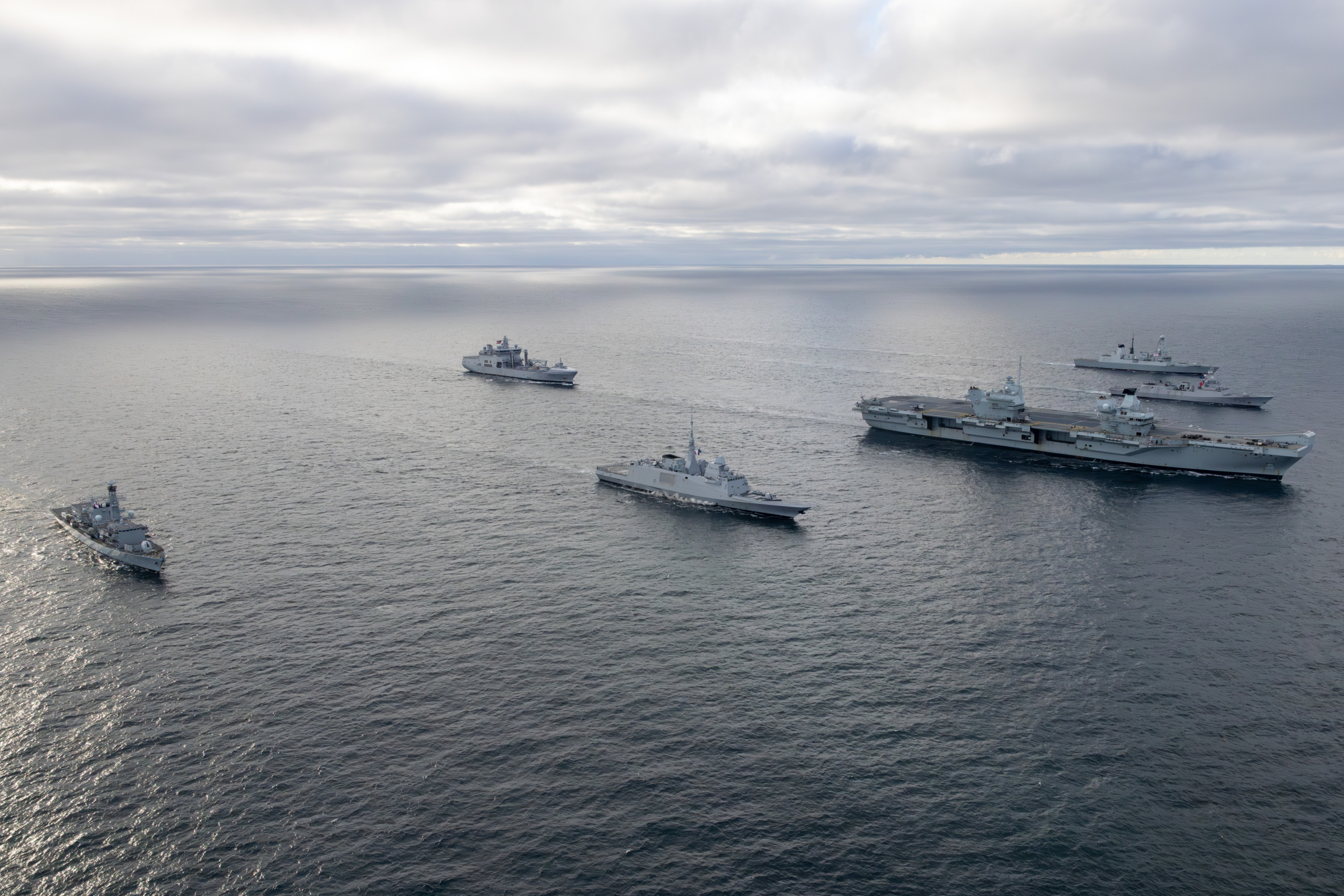
HMS Prince of Wales (R09) leads a formation of British, French and Norwegian warships during Exercise Neptune Strike 26-4 on 3 November 2026. Image: MOD Crown Copyright/AS1 Liam Ramsden
Photo: MOD Crown Copyright/AS1 Liam Ramsden

The Royal Navy and its nine Joint Expeditionary Force (JEF) allies have signed a landmark agreement to strengthen maritime security and collective deterrence across northern Europe, the North Atlantic and Baltic Sea.

The Northern Navies Initiative – which was signed by First Sea Lord General Sir Gwyn Jenkins aboard HMS Prince of Wales (R09) during the International Sea Power Conference 2026 (ISPC26) in Oslo, Norway, on 10 November – aims to bring the ten participating navies closer together operationally, creating a more integrated maritime force that is capable of rapidly responding to new, emerging threats.
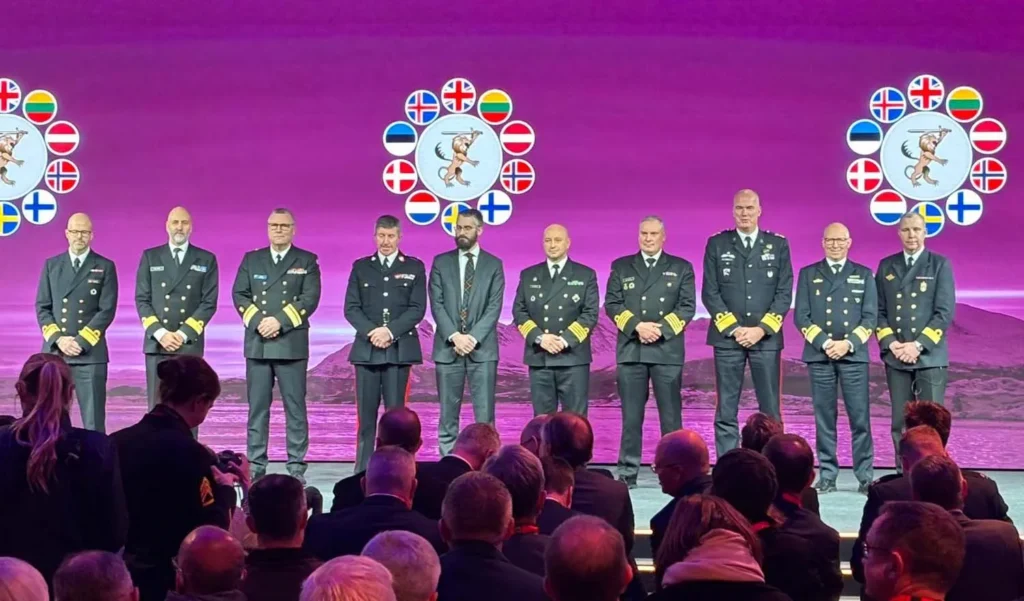
Image: MOD Crown Copyright/Royal Navy

The agreement represents a significant step in the UK’s efforts to reinforce European security alongside its northern European allies and partner nations, as geopolitical competition, hostile maritime activities and threats to critical infrastructure across the continent continue to grow.

Commenting on the initiative, Jenkins said: “After nine months of hard work, I’m delighted that the JEF Northern Navies Initiative has today taken a huge step forward. Together, we have shown what is possible when like-minded nations are united by a common purpose. The threats we face are multiplying and we must rise to the challenge before us.”

Bringing Europe’s northern navies together as one integrated fighting force

The Northern Navies Initiative seeks to establish common operating procedures, align training standards, improved joint operational planning and ensure greater compatibility between naval equipment and systems.

The JEF’s ten member nations – comprising the UK, Denmark, Estonia, Finland, Iceland, Latvia, Lithuania, the Netherlands, Norway and Sweden – will work towards operating as a coordinated maritime force rather than simply as ten separate national capabilities.

In practical terms, this could allow a Royal Navy frigate to transfer operational responsibility to another JEF navy without disrupting an ongoing mission.
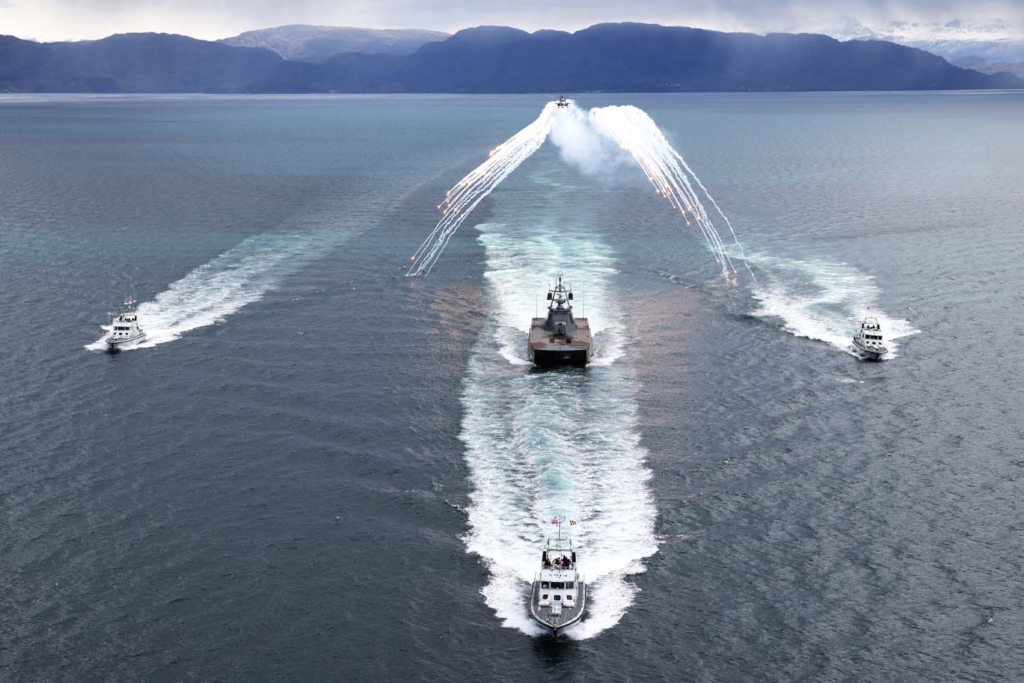
Image: MOD Crown Copyright/Royal Navy

Allied task groups could also coordinate sensors and uncrewed surface/underwater vessels (USV/UUVs) across national boundaries, while warships could access maintenance, refuelling and resupply facilities in partner nations without returning to their home ports.

A key element of the initiative is the development of equipment that is interoperable by design, enabling future autonomous maritime platforms to integrate with allied command-and-control (C2) systems and architecture.

This approach intends to increase operational flexibility, improve the collective use of maritime assets and enable JEF forces to combine capabilities more effectively during periods of heightened geopolitical tension or crises.

Bolstering NATO’s northern flank against new and emerging maritime threats

The agreement also addresses growing concerns over hostile activity below the threshold of armed conflict, particularly threats to undersea infrastructure, seabed activity and other forms of hybrid aggression or warfare.

The strategic importance of the High North is increasing, driven by climate change, expanding economic interests and intensifying geopolitical competition. Protecting maritime routes, energy networks and undersea communications infrastructure is now therefore becoming an increasing critical component of European security.

The initiative is designed to complement NATO rather than replace its existing command structure. It allows JEF navies to act early, rapidly combine capabilities and seamlessly transition into NATO’s C2 architecture if the alliance needs to mobilise at scale.
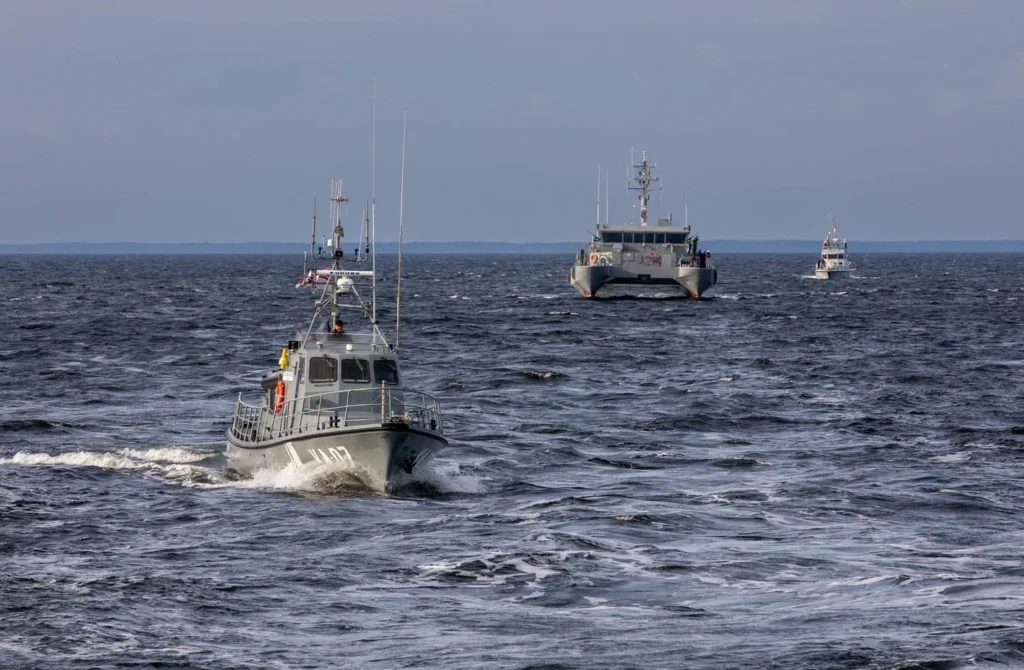
Image: MOD Crown Copyright/Royal Navy

Alongside the agreement, the Royal Navy is progressing Atlantic Net – a part of its wider Atlantic Bastion programme – which aims to improve the UK’s ability to detect hostile underwater activity and strengthen the protection of its critical maritime infrastructure.

Overall, the signing of the Northern Navies Initiative marks an crucial milestone in the UK’s ambition to reinforce maritime deterrence through closer cooperation with its trusted allies. However, its long-term effectiveness will depend on translating shared commitments into compatible equipment, sustained joint training and demonstrable operational readiness.

For the Royal Navy and its JEF partners, the objective is clear: to create a more connected, responsive and capable northern maritime force that can strengthen NATO’s collective ability to defend the Euro-Atlantic region.

Related

Rapid Fusion installs robotic cell at Kingston University
Zeus Robotic Cell into the Faculty of Engineering, Computing and the Environment at Kingston University
Rapid Fusion installs robotic cell at Kingston University
With its installation of a Zeus Robotic Cell into the Faculty of Engineering, Computing and the Environment at Kingston University, Rapid Fusion has enabled staff and students to print, scan and mill in one solution, teaching students the latest additive manufacturing solutions and helping tackle the real skills gap in the UK for robotics and 3D printing experts.
Royal Navy to launch Northrop Grumman’s Talon Blue CCA from aircraft carrier in 2027
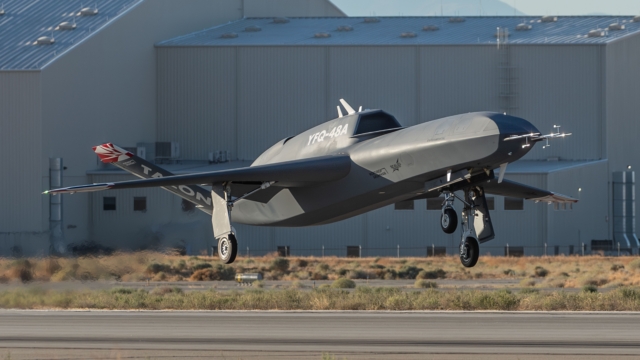
Northrop Grumman's YFQ-48A Talon Blue CCA demonstrator takes off from the Mojave Air and Space Port in California to undertake its first autonomous flight on 3 October 2026. Image: Northrop Grumman
Royal Navy to launch Northrop Grumman’s Talon Blue CCA from aircraft carrier in 2027
Northrop Grumman’s YFQ-48A Talon Blue will demonstrate autonomous carrier-based air operations aboard a Queen Elizabeth-class ‘flattop’ as part of trials planned for 2027 under Project Vanquish.
Aerospace Defence

11 Nov 2026

Eaton to support Dassault’s next-gen Falcon 10X on path to certification
Dassault Aviation’s Falcon 10X ultra-long-range business jet.
Eaton to support Dassault’s next-gen Falcon 10X on path to certification
Building on a long-standing collaboration, Eaton is to provide hydraulic and fuel system technologies for Dassault’s next-generation Falcon 10X business jet, supporting its fuel-efficiency and performance objectives.
Aerospace Member News

11 Nov 2026

Serco acquires QinetiQ’s US business
Satellite orbiting earth
Serco acquires QinetiQ’s US business
It was announced today that Serco's acquisition of QinetiQ’s US business has been agreed, substantially expanding the defence capabilities of Serco, whilst strengthening QinetiQ's balance sheet and enabling it to concentrate its resources on the UK, European, NATO and key allied defence and security markets.
Defence Member News Space

12 Nov 2026

Espanaro demonstrates secure data-sharing technology at NATO exercises
EFDI Accelerator 2.0, held at Defence BattleLab
Espanaro demonstrates secure data-sharing technology at NATO exercises
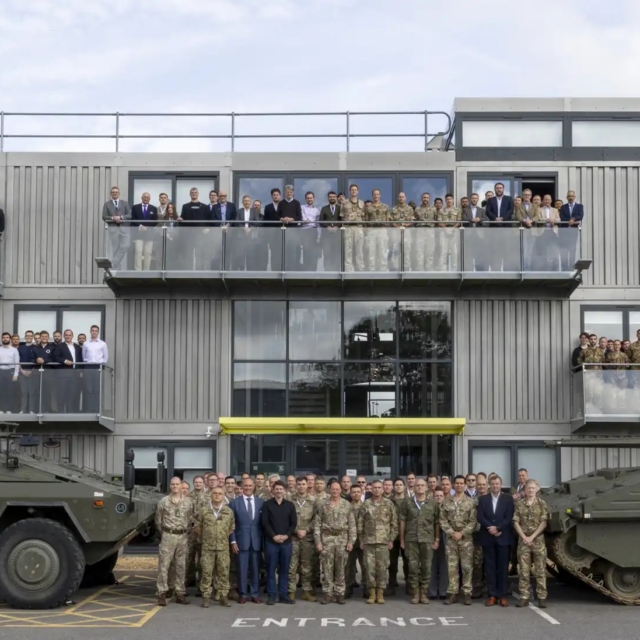
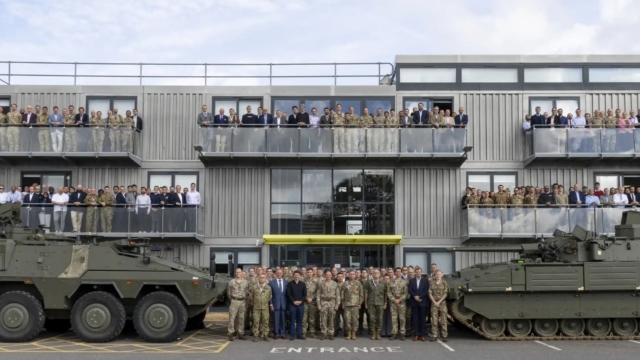
Espanaro demonstrated data-centric security (DCS) at the NATO Exercise Accelerator 2.0 led by the British Army at Defence BattleLab in Dorset.
Defence Events Member News

12 Nov 2026

Ready for war in 1,000 days? Peers demand faster contracts and stronger UK industry
British Army
Ready for war in 1,000 days? Peers demand faster contracts and stronger UK industry
A House of Lords inquiry warns that spending pledges will not deliver military readiness without faster procurement, sustained production and skilled workers. Speaking to Advance, Baroness Hayter says government and industry must change how they work together.
Defence Insights

11 Nov 2026

Serco acquires QinetiQ’s US business
Satellite orbiting earth
Serco acquires QinetiQ’s US business
It was announced today that Serco's acquisition of QinetiQ’s US business has been agreed, substantially expanding the defence capabilities of Serco, whilst strengthening QinetiQ's balance sheet and enabling it to concentrate its resources on the UK, European, NATO and key allied defence and security markets.
Defence Member News Space

12 Nov 2026

UK military satellite Titania reaches orbit as MoD trials space-threat sensors
Titania Satellite
UK military satellite Titania reaches orbit as MoD trials space-threat sensors
The UK's second ISTARI military satellite, Titania, reaches orbit as trials launch for a three-site sensor network to monitor potential threats to spacecraft.
Defence Space

9 Nov 2026

Leicester’s National Space Centre Discovery Team wins Sir Arthur Clarke Award
National Space Centre Discovery Team wins Sir Arthur Clarke Award
Leicester’s National Space Centre Discovery Team wins Sir Arthur Clarke Award
Following delivery of its education and outreach initiatives across the UK to inspire the next generation of scientists, engineers and space explorers, the National Space Centre's Discovery Team has gained national recognition by winning a prestigious Sir Arthur Clarke Award.
Member News Space

5 Nov 2026

NCSC launches new adversary simulation scheme to bolster UK cyber resilience
close up of someone programming computers
NCSC launches new adversary simulation scheme to bolster UK cyber resilience
The NCSC’s new CyAS scheme aims to strengthen the resilience of the UK’s critical infrastructure through rigorous, realistic cyber adversary simulation testing.
Security

12 Nov 2026

Lord Coaker calls for greater UK resilience against cyberattacks and infrastructure threats
Defence Talks podcast episode - Lord Coaker
Lord Coaker calls for greater UK resilience against cyberattacks and infrastructure threats
Speaking in a special Remembrance Day podcast, Lord Coaker paid tribute to those who serve while highlighting the need to strengthen UK preparedness against growing security threats.
Defence Security

11 Nov 2026

Fire Service College demos contribution to UK national resilience
Fire Service College (FSC) demo
Fire Service College demos contribution to UK national resilience
The historic Fire Service College training facility in Gloucestershire recently demonstrated how it combines immersive virtual reality, realistic incident scenarios and specialist expertise to prepare British and allied emergency responders, to support UK resilience.
Member News Security

11 Nov 2026