Rapid Fusion installs robotic cell at Kingston University
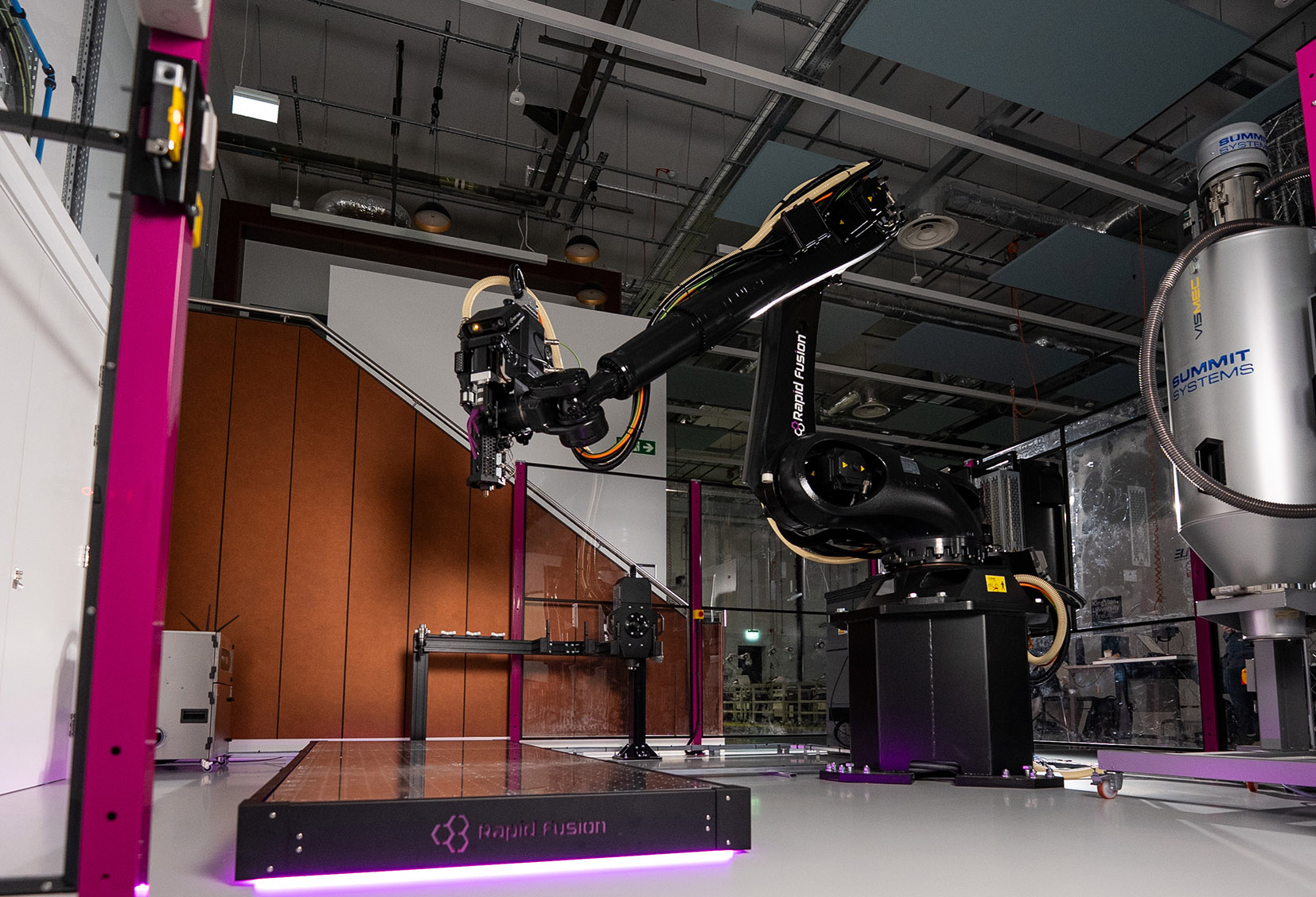
With its installation of a Zeus Robotic Cell into the Faculty of Engineering, Computing and the Environment at Kingston University, Rapid Fusion has enabled staff and students to print, scan and mill in one solution, teaching students the latest additive manufacturing solutions and helping tackle the real skills gap in the UK for robotics and 3D printing experts.

Zeus Robotic Cell into the Faculty of Engineering, Computing and the Environment at Kingston University
Photo: Rapid Fusion

One of the UK’s large format additive manufacturing (LFAM) specialists has sealed a groundbreaking educational deal with Kingston University. Rapid Fusion, which supplies its solutions to customers in four different continents, has installed a £450,000 Zeus Robotic Cell into the Faculty of Engineering, Computing and the Environment.

Located at its Roehampton Vale campus, the state-of-the-art advanced manufacturing platform combines 3D printing with integrated CNC milling in one modular system, giving researchers and industrial partners access to seamless additive and subtractive manufacturing. This will reduce outsourcing, streamline production and improve repeatable quality, making it ideal for prototyping work and low-volume complex components.

Kingston University is also using the cell to teach students the latest additive manufacturing solutions, with Rapid Fusion making a longer-term commitment to offer work placements, potential Knowledge Transfer Partnership (KTP) opportunities and input into the future curriculum, all designed to grow the next generation of 3D printing and robotics experts.

How the equipment will enable graduate engineers to develop advanced manufacturing skills

Jake Hand, CEO of Exeter-based Rapid Fusion said: “This is a real show of intent from our partners at the university and gives them access to one of the most advanced LFAM robots in the world.

“Zeus will provide staff, partners and grads with the opportunity to ‘print, scan and mill’ in one solution, removing a whole host of secondary ‘ops’ and, importantly, guaranteeing exacting tolerances as you are removing manually inputting the CNC toolpath.”

“This is the first time we’ve put this system into a university but this is just the start. There’s a real skills gap in the UK for robotics and 3D printing experts, so need to do our bit to train budding engineers on equipment and tech that is going to be used in the world real now and during the next 10 years.

“This is what we’re doing with Kingston. As well as installing and training staff on the cell, we are also looking at how our technical experts can work with education professionals to shape the curriculum and maximise what learners can do with the solution.

“It’s not just about developing people we can employ at Rapid Fusion. We’re doing this for advanced manufacturing as a whole – there’s lot of opportunity but we need the right skills to go alongside the pioneering tech.”

A state-of-the-art robot providing hands-on experience and skills that employers want

Rapid Fusion has been pioneering LFAM robotic solutions for the last five years, developing and launching to market Apollo, Medusa and the containerised Cerberus solution for producing parts in remote areas.
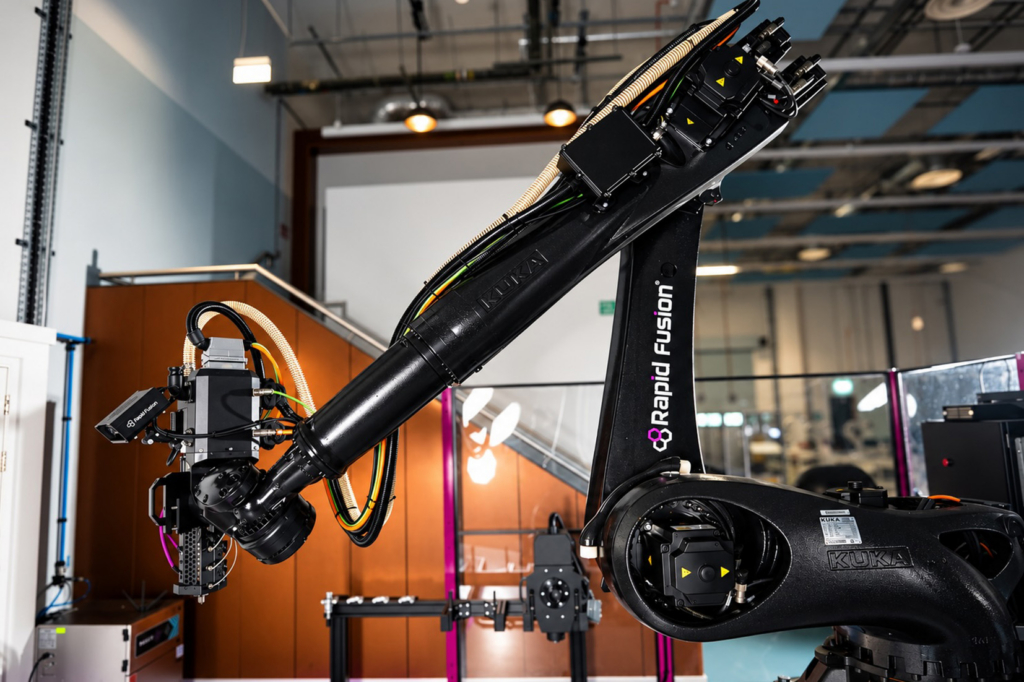
Zeus Robotic Cell into the Faculty of Engineering, Computing and the Environment at Kingston University
Photo: Rapid Fusion


The Zeus system is one of its most popular technology platforms and delivers smoother surfaces, tighter tolerances and post machined features directly by introducing subtractive accuracy to the scale and speed of additive. It has used exclusive relationships with Zivid and Ency to incorporate the latest industrial scanning camera and AI-driven CAD/CAM robot programming software respectively. This helps to harmonise workflow by scanning the custom part or mould and creating the most accurate toolpath quickly and with minimal manual involvement.

Lesley Stigling, Operations Manager at Kingston University, was a driving force behind the installation: “We are always exploring the latest technology and how it can add value to our industrial, research and educational offer.

“One of our graduates, Raghav, went to work with Rapid Fusion and insisted we meet. That quickly led to us acquiring the Zeus system, which gives us a competitive edge in large-format additive manufacturing and machining.

“I fully expect it will help us attract new research projects and cement existing relationships with industrial partners who are keen to push the boundaries of innovation and performance.

“This equipment will also help drive our efforts to future-proof the faculty. Our undergraduates and postgraduates will learn on this state-of-the-art robot, giving them the hands-on experience and skills that employers want and a head start in the graduate job market.”

Related

Royal Navy to launch Northrop Grumman’s Talon Blue CCA from aircraft carrier in 2027
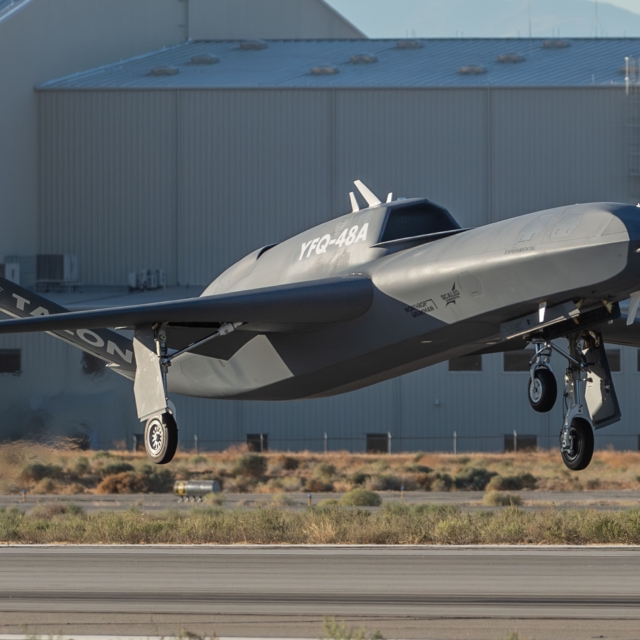
Northrop Grumman's YFQ-48A Talon Blue CCA demonstrator takes off from the Mojave Air and Space Port in California to undertake its first autonomous flight on 3 October 2026. Image: Northrop Grumman
Royal Navy to launch Northrop Grumman’s Talon Blue CCA from aircraft carrier in 2027
Northrop Grumman’s YFQ-48A Talon Blue will demonstrate autonomous carrier-based air operations aboard a Queen Elizabeth-class ‘flattop’ as part of trials planned for 2027 under Project Vanquish.
Aerospace Defence

11 Nov 2026

Eaton to support Dassault’s next-gen Falcon 10X on path to certification
Dassault Aviation’s Falcon 10X ultra-long-range business jet.
Eaton to support Dassault’s next-gen Falcon 10X on path to certification
Building on a long-standing collaboration, Eaton is to provide hydraulic and fuel system technologies for Dassault’s next-generation Falcon 10X business jet, supporting its fuel-efficiency and performance objectives.
Aerospace Member News

11 Nov 2026

CAA puts AI reliability and human oversight in focus as aerospace adoption grows
Artificial Intelligence
CAA puts AI reliability and human oversight in focus as aerospace adoption grows
The Civil Aviation Authority has reviewed more than 200 aerospace AI use cases, from maintenance and security screening to engineering and air traffic support.
Aerospace

11 Nov 2026

Royal Navy to launch Northrop Grumman’s Talon Blue CCA from aircraft carrier in 2027
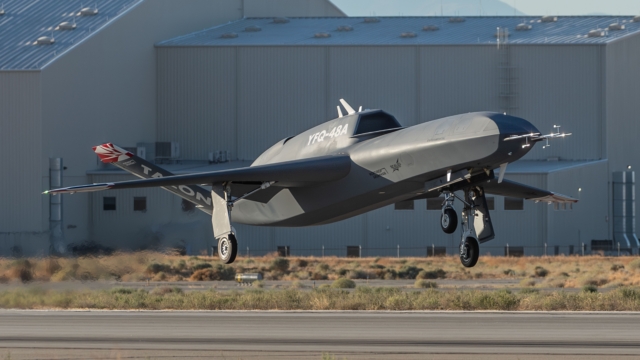
Northrop Grumman's YFQ-48A Talon Blue CCA demonstrator takes off from the Mojave Air and Space Port in California to undertake its first autonomous flight on 3 October 2026. Image: Northrop Grumman
Royal Navy to launch Northrop Grumman’s Talon Blue CCA from aircraft carrier in 2027
Northrop Grumman’s YFQ-48A Talon Blue will demonstrate autonomous carrier-based air operations aboard a Queen Elizabeth-class ‘flattop’ as part of trials planned for 2027 under Project Vanquish.
Aerospace Defence

11 Nov 2026

Lord Coaker calls for greater UK resilience against cyberattacks and infrastructure threats
Defence Talks podcast episode - Lord Coaker
Lord Coaker calls for greater UK resilience against cyberattacks and infrastructure threats
Speaking in a special Remembrance Day podcast, Lord Coaker paid tribute to those who serve while highlighting the need to strengthen UK preparedness against growing security threats.
Defence Security

11 Nov 2026

UK defence tech investment heads towards £1bn after tripling in 2026
State of UK Deep Tech 2026 report
UK defence tech investment heads towards £1bn after tripling in 2026
Venture capital investment in UK defence tech has nearly tripled to £720 million in 2026 and is projected to approach £1 billion by year-end, led by surges in AI and autonomous systems, according to a new Royal Academy of Engineering report.
Defence

11 Nov 2026

UK military satellite Titania reaches orbit as MoD trials space-threat sensors
Titania Satellite
UK military satellite Titania reaches orbit as MoD trials space-threat sensors
The UK's second ISTARI military satellite, Titania, reaches orbit as trials launch for a three-site sensor network to monitor potential threats to spacecraft.
Defence Space

9 Nov 2026

Leicester’s National Space Centre Discovery Team wins Sir Arthur Clarke Award
National Space Centre Discovery Team wins Sir Arthur Clarke Award
Leicester’s National Space Centre Discovery Team wins Sir Arthur Clarke Award
Following delivery of its education and outreach initiatives across the UK to inspire the next generation of scientists, engineers and space explorers, the National Space Centre's Discovery Team has gained national recognition by winning a prestigious Sir Arthur Clarke Award.
Member News Space

5 Nov 2026

Astroscale and OHB to collaborate on space security
Astroscale and OHB sign MoU
Astroscale and OHB to collaborate on space security
Following ratification of the Kensington Treaty in October, Astroscale and OHB have signed an MoU to enhance cooperation between the UK, Germany and Japan towards protecting critical infrastructure in space, whilst supporting the safe, sustainable and responsible use of the orbital environment.
Lord Coaker calls for greater UK resilience against cyberattacks and infrastructure threats
Defence Talks podcast episode - Lord Coaker
Lord Coaker calls for greater UK resilience against cyberattacks and infrastructure threats
Speaking in a special Remembrance Day podcast, Lord Coaker paid tribute to those who serve while highlighting the need to strengthen UK preparedness against growing security threats.
Defence Security

11 Nov 2026

Fire Service College demos contribution to UK national resilience
Fire Service College (FSC) demo
Fire Service College demos contribution to UK national resilience
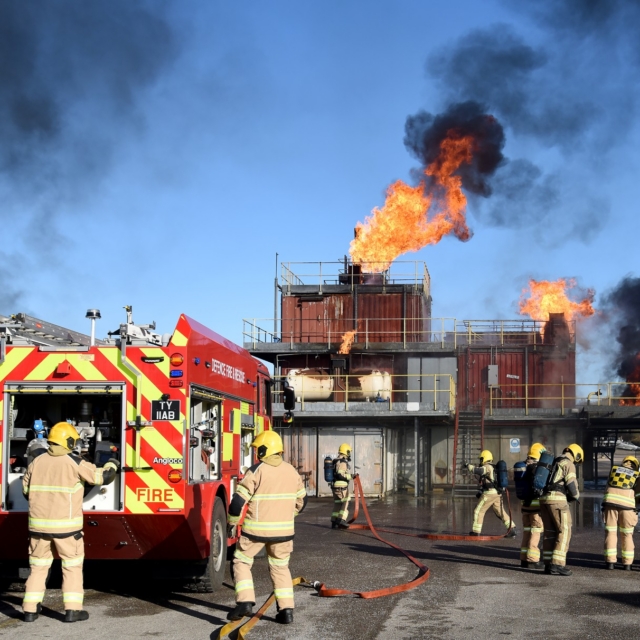
The historic Fire Service College training facility in Gloucestershire recently demonstrated how it combines immersive virtual reality, realistic incident scenarios and specialist expertise to prepare British and allied emergency responders, to support UK resilience.
Member News Security

11 Nov 2026

Royal Navy moves to deter Russian undersea threats with new ‘Atlantic Net’ investment
Image via Royal Navy
Royal Navy moves to deter Russian undersea threats with new ‘Atlantic Net’ investment
A £90m investment in autonomous maritime technology will bolster the Royal Navy’s surveillance capabilities while deterring Russian submarines and safeguarding critical seabed infrastructure in the North Atlantic.
Defence Security

11 Nov 2026