The rise and fall of HOTOL: Britain’s spaceplane that aimed to transform spaceflight

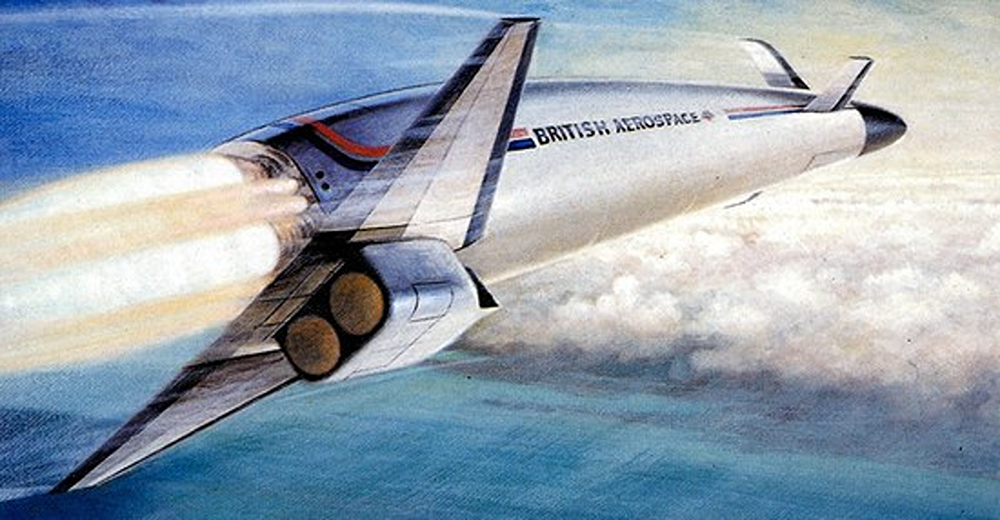
Britain once had ambitious plans to revolutionise access to space with a reusable aircraft capable of taking off from a runway, travelling into orbit and returning to Earth. The project was called HOTOL. But despite its revolutionary technology and considerable ambition, it never progressed beyond the design and feasibility stages.
What was the HOTOL project?
HOTOL, short for Horizontal Take-Off and Landing, was an ambitious British spaceplane project developed during the 1980s by British Aerospace (BAe), in collaboration with Rolls-Royce.
First conceived in 1982, HOTOL was intended to provide Britain and Europe with an independent, reusable and relatively inexpensive means of reaching space. At the time, satellite launches relied heavily on expendable rockets, while NASA’s Space Shuttle, although reusable, required substantial refurbishment and operating costs between missions.
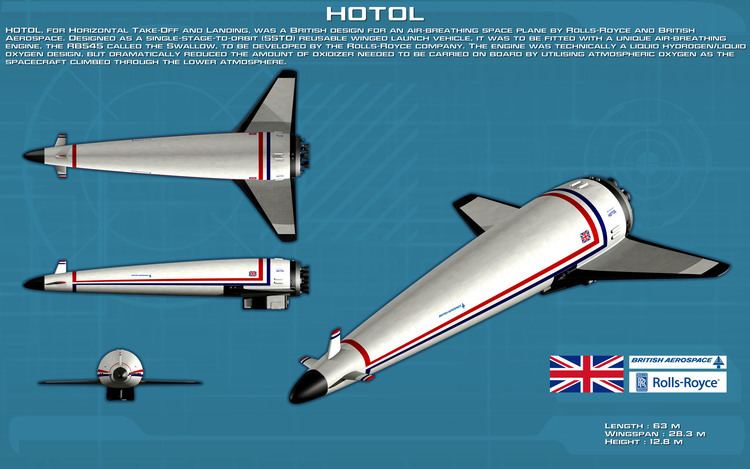
HOTOL proposed something rather different: an unmanned, single-stage-to-orbit vehicle that would operate much like an aircraft. It would take off horizontally, accelerate to extremely high speeds, climb into orbit, deliver its payload and eventually return to Earth for a runway landing. The project was particularly ambitious because it aimed to achieve all this without the need for disposable rocket stages or external boosters.
The concept attracted considerable interest from the British Government, which recognised the potential strategic and commercial benefits of developing an independent space-launch capability.
What was HOTOL designed to do?
The central objective was to make access to space cheaper, more reliable and more routine. HOTOL was designed primarily as an unmanned cargo vehicle, capable of carrying satellites into low Earth orbit. It could also potentially retrieve satellites, transport equipment and deliver supplies to future space stations.
Its designers hoped that the vehicle would eventually carry payloads of several tonnes into orbit, with a target launch cost substantially below that of contemporary systems. The most revolutionary aspect of HOTOL was its proposed propulsion system, known as the RB545 Swallow engine, developed by Rolls-Royce and based on work by British engineer Alan Bond.
Unlike conventional rocket engines, which carry both fuel and oxygen onboard, the Swallow engine was designed to use oxygen from the atmosphere during the early stages of flight. This would significantly reduce the amount of liquid oxygen the vehicle needed to carry, saving weight and increasing the potential payload.
At lower altitudes, the engine would operate as an air-breathing propulsion system, using atmospheric oxygen to burn liquid hydrogen. As the vehicle climbed beyond the atmosphere, it would switch to conventional rocket operation, carrying its own liquid oxygen to continue accelerating into orbit.
This hybrid approach was intended to overcome one of the biggest challenges facing single-stage-to-orbit spacecraft: the enormous amount of propellant required to reach orbital velocity. In principle, HOTOL offered the possibility of an aircraft-like space transportation system that could be reused many times, potentially transforming the economics of satellite launches.
Why did HOTOL fail?
Despite its promise, HOTOL faced several serious technical and financial challenges.
1. The technology was exceptionally difficult
The Swallow engine was revolutionary, but it had not been demonstrated as a working flight engine. Developing a propulsion system capable of operating efficiently across such a wide range of speeds, temperatures and atmospheric conditions represented a formidable engineering challenge.
The vehicle would also have to withstand the extreme heating associated with hypersonic flight and atmospheric re-entry.
2. Problems with the aircraft’s design
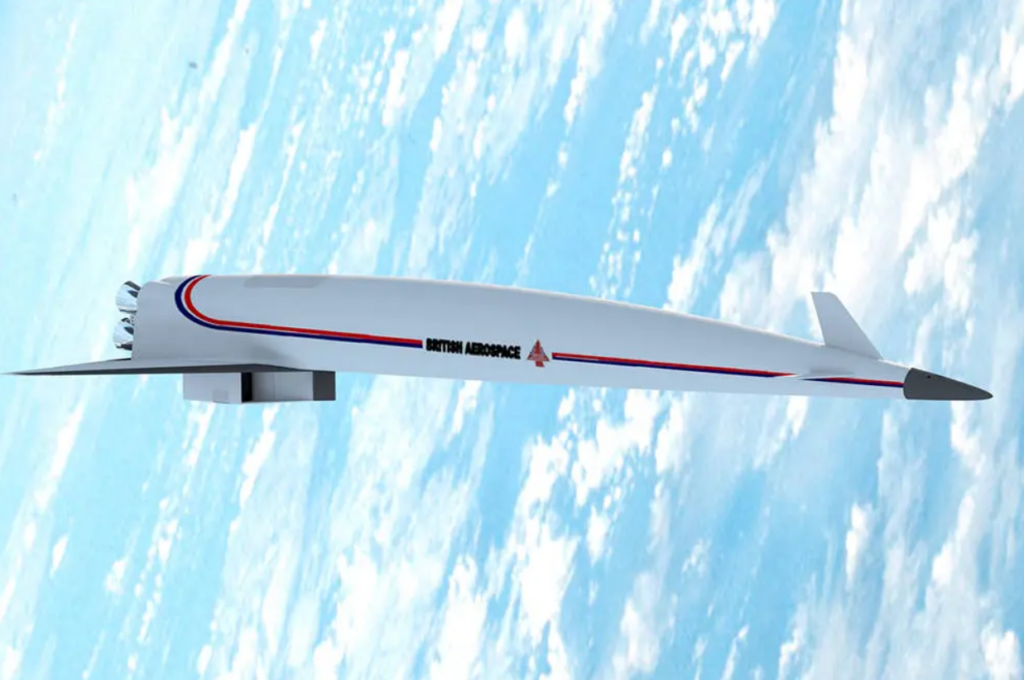
One significant difficulty involved the positioning of the engines. Their location at the rear of the vehicle created problems with its centre of gravity and aerodynamic stability.
Maintaining control throughout the enormous range of flight conditions, from runway take-off to hypersonic flight and orbital re-entry, proved considerably more complicated than initially anticipated.
Attempts to resolve these design problems threatened to increase the vehicle’s weight and reduce its payload capacity, undermining one of the project’s principal objectives.
3. The enormous cost of development
The financial commitment required was another major obstacle. Estimates for full development ran into several billion pounds, with the programme requiring substantial government support and international industrial partnerships.
Although the British Government initially provided funding for feasibility and proof-of-concept studies, it was unwilling to commit to the much larger investment needed to develop and build the vehicle.
In 1988, the Government withdrew further financial support, effectively bringing the original HOTOL project to an end.
4. Difficulties attracting international partners
HOTOL was considered too expensive and technically ambitious for Britain to develop alone. International cooperation, particularly through the European Space Agency, was therefore important.
However, the classification of important engine technology for national security reasons complicated efforts to share technical information with potential European partners. This made securing the necessary international backing more difficult.
What happened after HOTOL?
Although the original project was abandoned, its underlying ideas did not disappear. In 1989, Alan Bond and fellow engineers Richard Varvill and John Scott-Scott established Reaction Engines Limited. The company subsequently developed the concept for a more advanced reusable spaceplane called SKYLON, powered by its proposed SABRE engine.
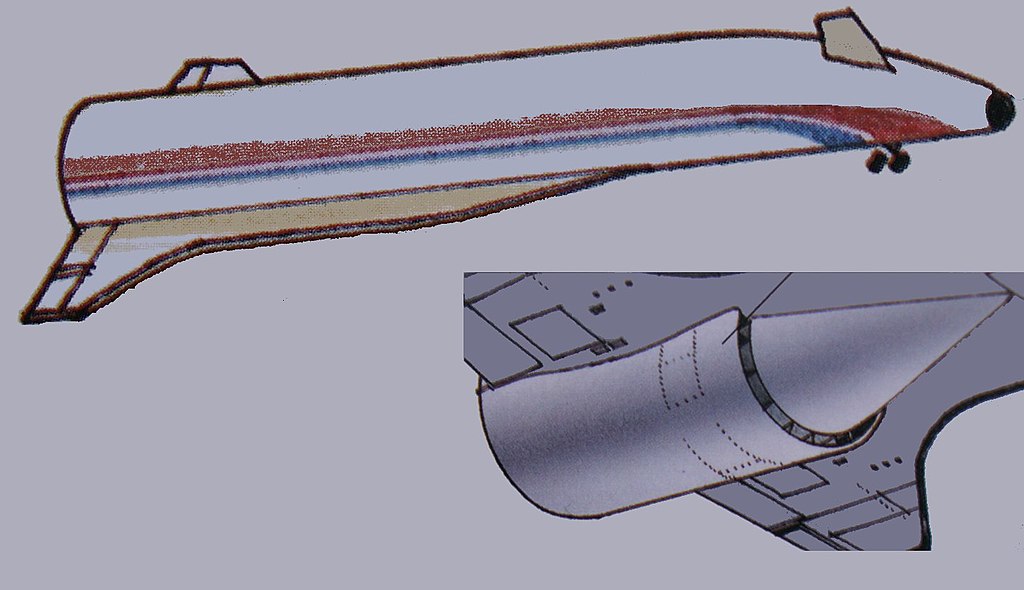
SKYLON sought to address some of the technical and aerodynamic shortcomings of HOTOL while retaining the ambition of single-stage access to orbit.
The company continued research and development for decades, although neither SKYLON nor a fully operational SABRE engine was ultimately completed. Reaction Engines entered administration in 2024.
A missed opportunity for British aerospace?
HOTOL remains one of the most ambitious British aerospace projects ever conceived. Its vision of an aircraft capable of reaching orbit without disposable rocket stages was decades ahead of what could realistically be achieved with the technology and funding available at the time.
Ultimately, HOTOL failed because its engineering challenges, development costs and requirement for international cooperation proved too great.
Sign up for our newsletter and get our latest content in your inbox.
Similar Reads


Sign up for our newsletter. Select all sectors relevant to you.
Related