RAF reportedly moving aircraft into hangars amid drone threat concerns

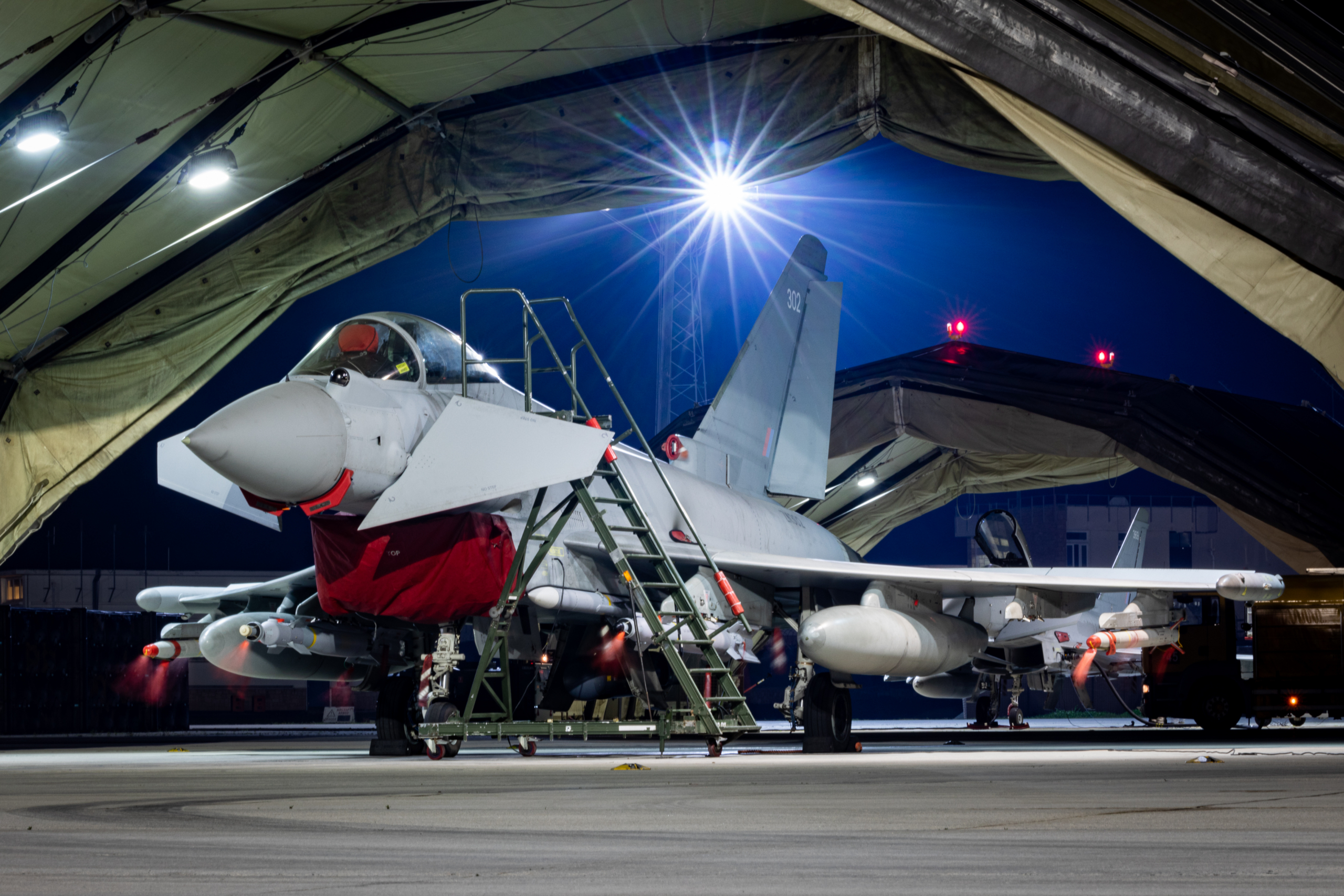
The Royal Air Force (RAF) is moving aircraft into hangars and shelters at night as a precaution against potential drone threats, Sky News reported on Wednesday, 25 November.
Responding to questions from Advance, the Ministry of Defence (MoD) said it was continually adapting security measures to counter potential threats but did not specifically confirm the reported aircraft movements.
“We take the security of our bases, equipment and personnel very seriously and are always adapting to counter any potential threats,” an MoD spokesperson told Advance.
“This includes investing an additional £470 million to strengthen security at military sites, including better physical protection, surveillance and counter-drone capabilities. We have already invested £15 million in drone and counter-drone technology and introduced restricted airspace over 44 critical Defence sites.”
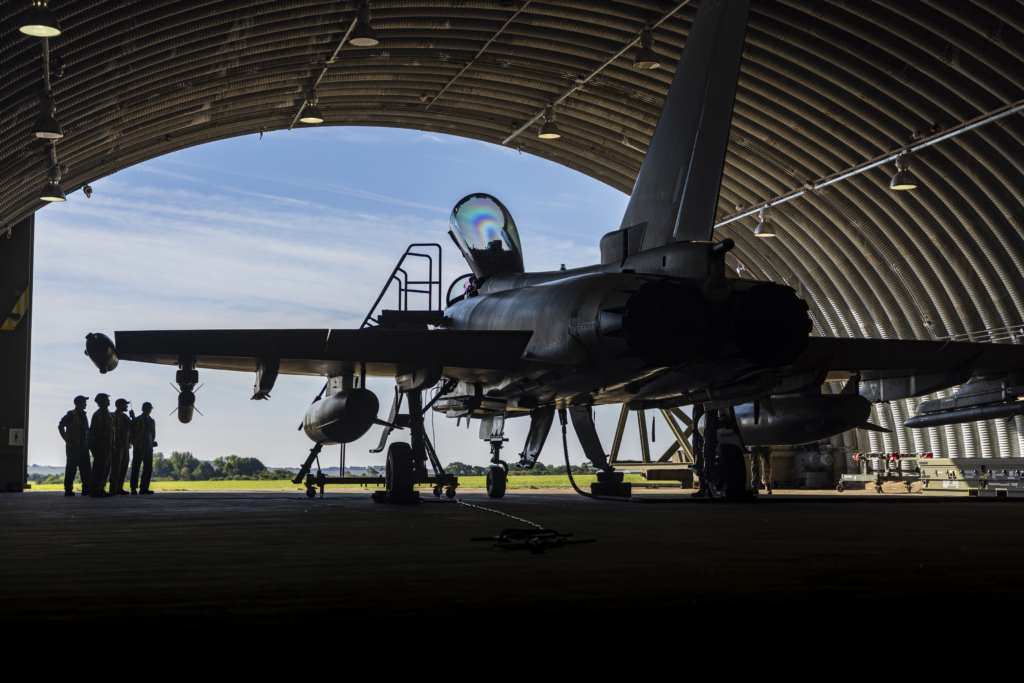
The Sky News report, which was subsequently carried by Reuters, did not identify its sources.
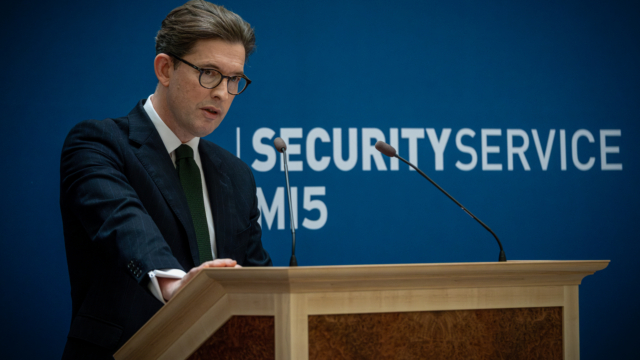
It came a day after the MoD and the National Protective Security Authority (NPSA), part of MI5, issued a joint alert warning of increased Russian attempts to sabotage European defence-related facilities.
The warning is specifically directed at UK companies providing direct material support to the Ukrainian armed forces, including businesses within the defence supply chain.
No direct connection between the reported RAF measures and the Russian sabotage warning has been publicly established.
MoD and MI5 warn defence suppliers of sabotage threat
The joint alert, issued on 24 November, warned that Russia was using proxy actors to carry out sabotage against European defence facilities.
“In recent months, Russia has increased attempts to conduct sabotage against European defence-related facilities. This activity is typically characterised by the use of proxy actors employing low-sophistication sabotage methodologies, such as arson,” the alert said.
“This activity is intended to undermine support for Ukraine and may sit alongside other hostile activity, including intimidation of individuals, espionage and information operations.”
The authorities warned that companies involved in military procurement or supplying equipment to Ukraine could become targets. This includes businesses operating further down the supply chain.
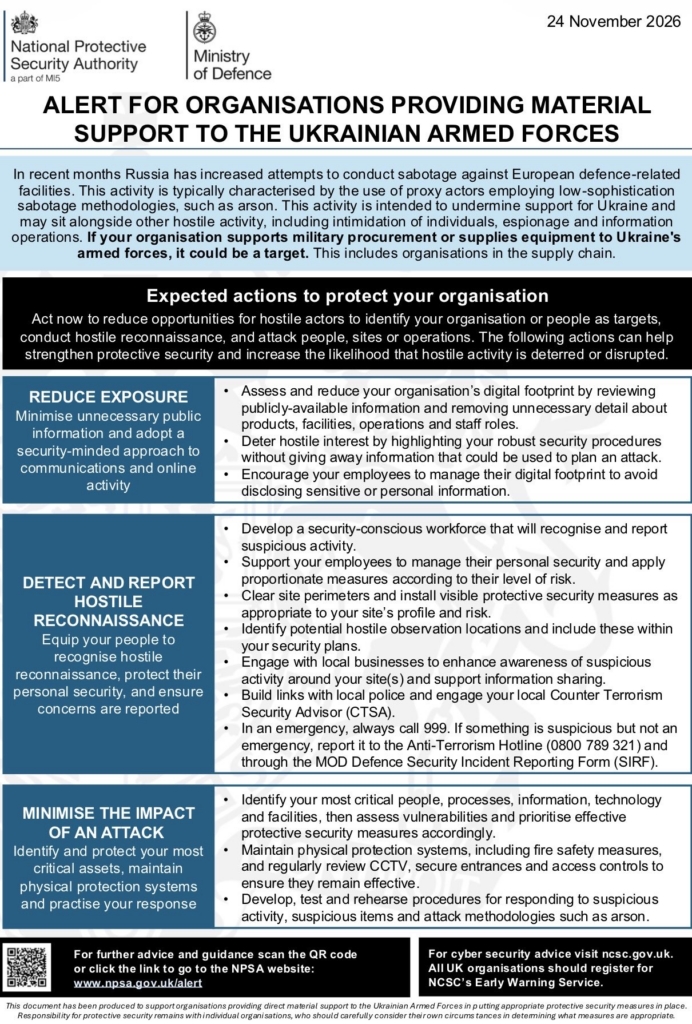
Companies have been advised to review publicly available information about their facilities, products, operations and employees, removing unnecessary details that could be exploited by hostile actors.
The NPSA also warned that individuals with access to sensitive information, assets or personnel could be targeted, regardless of their seniority within an organisation.
Businesses have been urged to strengthen physical security, review surveillance and access controls, maintain fire protection systems and rehearse their response to potential attacks.
The guidance recommends closer cooperation with local police, counter-terrorism security advisers and neighbouring businesses to improve the detection and reporting of suspicious activity.
Recent security incidents at UK military bases
The reported RAF precautions follow a series of security concerns involving military airbases in the UK in recent months.
As Advance reported earlier this month, more than a dozen US Air Force (USAF) aircraft, including KC-135 Stratotanker aerial refuelling aircraft and CV-22 Osprey tiltrotors, left RAF Mildenhall in Suffolk amid reports of a possible Iranian security threat.
The precise nature of that threat has not been publicly established.
At the time, Downing Street insisted that UK military bases remained safe, saying the government worked closely with the police and allies to protect military installations and that security arrangements were under constant review.
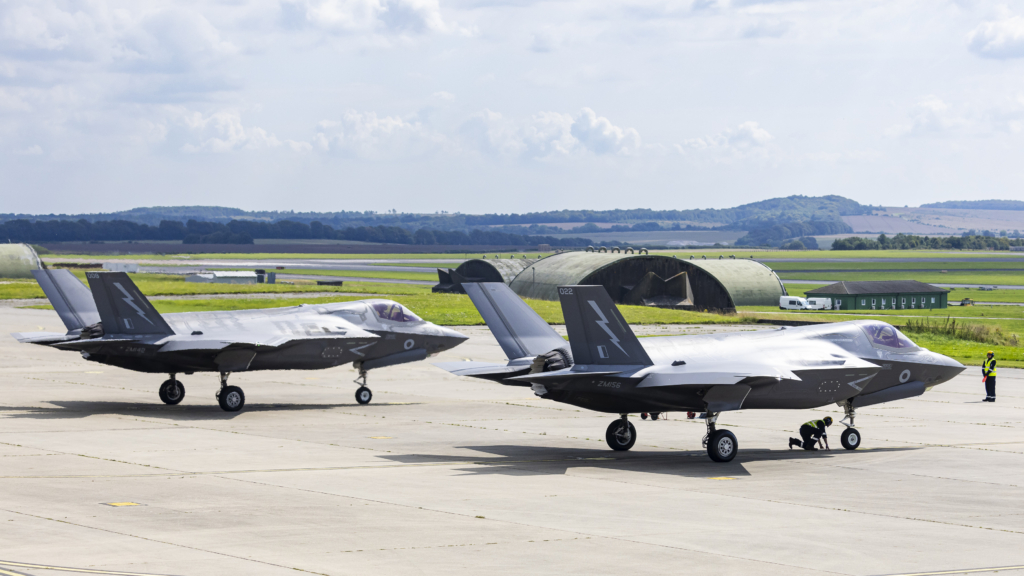
The aircraft movements followed a separate security incident near RAF Fairford in Gloucestershire in September, which resulted in the arrest of five men on suspicion of explosives offences and preparing a terrorist act.
Around 85 households in the neighbouring village of Whelford were evacuated as a precaution while Army bomb-disposal specialists examined suspicious vehicles.
Advance previously reported that investigators were examining a possible Iranian connection to the Fairford incident, although attribution had not been confirmed.
UK strengthens counter-drone capabilities
The government has outlined a series of investments to improve security across the defence estate, including measures to protect military installations against unauthorised drone activity.
In a written parliamentary answer on 10 November, Defence Minister Louise Sandher-Jones said the MoD was using a combination of physical protection, policing, surveillance and counter-drone technology to safeguard military bases.
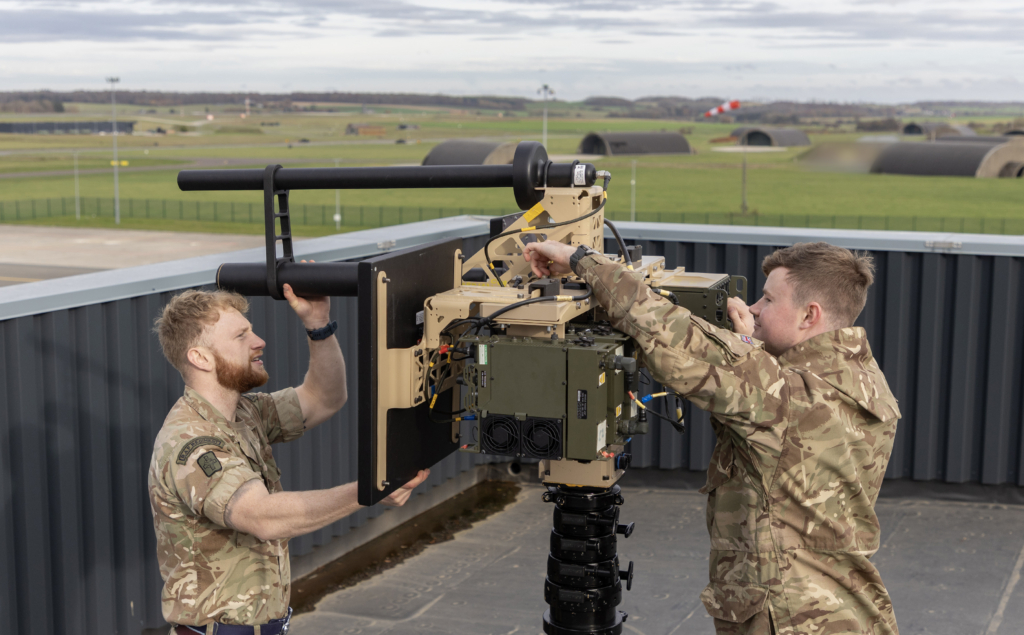
“Following recent security incidents, we have maintained enhanced vigilance across the Defence estate and strengthened protective measures where necessary,” she said.
The government has allocated more than £750 million to strengthen short-range counter-drone protection in the UK and for deployed forces.
The MoD has declined to disclose specific protective arrangements at individual military installations on security grounds.
Sign up for our newsletter and get our latest content in your inbox.
Similar Reads


Sign up for our newsletter. Select all sectors relevant to you.
Related