Police, military and bomb-disposal robots: Inside the RAF Fairford response


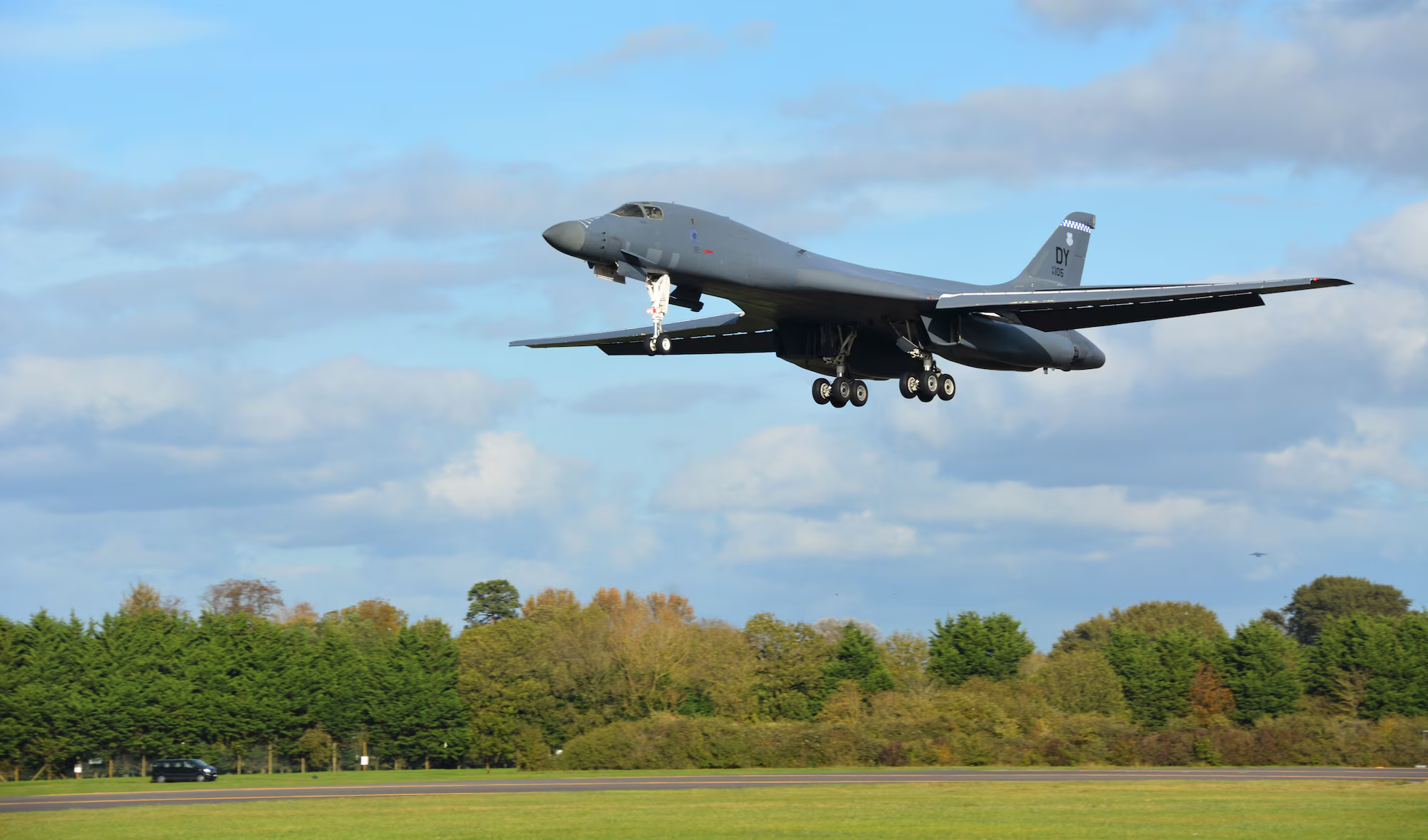
Five men arrested near RAF Fairford remain at the centre of a counter-terrorism investigation following an incident that brought together armed police, Army bomb-disposal specialists and US military security personnel.
The response extended beyond the Gloucestershire airfield, with around 85 households evacuated from nearby Whelford while specialists examined three suspicious vehicles.
According to the Metropolitan Police, officers received a call at approximately 00:45 on Sunday 27 September about vehicles apparently travelling towards the base. Armed officers subsequently arrested five men on suspicion of explosives offences and preparing a terrorist act.
However, reports of heightened security at Fairford on Saturday indicate that protective measures were already being taken before that call. The sequence raises questions about how an earlier warning, information from the public and the subsequent police response fitted together.
RAF Fairford’s security alert preceded the arrests
The Aviationist reported that observers had described increased security and an apparent move to Force Protection Condition Delta on 26 September. Several OSINT accounts were reporting the heightened security state at least three hours before the phone call happened.
Delta is the highest level in the US military’s force-protection system. According to US Army guidance, it applies locally after a terrorist attack or when intelligence indicates that terrorist action against a specific location or person is imminent. It is separate from the UK’s national terrorism threat level.
CONTEXT: If reports that RAF Fairford is currently at FPCON Delta are accurate, this is extremely unusual in Europe.
— Coffe Report (@CoffeReport) September 26, 2026
In 2024, several US bases across Europe were raised to Charlie – one level below Delta – and US officials said they hadn’t seen even that level in at least a… https://t.co/fJL20MxVrz
The reason for Fairford’s reported escalation has not been publicly established. Nor is it clear whether any earlier warning identified the vehicles or individuals subsequently detained.
A local farmer has said she alerted police after coming across three vans in the road, and then seeing hooded and masked men running into fields, according to Reuters. Her report could have supplied an important piece of information even if the installation was already responding to a wider threat.
Bomb-disposal robot examines suspicious vehicles
Army explosive ordnance disposal specialists used a remotely operated robot to examine the vehicles, allowing personnel to investigate from a distance.
The machine has been provisionally identified as an L3Harris T7, although the model used at Fairford has not been officially confirmed.
Video of British military EOD robots defusing suspected bomb vans near RAF Fairford courtesy of SkyNews. pic.twitter.com/PbrrVH6V1x
— WarMonitor🇺🇦🇬🇧 (@WarMonitor3) September 27, 2026
The British Army acquired T7 systems through Project Starter. MoD procurement information describes how haptic feedback allows operators to feel resistance through a remote-controlled handgrip while manipulating the robot’s arm. This helps them perform delicate tasks without approaching a suspected device.
The T7 is a tracked system capable of supporting vehicle-borne improvised explosive device disposal. Its cameras and manipulator provide the operator with remote viewing and handling capabilities; it is controlled by a person rather than acting autonomously.
Whelford evacuation extends the response beyond the base
The civilian impact was concentrated in Whelford, the village beside the airfield. Gloucestershire Police said a 400m cordon had been established around the vehicles and approximately 85 households were advised to evacuate as a precaution.
Residents were directed to Cirencester Leisure Centre, with those unable to stay with relatives or friends requiring additional support. They remained unable to return home into Monday morning.
Who is responsible for security at RAF Fairford?
Fairford is a UK military installation used by US forces. However, American operation of the base does not make it US sovereign territory.
The House of Commons Library explains that US forces are stationed in the UK by invitation, under arrangements including the NATO Status of Forces Agreement, the Visiting Forces Act 1952 and bilateral agreements. Those arrangements govern their presence and jurisdiction; they do not create a general US policing authority over neighbouring communities.
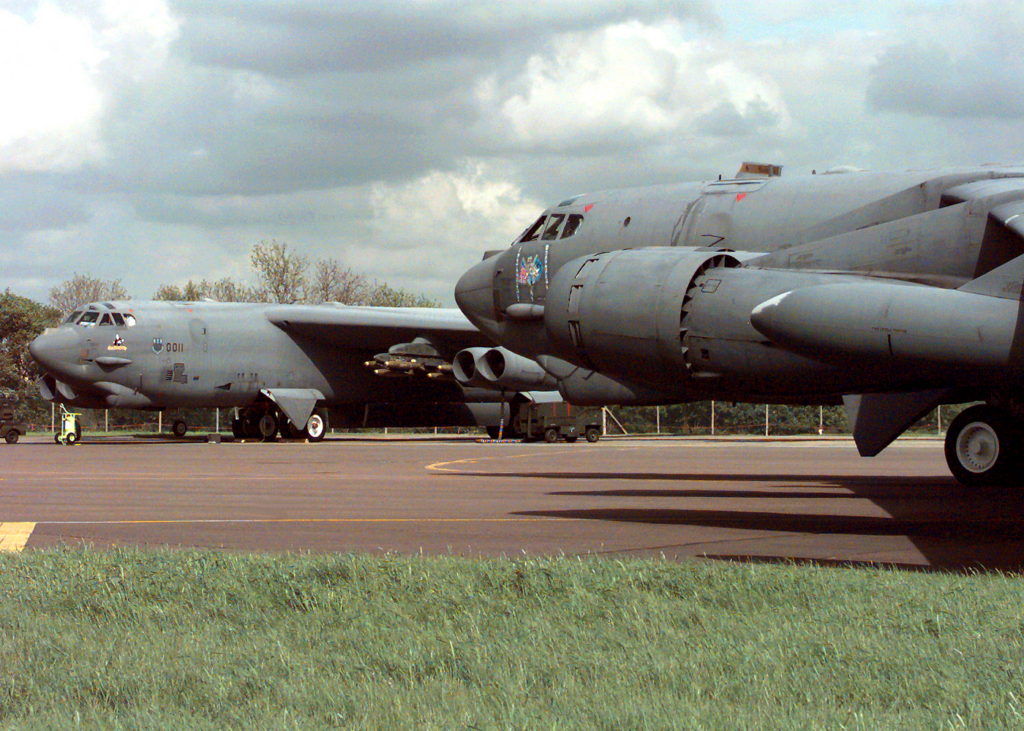
US Air Force security personnel provide installation protection. UK policing responsibilities overlap with that protective role: the Ministry of Defence Police has constabulary powers covering defence property and visiting forces, with local agreements establishing cooperation with territorial police. Its jurisdiction is therefore more nuanced than a division between opposite sides of a fence.
In this incident, Gloucestershire Police provided the initial armed response, Counter Terrorism Policing took the investigative lead, and Army specialists examined the suspected explosive threat.
Investigators are examining a possible Iranian connection, according to ITV News, but attribution remains unconfirmed.
For those responsible for protecting UK defence infrastructure, the immediate questions concern how warnings were shared, how public information reached responders and how military protection was coordinated with civilian policing. Establishing that sequence will be essential to fairly assessing the response.
Sign up for our newsletter and get our latest content in your inbox.
Similar Reads