NATO medical leaders see UK Defence Medical personnel test concealed field hospital

NATO medical leaders have seen first-hand how UK Defence Medical personnel hide a hospital’s location, with lessons from Ukraine shaping the exercise and the need to protect medical facilities.

NATO medical leaders see UK Defence Medical personnel test concealed field hospital
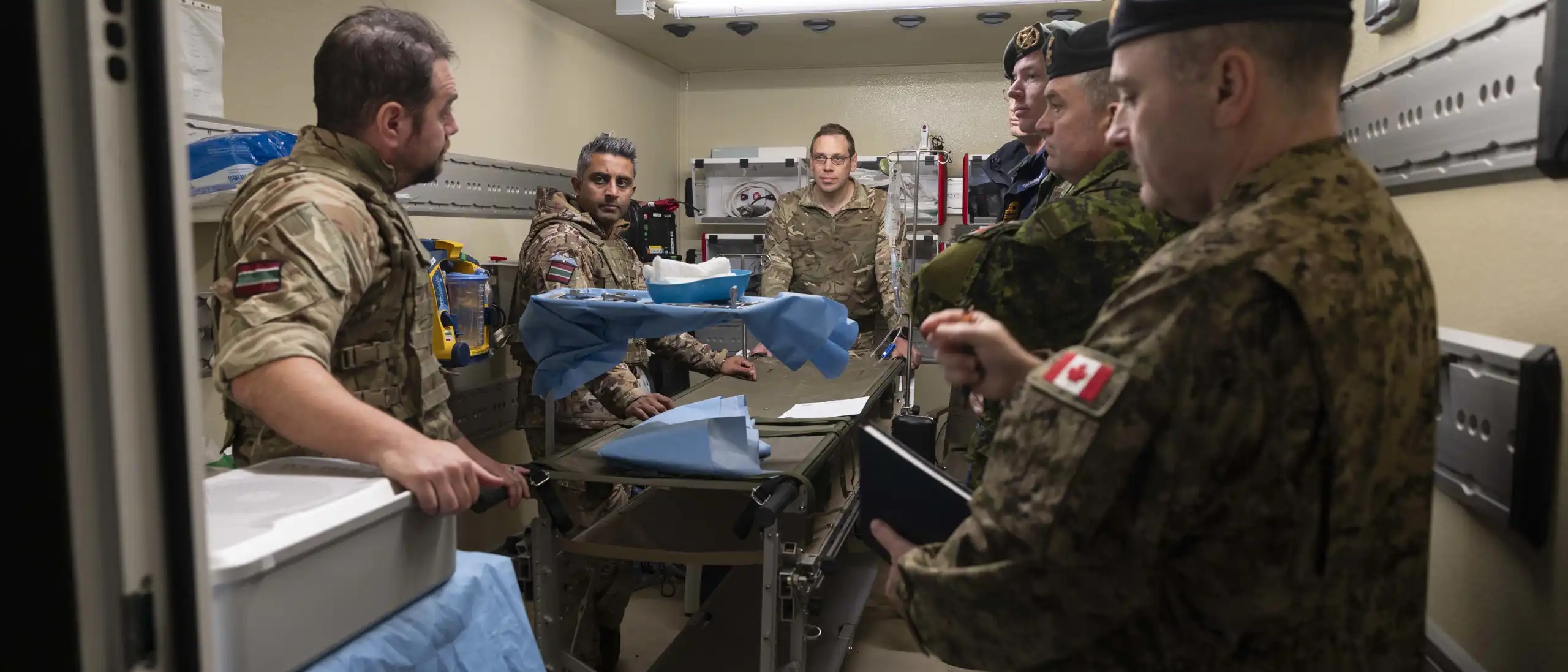
Photo: British Army / Crown Copyright

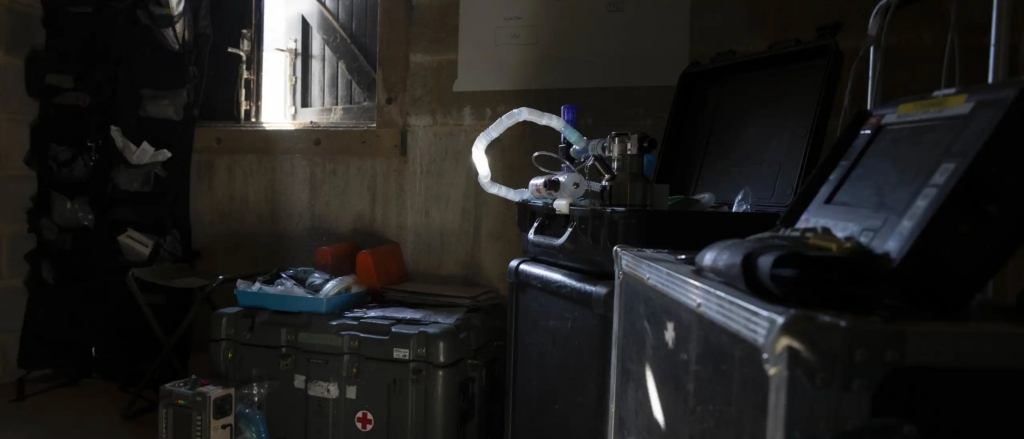
UK military medics serving with the Royal Army Medical Services have tested a concealed field hospital on Salisbury Plain Training Area, Wiltshire, drawing on lessons from Ukraine to keep lifesaving care operating under threat.

Led by the Army’s 2 Medical Group, including 206 Multirole Medical Regiment and 335 Medical Evacuation Regiment, Exercise Bellatorean Cyclone brought together more than 200 specialists to develop hospital and mobile surgical capabilities that can operate hidden across multiple locations, rather than from a single large medical facility.
NATO medical leaders see UK Defence Medical personnel test concealed field hospital
Photo: British Army / Crown Copyright

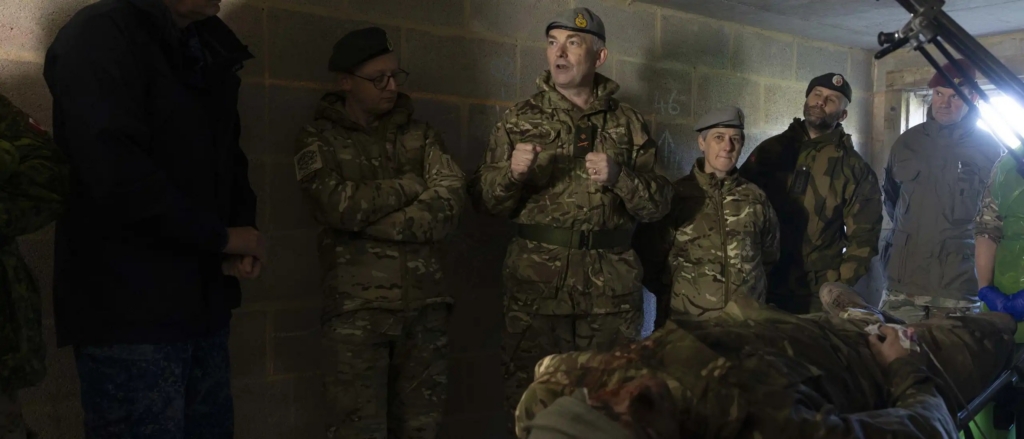
They were joined by senior representatives from NATO’s Committee of the Chiefs of Military Medical Services (COMEDS) including its Vice-Chair, Major General Marc Ongena of the Belgian Armed Forces, who saw how UK medical teams reduce the physical and electronic signs that could reveal a hospital’s location.

Why smaller field hospital teams in different locations makes them harder to detect

An approach known as MESH splits a large field hospital into smaller teams working from separate locations, including existing buildings and damaged urban infrastructure. This makes facilities harder to detect while allowing teams to receive, treat and stabilise casualties.

UK Surgeon General, Major General Phil Carter, who attended the exercise and is the UK representative to NATO COMEDS, said: “Two Medical Group is helping lead the conversation on what Deployed Hospital Care must look like on the modern battlefield: innovative, dispersed, resilient and connected. The professionalism and enthusiasm of our people, working alongside NATO partners to test and develop these concepts, was hugely impressive.”
Concealed Field Hospital
Photo: British Army / Crown Copyright


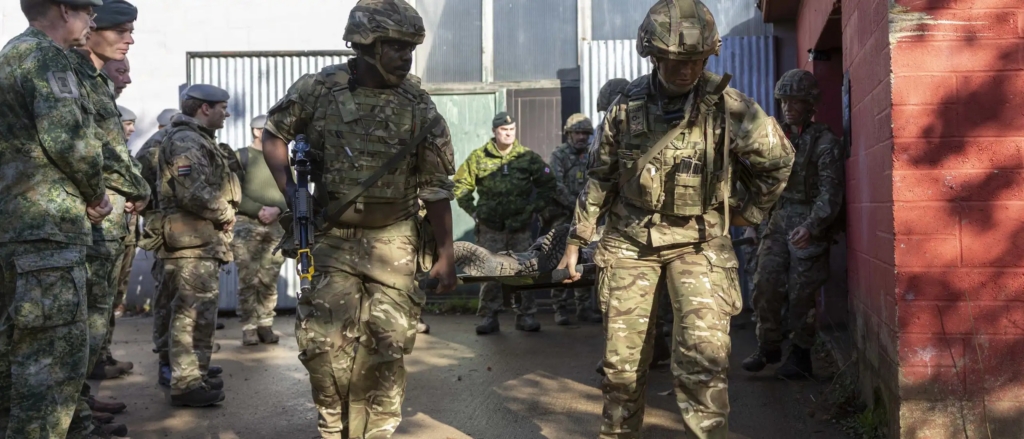
The exercise tested the provision of advanced resuscitation, damage control surgery and short-term treatment to stabilise casualties before further evacuation.

The war in Ukraine has highlighted the vulnerability of medical facilities to drones, artillery and surveillance. Attacks can also delay casualty evacuation, making access to surgery closer to the front line vital. Ensuring military medical facilities can survive on the battlefield is essential to treating patients.

Developing dispersed surgery and medical care in challenging environments

Teams tested how to maintain treatment and communication across separate locations.

Staff Sergeant Diane King, a Critical Care Nurse with 206 Multi-role Medical Regiment, said: “Exercising as part of a team in an unfamiliar environment allowed us to further develop concepts and operational procedures based on what we see in conflicts around the world today.”

Warrant Officer Class Two Daniel Wesley, of 206 Multi-role Medical Regiment, said: “The exercise really allowed us to develop dispersed medical care in a complex environment. The challenges we faced as a team developed our understanding of medical treatment in contested conflict zones around the world. Our aim now is to take this new knowledge and skill set, develop and build it.”

Personnel also tested a mobile surgical team designed to reinforce overwhelmed medical facilities quickly, with limited additional logistical support.
NATO medical leaders see UK Defence Medical personnel test concealed field hospital
Photo: British Army / Crown Copyright


Staff Sergeant Ollie Hobbs, a paramedic with 335 Medical Evacuation Regiment, said: “It was exciting to work on improvised vehicle platforms and experimenting with how we would adapt platforms to meet the needs of contemporary conflicts.”

The findings will help 2 Medical Group develop more resilient medical capabilities and inform cooperation with NATO allies preparing to support each other on operations.

Related

Thompson Aero Seating completes inspection of China Southern Airlines’ A350-900 Business Class
Thompson Aero Seating group photo
Thompson Aero Seating completes inspection of China Southern Airlines’ A350-900 Business Class
Northern Ireland based Thompson Aero Seating has completed the First Article Inspection (FAI) for the new Business Class seating, cabin monuments and branding panel system of China Southern Airlines' Airbus A350-900.
Aerospace Member News

19 Nov 2026

Dowty to open UK Innovation Centre in Gloucester
Next-gen propeller systems
Dowty to open UK Innovation Centre in Gloucester
A £19 million investment from GE Aerospace will enable Dowty to open an Innovation Centre in the UK that will advance the development and pre-production of next-generation propeller systems and other innovative aerospace technologies.
Aerospace Member News

18 Nov 2026

Gatwick awards slots to GOL as airline eyes international growth
GOL Linhas Aéreas Airplane
Gatwick awards slots to GOL as airline eyes international growth
Brazil's largest low-cost carrier has secured coveted Gatwick slots for summer 2027, strengthening its long-haul ambitions and signalling potential growth in UK-Brazil connectivity.
Aerospace

18 Nov 2026

Six months, 19 allies and a NATO first: Operation Firecrest in numbers
HMS Prince of Wales CSG
Six months, 19 allies and a NATO first: Operation Firecrest in numbers
The HMS Prince of Wales has returned having completed the six-month Operation Firecrest and taken part in Neptune Strike 26-4.
Defence

19 Nov 2026

UK seeks emergency Border Force cutters as ageing fleet faces service gap
Babcock Type 31
UK seeks emergency Border Force cutters as ageing fleet faces service gap
The UK Home Office is seeking two or three interim Border Force cutters to prevent a "critical capability gap" as its ageing fleet faces mounting maintenance issues ahead of permanent replacements arriving in 2032.
Defence Security

19 Nov 2026

MARSS welcomes Kaïs Mnif as Group President and Chairman
Kaïs Mnif
MARSS welcomes Kaïs Mnif as Group President and Chairman
The appointment of Kaïs Mnif as Group President and Chairman follows the award of several high-value contracts since MARSS was acquired by EOS in May 2026, including nationwide counter-drone networks across the Middle East.
Defence Member News

19 Nov 2026

University of Surrey develops electronic eye to monitor solar storms
HEPI prototype ‘electronic eye’ sensor
University of Surrey develops electronic eye to monitor solar storms
Under a £400,000 contract with the European Space Agency (ESA) and the UK Space Agency (UKSA), a team of researchers at the University of Surrey will develop an ultra-compact monitor to reveal the effects of radiation from solar storms on space infrastructure, aircraft and terrestrial systems like satellites.
Aerospace Space

18 Nov 2026

BAE Systems selected as NASA PRIMA partner
NASA’s PRIMA far-infrared space observatory, built on BAE Systems’ Evolve+ platform.
BAE Systems selected as NASA PRIMA partner
Alongside a number of international space industry providers, BAE Systems will support NASA’s PRIMA mission to survey the history and evolution of the universe and bridge current scientific gaps.
Member News Space

18 Nov 2026

First Light Fusion and STFC’s CLF partner on FLARE fast ignition
First Light Fusion team at STFC’s Central Laser Facility (CLF)
First Light Fusion and STFC’s CLF partner on FLARE fast ignition
A new collaboration between First Light Fusion and STFC’s Central Laser Facility (CLF) will develop the rapid heating stage of FLARE, advancing its progress towards low cost, high gain inertial fusion.
UK seeks emergency Border Force cutters as ageing fleet faces service gap
Babcock Type 31
UK seeks emergency Border Force cutters as ageing fleet faces service gap
The UK Home Office is seeking two or three interim Border Force cutters to prevent a "critical capability gap" as its ageing fleet faces mounting maintenance issues ahead of permanent replacements arriving in 2032.
Defence Security

19 Nov 2026

92% of UK defence firms surveyed plan to use more domestic suppliers as procurement concerns persist
British-Army-Challenger-3-tank
92% of UK defence firms surveyed plan to use more domestic suppliers as procurement concerns persist
UK defence firms plan to work with more domestic suppliers over the next year, but changing contract requirements and lengthy decisions remain concerns.
Defence Security

18 Nov 2026

Your business has been hacked: What should happen in the first 24 hours?
Cyber security operations
Your business has been hacked: What should happen in the first 24 hours?
A cyber attack can stop operations within minutes. New NCSC guidance explains the critical decisions businesses must make in the first 24 hours.
Security

18 Nov 2026