NAO: The UK’s Defence Investment Plan was still £1.2bn over budget when published

The UK’s four-year defence plan provides £8.6bn less for training and other military activity than the Armed Forces initially proposed.

Imagery of Royal Artillery 16 Air Assault Brigade personnel boarding and training with an 18 Sqn Chinook on Exercise GREYHOUND TITAN in Germany performing trooping and underslung load serials on the 22nd of October 2026.
Photo: RAF

The Ministry of Defence closed most of a £28.8 billion gap in its four-year spending plans through extra Treasury funding and reductions to planned military activity. Even so, the Defence Investment Plan was forecast to cost £1.2 billion more than the MoD had available when it was published in June, according to the National Audit Office (NAO).

The Armed Forces will receive £11.3 billion less for readiness over the four years to 2029–30 than they initially proposed to deliver the Strategic Defence Review. Of that difference, £8.6 billion relates to training and other military activity. The MoD accepted that some of its spending decisions would leave gaps in capability or reduce readiness.

How a £1.4bn gap became £28.8bn

When the government published the Strategic Defence Review in June 2025, the MoD estimated that its plans would cost £1.4 billion more than its four-year budget.

A more detailed costing exercise over the summer produced a substantially different answer. By November, the MoD, Treasury and Cabinet Office agreed that existing programmes and commitments would cost £314.9 billion, putting them £28.8 billion over budget.

The flagship of the Royal Navy, the HMS Queen Elizabeth leaves the port of Gibraltar after her maiden overseas stop. She was escorted by HMS Scimitar and HMS Sabre from Gibraltar Squadron and also the Gibraltar Defence Police and Royal Gibraltar Police.
Photo: Royal Navy

By February 2026, officials had brought the gap down to £18.3 billion and concluded that the remaining decisions needed the Prime Minister and Chancellor. In June, the Treasury agreed an extra £11.6 billion in cash funding alongside other measures worth £3.4 billion.

The final investment plan was published on 30 June, six months later than intended, with a revised four-year budget of £297.7 billion.

The MoD considers that settlement broadly affordable through 2029–30. However, its budget for military activity will rise only in line with economy-wide inflation. Fuel and equipment maintenance costs are rising faster, putting pressure on how much training and other activity the services can sustain.

The plan also assumes £10.7 billion in efficiency savings over four years. At the time of the audit, the MoD had well-developed plans for £2.4 billion of them.

MoD assumes a fifth of project spending will slip

For defence suppliers, one of the most consequential assumptions concerns when orders will translate into work. The MoD generally expects around 8% to 10% of project costs in a balanced programme to fall later than scheduled. In drawing up the investment plan, it assumed about 20% of project spending would move into later years.

The MoD’s procurement officials identified one reason for that uncertainty. The department had been unable to engage with industry while it developed the plan, leaving suppliers needing time to assess the programme and prepare for it.

On the government side, the National Armaments Director Group reported a staffing shortfall of around 18% in June. It judged that it needed to bring that within 10% to manage the workload.

668 Sqn Underslung Load exercise on Middle Wallop airfield. Ex involved Wildcat and Chinook aircraft.
Photo: British Army

Beyond 2030, the timing of the UK’s promised increase in defence spending matters to companies deciding when to recruit skilled workers or expand production. The Treasury has said it will set out how the UK will reach its NATO commitment of 3.5% of GDP on defence by 2035 in next year’s Spending Review.

The NAO warned that without a clearer picture of when demand will rise, the MoD and its suppliers risk reaching the point when the money is available without the people or capacity to deliver.

Related

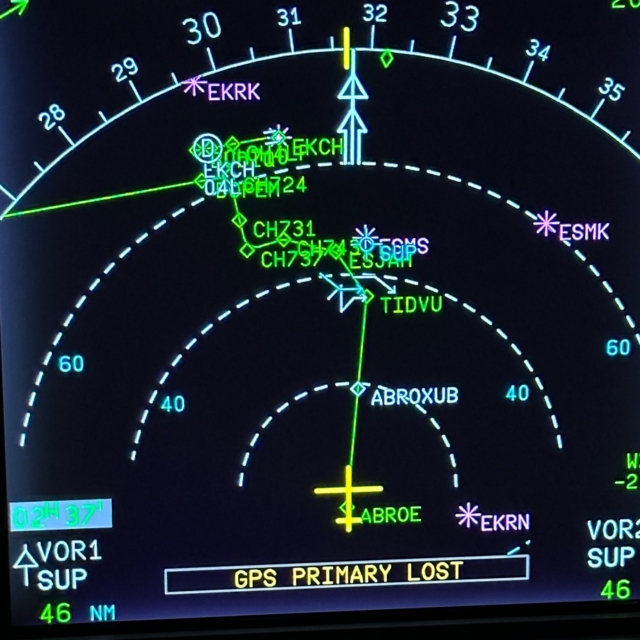
What happens when an aircraft’s GP is jammed? How pilots navigate and stay safe
GPS jamming shown on an Airbus A320 radar
What happens when an aircraft’s GP is jammed? How pilots navigate and stay safe
Thousands of GPS interference incidents are now being reported, creating new challenges for pilots, airlines and air traffic controllers around the world.
Aerospace

25 Nov 2026

Cranfield Aerospace ends Project Fresson and shifts to hydrogen drones
Stingray drone
Cranfield Aerospace ends Project Fresson and shifts to hydrogen drones
Cranfield Aerospace Solutions has ended its plan to convert a nine-passenger Britten-Norman Islander to hydrogen-electric power.
Aerospace

25 Nov 2026

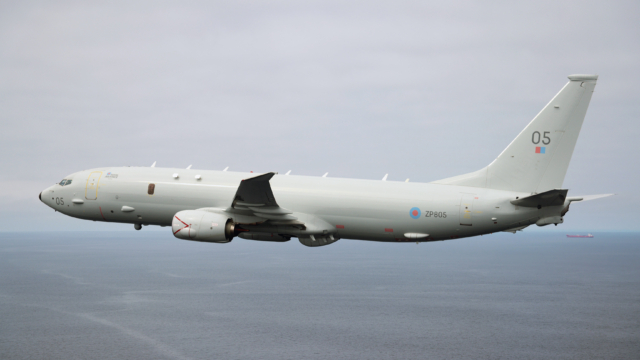
RAF Poseidons bolster NATO’s submarine-hunting abilities during Baltic drill
An RAF-operated P-8A Poseidon MRA1 (serial ZP805) flies over the Moray Firth, Scotland, on 22 July 2021. Image: MOD Crown Copyright/Cpl Adam Fletcher
RAF Poseidons bolster NATO’s submarine-hunting abilities during Baltic drill
RAF Poseidon MRA1s joined forces with participants from eight allied nations in the Baltic to strengthen NATO’s submarine detection and deterrence in Exercise Dynamic Merlin.
Aerospace Defence

25 Nov 2026

Serco awarded £64m US Navy amphibious fleet support contract
The US Navy's Landing Craft Air Cushion (LCAC) hovercraft.
Serco awarded £64m US Navy amphibious fleet support contract
With this contract award, Serco's existing support services for the US Navy now extend to delivering engineering systems for medium and large-sized marine craft and hovercrafts, used in a range of different missions.
Defence Member News

25 Nov 2026

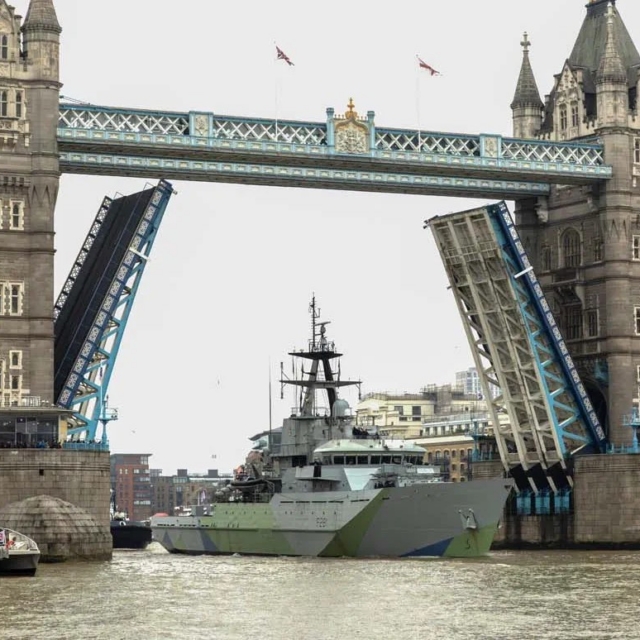
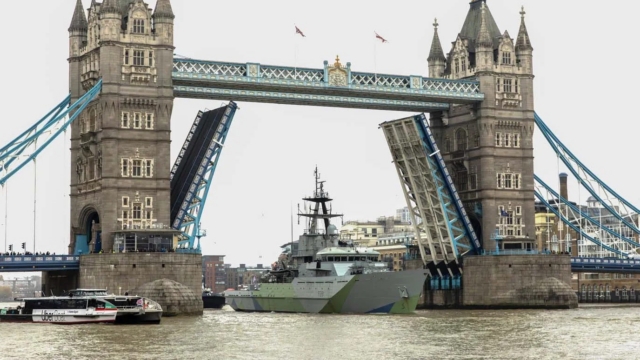
HMS Tyne showcases UK’s ‘Hybrid Navy’ ambition during London visit
HMS Tyne (P281) sails under Tower Bridge during her London visit in late-November 2026. Image: MOD Crown Copyright/POPhot Rory Arnold
HMS Tyne showcases UK’s ‘Hybrid Navy’ ambition during London visit
HMS Tyne has arrived in London to demonstrate the Royal Navy’s drive to integrate autonomous technologies into frontline maritime operations through the ‘Hybrid Navy’ concept.
Defence

25 Nov 2026

Royal Navy minehunting capabilities boosted in £142m REMUS 620 UUV deal with HII
HII's REMUS 620 UUV. Image: HII
Royal Navy minehunting capabilities boosted in £142m REMUS 620 UUV deal with HII
A new £142m contract for HII’s REMUS 620 UUVs will strengthen the Royal Navy’s minehunting capabilities and support specialised jobs in the UK.
Defence

25 Nov 2026

GMV transfers CyberCUBE operations to ESA
ESEC Centre
GMV transfers CyberCUBE operations to ESA
The transfer of CyberCUBE's operations over to the ESA team, signals the end of the commissioning stage and the start of experiments testing cybersecurity systems to protect space assets.
Member News Security Space

24 Nov 2026

Open Cosmos receives EMTECH kit to advance ESA’s NanoMagSat mission
Nano Mag Sat
Open Cosmos receives EMTECH kit to advance ESA’s NanoMagSat mission
A partnership between Open Cosmos and EMTECH SPACE has brought magnetic testing technology to Open Cosmos’ Harwell factory, replicating the conditions of Earth’s magnetic field to test satellites on the ground before launch, set to advance ESA NanoMagSat mission and foster industrial collaboration across Europe.
Member News Space

24 Nov 2026

UK-built X-ray instrument begins work as BepiColombo reaches Mercury
The MIXS flight instrument before the launch of the BepiColombo mission
UK-built X-ray instrument begins work as BepiColombo reaches Mercury
Following an eight-year journey, the joint ESA-JAXA BepiColombo spacecraft has entered orbit around Mercury, preparing the UK-led MIXS X-ray instrument to map the planet's surface composition.
Space

23 Nov 2026

NCSC urges UK firms to check online defences as AI attacks rise
Engineer looking at office servers in data centre
NCSC urges UK firms to check online defences as AI attacks rise
The National Cyber Security Centre has reported a rise in AI-assisted cyber attacks since September. Its guidance asks UK businesses to check for exposure.
Security

25 Nov 2026

GMV transfers CyberCUBE operations to ESA
ESEC Centre
GMV transfers CyberCUBE operations to ESA
The transfer of CyberCUBE's operations over to the ESA team, signals the end of the commissioning stage and the start of experiments testing cybersecurity systems to protect space assets.
Member News Security Space

24 Nov 2026

MI5 and MoD warn UK firms supplying Ukraine of Russian sabotage threat
Sir Ken McCallum, MI5 chief giving annual threat update at Thames House
MI5 and MoD warn UK firms supplying Ukraine of Russian sabotage threat
MI5 and the UK MOD have warned of escalating Russian sabotage attempts across Europe, urging UK defence firms to strengthen security.
Defence Security

24 Nov 2026