HMS Tyne showcases UK’s ‘Hybrid Navy’ ambition during London visit

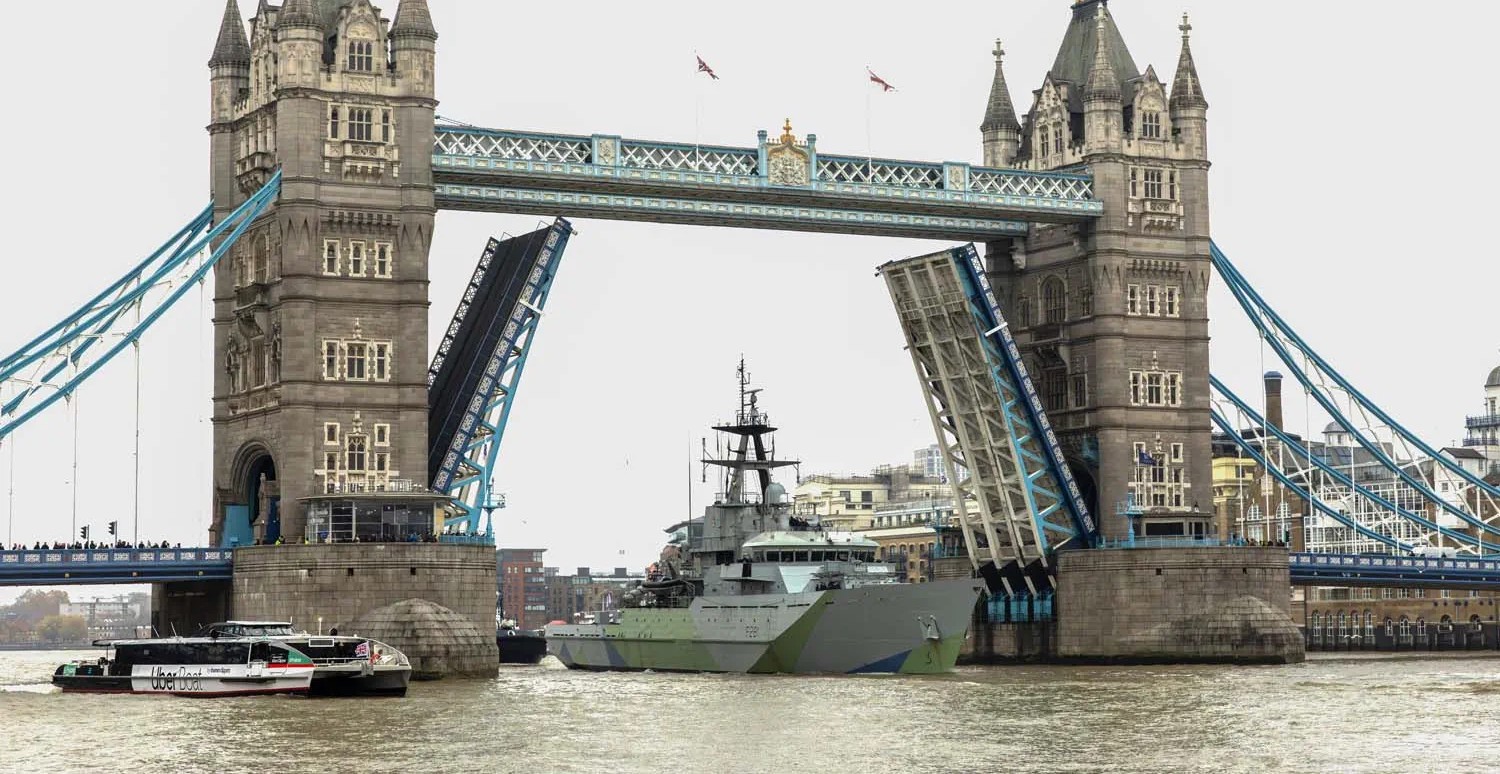
The Royal Navy’s River-class offshore patrol vessel, HMS Tyne (P281), is visiting London this week to demonstrate how crewed warships and autonomous technologies are being integrated into a more flexible and resilient maritime force, as the UK accelerates its transition towards the ‘Hybrid Navy’ concept.
Berthed alongside the World War Two-era Town-class light cruiser, HMS Belfast (C35), Tyne is providing ministers, defence industry leaders and other stakeholders with an opportunity to see how uncrewed systems and autonomous technologies are moving towards operational service alongside traditional naval capabilities.
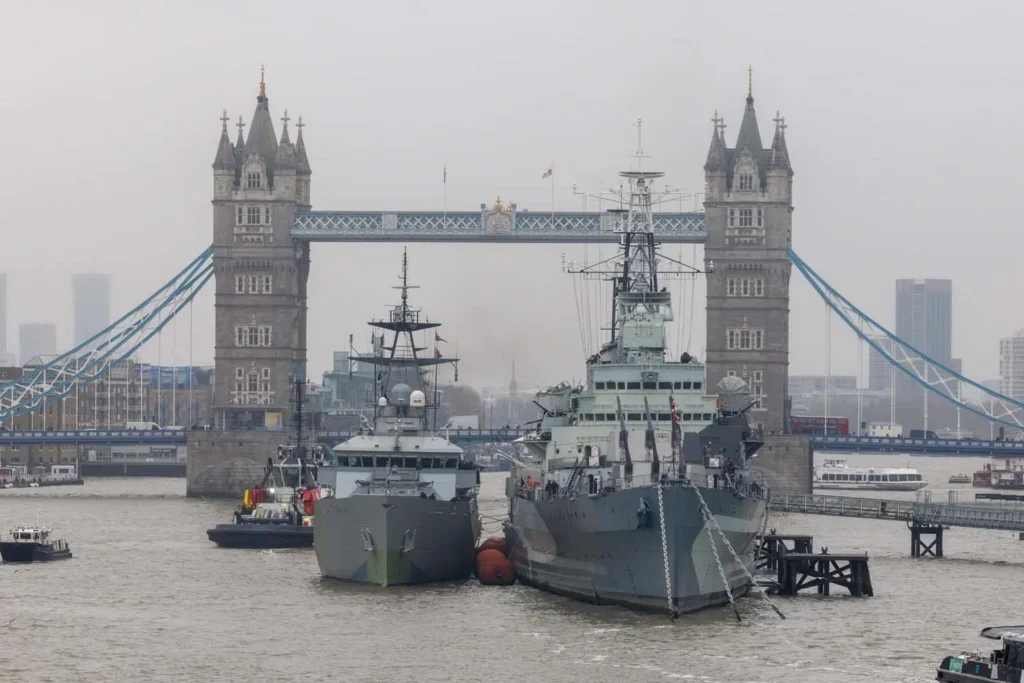
The visit comes as the Royal Navy seeks to adapt to an increasingly complex maritime threat environment, combining the strength of crewed warships, submarines and aircraft with autonomous platforms, sensors and digital networks.
Lt Cmdr Sam Fields, the officer commanding HMS Tyne, said: “HMS Tyne is proud to demonstrate how the Royal Navy is evolving to meet future threats and showcase how emerging technologies and autonomous systems can work alongside our people to create a more capable, resilient and adaptable Navy.”
Showcasing a new era of hybridised crewed and uncrewed naval operations
Among the equipment being demonstrated aboard HMS Tyne are systems from the Royal Navy’s 1st Autonomous Squadron (1AS), including the Kraken K3 Scout uncrewed surface vessel (USV) and its associated control equipment. Examples of uncrewed aerial systems (UAS) from the Fleet Air Arm’s (FAA’s) 700X Naval Air Squadron (NAS) are also being showcased.
The deployment illustrates the Navy’s ambition to move beyond technology trials and demonstrations towards integrating uncrewed and autonomous capabilities into frontline operations.
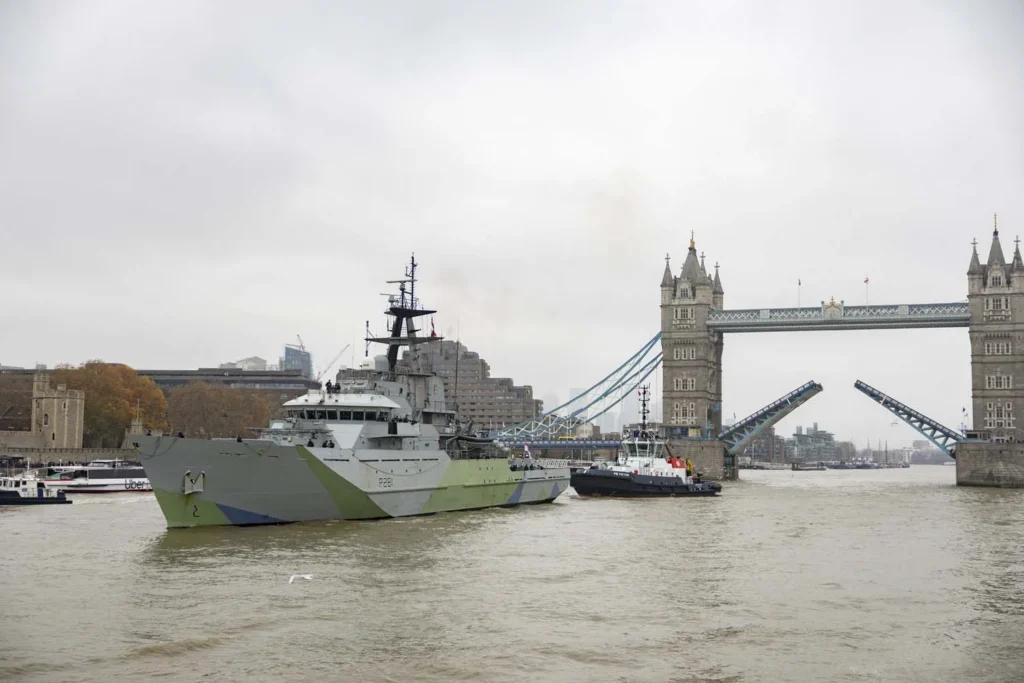
Commissioned at HMNB Portsmouth in Hampshire on 5 November, 1AS represents a significant milestone in that transition. Its role is to develop operational approaches that combine autonomous platforms with the expertise of naval personnel to increase maritime reach, persistence and situational awareness while reducing risks to sailors.
This development forms part of a wider £1.5bn investment in the ‘Hybrid Navy’ concept over a four-year period, which was outlined as part of the 2026 Defence Investment Plan (DIP) reflecting a strategic shift towards a force capable of deploying greater numbers of interconnected, crewed and uncrewed platforms.
Vice Adm Steve Moorhouse, Fleet Commander of the Royal Navy, described the new concept as a means of giving personnel “more reach, more striking power and more options”, adding that it will make the fleet harder to knock out of the fight and quicker to adapt.
Redefining the UK’s maritime capabilities through the ‘Hybrid Navy’ concept
Beyond the equipment demonstrations, Tyne’s visit to London provides an opportunity to engage government departments, defence industry partners, parliamentarians and academics on the future direction of the Royal Navy.
The transition towards a ‘Hybrid Navy’ represents a significant shift in how maritime capability will be generated and deployed. Rather than relying exclusively on traditional crewed platforms, the concept envisages a more distributed force in which autonomous surface, underwater and aerial systems work alongside ships, submarines and aircraft, sharing information and extending operational reach.
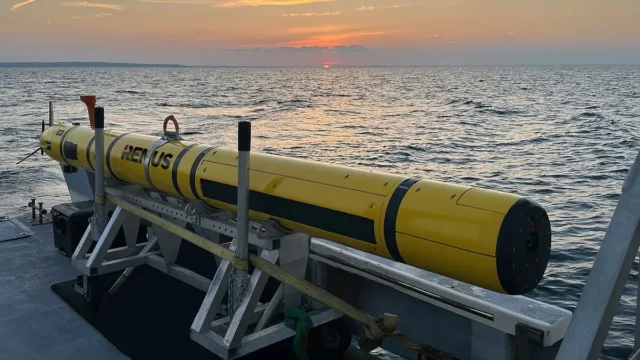
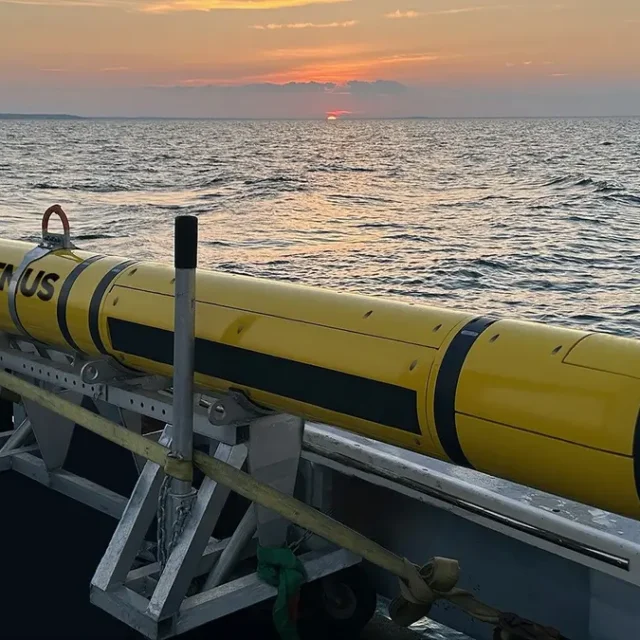
This ambition is underpinned by investment in new autonomous technologies, including a £142m contract for REMUS 620 uncrewed underwater vehicles (UUVs) – manufactured by the US maritime defence technology firm, Huntington Ingalls Industries (HII) – which was announced on 24 November.
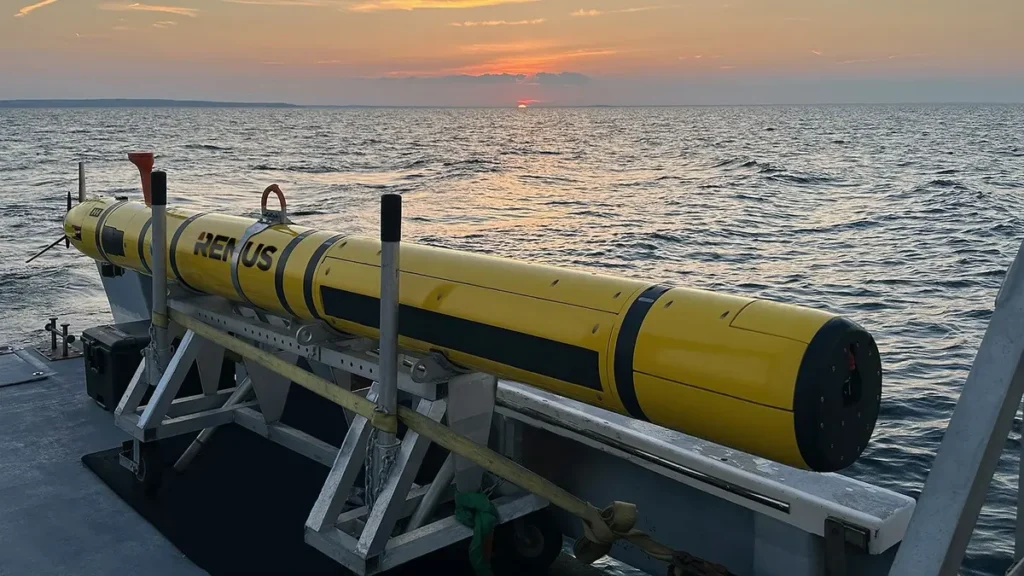
Designed primarily for mine countermeasure (MCM) operations, the autonomous vehicles will enable the Navy to identify and help neutralise underwater threats while reducing the exposure of personnel to dangerous environments. Their integration also highlights the importance of combining international technology partnerships with UK-developed software and specialist industrial expertise.
For the British defence industry, the wider transformation creates opportunities across autonomous platform development, advanced sensors, artificial intelligence (AI), communications, software and systems integration. It also places greater emphasis on ensuring emerging technologies can operate reliably alongside established naval infrastructure and command-and-control (C2) systems.
Crucially, the transformation is not simply about introducing more uncrewed platforms. It is about changing how the Navy operates, enabling personnel to make better-informed decisions, cover more maritime territory and respond more rapidly to evolving threats.
HMS Tyne’s visit therefore offers a tangible demonstration of how the Navy is combining its established maritime expertise with technological innovation to create a more adaptable, connected and resilient maritime fighting force.
Sign up for our newsletter and get our latest content in your inbox.
Similar Reads


Sign up for our newsletter. Select all sectors relevant to you.
Related