Royal Navy minehunting capabilities boosted in £142m REMUS 620 UUV deal with HII

A new £142m contract for HII’s REMUS 620 UUVs will strengthen the Royal Navy’s minehunting capabilities and support specialised jobs in the UK.

HII's REMUS 620 UUV. Image: HII

The UK’s ability to protect vital sea routes is set to receive a significant boost following the Ministry of Defence’s (MOD’s) new £142m investment in advanced uncrewed underwater vehicles (UUVs) from the US maritime defence technology firm, Huntington Ingalls Industries (HII), for the Royal Navy.

Awarded by the UK’s National Armaments Director Group (NADG) after an international competition and revealed on 24 November, the contract will see HII supply an unspecified number of REMUS 620 UUVs, as well as associated equipment and specialist support services to the Royal Navy as part of its Mine-Hunting Capability (MHC) programme.

As well as strengthening the UK’s mine countermeasures (MCM) capability, the deal will bring support services previously delivered overseas to Britain and support 15 specialist jobs, including new work opportunities in Portchester, Hampshire.
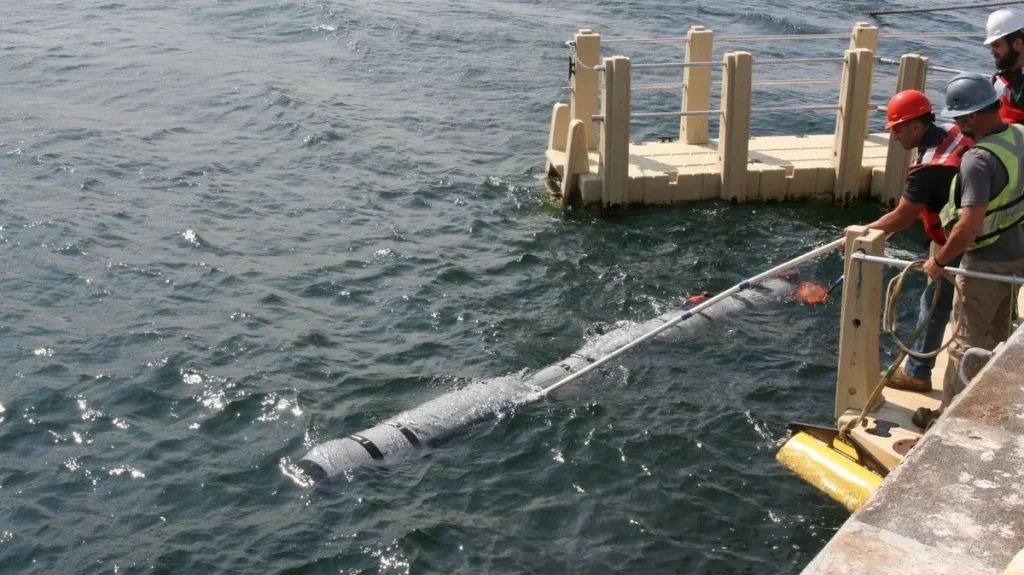
Image: HII
Image: HII

The systems are designed to detect and help dispose of dangerous sea mines, protecting critical shipping lanes and maintaining freedom of navigation in key maritime regions. By deploying uncrewed vehicles to investigate potentially mined waters, the Navy will be able to reduce the exposure of personnel to dangerous environments while making minehunting operations safer, faster and more flexible.

Commenting on the deal, UK Defence Secretary Wes Streeting said: “This investment strengthens our ability to protect freedom of navigation, which is critical to our security and our economy…

“By using the biggest sustained increase in defence spending since the Cold War to put the latest technology in the hands of our sailors, we are taking them out of harm’s way and giving them the tools to keep vital shipping routes open, keeping us all safe in a more dangerous world,” he added.

REMUS 620: A deeper dive into the Royal Navy’s new autonomous minehunter

The REMUS 620 UUV represents an important addition to the Royal Navy’s growing portfolio of autonomous maritime capabilities.

The vehicles can travel at speeds of up to 8kt (9mph), dive to depths of 600m (1,968.5ft) and operate for up to 110 hours on a single mission. Equipped with sonar technology, they can map extensive areas of the seabed, allowing Navy analysts to examine collected information remotely and helping to keep sailors and divers away from potential minefields.
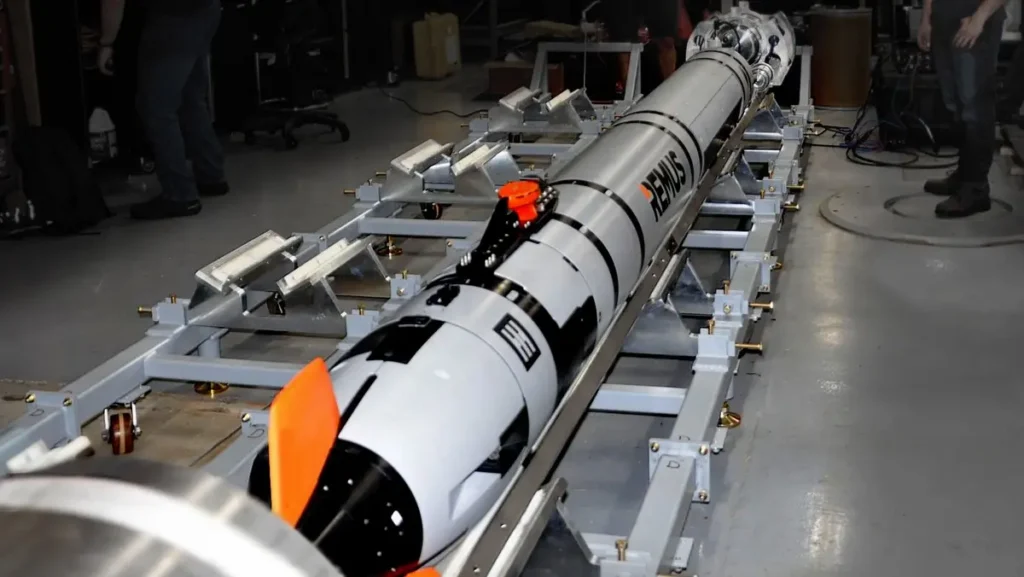
Image: HII
Image: HII

Furthermore, the new REMUS 620 UUVs will also be integrated with UK-developed SeeByte SeeTrack and Neptune software, which is already being employed by the wider Royal Navy and further builds on existing British investment in minehunting technology.

Duane Fotheringham, President of the Unmanned Systems division at HII, added: “HII is proud that the Royal Navy has selected the REMUS UUV and Sea Launcher to support its critical [MCM] missions. This selection reflects the Royal Navy’s confidence in our proven technology and our shared commitment to maritime security.”

2026 DIP: Building the foundations of a ‘Hybrid Navy’

This latest investment marks another key step towards the Royal Navy’s ‘Hybrid Navy’ concept, under which conventional crewed warships will increasingly operate alongside uncrewed, autonomous and remotely operated systems across the air, surface and underwater domains.

The contract complements the recent £90m agreement between the UK and Norway for three new minehunting motherships, which will provide platforms for autonomous MCM operations. The wider programme also aligns with the UK government’s 2026 Defence Investment Plan (DIP), which commits more than £5bn to the acquisition and development of new autonomous systems by 2030.
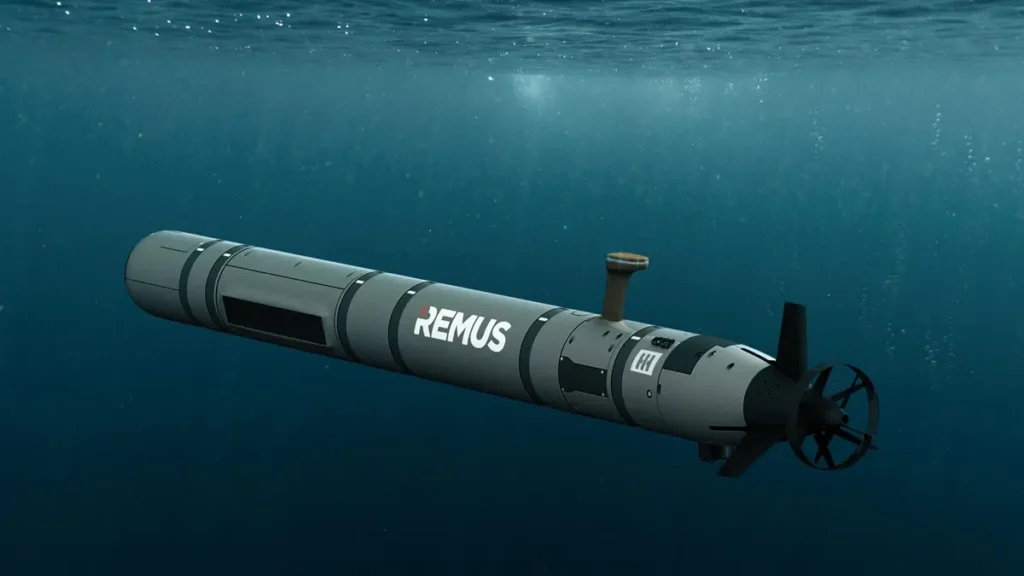
Image: HII
Image: HII

Together, these investments reflect a changing approach to British maritime security, combining established crewed naval platforms with increasingly capable uncrewed technologies.

For the UK, the HII contract offers a dual benefit: enhancing the Royal Navy’s ability to protect strategically important shipping routes while bringing specialist technical support, expertise and employment opportunities into the domestic defence sector.

Related

Cranfield Aerospace ends Project Fresson and shifts to hydrogen drones
Stingray drone
Cranfield Aerospace ends Project Fresson and shifts to hydrogen drones
Cranfield Aerospace Solutions has ended its plan to convert a nine-passenger Britten-Norman Islander to hydrogen-electric power.
Aerospace

25 Nov 2026

RAF Poseidons bolster NATO’s submarine-hunting abilities during Baltic drill
An RAF-operated P-8A Poseidon MRA1 (serial ZP805) flies over the Moray Firth, Scotland, on 22 July 2021. Image: MOD Crown Copyright/Cpl Adam Fletcher
RAF Poseidons bolster NATO’s submarine-hunting abilities during Baltic drill
RAF Poseidon MRA1s joined forces with participants from eight allied nations in the Baltic to strengthen NATO’s submarine detection and deterrence in Exercise Dynamic Merlin.
Aerospace Defence

25 Nov 2026

Project Telum: Babcock secures £340m contract to source RAF Tutor T1 successor
Image: MOD Crown Copyright/Sgt Jack Pritchard
Project Telum: Babcock secures £340m contract to source RAF Tutor T1 successor
Babcock has secured a £340m deal to deliver the RAF’s next-generation light aircraft flying training service from 2030 under Project Telum.
Aerospace Defence

24 Nov 2026

RAF Poseidons bolster NATO’s submarine-hunting abilities during Baltic drill
An RAF-operated P-8A Poseidon MRA1 (serial ZP805) flies over the Moray Firth, Scotland, on 22 July 2021. Image: MOD Crown Copyright/Cpl Adam Fletcher
RAF Poseidons bolster NATO’s submarine-hunting abilities during Baltic drill
RAF Poseidon MRA1s joined forces with participants from eight allied nations in the Baltic to strengthen NATO’s submarine detection and deterrence in Exercise Dynamic Merlin.
Aerospace Defence

25 Nov 2026

Banking barriers could put UK defence contracts at risk, warns Pollard
small business or SME working in manufacturing for defence
Banking barriers could put UK defence contracts at risk, warns Pollard
MPs heard that SC Group, formerly Supacat, had struggled to raise finance despite winning MoD contracts worth tens of millions of pounds.
Defence

24 Nov 2026

Project Telum: Babcock secures £340m contract to source RAF Tutor T1 successor
Image: MOD Crown Copyright/Sgt Jack Pritchard
Project Telum: Babcock secures £340m contract to source RAF Tutor T1 successor
Babcock has secured a £340m deal to deliver the RAF’s next-generation light aircraft flying training service from 2030 under Project Telum.
Aerospace Defence

24 Nov 2026

GMV transfers CyberCUBE operations to ESA
ESEC Centre
GMV transfers CyberCUBE operations to ESA
The transfer of CyberCUBE's operations over to the ESA team, signals the end of the commissioning stage and the start of experiments testing cybersecurity systems to protect space assets.
Member News Security Space

24 Nov 2026

Open Cosmos receives EMTECH kit to advance ESA’s NanoMagSat mission
Nano Mag Sat
Open Cosmos receives EMTECH kit to advance ESA’s NanoMagSat mission
A partnership between Open Cosmos and EMTECH SPACE has brought magnetic testing technology to Open Cosmos’ Harwell factory, replicating the conditions of Earth’s magnetic field to test satellites on the ground before launch, set to advance ESA NanoMagSat mission and foster industrial collaboration across Europe.
Member News Space

24 Nov 2026

UK-built X-ray instrument begins work as BepiColombo reaches Mercury
The MIXS flight instrument before the launch of the BepiColombo mission
UK-built X-ray instrument begins work as BepiColombo reaches Mercury
Following an eight-year journey, the joint ESA-JAXA BepiColombo spacecraft has entered orbit around Mercury, preparing the UK-led MIXS X-ray instrument to map the planet's surface composition.
Space

23 Nov 2026

NCSC urges UK firms to check online defences as AI attacks rise
Engineer looking at office servers in data centre
NCSC urges UK firms to check online defences as AI attacks rise
The National Cyber Security Centre has reported a rise in AI-assisted cyber attacks since September. Its guidance asks UK businesses to check for exposure.
Security

25 Nov 2026

GMV transfers CyberCUBE operations to ESA
ESEC Centre
GMV transfers CyberCUBE operations to ESA
The transfer of CyberCUBE's operations over to the ESA team, signals the end of the commissioning stage and the start of experiments testing cybersecurity systems to protect space assets.
Member News Security Space

24 Nov 2026

MI5 and MoD warn UK firms supplying Ukraine of Russian sabotage threat
Sir Ken McCallum, MI5 chief giving annual threat update at Thames House
MI5 and MoD warn UK firms supplying Ukraine of Russian sabotage threat
MI5 and the UK MOD have warned of escalating Russian sabotage attempts across Europe, urging UK defence firms to strengthen security.
Defence Security

24 Nov 2026