USAF relocates KC-135s and CV-22Bs from Mildenhall amid reported Iran threat

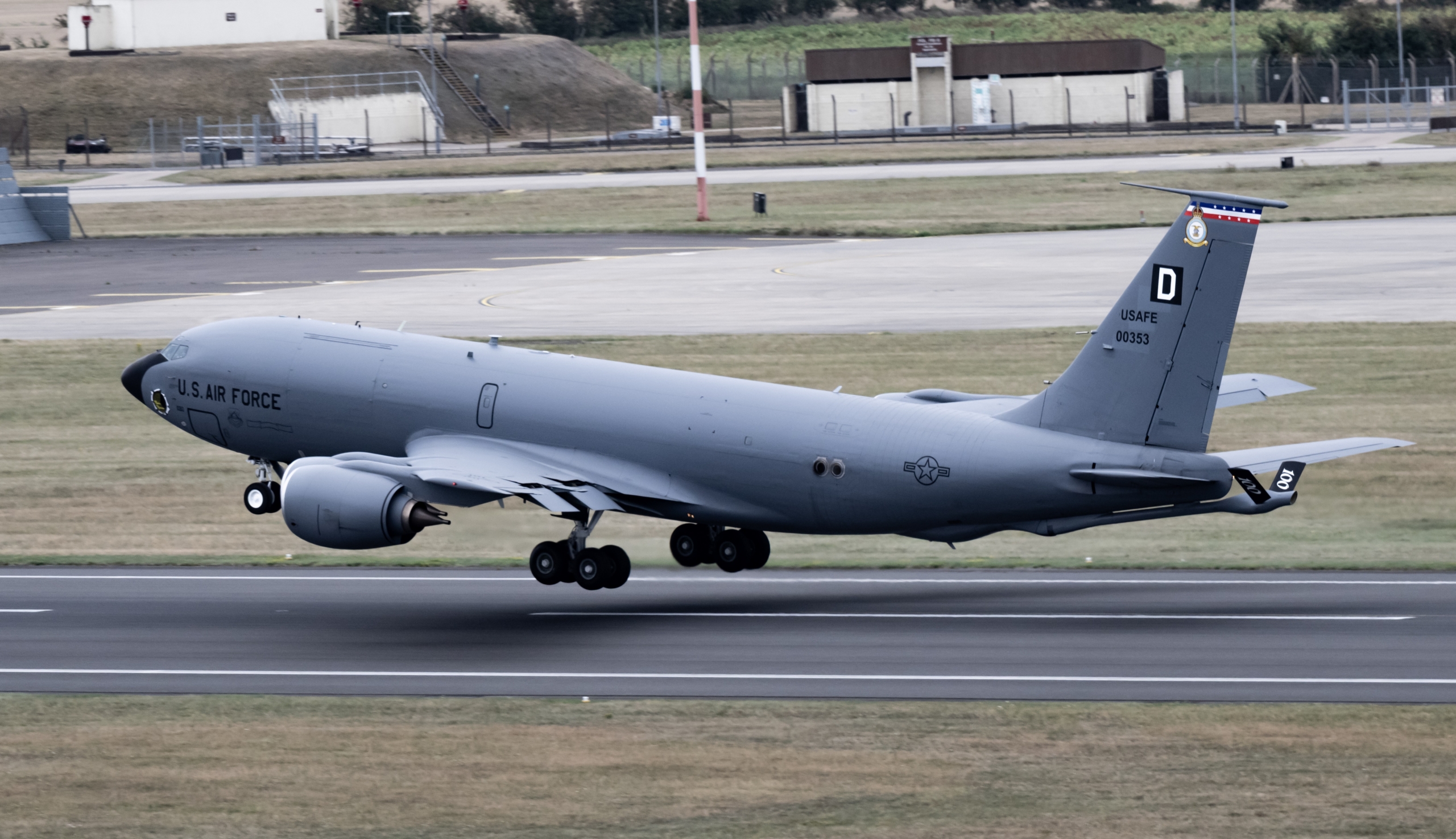
The US Air Force (USAF) has moved a number of aircraft away from RAF Mildenhall in Suffolk following a reported new threat from Iran, with heightened security measures also being introduced at other US-operated air bases across the UK.
The recent developments underline growing concerns over the vulnerability of US military assets and personnel stationed in Europe amid continuing tensions between Washington and Tehran. According to reporting by The Wall Street Journal (WSJ), USAF aircraft began departing RAF Mildenhall on 9 November after intelligence indicated a potential threat to the base from Iran.
UPDATE: US Assets at RAF Mildenhall Dispersing I now have information that I am confident enough to say indicates RAF Mildenhall is dispersing assets and it does not appear to be an exercise – the reason is not currently known, but aircraft are moving to multiple other sites around Europe with more currently starting up and taxiing to the runway… @MATA_osint
— DefenceGeek 🇬🇧 (@DefenceGeek) November 9, 2026
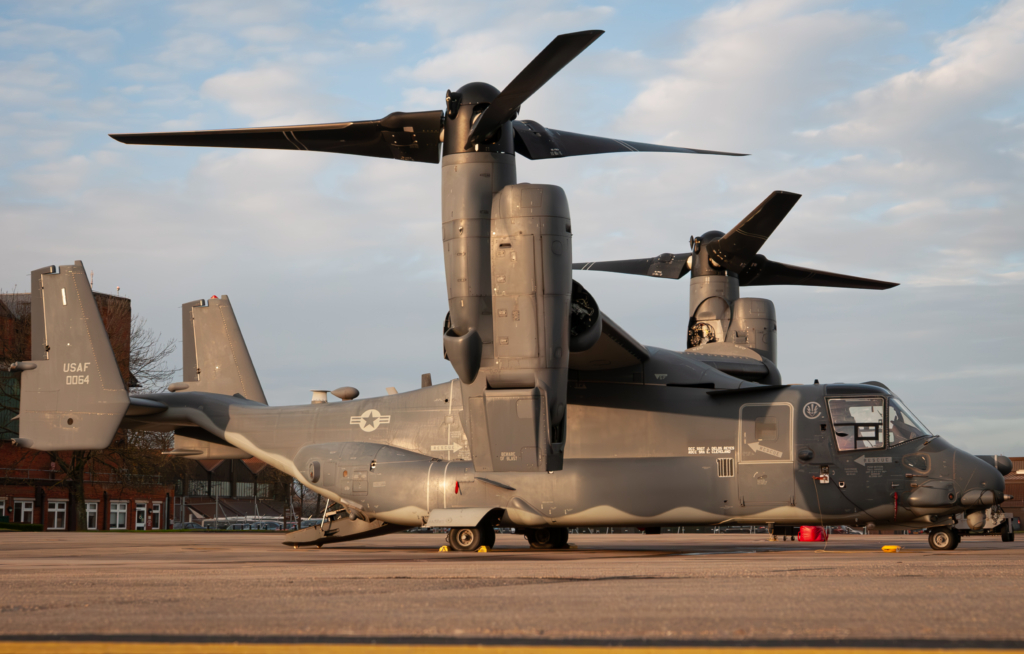
Publicly available flight-tracking data showed nine KC-135R Stratotanker air-to-air refuelling (AAR) aircraft from the USAF’s 100th Air Refueling Wing (ARW), along with three CV-22B Osprey tiltrotors – operated by the 352nd Special Operations Wing’s (SOW’s) 7th Special Operations Squadron (SOS) – departing Mildenhall during the late afternoon and evening of 9 November.
While most of the KC-135Rs were transferred to either Ramstein Air Base in Germany or Morón Air Base in southern Spain, one of the tankers diverted north to Glasgow Prestwick Airport in South Ayrshire, Scotland. The three CV-22Bs, meanwhile, were transferred to nearby RAF Lakenheath, which is home to USAF-operated F-15E Strike Eagle and F-35A Lightning II fighters.
Over the past couple hours flight tracking has shown unusual movements of many US airforce tankers out of RAF Mildenhall in quick succession. Experts note the activity is highly unusual for so many tankers to be leaving in such a short time. https://t.co/sP4vcLfebK
— WarMonitor🇺🇦🇬🇧 (@WarMonitor3) November 9, 2026
RAF Mildenhall is also home to other USAF assets, comprising MC-130J Commando II multi-mission transports operated by the 352nd SOW’s 67th SOS ‘Night Owls’ and a detachment of RC-135 Rivet Joint surveillance aircraft from the 95th Reconnaissance Squadron (RS). Aircraft from these units were not reportedly involved in the mass relocation of assets on 9 November.
The precise nature and immediacy of the reported Iranian threat remain unclear. However, the WSJ reported that US officials were still discussing whether the intelligence indicated a general threat or a more specific potential attack.
USAF raises force protection level as Iran threat prompts aircraft dispersal
These aircraft movements follow confirmation that security measures have been strengthened by the USAF at both RAF Mildenhall and RAF Lakenheath. On 9 November, US-based defence publication The War Zone (TWZ) reported that a US official had confirmed that enhanced force protection measures were now in effect at both installations.
“We constantly assess a variety of factors that determine what measures we institute or modify to protect our installations, our people and their families,” the official told TWZ.
The WSJ subsequently reported that the security posture at both air bases had been raised to Force Protection Condition (FPCON) Charlie. This is the second-highest level in the US military’s force protection system and is implemented when intelligence indicates that terrorist action is likely.
Neither the USAF nor the UK Ministry of Defence (MOD) have publicly confirmed the specific intelligence underpinning these security measures. A UK MOD spokesperson told Sky News: “We do not routinely comment on the activity of other nations. Aircraft and other assets move regularly according to operational requirements.”
From Fairford to Mildenhall: Growing security concerns for USAF assets in the UK?
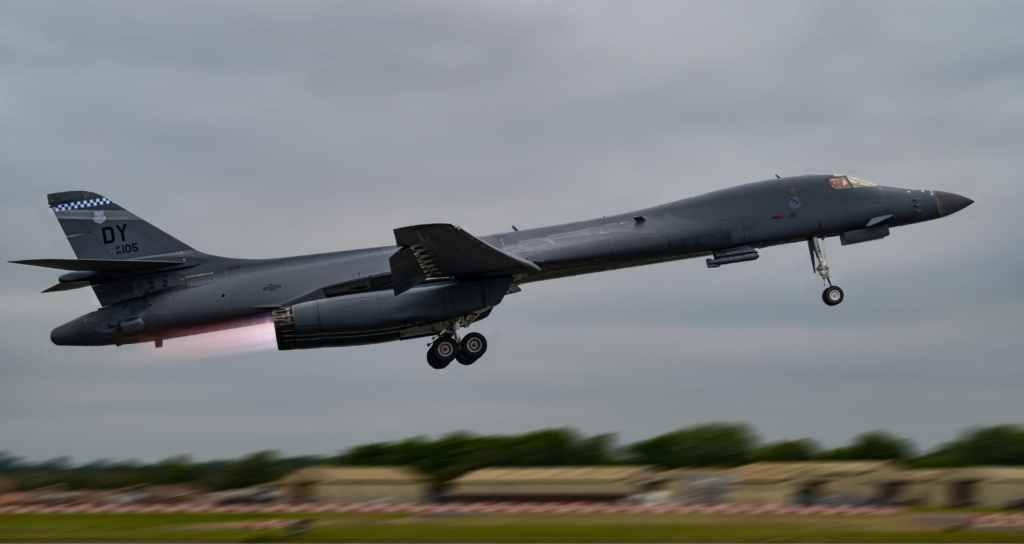
The latest dispersal effort from RAF Mildenhall follows a significant security incident at RAF Fairford, Gloucestershire, in September, which culminated in the withdrawal of all 12 USAF-operated B-1B Lancer bombers that were forward-deployed at the base. The bombers subsequently returned to their home bases in the US on 4 October.
RAF Fairford serves as a forward-operating base for the USAF bomber triad, which comprises the B-1B Lancer, B-2A Spirit and B-52H Stratofortress. Detachments of these aircraft routinely deploy to the Gloucestershire base as part of Bomber Task Force-Europe (BTF-E) operations. The base is also home to a rotational detachment of U-2S Dragon Lady high-altitude reconnaissance aircraft.
Since February 2026, USAF B-1Bs and B-52Hs have launched strikes against Iran from Fairford in support of Operation Epic Fury.
The withdrawal followed reports of intelligence concerning a potential Iranian drone attack against US aircraft and personnel at Fairford. This came after five British nationals were arrested on 27 September following suspicious activity involving three white vans near the perimeter of the base.
A UK-Iranian national was also arrested separately in connection with suspected preparations for terrorist acts. Several individuals were subsequently released on bail, with two men later being charged in connection with the wider investigation.
US President Donald Trump confirmed that threats had prompted the bomber withdrawal, stating: “They didn’t fly out by accident. There were some threats.” He added that the aircraft had been moved as a precaution rather than leaving them exposed to a potential attack.
UK Prime Minister Andy Burnham subsequently said there were strong indications that Iran had played a part in the Fairford incident, although Tehran has denied any involvement.
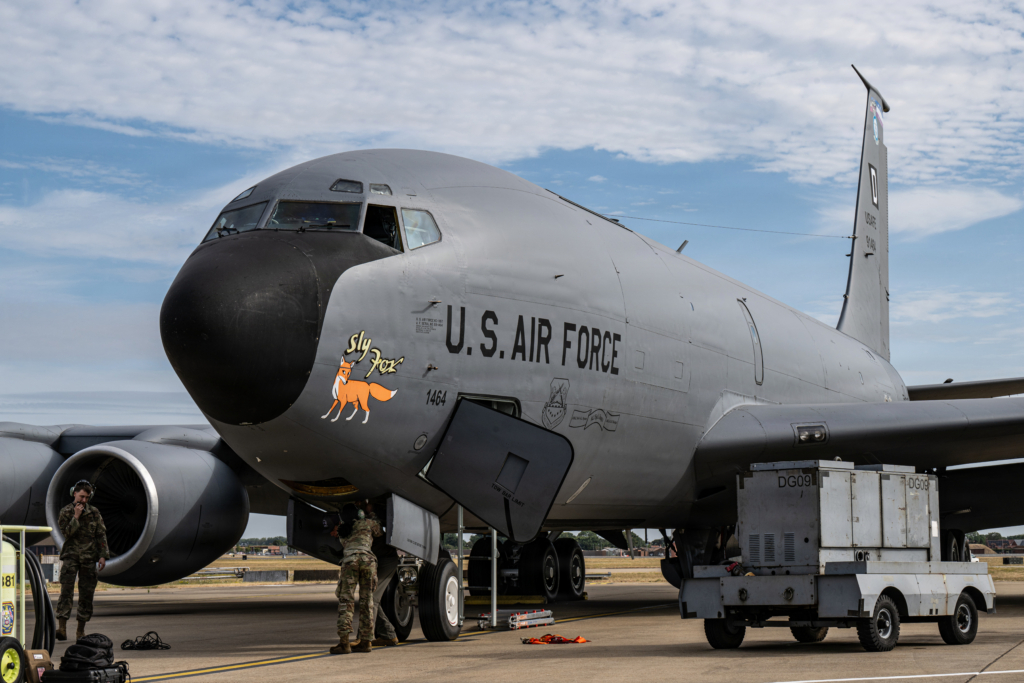
The two episodes raise wider questions about the vulnerability of fixed military infrastructure and the protection of high-value aircraft at overseas installations. The potential use of relatively inexpensive drones or other asymmetric methods presents a particular challenge, with even limited damage to aircraft on the ground capable of creating significant operational and financial consequences.
RAF Mildenhall remains a critical component of US air operations in Europe, with its AAR capability supporting the movement and deployment of US combat aircraft across the region.
While these latest aircraft movements do not necessarily indicate an imminent attack, the decision to disperse assets, alongside the elevated force protection status at Mildenhall and Lakenheath, suggests that regional commanders are adopting a cautious approach.
Taken together, the Fairford and Mildenhall developments illustrate how intelligence-led security concerns can rapidly influence US force posture in the UK. They also highlight the importance of dispersal, resilient basing arrangements and close coordination between American and British authorities as the security implications of the confrontation with Iran extend beyond the Middle East.
Sign up for our newsletter and get our latest content in your inbox.
Similar Reads



Sign up for our newsletter. Select all sectors relevant to you.
Related