General Atomics

Met launches new drone programme

The Metropolitan Police Service has launched an innovative trial which sees drones dispatched to support police officers responding to emergencies.


Image courtesy The Met

The new technology will see police responding more quickly to emergency calls, with drones feeding intelligence to officers arriving at incidents so they can make London safer than ever before.

The drones will capture high quality imagery within minutes, providing real-time situational awareness of incidents and ensuring Londoners benefit from more rapid, informed and effective police responses.

As part of a response to a 999 call, a drone will be launched remotely from the force’s control room and piloted by specially trained operators. The drones will arrive on the scene within two minutes and from there will stream high-quality footage to assist officers both on the ground and in the control room.

They will be used for a variety of frontline policing needs, including searching for missing people, tracing a suspect, or arriving quicker to capture evidence at the scene of an incident.

The drones will provide intelligence quicker – including on a suspects where abouts and real-time descriptions of a suspect’s appearance. This will help officers catch criminals and stop them from causing further harm to communities.

The new drones are quicker, quieter, cheaper and more environmentally friendly than existing police helicopters, whilst delivering the same operational effects. Subject to a successful trial, they will be an important part of the Met’s mission to use technology to help make the capital safe.

This new pilot, known as Drone as First Responder (DFR), is being introduced in London under the National Police Chiefs’ Council’s drones programme.

The project has initially launched in Islington, with the Met aiming to roll it out to two more sites across London before the end of the year, covering the West End and Hyde Park.

Assistant Commissioner Laurence Taylor, the national lead for drones, said: “Our Drone as First Responder programme will see police resources arriving at crime scenes across London quicker. They will assist in tracing trace suspects, locate locating missing people and delivering intelligence to our officers as they respond to Londoners when they need us most.

“We are building a Met that is more precise and efficient than ever before, and this new technology gives us a vital new tool to tackle crime in the capital.”

Superintendent Taryn Evans, who leads the NPCC Drones Programme and the pilot for the Met, said: “This is an exciting opportunity to bring the many benefits and efficiencies of the Drone as First Responder programme to London, supporting both officer and community safety.

“We’ve been running trials of the programme in several different police forces with a range of operating environments from urban to rural and the technology has proven a gamechanger in many incidents.

“This pilot with the Met brings together our two years of learning and development and I look forward to seeing how it can enhance the operational response.”

How do the drones work?
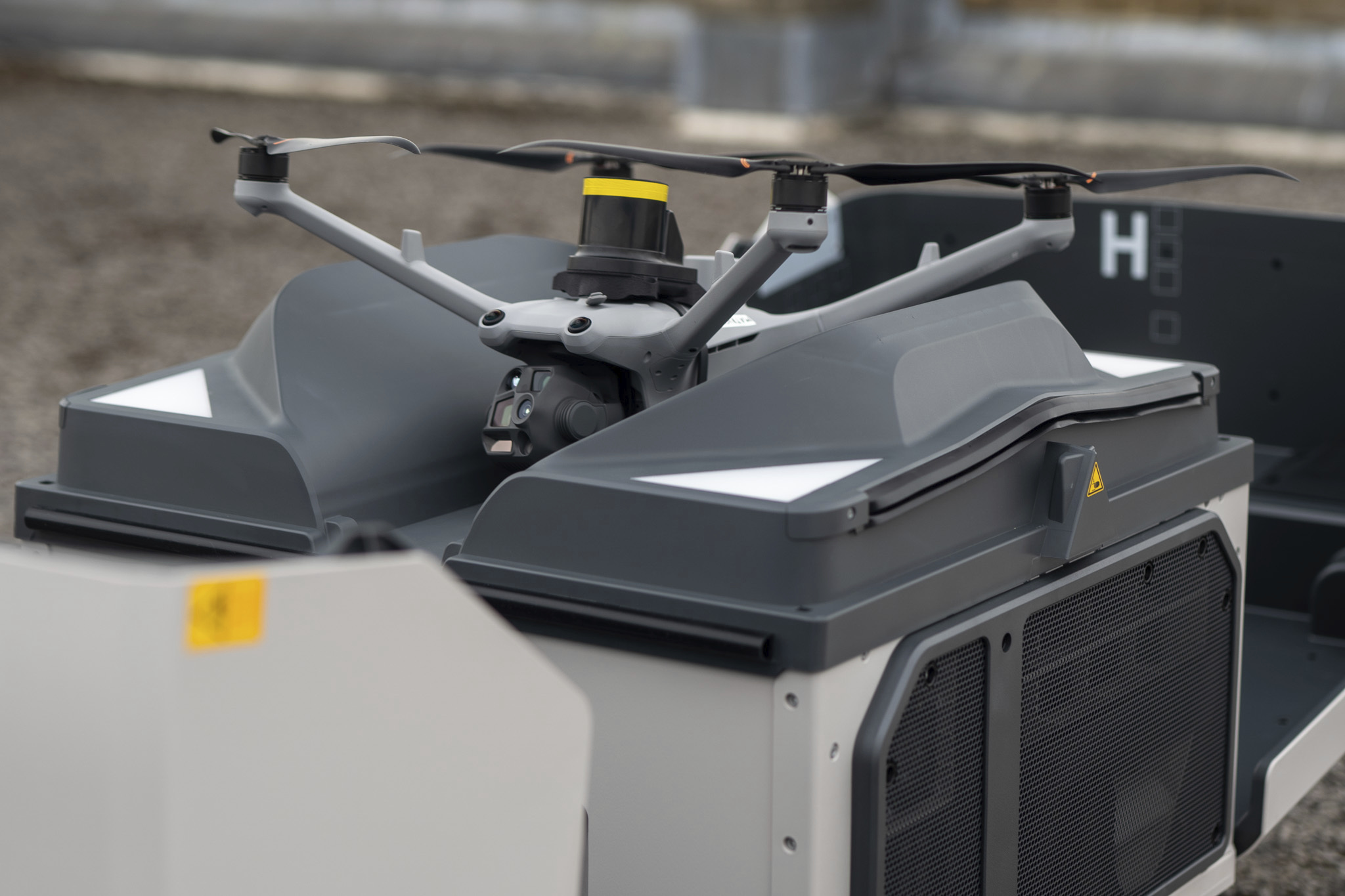
Drones are housed in special boxes on the roofs of selected police buildings. The drones sit charging and waiting for a call to launch.

The Met’s control room will make the decision to deploy a drone and it will be remotely launched to the incident.

Once overhead a scene, the drone’s imagery will be transmitted in real-time to the specific control room or mobile user, supporting the police response and recording footage for evidence.

At the end of the deployment, the drone will return to its landing area and the weather-proof box will close so it can be charged and prepared for its next mission.

The drone’s video feed will help the control room to tailor the emergency response and send the right resources.

While the Met has used drones to assist in policing previously, this has been as an asset that is often requested in advance. The DFR programme, will mean that drones will able to assist within minutes of a request for assistance.

Other police forces, such as Norfolk Constabulary, Cleveland Police, West Midlands Police, Hampshire & Isle of Wight Constabulary and Thames Valley Police Joint Operations Unit are also in the trial phase of this technology, which has been pioneered by the National Police Chiefs’ Council (NPCC).

Related

Enhanced aviation programme to help college students into airport careers
TSCG and MAG aviation course launch 08.10.2026
Enhanced aviation programme to help college students into airport careers
Manchester Airports Group (MAG) is building on its partnership with Trafford & Stockport College to bring industry insights into the classroom and enable young people to get hands-on experience relevant to today's aviation sector.
Aerospace

13 Oct 2026

3 innovative technologies selected for trial at Glasgow Airport
Glasgow Airport with Edelweiss aircraft
3 innovative technologies selected for trial at Glasgow Airport
The companies selected are part of an initiative supporting the development and adoption of new technologies across the UK’s aviation sector.
Aerospace

13 Oct 2026

UK blames Iran’s Revolutionary Guards for RAF Fairford ‘bomb plot’
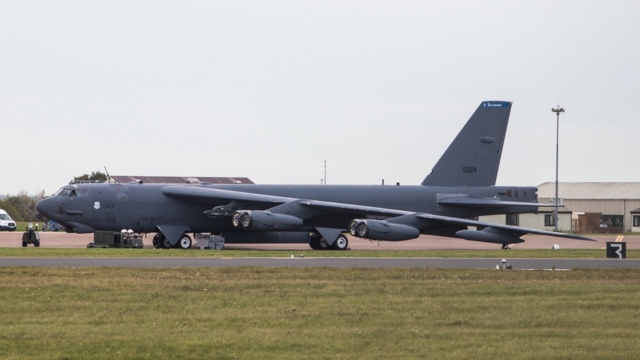
Boeing B-52H Stratofortress USAF at RAF Fairford
UK blames Iran’s Revolutionary Guards for RAF Fairford ‘bomb plot’
UK government accuses Iran's Revolutionary Guards of directing a suspected plot targeting RAF Fairford, following seven arrests.
Aerospace Defence Security

13 Oct 2026

MI5 warns UK defence businesses to strengthen security
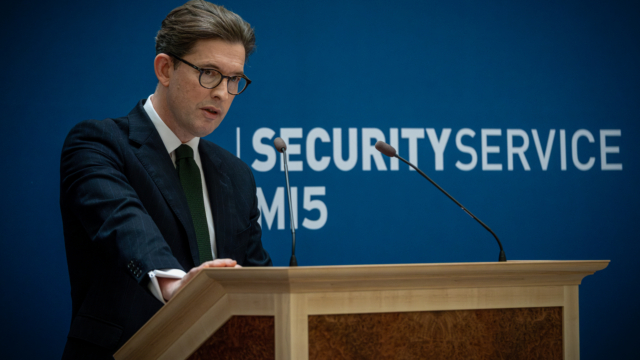
Sir Ken McCallum, MI5 chief giving annual threat update at Thames House
MI5 warns UK defence businesses to strengthen security
Defence suppliers and critical infrastructure operators must strengthen protection against sabotage, cyber attacks and drone threats, MI5 chief Sir Ken McCallum has warned.
Defence Security

13 Oct 2026

UK firm MARSS wins £370m Kuwait counter-drone contract, creating 100 jobs
MARSS signs £370 million contract for nationwide counter-drone defence of Kuwait
UK firm MARSS wins £370m Kuwait counter-drone contract, creating 100 jobs
MARSS will deploy a nationwide AI-enabled counter-drone network for Kuwait under a £370m contract, creating around 100 skilled jobs in the UK.
Defence

13 Oct 2026

UK blames Iran’s Revolutionary Guards for RAF Fairford ‘bomb plot’
Boeing B-52H Stratofortress USAF at RAF Fairford
UK blames Iran’s Revolutionary Guards for RAF Fairford ‘bomb plot’
UK government accuses Iran's Revolutionary Guards of directing a suspected plot targeting RAF Fairford, following seven arrests.
Aerospace Defence Security

13 Oct 2026

UK and Germany back SaxaVord in new European space launch deal
SaxaVord Spaceport, Shetland
UK and Germany back SaxaVord in new European space launch deal
The UK and Germany have agreed to deepen space launch cooperation, with Scotland's SaxaVord Spaceport securing European access to orbit.
Aerospace Defence Space

9 Oct 2026

Excelerate Technology to build UK CNI robotic security solution
Satellite in Earth orbit
Excelerate Technology to build UK CNI robotic security solution
In a project co-funded by the European Space Agency Business Applications and Space Solutions (ESA BASS) and supported by the UK Space Agency, Excelerate Technology will build and demonstrate how space-enabled assets can provide innovative safety and security solutions, including protection of Critical National Infrastructure (CNI) at a site in the UK.
World Space Week: How British technology will help ESA return to the Moon
ESA Argonaut
World Space Week: How British technology will help ESA return to the Moon
As Europe prepares to return to the Moon, British-developed LEIA LiDAR technology will help ESA's Argonaut lander autonomously identify safe touchdown zones on the lunar surface.
Space

5 Oct 2026

MI5 warns UK defence businesses to strengthen security
Sir Ken McCallum, MI5 chief giving annual threat update at Thames House
MI5 warns UK defence businesses to strengthen security
Defence suppliers and critical infrastructure operators must strengthen protection against sabotage, cyber attacks and drone threats, MI5 chief Sir Ken McCallum has warned.
Defence Security

13 Oct 2026

Two in five UK workers lack training on AI-powered cyber threats
Cyber security being done by a man on a computer
Two in five UK workers lack training on AI-powered cyber threats
Adding AI to the already complex business of cyber security has the potential to make attacks more sophisticated and harder to spot.
Security

13 Oct 2026

UK blames Iran’s Revolutionary Guards for RAF Fairford ‘bomb plot’
Boeing B-52H Stratofortress USAF at RAF Fairford
UK blames Iran’s Revolutionary Guards for RAF Fairford ‘bomb plot’
UK government accuses Iran's Revolutionary Guards of directing a suspected plot targeting RAF Fairford, following seven arrests.
Aerospace Defence Security

13 Oct 2026