RAF Chinooks deploy aboard Queen Elizabeth for maritime training drill

RAF Chinooks have embarked aboard HMS Queen Elizabeth, testing the UK’s heavy-lift tactical transport capabilities in a maritime environment during Exercise Hathi Pol.

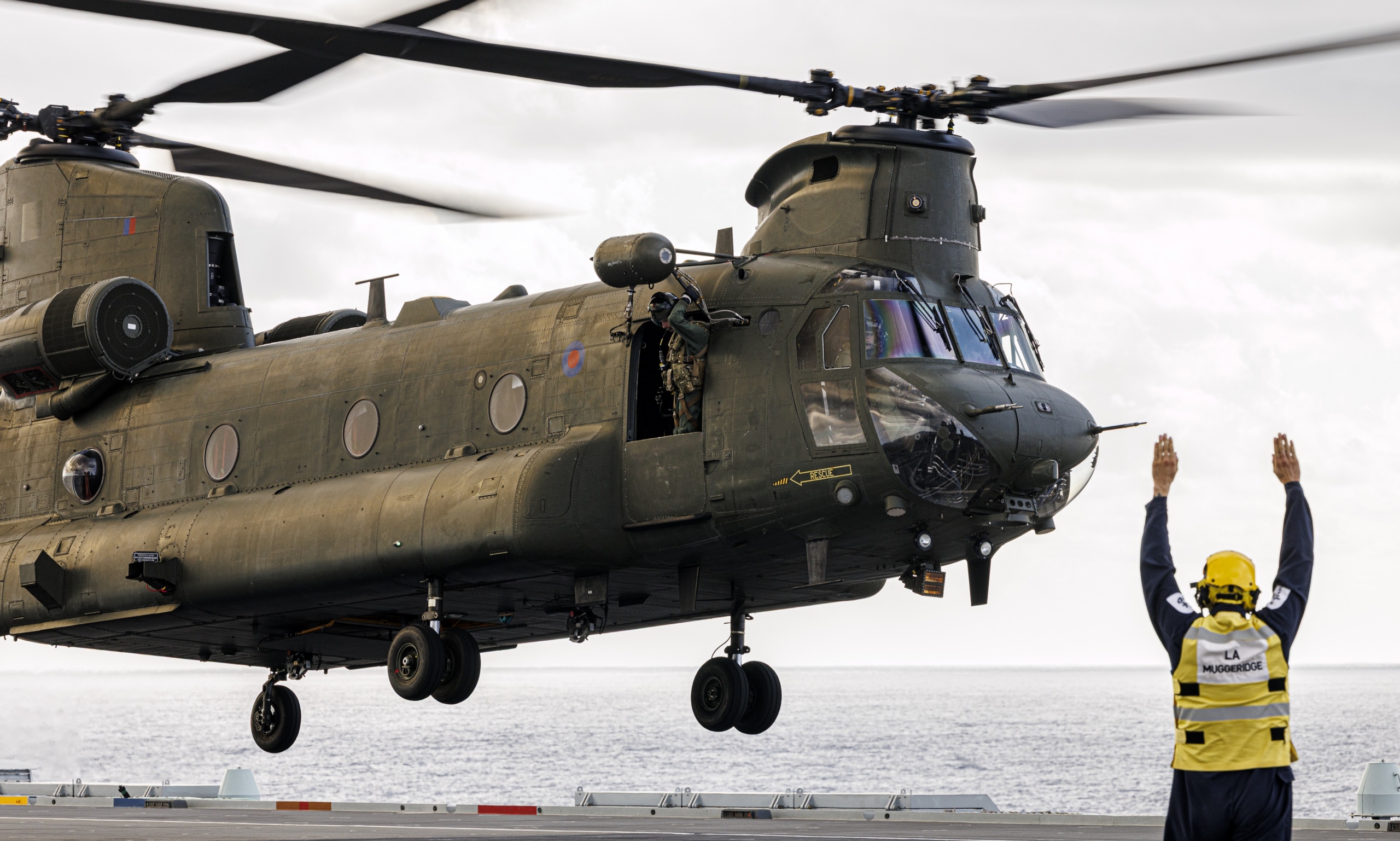
An RAF-operated Chinook HC6A (serial ZH896) lifts off from the flight deck of HMS Queen Elizabeth (R08) during Exercise Hathi Pol on 20 October 2026. Image: MOD Crown Copyright/Royal Air Force

The Royal Air Force (RAF) has deployed two Chinook HC6A heavy-lift tactical transport helicopters aboard the Royal Navy’s flagship aircraft carrier, HMS Queen Elizabeth. The two-week programme of maritime aviation training is intended to strengthen the UK’s ability to conduct heavy-lift operations from sea-based platforms.

The activity took place during Exercise Hathi Pol, a longstanding joint training programme that is designed to develop interoperability between the RAF and Royal Navy.

Led by the Odiham-based No 27 Squadron, with support from personnel from No 7 Squadron, the deployment involved two Chinook HC6As (serials ZH777 and ZH896) and approximately 80 RAF personnel operating alongside the carrier’s company in the Western Mediterranean and Eastern Atlantic.
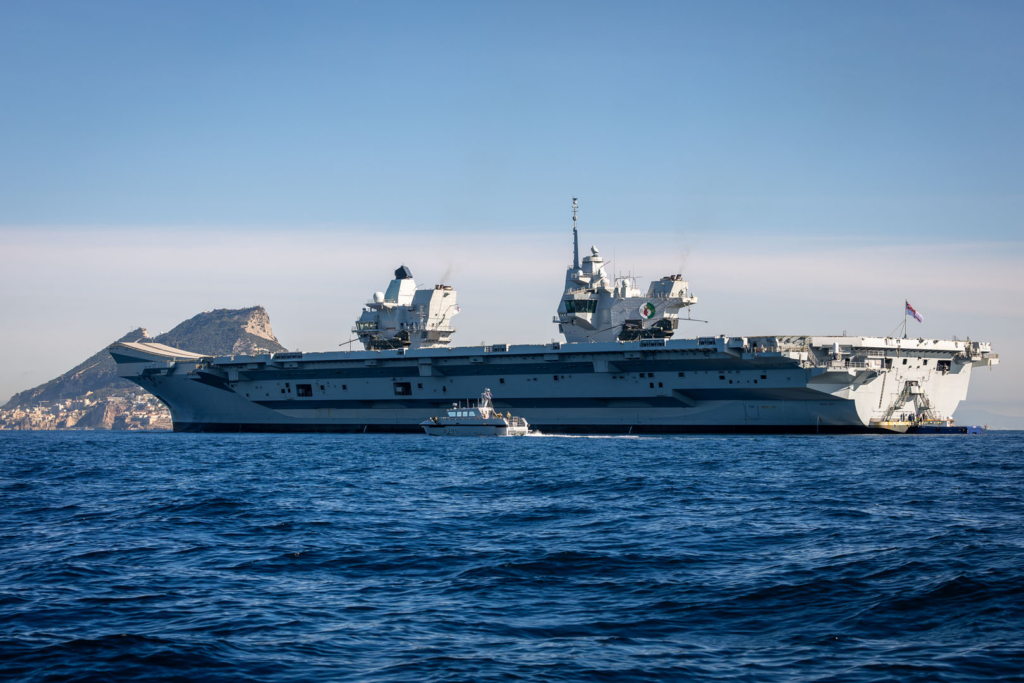
Image: MOD Crown Copyright/Royal Navy

The exercise focused on developing the specialist skills required to operate and sustain RAF Chinook operations in the challenging maritime environment, including Deck Landing Qualification (DLQ) and Embarked Aviation Qualification (EAQ) training activities.

According to the RAF, the exercise also provided valuable experience and opportunities for engineers and other support personnel responsible for maintaining aviation capability during embarked operations aboard the Royal Navy’s two ‘flattops’. Exercise Hathi Pol further aims to bolster “the RAF’s ability to deploy rapidly alongside [its] partner services wherever required.”

Taking the Chinook to sea aboard HMS Queen Elizabeth

Operating a large, land-based helicopter from a moving aircraft carrier presents a number of challenges, requiring close coordination between aircrew, engineers and Royal Navy personnel.

Unlike naval helicopters – such as the Merlin HM2 – the Chinook is not specifically designed for maritime operations. Its exposure to high ocean winds and saltwater spray creates additional considerations, particularly regarding aircraft protection and corrosion.

Image: MOD Crown Copyright/Royal Navy

Flight operations demand close integration between RAF aircrew and the carrier’s flight deck, flight control, bridge and operations room teams. Personnel must coordinate aircraft movements and landing activities within the constraints of a moving ship, while also maintaining safe operations in an unfamiliar environment.

Exercise Hathi Pol provided an opportunity for both services to refresh these skills, with HMS Queen Elizabeth and her embarked crew also benefitting from the experience of handling aircraft that are not routinely operated by sailors from her busy flight deck.

Commenting on the drill, Sqn Ldr Grahame – the deputy commander of No 27 Squadron and detachment commander for Exercise Hathi Pol – said: “[No] 27 Squadron’s deployment on Ex Hathi Pol marked a significant milestone for both the squadron and HMS Queen Elizabeth…
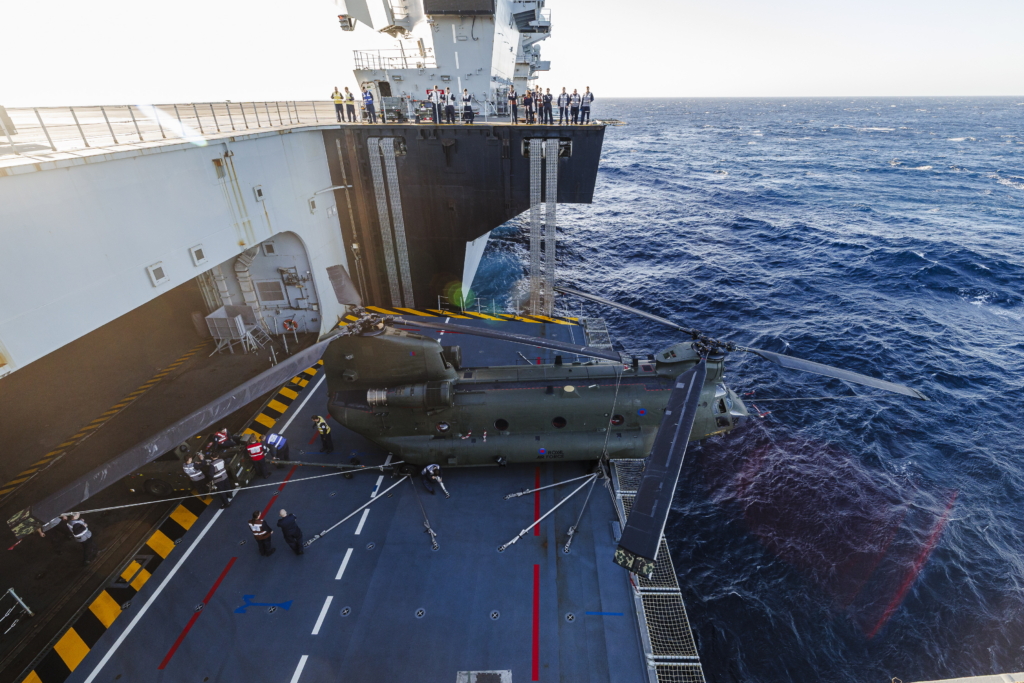
Image: MOD Crown Copyright/AS1 Joseph Head

“Chinooks from [No] 27 Squadron were the first embarked aviation to operate from [Queen Elizabeth] in over two years, providing an important opportunity for aircrew and [the] ship’s company to work together and refresh their embarked maritime experience…

“Departing the familiar training areas of the English Channel, [Queen Elizabeth] sailed south towards Gibraltar. During the passage, Chinook aircraft were dispatched ashore to embark the essential equipment required to support at-sea replenishment from a UAS, the first fixed-wing aircraft operated by the ship since her return to sea,” he concluded.

Squeezing a Chinook into Queen Elizabeth’s hangar deck in around 60 seconds

One of the most demanding elements of the exercise involved transferring one of the Chinooks from the flight deck into the aircraft carrier’s onboard hangar.

At 99ft (30.2m) long, the Chinook only just fits onto the aircraft lifts employed by the Royal Navy’s two Queen Elizabeth-class ‘flattops’. During the transfer, the aircraft’s nose protrudes beyond the edge of the lift, with its rotor blades remaining spread – given that the RAF’s Chinook fleet does not possess foldable rotor blades like the Navy’s Merlin HM2 force.
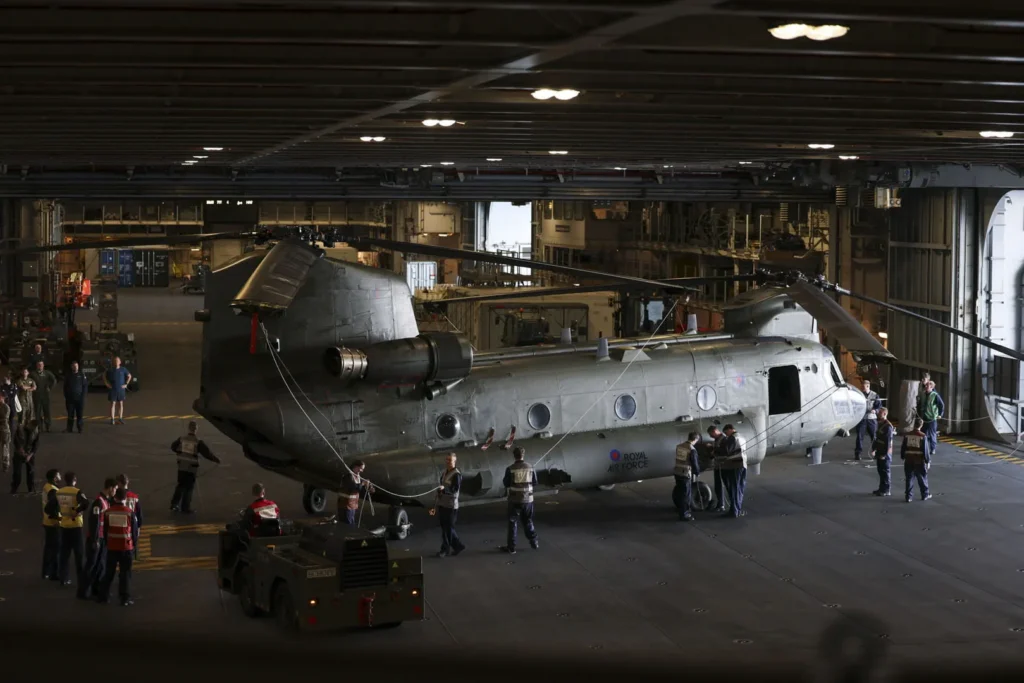
Image: MOD Crown Copyright/Royal Navy

The 12-tonne helicopter is subsequently lowered to the carrier’s hangar deck level in approximately 60 seconds before being moved into the hangar by onboard personnel. The procedure requires careful planning and precise aircraft handling, but is essential for protecting the Chinooks from the harsh maritime environment and enabling engineers to undertake maintenance under cover.

The exercise also helped personnel aboard HMS Queen Elizabeth to rebuild their aviation handling experience following the carrier’s recent substantial overhaul in Rosyth, Scotland, and Portsmouth, Hampshire.

Building up the UK’s maritime heavy-lift capability for future operations

This training activity supports the RAF’s ability to deploy heavy-lift tactical transport capabilities from either HMS Queen Elizabeth or her sister ship, HMS Prince of Wales (R09).

Such capability could prove particularly valuable during humanitarian assistance/disaster relief (HA/DR) missions and non-combatant evacuation operations (NEO), where Chinook helicopters could transport personnel, outsized equipment and essential supplies to affected regions, or assist with civilian evacuations.
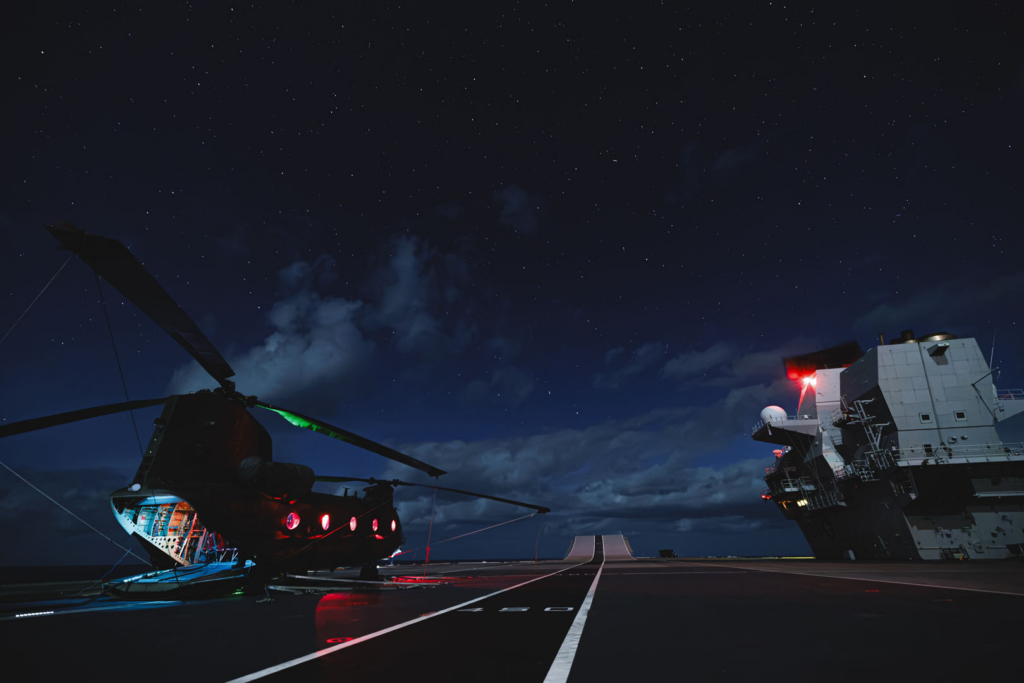
Image: MOD Crown Copyright/Royal Navy

Exercise Hathi Pol concluded with the helicopters embarked as Queen Elizabeth arrived in Gibraltar, demonstrating the importance of joint training in maintaining the UK’s ability to deliver flexible aviation capabilities across the maritime domain.

“The exercise reaffirms the RAF remains ready to respond to emerging crises and support operations across the globe, demonstrating the value of a highly trained, adaptable and integrated joint force capable of delivering effect wherever and whenever required,” the RAF said.

Related

QinetiQ to support Government’s tech talent drive
TechFirst
QinetiQ to support Government’s tech talent drive
By providing work experience opportunities and technology programmes, including cyber security, QinetiQ is supporting the UK Government TechFirst initiative, aimed at delivering practical skills and career support for young people.
MOD seeks industry input on next-generation medical evacuation system
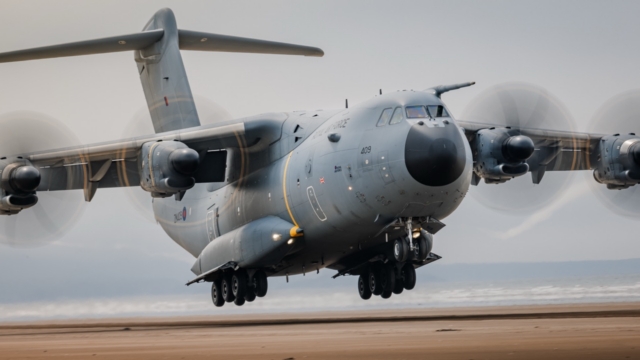
Imagery of the Atlas A400M, seen here operated by crews of LXX & 30 Squadron overseen by an XXIV Squadron instructor, carrying on beach landings over on Pembrey Sands. This was facilitated by Tactical Air Traffic Controllers and Tactical Fire who ensure the beach and activity is completed as intended. Along with conducting touch and go's alongside full stop landings, the aicraft also despatched a pair of RWMIK's driven by 16 Air Assault Brigade as part of an Engine Running Operation or ERO.
MOD seeks industry input on next-generation medical evacuation system
The MOD is looking to modernise the specialist systems used to transport patients with dangerous infectious diseases back to the UK.
Aerospace Defence

2 Nov 2026

Jersey Airport seeks UK counter-drone support after two nights of flight disruption
Control Tower at Jersey Airport
Jersey Airport seeks UK counter-drone support after two nights of flight disruption
Multiple flight diversions and cancellations sparked a police investigation and prompted fresh efforts to strengthen drone detection around Jersey Airport.
Aerospace

2 Nov 2026

NCSC says AI-powered attack on UK critical infrastructure likely by 2028
Futuristic Hand Reaching for AI Technology Interface Representing Artificial Intelligence and Data Management in a Digital World. Glyphic
NCSC says AI-powered attack on UK critical infrastructure likely by 2028
The NCSC warns the UK could face AI-powered cyber attacks on critical national infrastructure by 2028, prompting fresh warnings over national security and defence.
Defence Security

3 Nov 2026

Royal Navy tracks Russian warships in UK waters as RAF Protector makes operational debut
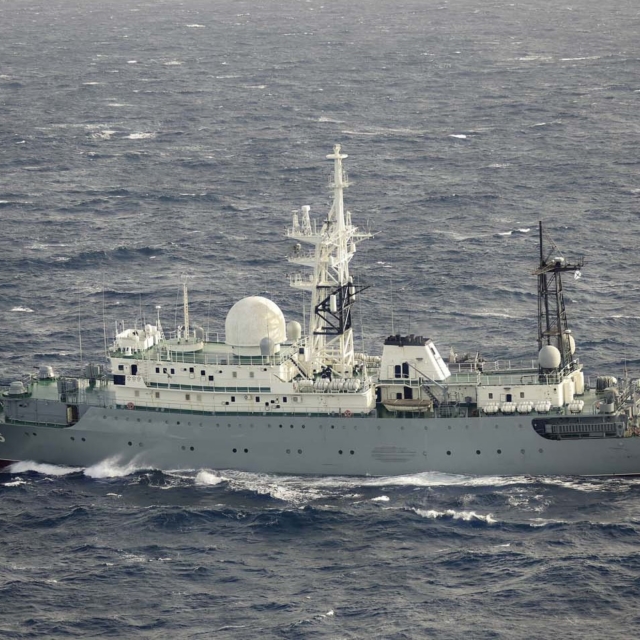
The Russian Vishnya-class intelligence-gathering vessel, Viktor Leonov (CCB-175), is shadowed by a Royal Navy-operated Merlin HM2 helicopter off the Outer Hebrides on 29 September 2026. Image: MOD Crown Copyright/Royal Navy
Royal Navy tracks Russian warships in UK waters as RAF Protector makes operational debut
Royal Navy warships and aircraft recently monitored Russian naval movements around Britain, with support from RAF Protector RG1 drones, which marked the type’s operational debut in UK airspace.
Defence Security

3 Nov 2026

QinetiQ to support Government’s tech talent drive
TechFirst
QinetiQ to support Government’s tech talent drive
By providing work experience opportunities and technology programmes, including cyber security, QinetiQ is supporting the UK Government TechFirst initiative, aimed at delivering practical skills and career support for young people.
QinetiQ to support Government’s tech talent drive
TechFirst
QinetiQ to support Government’s tech talent drive
By providing work experience opportunities and technology programmes, including cyber security, QinetiQ is supporting the UK Government TechFirst initiative, aimed at delivering practical skills and career support for young people.
Space cybersecurity starts on the ground: The hidden risks in satellite supply chains
headshot for Benny Czarny Opswat CEO
Space cybersecurity starts on the ground: The hidden risks in satellite supply chains
Compromised suppliers, unchecked files and insecure updates can threaten satellites before they reach orbit. OPSWAT founder and CEO Benny Czarny explains why prevention must start on the ground
Insights Security Space

31 Oct 2026

Plextek receives King’s Award for Enterprise in Innovation
King’s Award for Enterprise in Innovation from His Royal Highness the Duke of Gloucester.
Plextek receives King’s Award for Enterprise in Innovation
HRH The Duke of Gloucester has presented Plextek with the King’s Award for Enterprise in Innovation for its PLX-T60 sensing platform.
NCSC says AI-powered attack on UK critical infrastructure likely by 2028
Futuristic Hand Reaching for AI Technology Interface Representing Artificial Intelligence and Data Management in a Digital World. Glyphic
NCSC says AI-powered attack on UK critical infrastructure likely by 2028
The NCSC warns the UK could face AI-powered cyber attacks on critical national infrastructure by 2028, prompting fresh warnings over national security and defence.
Defence Security

3 Nov 2026

Royal Navy tracks Russian warships in UK waters as RAF Protector makes operational debut
The Russian Vishnya-class intelligence-gathering vessel, Viktor Leonov (CCB-175), is shadowed by a Royal Navy-operated Merlin HM2 helicopter off the Outer Hebrides on 29 September 2026. Image: MOD Crown Copyright/Royal Navy
Royal Navy tracks Russian warships in UK waters as RAF Protector makes operational debut
Royal Navy warships and aircraft recently monitored Russian naval movements around Britain, with support from RAF Protector RG1 drones, which marked the type’s operational debut in UK airspace.
Defence Security

3 Nov 2026

QinetiQ to support Government’s tech talent drive
TechFirst
QinetiQ to support Government’s tech talent drive
By providing work experience opportunities and technology programmes, including cyber security, QinetiQ is supporting the UK Government TechFirst initiative, aimed at delivering practical skills and career support for young people.