


The UK Cyber and Electromagnetic Command advantage


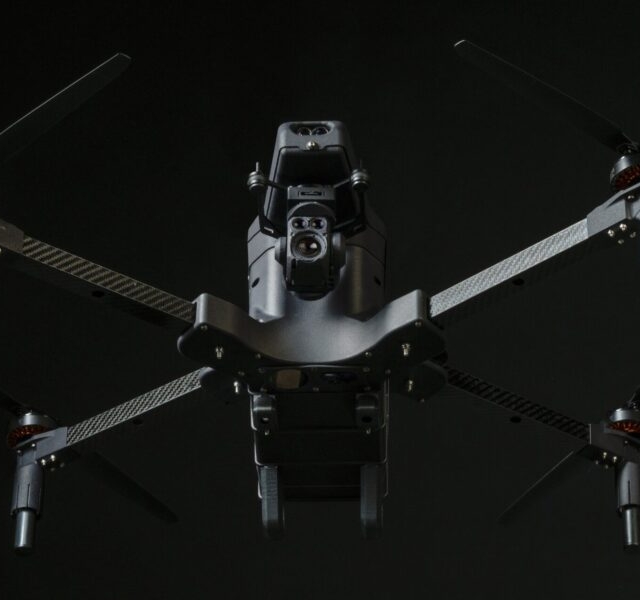
Image courtesy CybaVerse
As digital becomes increasingly entangled within geopolitical tensions, the UK government recently announced new plans to strengthen the country’s defensive and offensive capabilities.
Over the last few years, cyber has become intertwined within geopolitical tensions. From the Volt Typhoon campaign, executed out of China and responsible for attacking US critical infrastructure, to Russian state-sponsored actors causing havoc for the NHS, cyber is now frequently being used by nation-state adversaries to attack countries through invisible means, while causing immense damage.
However, this is happening in parallel with digital technologies also playing a more prominent role in physical conflicts. We have already seen drone jamming and missile interference in Ukraine, while data also suggests that unmanned weapons have inflicted approximately 70% of all casualties in the war.
In response to this growing threat, the UK government recently announced the formation of a new Cyber and Electromagnetic Command, which is aimed at enhancing the country’s resilience in the arena of hybrid warfare.
The new command reinforces that the battlefield is no longer confined to land, sea and air. It now firmly includes the cyber and digital world and the electromagnetic spectrum.
So, what exactly is the Cyber and Electromagnetic Command and how will it strengthen the UK’s defensive and offensive capabilities in today’s volatile global environment?
Understanding the Cyber and Electromagnetic Command
The newly established Cyber and Electromagnetic Command has been created to defend military networks and UK citizens from an increase in cyber and digitally-enabled attacks.
A key aspect of the command’s remit is the use of electromagnetic warfare, an advanced form of digital conflict that includes jamming enemy communications, disrupting command-and-control systems and neutralising threats, such as drones and missile platforms.
Alongside this, the MoD has announced over £1 billion in investment to develop a Digital Targeting Web, a next-generation system that will leverage AI to connect weapons platforms, enhance battlefield awareness and streamline coordination across all branches of the Armed Forces.
Together, these initiatives reflect the UK’s ambition to build a more integrated, intelligent and anticipatory defence infrastructure. One that doesn’t just react to threats but actively stays ahead of them.
While traditional defence remains vital, the formation of the Command signals a shift towards readiness. The government clearly recognises that it is no longer enough to simply build defences and wait for an attack.
Modern military must be capable of disrupting enemy infrastructure, communication networks and decision-making processes before threats get the opportunity to materialise.
Understanding the current geopolitical threat landscape
One of the key reasons for the establishment of the command is the current uncertainty of the world today.
Not only are nation state cyber attacks becoming a daily occurrence, we are also seeing electromagnetic warfare play out on the ground in global conflicts. Furthermore, ongoing conflicts in the Middle East, and Russia’s invasion of Ukraine, have intensified global instability, contributing to the Doomsday Clock moving to 89 seconds to midnight, the closest it has ever been.
With the UK often sitting in the crosshairs of these tensions, it must be prepared, particularly when the specific threats it faces are also broadening.
State-sponsored actors from Russia, China, Iran and North Korea are constantly on the hunt for avenues to conduct attacks on the UK’s critical infrastructure.
These attacks are stealthy, with adversaries sitting on networks for years, conducting reconnaissance, before they are detected. This highlights that in the cyber domain, it’s not just the everyday threats like ransomware and DDoS that cause concern. These attacks on critical infrastructure are executed for information gathering, which can be used to advance an enemy, potentially hitting the UK at a time of increased vulnerability.
Adding further complexity to the picture is the rapid rise in AI and deepfake technologies. These technologies lower the barrier to entry into cyber crime and make attribution more difficult, but they are also being used by nation state adversaries to carry out disinformation and misinformation campaigns. These campaigns can be used to manipulate the British public, cause societal unrest or spark distrust in governments.
Securing the UK on the ground and in cyber space
The formation of the UK’s Cyber and Electromagnetic Command is a long-overdue response to the realities of modern warfare.
It demonstrates that the UK is no longer willing to play catch-up in the digital arms race.
Instead, it is investing in the tools, talent and technologies necessary to lead and get ahead of nation-state adversaries.
Modern warfare is no longer limited to kinetics. Today, invisible attacks, executed against critical infrastructure from thousands of miles away, are just as damaging.
The UK government clearly recognises the importance of getting ahead of this threat.
Investments in the new Command will support this initiative, protecting the UK and its citizens amidst escalating geopolitical tensions – both on the ground and in the digital domain.
Sign up for our newsletter and get our latest content in your inbox.
Similar Reads




Sign up for our newsletter. Select all sectors relevant to you.
Related