

UK launches search for new RAF Hawk trainer and Red Arrows aircraft


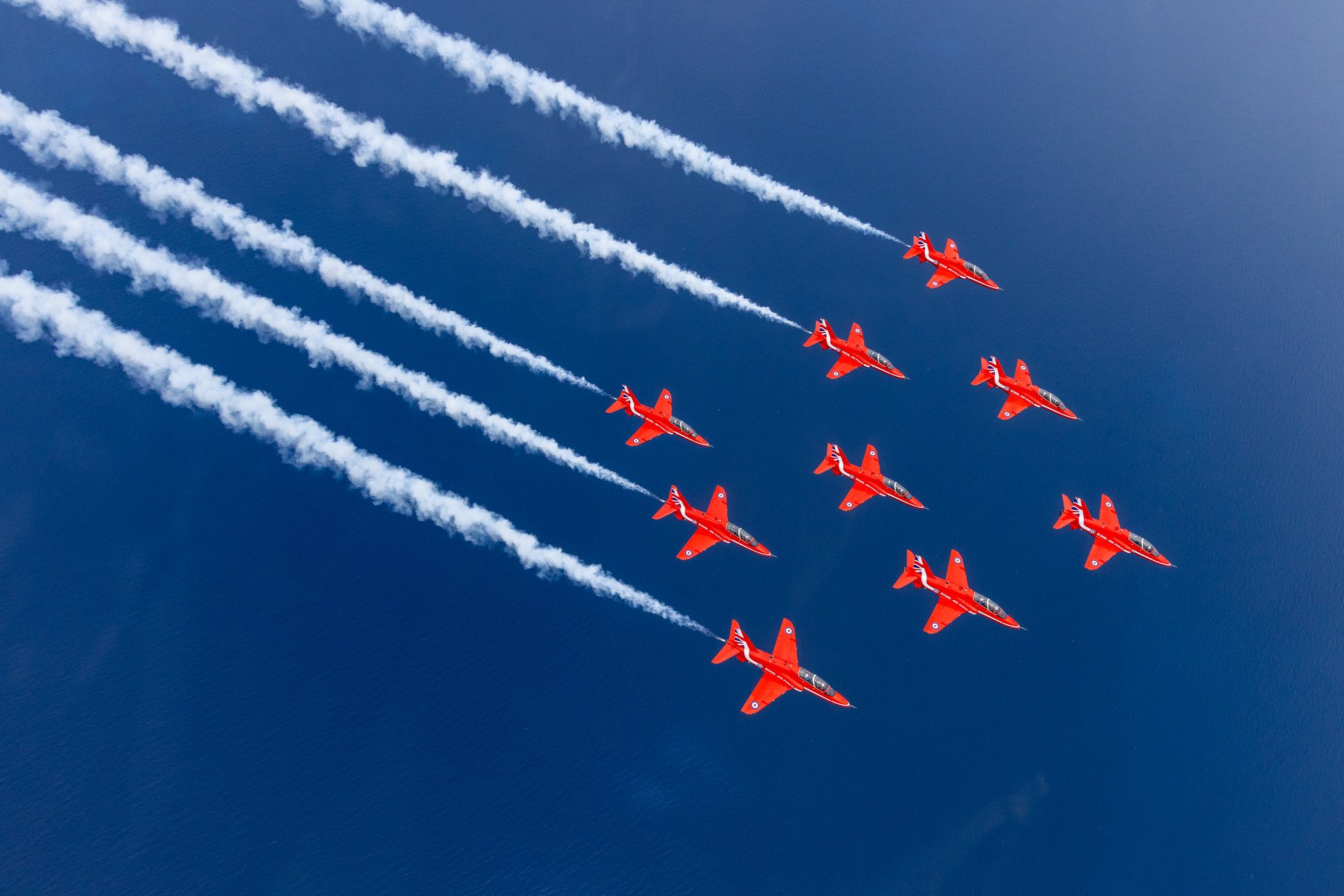
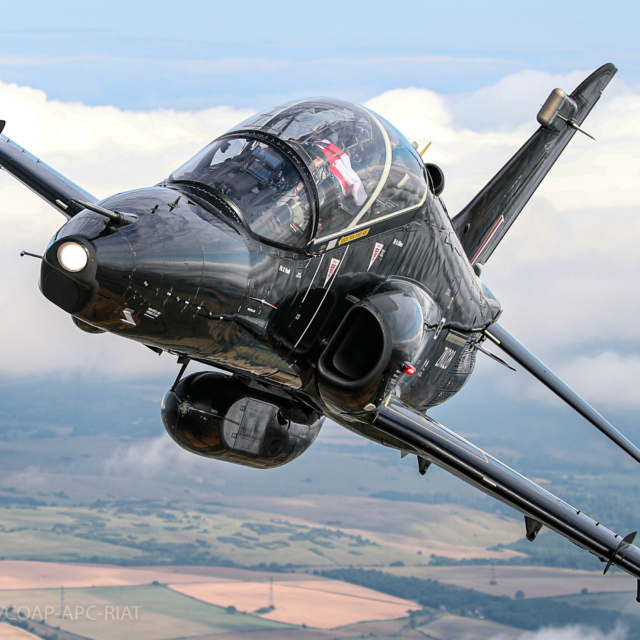
Britain is seeking a new jet trainer to replace the Royal Air Force’s Hawk T1 and T2 fleets, and the aircraft flown by the Red Arrows.
The Ministry of Defence has issued a request for information for a new Jet Training System, marking the first formal step towards replacing both variants. As first reported by The Aviationist, the requirement is expected to cover more than an aircraft, with training, support and other elements forming part of the future system.
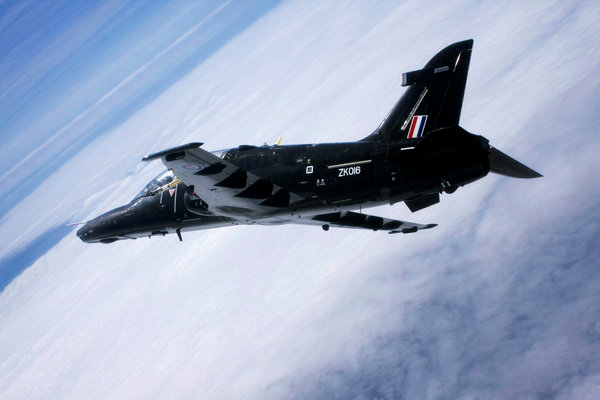
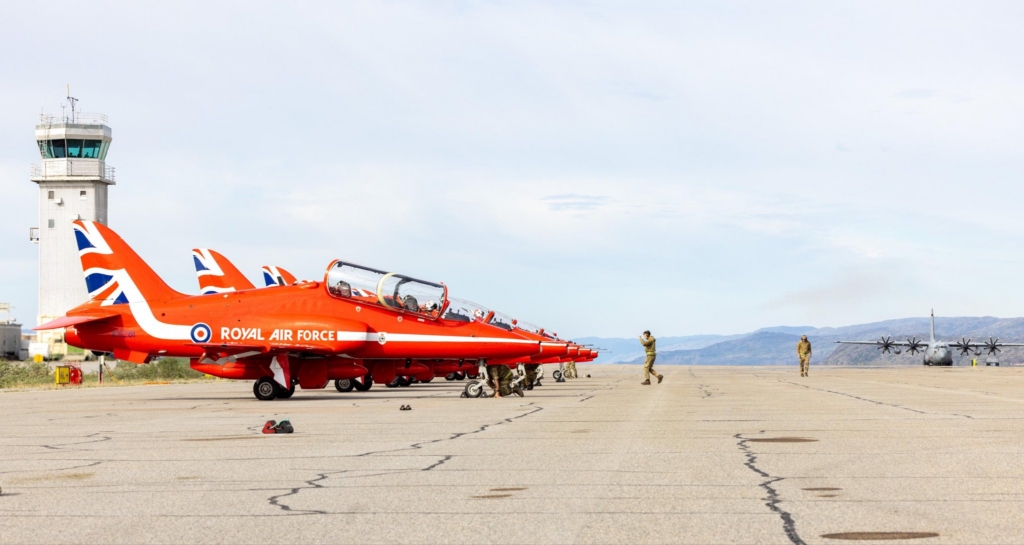
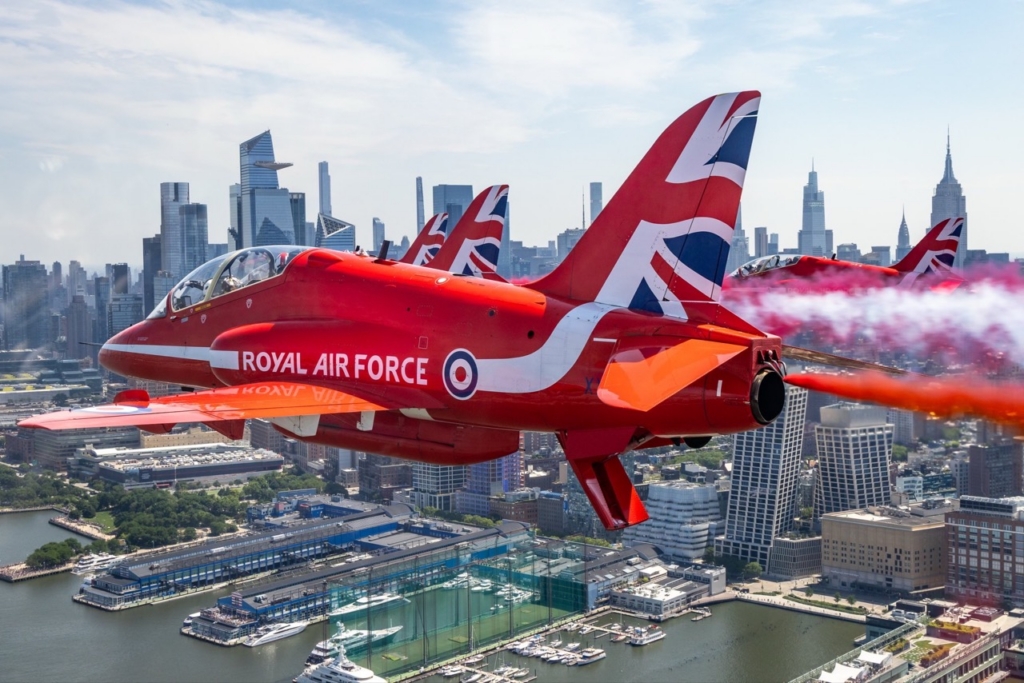
The timing reflects two separate deadlines. The Hawk T1 used by the Red Arrows is due to leave service in 2030, while the Hawk T2, which is used for advanced fast-jet training at RAF Valley, is also being considered for an earlier replacement because of availability and reliability problems.
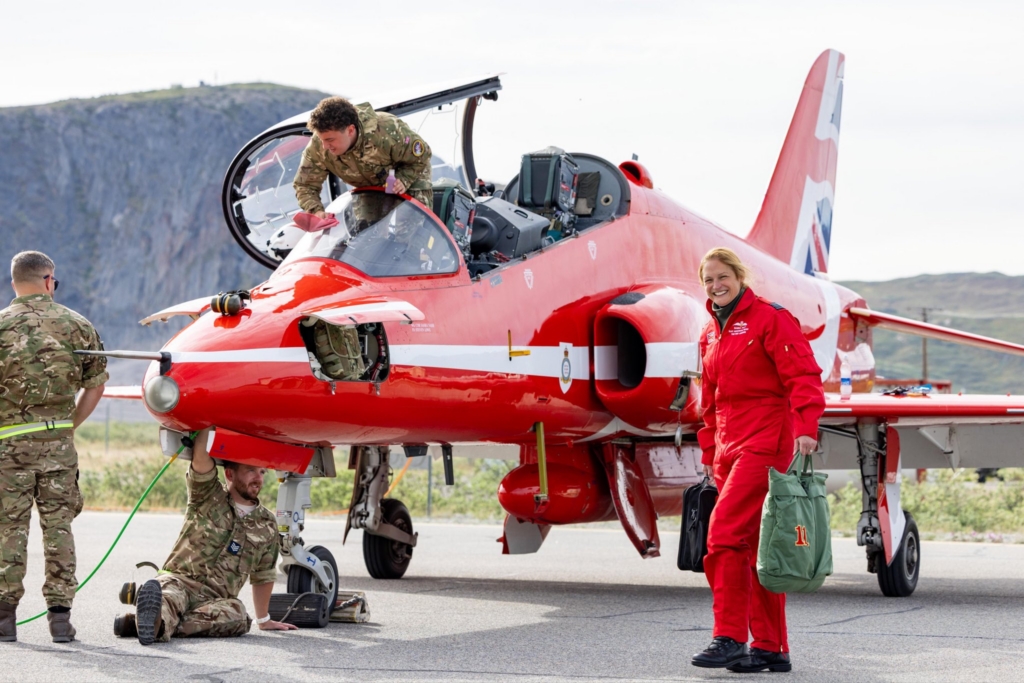
That gives the UK an unusual procurement problem. It is not simply looking for another advanced trainer to replace the T2. The eventual system also has to provide an aircraft suitable for the Red Arrows, whose current Hawks will reach the end of their planned service life within the decade.
The requirement is also being shaped around the RAF’s future combat aircraft. The MoD says the new system is intended to support the transition towards fifth- and sixth-generation air systems, while requiring a significant level of UK industrial participation.
Why the RAF’s next jet trainer will need to prepare pilots for F-35 and GCAP
The Hawk has been part of British military aviation for almost half a century.
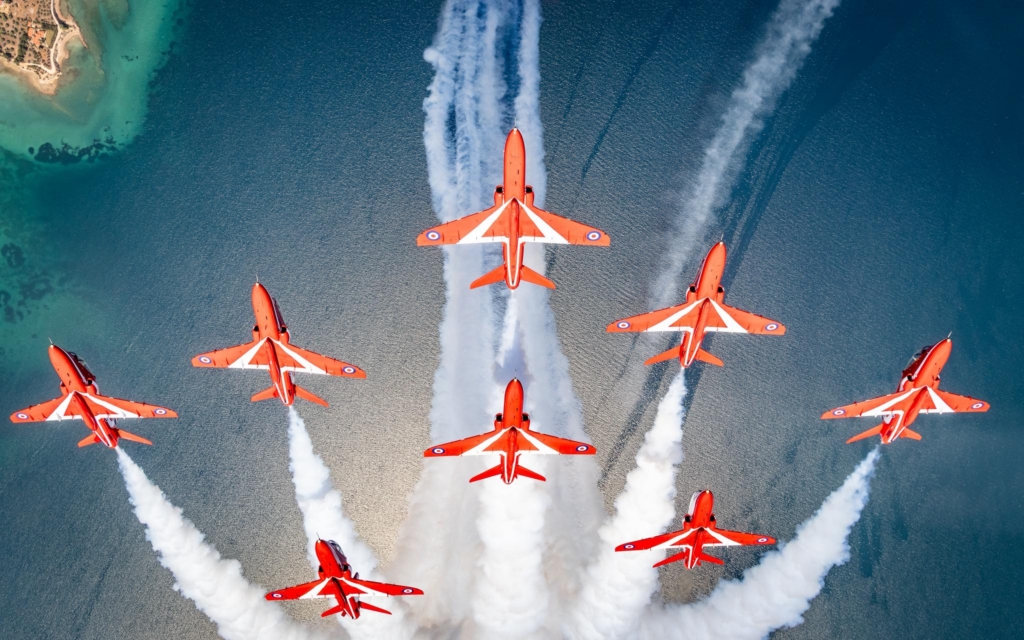
The T1 entered RAF service in 1976 and became the Red Arrows’ aircraft in 1979, replacing the Folland Gnat. Its training career has since ended, with the type’s remaining RAF operations consolidated around the display team and associated testing and training activities. The service currently expects the remaining T1 fleet to reach its planned 2030 retirement date.
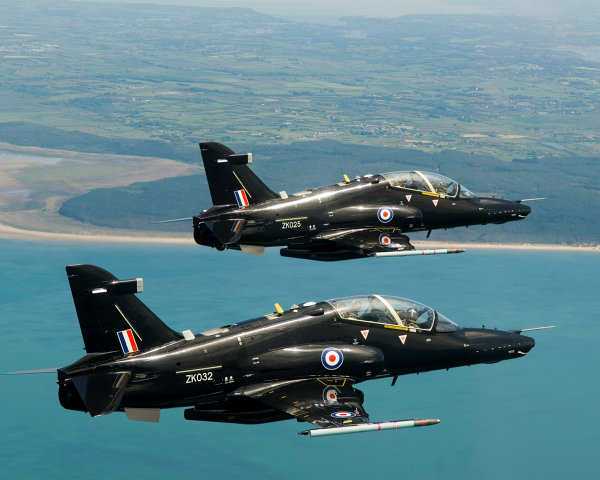
The T2 is considerably younger. It became the RAF’s advanced jet trainer in 2012 and assumed the full role four years later. Unlike the T1, it was developed as a substantially modernised version of the Hawk, with only around 10% of parts common between the two variants.
Yet the newer aircraft has not escaped problems. Hawk T2 availability has been affected by reliability issues, while the training pipeline itself has come under scrutiny. The aircraft is operated from RAF Valley by No 4 Flying Training School under the UK Military Flying Training System.
The next aircraft therefore has to fit into a training architecture that increasingly needs to prepare pilots for aircraft such as the F-35 and the future Global Combat Air Programme.
That is changing the competitive field.
The T-7 proposal focuses heavily on UK industrial participation
The most obvious British-linked proposal is the T-7 Red Hawk, being offered by BAE Systems with Boeing and Saab.
BAE built the Hawk but Britain no longer has an active Hawk production line. The company would therefore be looking at the T-7 competition as an opportunity to establish a new UK production role rather than simply restarting the old aircraft.
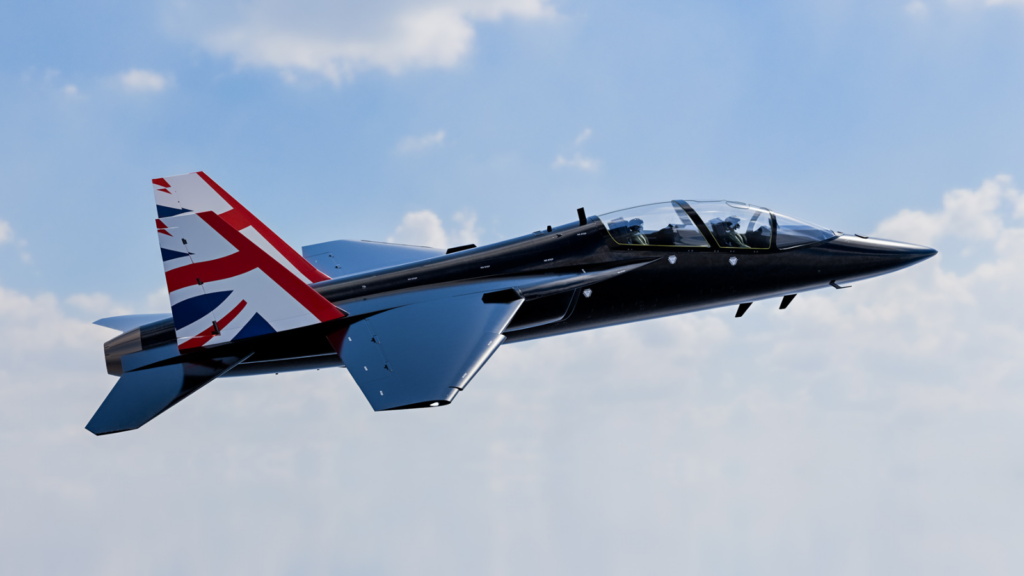
The consortium has indicated that final assembly could take place in Britain, with BAE’s Warton site identified as the likely location. That would directly address the MoD’s requirement for significant UK workshare.
The T-7 was developed for the US Air Force to replace the Northrop T-38 Talon. Its GE F404 afterburning engine gives it considerably more performance than the Hawk’s non-afterburning Rolls-Royce Adour. The aircraft is not supersonic like some earlier US trainers, but it has been designed around the demands of modern fighter training.
BAE, Boeing and Saab made the UK proposition visible at this year’s Farnborough International Airshow, displaying a T-7 mock-up in a British training-aircraft scheme.
How Leonardo’s M-345 and M-346 fit the RAF requirement
Leonardo presents a different proposition, with both the M-345 and M-346 potentially relevant to the British requirement.
The M-345 is closer to the Hawk in concept. It uses a single Williams FJ44 turbofan and is derived from the SIAI-Marchetti S.211. In Italy, however, it occupies an earlier part of the training pipeline, including ab initio jet training.
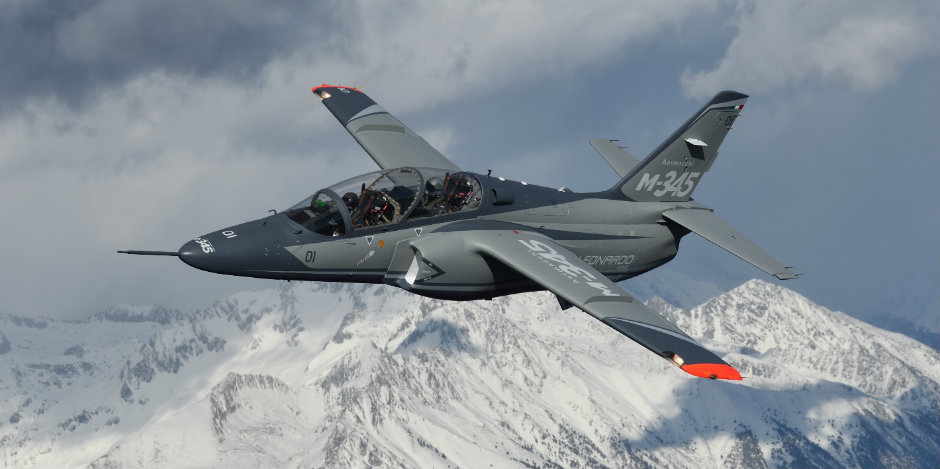
The M-346 is a more capable aircraft. Powered by two Honeywell/ITEC F124 engines, it combines advanced training with light-fighter characteristics and weapons capability. The aircraft originated from a joint development with Yakovlev that produced the M-346 and Yak-130 before the programmes separated.
The UK already has some experience with the type. RAF pilots have flown the M-346 at the International Flight Training School at Decimomannu in Italy
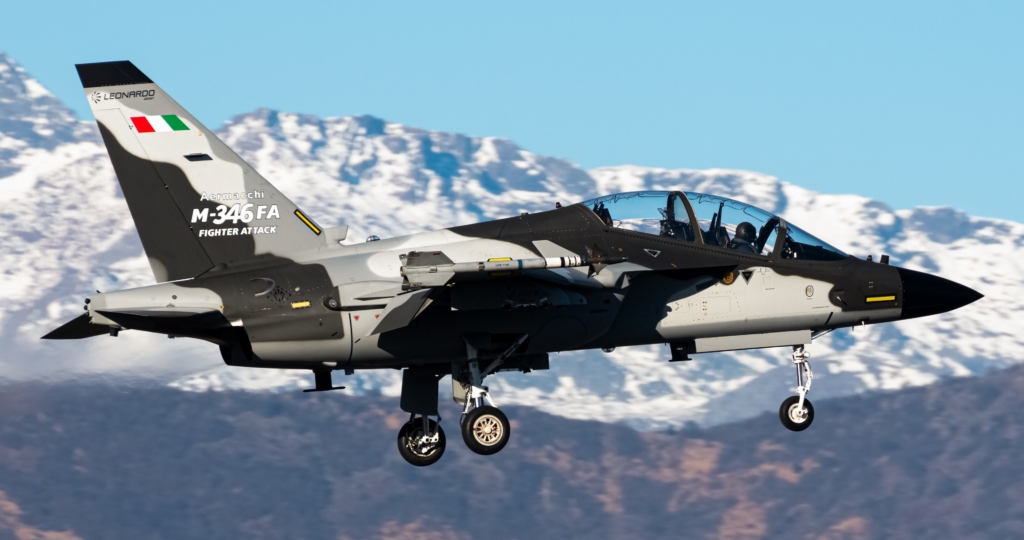
The issue for Britain is whether it needs two aircraft types within its future training system. Italy uses the M-345 and M-346 in complementary roles, but adopting the same model would carry an additional cost and infrastructure burden.
Leonardo has also ruled out using its Yeovil facility for local manufacture, although the company’s UK industrial footprint could still provide opportunities for British suppliers.
T-50 Golden Eagle and Hürjet offer alternative trainer options
Korea Aerospace Industries is offering the T-50 Golden Eagle, a more mature design already operated in significant numbers.
The T-50 occupies a similar space to the M-346, combining advanced jet training with light-fighter capability. It has established customers in Asia and has entered NATO service through Poland. Its difficulty in the British competition is less about aircraft maturity than the question of how much UK industrial work could realistically be attached to the programme.
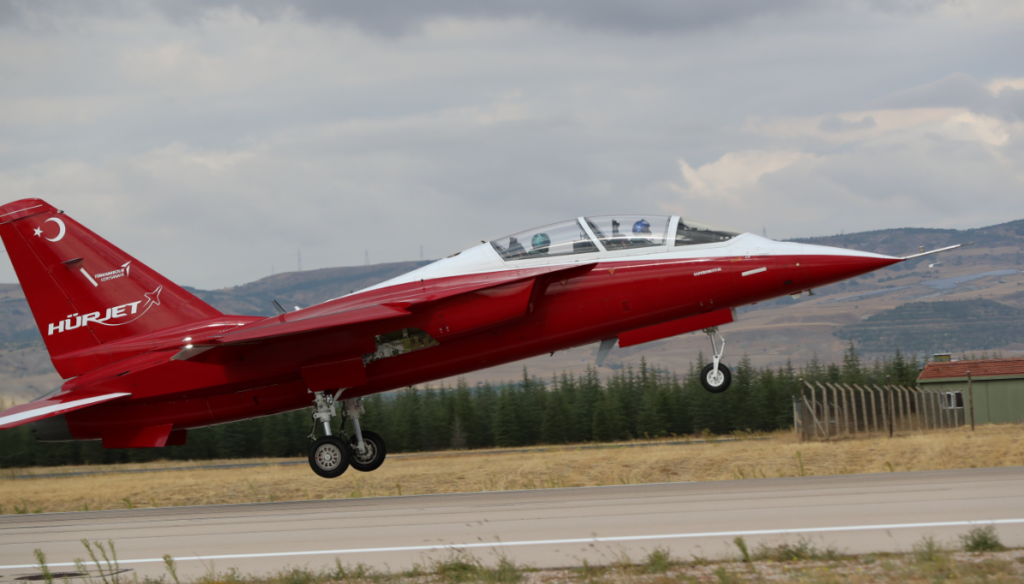
Turkey’s Hürjet is another possibility. It is supersonic and therefore offers a different performance proposition from most of the other aircraft under consideration. But it remains at an earlier stage of development and production than the T-50 and M-346.
An earlier British option has already disappeared. Aeralis had proposed a modular jet trainer aimed at the UK requirement, but its collapse has removed that indigenous design from consideration.
The MoD’s current exercise is still only market engagement. Companies have until September 11 to register their interest, and the RFI does not constitute a commitment to buy.
But the decision ahead is significant. Britain is no longer choosing simply what should replace a training aircraft introduced decades ago. It is deciding what its fast-jet training system should look like as the RAF moves towards a fleet built around F-35s, upgraded Typhoons and the next generation of combat aircraft.
Sign up for our newsletter and get our latest content in your inbox.
Similar Reads