Met Police chief calls for major overhaul to tackle cybercrime

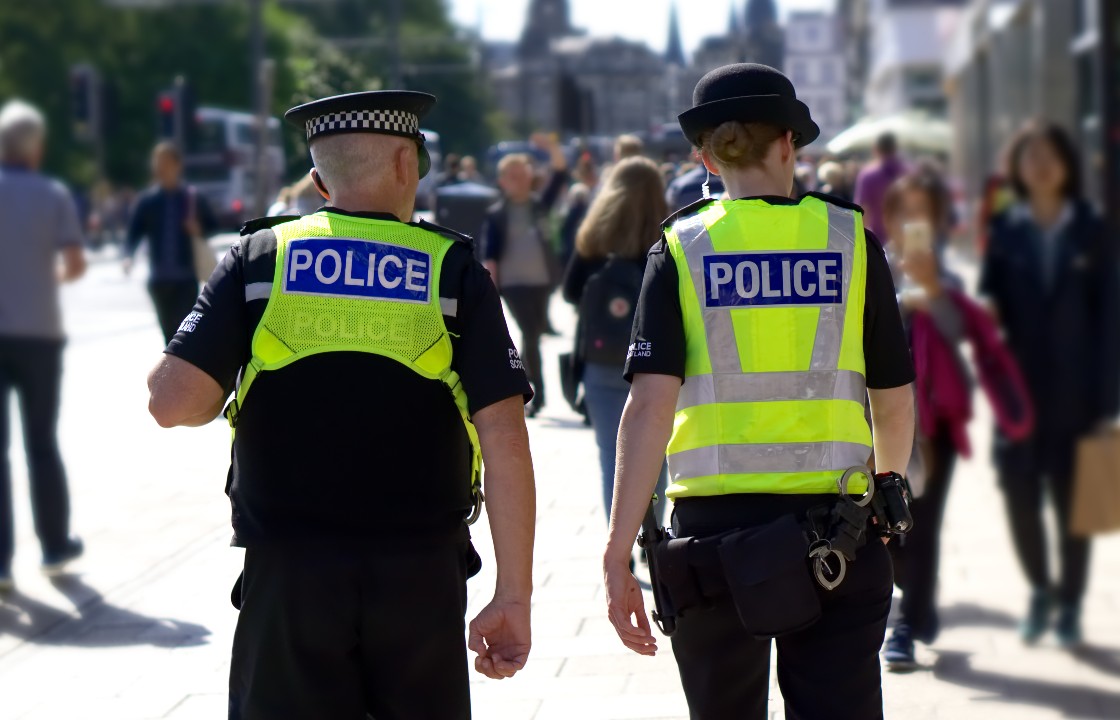
Metropolitan Police Commissioner Sir Mark Rowley has called for a major overhaul of England and Wales’s 43 police forces, replacing them with eight to ten regional forces. Sir Mark warns that the current system is struggling to tackle cybercrime, organised crime and threats from hostile states.
In a speech today (6 November) in Manchester, alongside four other police chiefs, Sir Mark proposed a three-tier structure comprising local policing commands, larger regional forces and a new National Police Service.
According to the Metropolitan Police, the proposed reorganisation would be the largest change to policing structures since the 1960s. Sir Mark argues that forces organised primarily around local boundaries are ill-equipped to investigate criminal networks operating across regions and international borders.
“Today we face a choice, between the third revolution in British policing or the inevitable decline of our ability to protect the public,” Sir Mark said.
Cybercrime and cross-border threats
The Commissioner pointed to fraud networks, online child sexual abuse, cybercriminals and hostile states as examples of threats that require more coordinated investigations and specialist resources.
He argued that maintaining similar administrative and specialist functions across 43 forces creates unnecessary duplication.
Sir Mark said reducing duplicated functions could release thousands of roles for frontline policing.
The Commissioner also called for clearer national leadership on fraud and cybercrime, arguing that responsibilities are currently fragmented between the National Crime Agency and the City of London Police. Under his proposed National Police Service, these capabilities would be coordinated through a single national structure.
More than 90% of crime has a digital element
His intervention follows the Home Office’s January 2026 policing reform White Paper, which also proposed a National Police Service, local police areas and changes to the existing 43-force structure.
The government said more than 90% of crime is estimated to have a digital element, while around 20,000 devices were awaiting forensic analysis.
The White Paper also outlined a National Centre for AI in Policing, backed by £115 million over three years, to assess and expand the use of artificial intelligence across forces.
The planned investment would support investigations, data analysis and administrative work, with oversight of police AI deployment.
Sir Mark said policing is struggling to keep pace with increasingly sophisticated criminal networks that use technology to operate across borders. He noted that fraud now accounts for around 45% of all Crime Survey offences, while cybercrime represents around one in ten crimes.
Highlighting the growing challenge of online exploitation, Sir Mark said more than 92,000 referrals relating to online child sexual abuse were made by platforms last year. He warned that online-facilitated offending now accounts for close to half of all recorded child sexual abuse offences, while reports of child sexual extortion increased by 127% in a single year.
Funding and frontline pressures
Sir Mark also raised concerns about police funding. According to figures cited by the Metropolitan Police, spending on policing in England and Wales has fallen from around 0.9% of GDP in 2010 to around 0.7%.
He argued that forces are spending too much on ageing systems while officers are diverted from neighbourhood duties to respond to demand linked to mental health and social care.
The Commissioner said forces spent £276 million from reserves last year to balance budgets and borrowed more than £630 million to fund capital programmes.
He also warned that police technology investment is heavily weighted towards maintaining legacy systems, saying that 97% of the service’s annual £2 billion technology spend is used simply to keep existing systems running.
“This is maintaining the past. Not building the future,” he said.
“The model is creaking”
Explaining the urgency of change, Sir Mark said:
“The model is creaking. We have 43 overstretched forces trying to do too much, with too little.”
The Commissioner stressed that larger regional organisations must remain accountable to local communities.
He argued that local policing teams increasingly require specialist support that many smaller forces struggle to sustain. As an example, he said eight police forces carried out no basic undercover operations during the last year, raising questions about the availability of specialist capabilities across the country.
Sir Mark also highlighted the growing role of organised crime in local communities, pointing to criminal networks involved in fraud, money laundering, exploitation and counterfeit goods trading. He cited National Crime Agency estimates suggesting at least £1 billion of criminal cash is laundered through high-street businesses each year.
While advocating stronger national and regional capabilities, Sir Mark said neighbourhood policing must remain at the heart of the service, supported by better access to digital forensics, financial investigators, surveillance teams and other specialist resources.
He concluded that reform alone would not be enough and called for policing funding to return to at least 0.9% of GDP, arguing that continued underinvestment would leave forces less able to respond to increasingly complex threats.
His proposals add to the debate over how to deliver national specialist capabilities without weakening local policing.
Sign up for our newsletter and get our latest content in your inbox.
Similar Reads





Sign up for our newsletter. Select all sectors relevant to you.
Related