Meteor completes first internal bay jettison from British F-35B

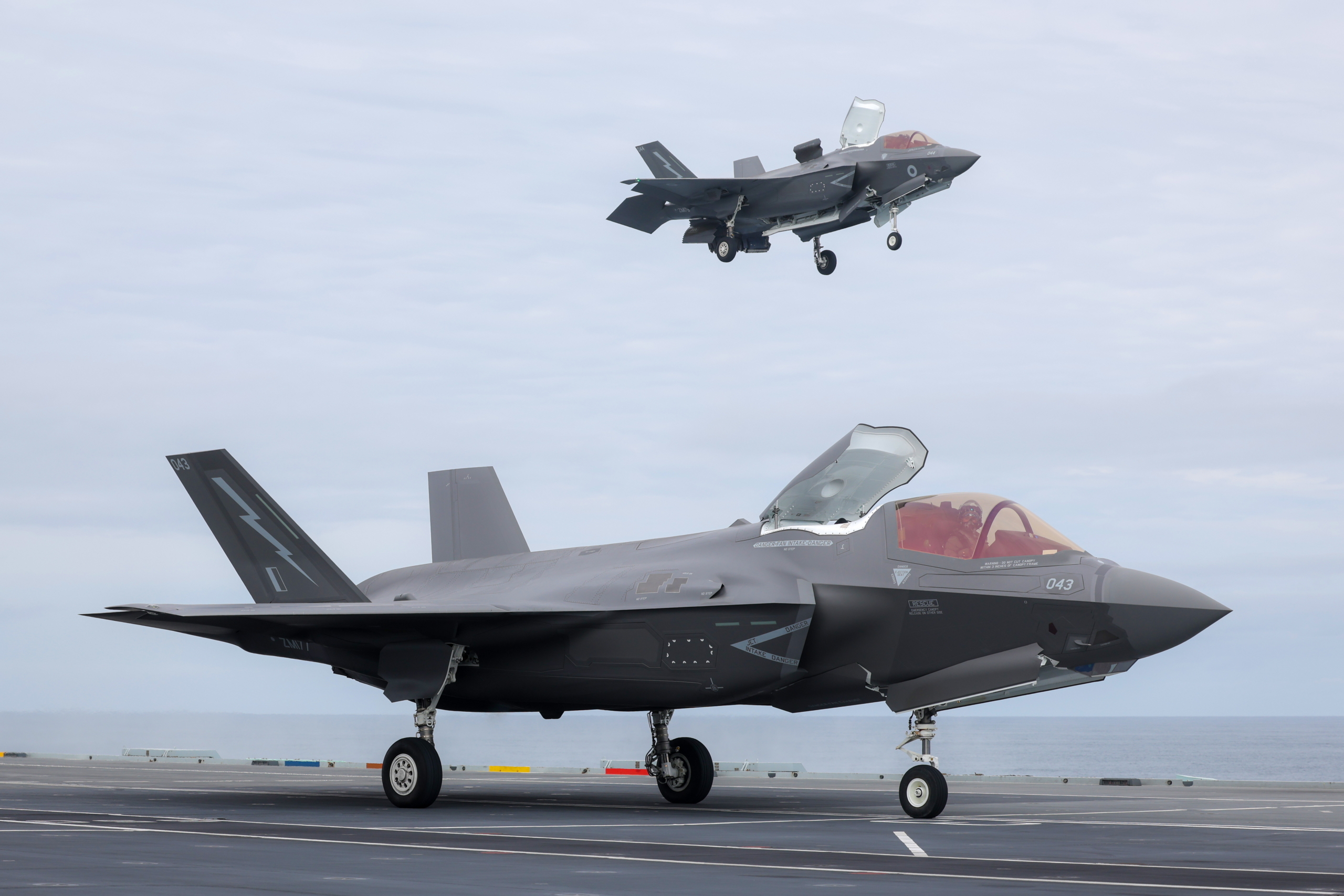
Yesterday, MBDA UK announced that its Meteor beyond-visual-range air-to-air missile (BVRAAM) had passed a significant F-35B integration milestone, completing its first jettison from the fighter’s internal weapons bay.
The development happened in the United States on 7 October and represents an important step toward integrating the long-range European missile with the fighter jet. MBDA UK stated, “The successfully completed developmental test is the first in a series of METEOR jettison flight trials.”
Jettison testing is used to evaluate how cleanly and safely a missile detaches from a host aircraft under normal operating conditions and during an emergency abort. It provided data for MBDA to refine the predictive digital models used in assessing weapon release characteristics.
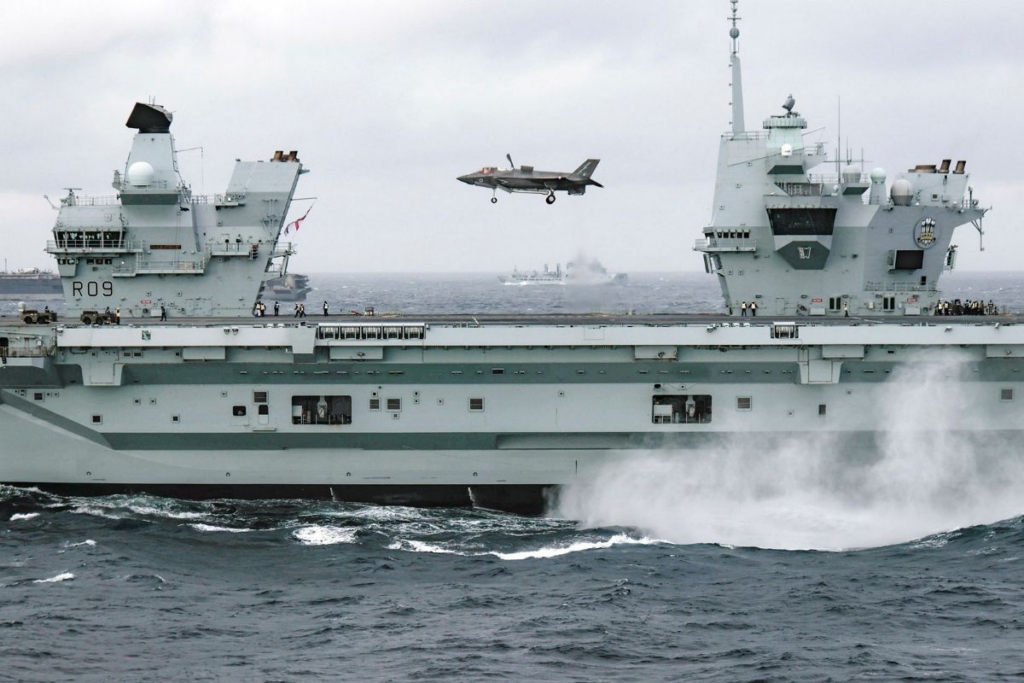
The tests are designed to ensure the weapon separates cleanly without impacting the fuselage, disrupting the aircraft’s flight dynamics, or having other negative impacts on the F-35B.
The first captive-carry (inert) flight tests with the Meteor were carried out in early 2025.
Future tests and integration of Meteor to F-35B
The Meteor air-to-air missile is now expected to go through a series of release profiles over the coming months. These will validate safe separation across the fighter jet’s operational envelope.
Developmental releases are to culminate with live firings that will confirm both the separation and weapon fly-out performance in different conditions.
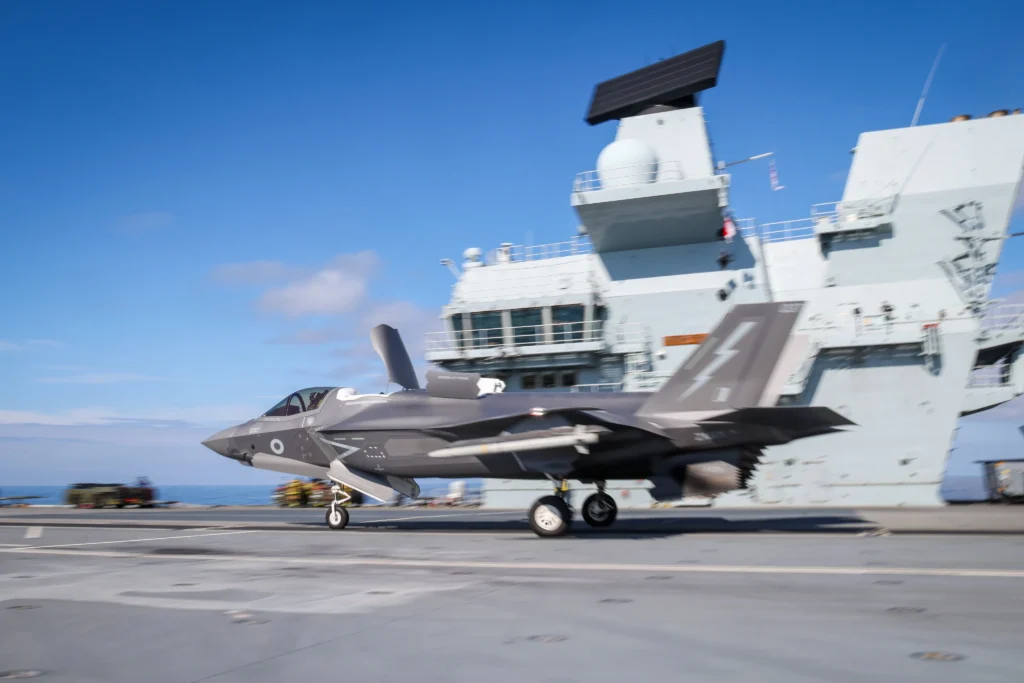
The weapon test was prepared and loaded by a mixed British and American ITF team. The team included personnel from the Royal Navy, Royal Air Force, and Lockheed Martin.
The UK is leading the integration effort, while Italy is sponsoring the parallel F-35A integration. Integration requires modifications to the missile, including cropped fins for internal bay carriage needed to preserve the F-35’s stealth profile.
Boosting the air-to-air capability of Britain’s F-35Bs
Britain’s fleet of 47 F-35Bs is shared between the Royal Navy and Royal Air Force. The jettison sortie was flown by a Royal Navy F-35 Test Pilot assigned to the Air and Space Warfare Centre (ASWC).
The integration will boost the UK’s and Italy’s Combat Air capability and provide a significant boost in the air-to-air capability of the aircraft in those countries. While the US Marine Corps is the largest operator of the F-35B, the service doesn’t intend to use the European Meteor.
🚀 #METEOR #missile completed its first jettison from an F-35B’s internal weapons bay in the US, marking a key integration milestone. Further trials will follow ahead of live firings, advancing UK and Italy’s #CombatAir capability. @thef35 @theF35JPO 🔗https://t.co/mgRu28U43R https://t.co/eEC82pOl4Z
— MBDA UK (@MBDA_UK) November 5, 2026
The MBDA Meteor missile entered service in 2016, while Britain’s F-35Bs achieved Initial Operational Capability (IOC) in 2019. Previously, it had been planned for the Meteor to be integrated into the F-35B in 2027, but now the date has been pushed back to the early 2030s.
The Meteor is already the primary long-range air-to-air missile carried by the UK Typhoon fighter jets. Integrating the Meteor will provide a major capability boost over the currently available AIM-120 AMRAAM.
Seperately, the UK and France have already signed a memorandum to develop a next-generation air-to-air missile.
Sign up for our newsletter and get our latest content in your inbox.
Similar Reads




Sign up for our newsletter. Select all sectors relevant to you.
Related