

UK’s first F-35As will train pilots, not deliver NATO nuclear role


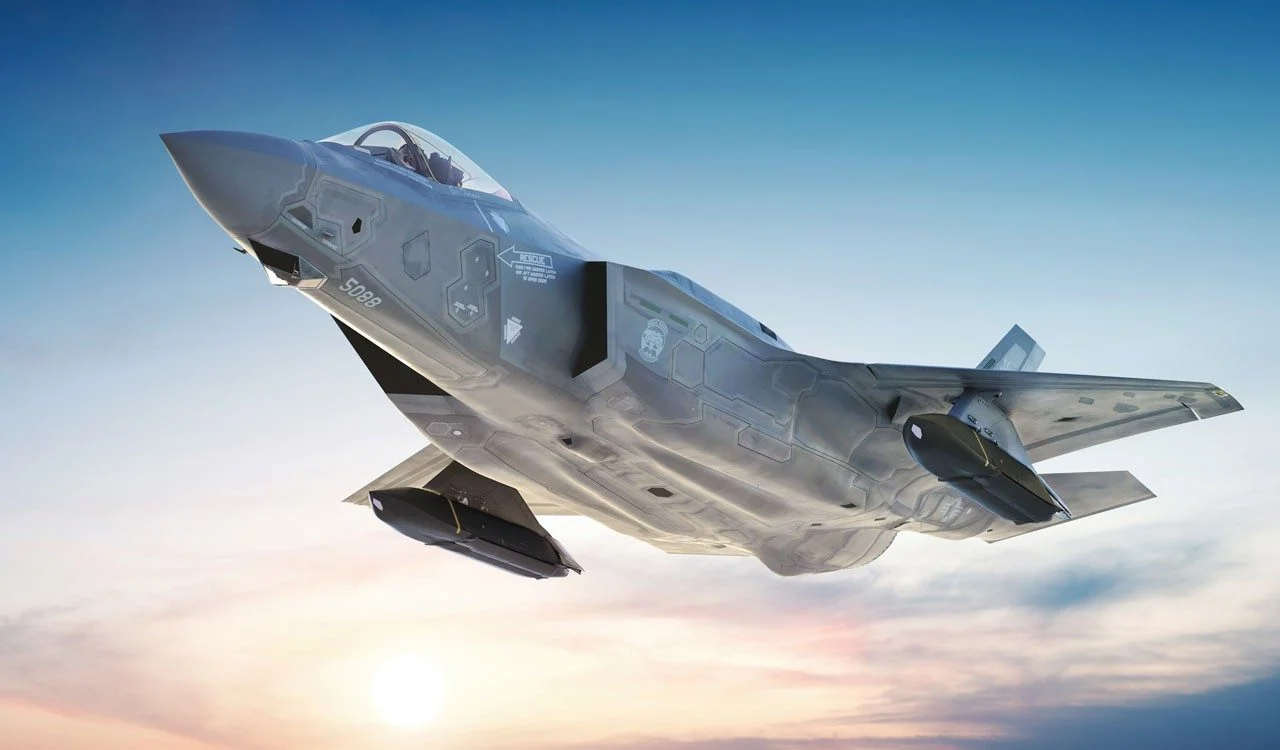
The Royal Air Force (RAF) has clarified that the United Kingdom’s initial fleet of 12 Lockheed Martin F-35A fighters will primarily support pilot training rather than form the country’s future NATO dual-capable nuclear force, leaving key questions over the size, composition and supporting infrastructure of Britain’s planned airborne nuclear capability still under review.
The clarification, first reported by Janes from the Global Air & Space Chiefs’ Conference in London and subsequently expanded upon by Aviation Week and UK Defence Journal, comes just over a year after the UK announced it would acquire the conventional take-off and landing F-35A alongside plans to return to NATO’s nuclear sharing mission.
The remarks suggest that the two initiatives, while linked politically, are now being treated as separate strands of the RAF’s future force planning.
Speaking at the conference, Air Vice-Marshal Jim Beck, the RAF’s Director Capability and Programmes, said the acquisition of the first 12 F-35As should not be viewed as the aircraft that will automatically deliver Britain’s restored airborne nuclear role.
“For any clarification, or to avoid any doubt, we did not buy those 12 aircraft for dual-capable aircraft capability. We bought them for our conversion units. At the same time, we stated we would get back into the dual-capable aircraft role supporting NATO. The two are separate,” Beck said.
RAF separates F-35A training buy from nuclear role
Beck’s comments represent an important clarification of the government’s announcement made in June last year.
When London confirmed the purchase of 12 F-35As, the Ministry of Defence described the decision as part of Britain’s return to NATO’s dual-capable aircraft mission, restoring an airborne nuclear role for the first time since the retirement of the WE.177 free-fall nuclear bomb in the late 1990s.
The F-35A is certified to carry the US B61-12 gravity bomb, unlike the F-35B currently operated by the RAF and Royal Navy.
Until now, the announcement had widely been interpreted as meaning the first 12 aircraft would fulfil that mission.
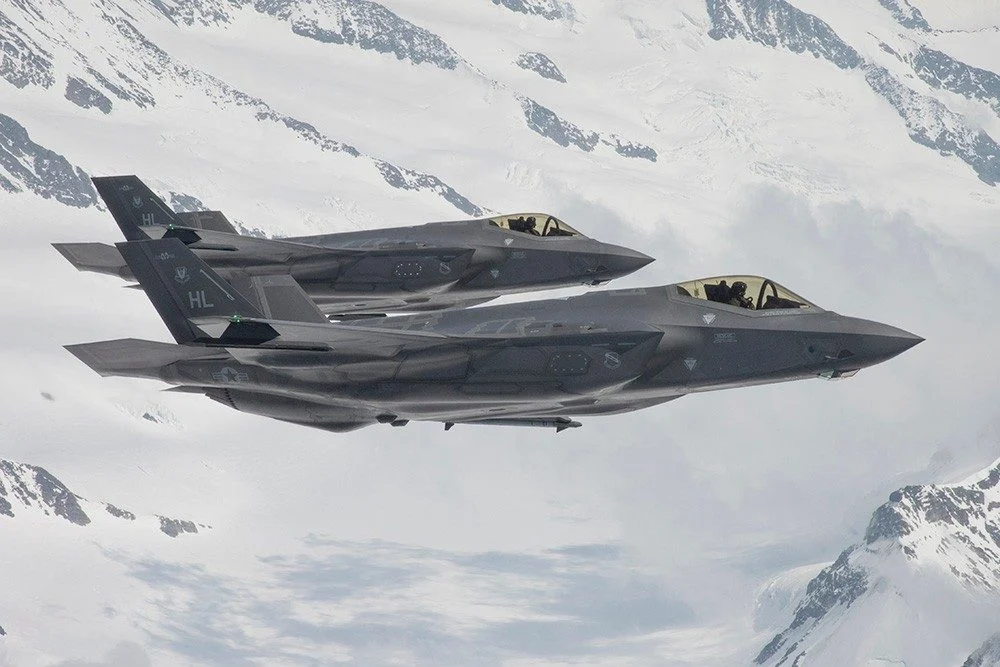
Beck’s remarks indicate the RAF instead sees the initial fleet as a training capability, while the operational force required to undertake NATO’s nuclear mission remains the subject of ongoing analysis.
According to Aviation Week, the RAF is still assessing the size and posture of the force needed to meet the dual-capable aircraft requirement, suggesting decisions on aircraft numbers and operational structure have yet to be finalised.
First 12 F-35As headed for pilot conversion
The first F-35As will be assigned to the RAF’s Operational Conversion Unit, where they will be used to train new Lightning pilots.
The conventional take-off and landing variant offers several practical advantages over the short take-off and vertical landing F-35B. It is less expensive to acquire and operate, carries more internal fuel, requires fewer maintenance hours and can remain airborne longer, allowing more efficient pilot training while preserving flying hours on front-line F-35Bs assigned to carrier operations.
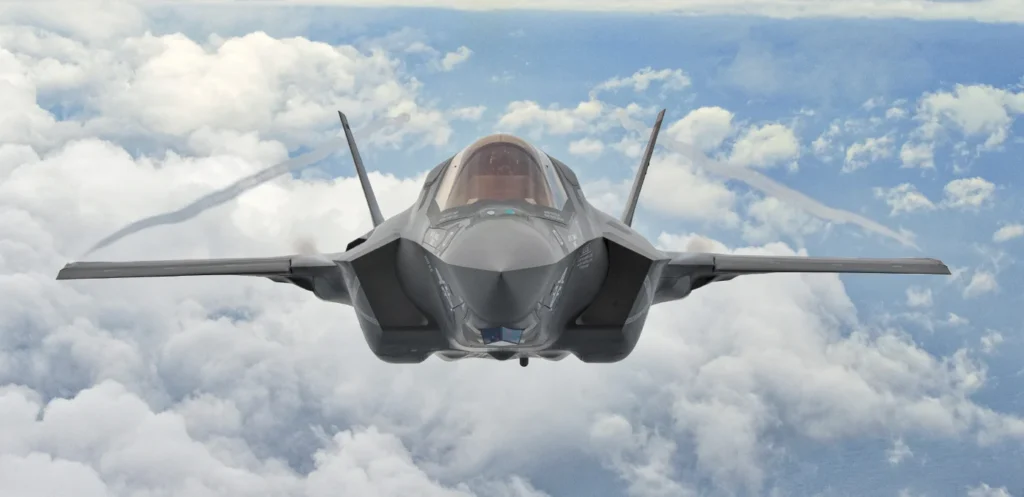
The UK currently operates 48 F-35Bs and has committed to acquiring a further 15 F-35Bs alongside the 12 F-35As, while maintaining its long-term objective of procuring up to 138 F-35 aircraft over the life of the programme.
While the clarification answers one question, it raises several others about how Britain intends to re-establish an airborne nuclear capability within NATO.
If the initial F-35As are dedicated to training, the RAF will need to determine how many additional aircraft are required to sustain an operational dual-capable force without affecting pilot conversion.
Tanker and infrastructure questions remain
Supporting capabilities are also under review. During the same conference, RAF officials confirmed that the future Global Combat Air Programme (GCAP) fighter will use boom air-to-air refuelling, while Air Chief Marshal Sir Harvey Smyth told Aviation Week that the service is exploring options with AirTanker to introduce a boom capability for the Voyager tanker fleet.
That requirement would also benefit future F-35A operations, which use boom refuelling rather than the hose-and-drogue system employed by today’s RAF fast jets.
Despite the clarification over the role of the first aircraft, the government’s broader policy has not changed.
Britain remains committed to rejoining NATO’s dual-capable aircraft mission, complementing the UK’s submarine-based nuclear deterrent with an air-delivered capability available to the Alliance.
Sign up for our newsletter and get our latest content in your inbox.
Similar Reads



Sign up for our newsletter. Select all sectors relevant to you.
Related