Babcock brings seven firms into ARMOR Force as hybrid navy takes shape

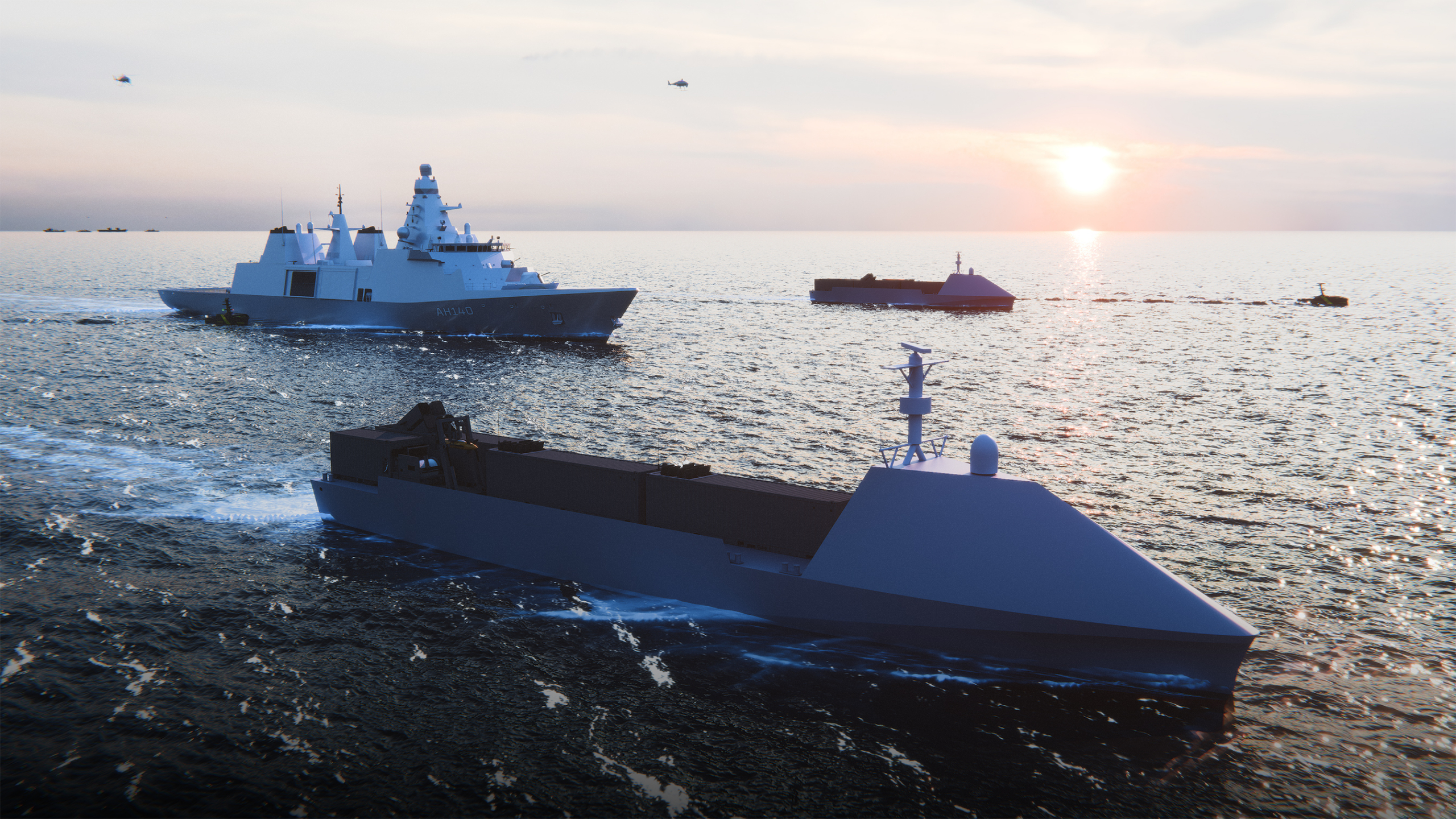
Babcock has expanded its ARMOR Force framework with seven technology and defence partners, bringing together more of the platforms, sensors and mission systems needed to deliver its hybrid navy concept.
CUBEDIN, Exail, Hensoldt, Kraken Technology Group, SH Defence, Stormborn and Thales have joined the framework, under which Babcock will integrate technologies and provide a single point of accountability for naval customers.
ARMOR Force is designed to combine crewed, lean-crewed and uncrewed systems within a common operating environment, supported by testing, training, certification and through-life support.
“The future Hybrid Navy will not be built from individual technologies operating in isolation,” said Sir Nick Hine, Babcock’s chief growth officer and chief executive – Marine, announcing the expanded framework. “Success depends on bringing together platforms, systems, data and people into a coherent operational capability.”
Seven partners bring platforms, sensors and modular systems
The new partners span several elements of that capability. Although Babcock has not detailed individual work packages, their existing specialisms illustrate the breadth of technology available:
- CUBEDIN develops standardised interfaces and software connecting mission modules with naval platforms. Its expertise covers the physical, power and data connections needed to make equipment from different suppliers work together.
- Exail brings maritime robotics and autonomous mine countermeasures expertise, including uncrewed systems used to locate and neutralise underwater threats.
- Hensoldt supplies naval radar, navigation, electro-optical and electronic warfare technologies, providing capabilities for surveillance, threat detection and situational awareness.
- Kraken Technology Group develops high-performance uncrewed vessels, including K3 Scout. Its modular platforms are designed for roles including maritime surveillance, force protection, logistics and precision strike.
- SH Defence develops The Cube modular mission system and associated handling equipment, allowing vessels to change roles by exchanging containerised payloads.
- Stormborn develops autonomous maritime systems combining vessel engineering, sensing, autonomy and command, with a focus on persistent surveillance and protection of critical waters and infrastructure.
- Thales brings experience in autonomous minehunting, sonar and secure command and control, including the maritime mine countermeasures system delivered to the Royal Navy.
Together, these specialisms cover the vessels carrying out a mission, the equipment they carry and the interfaces connecting them. Babcock’s role is to integrate those elements into a capability that navies can operate and sustain, while allowing new technologies and suppliers to be introduced as requirements change.
How ARMOR Force turns a frigate into a task force
The ARMOR Force (Autonomous and Remote Maritime Operational Response Force) concept aims to distribute capability across several platforms, with a crewed ship providing command.
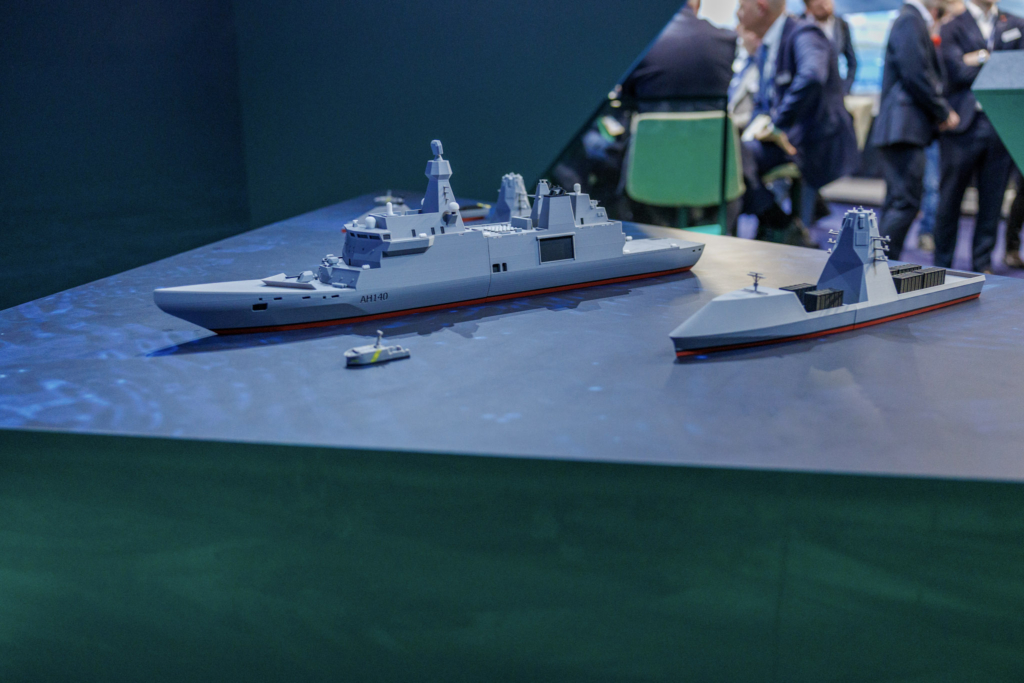
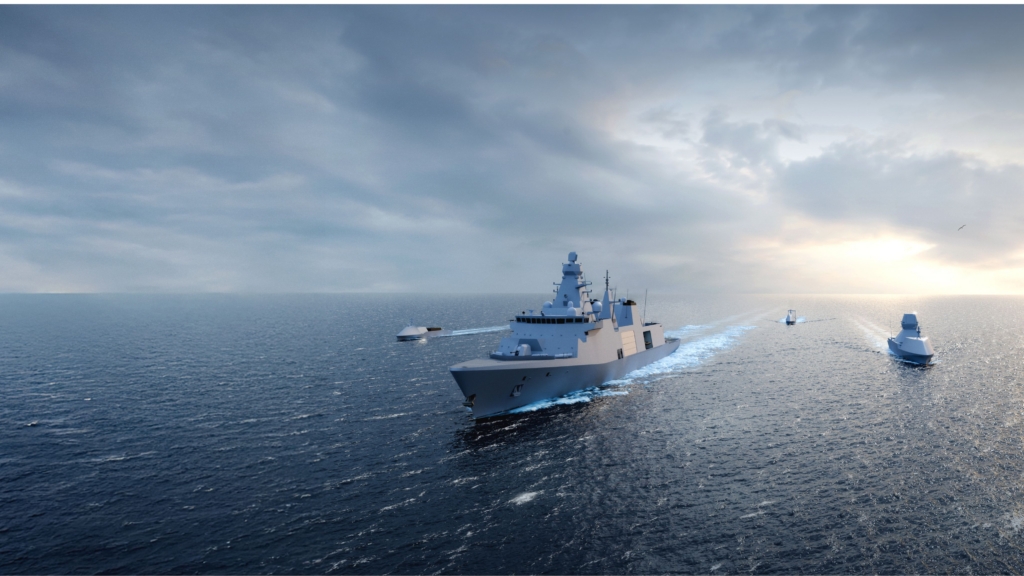
Speaking to Advance in August, Hine described a potential formation centred on a Type 31 frigate or Arrowhead 140 derivative, accompanied by uncrewed surface vessels.
“You go from a frigate to a mini task force,” he said.
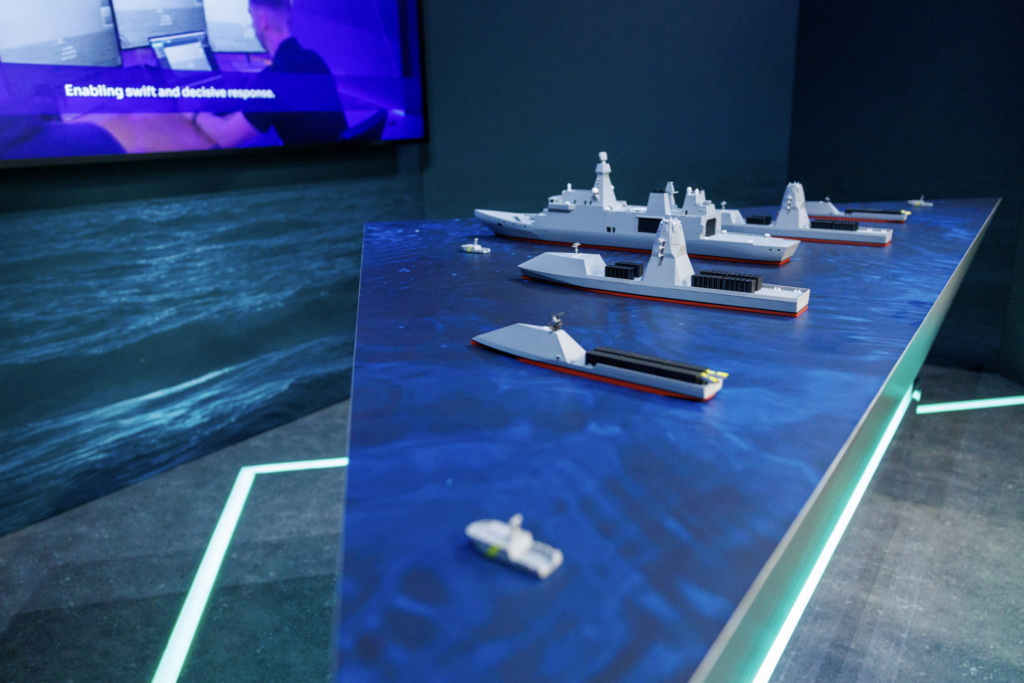
Babcock’s proposed Arrowhead 60 would be a 60-metre platform carrying up to four 40-foot containers, each housing mission equipment. Changing those payloads would allow the vessel to take on different tasks.
Hine’s vision is for a catalogue of containerised capabilities, with common interfaces allowing equipment to move between platforms. Some could also have applications ashore: he cited a counter-drone system that could be deployed on a vessel, beside an airport or on a truck.
“The external interface, how you interface with the box, that should be open and easy in order to be able to be replicated by anybody,” he told Advance.
The latest announcement places Arondite’s Cobalt mission orchestration platform at the centre of coordinating the technologies and systems on ARMOR Force vessels. Babcock said its work with Arondite and US shipbuilder HII continues alongside the expanded framework.
Human authority remains central to what Babcock calls “commanded autonomy”. In the interview, Hine distinguished between autonomous navigation and human control over the capabilities carried aboard.
“The person is in charge of the capability on the platform,” he explained.
What comes next for Babcock and ARMOR Force?
Hine described a development approach in which containerised mission systems and their interfaces would be demonstrated before Babcock’s own large uncrewed vessel was ready.
He also said Babcock intended to develop its vessel through self-funded research and development, supporting both UK proposals and international export opportunities. Those were development intentions; the latest announcement does not confirm a vessel order or operational deployment date.
The international ambition is to let partner nations contribute their own containerised capabilities and participate in platform construction, adapting the industrial arrangement to each customer.
For Babcock, that strategy also has implications for the future of Rosyth, where it builds the Royal Navy’s Type 31 frigates.
“If I was successful in a number of these areas, I can fill the yard in Rosyth for 15 or 20 years with the work,” Hine told Advance, discussing prospective command-vessel and export opportunities.
He distinguished that potential command-vessel work from the construction location for Babcock’s uncrewed vessels, which he said had not been decided.
The latest framework announcement identifies Rosyth and Devonport among the UK facilities supporting development, integration, simulation, testing and through-life support — activities needed to turn the growing partnership into deployable naval capability.
Sign up for our newsletter and get our latest content in your inbox.
Similar Reads



Sign up for our newsletter. Select all sectors relevant to you.
Related