

Inside Babcock’s plans to turn the Type 31 into a four-ship hybrid task force


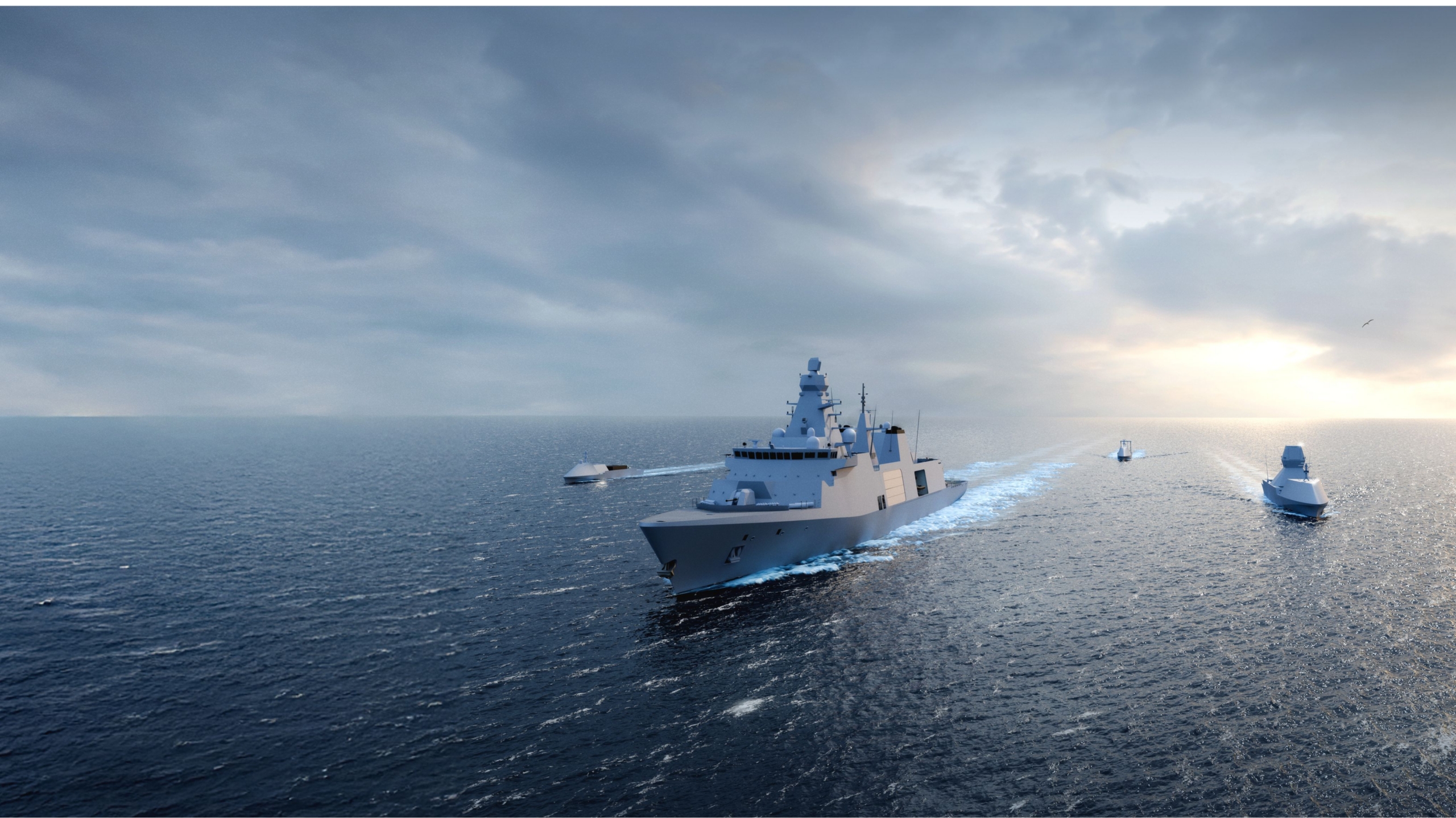
The Royal Navy’s Hybrid Navy is beginning to move from an abstract ambition towards a tangible force structure, and Babcock wants its Type 31 frigate to sit at the heart of it.
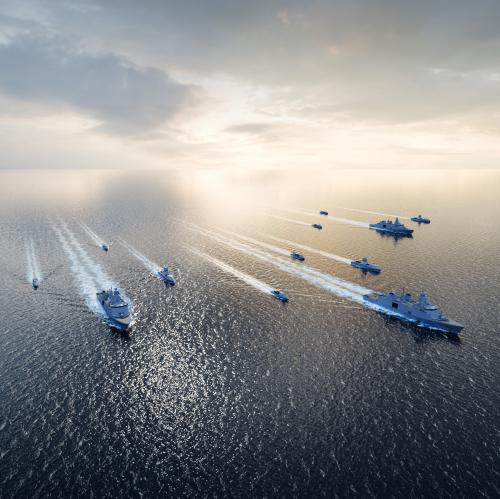
Under the company’s ARMOR Force proposal, one crewed command ship would operate alongside several large uncrewed surface vessels carrying interchangeable weapons, sensors and other capabilities in standard shipping containers.
“Imagine a Type 31 common command vessel, three uncrewed surface vessels, one doing Bastion, one doing Shield, one doing Strike,” Sir Nick Hine, chief executive of Babcock’s Marine sector, told ADS Advance. “You go from a frigate to a mini task force.”
Earlier this week, the Defence Science and Technology Laboratory revealed how it helped the Royal Navy develop the operational thinking behind its Hybrid Navy.
Dstl’s work, conducted under the First Sea Lord’s 100-day challenge in late 2025, examined how crewed and uncrewed platforms, sensors, communications and operational effects could work as an interconnected force.
Babcock is now positioning ARMOR Force as an industry answer to that requirement.
Technology catches up with the concept
ARMOR stands for Autonomous and Remote Maritime Operational Response Force, but Hine said its foundations predate the recent surge of interest in naval drones.
“About 10 years ago, when I was still in the Navy, I started talking about autonomous operation, distributed capability and capability in boxes,” he said. “The technology wasn’t quite ready, but the concept was. The concept hasn’t changed, but the technology has caught up. And Ukraine has happened in the middle of all that.”
Ukraine demonstrated that relatively inexpensive autonomous systems could be deployed operationally and at scale, accelerating a development that Hine believes traditional defence procurement would otherwise have approached far more slowly.
“You’ve got those three things coming together: the concept, the Ukraine war and the technology,” he said. “ARMOR Force is effectively the idea that you improve lethality and capability, and reduce cost, through the application of distributed power.”
The Defence Investment Plan provided another essential ingredient: evidence that the Government intends to finance the transition.
“The DIP is the capability confirmation that not only does the Royal Navy want it, but the Ministry of Defence will fund it,” Hine said. “Industry is coin-operated and it needs money to make it work. We can have as many ideas as you like, but at some point somebody has to write cheques.”
From Type 31 to command ship
Babcock believes the first common command vessel could be created from an existing Type 31 without rebuilding the frigate.
“You can have a minimum viable product quite quickly, with effectively some computer server additions, some communications upgrades and some software,” Hine explained.
“The beauty of Type 31 is that we deliberately made it adaptable. There is a whole series of adaptability spaces inside that you can use to augment the capabilities embarked in your uncrewed surface vessels.”
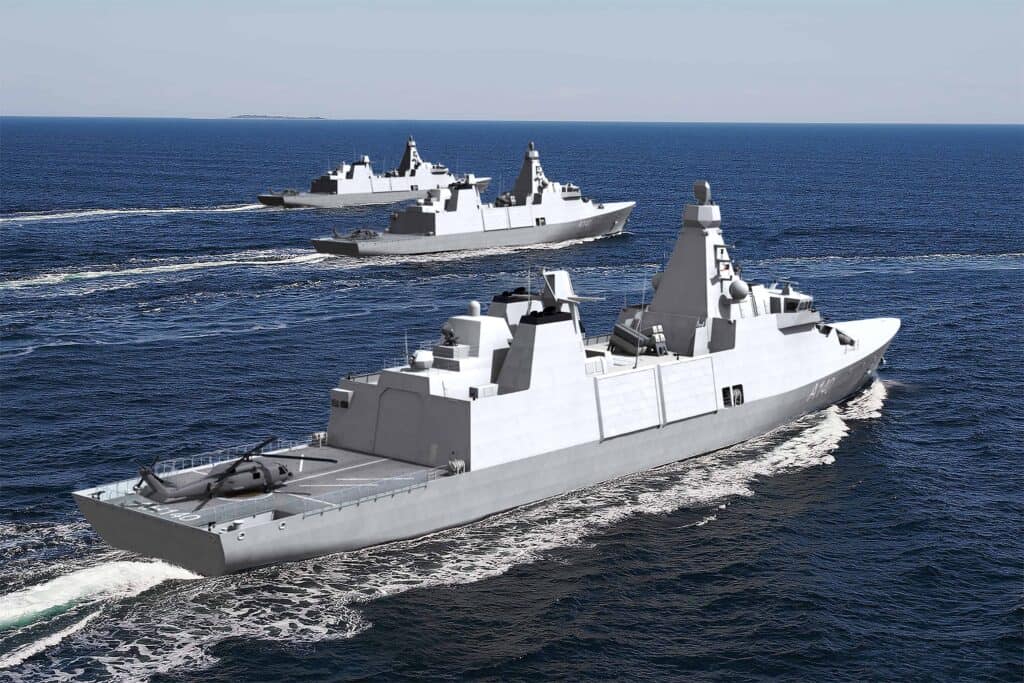
Later vessels could incorporate more extensive changes, potentially including a stern ramp for launching and recovering smaller craft and redesigned internal spaces.
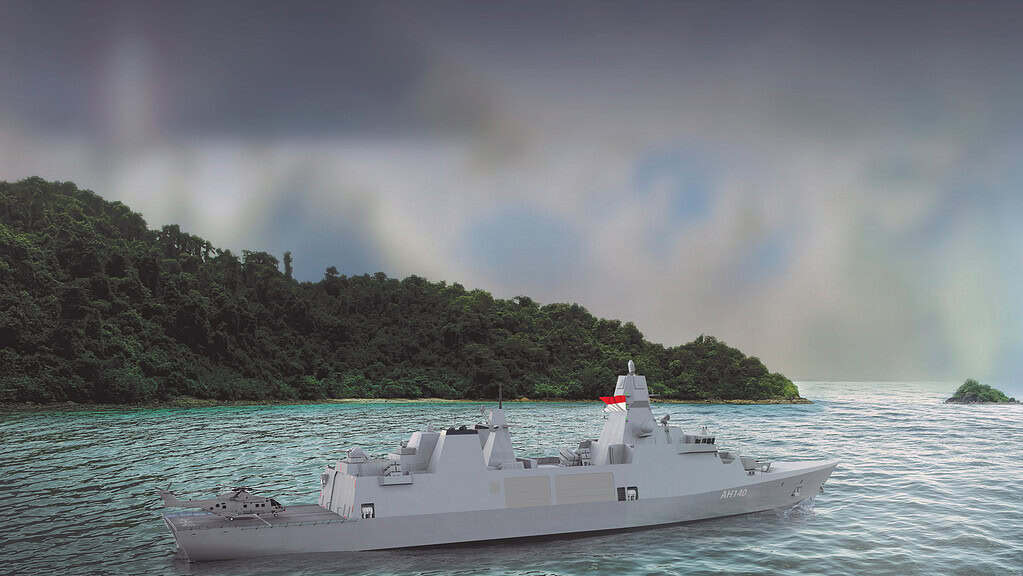
Hine sees the existing Type 31 as the starting point rather than the final configuration. The Defence Investment Plan refers to at least six common command vessels, opening the possibility of a new batch of Arrowhead 140-derived ships designed around the role from the outset.
“We would say you can have your first batch of common command vessels as a Type 31 minimum viable product,” he said. “Then we would love to get quickly into building the next generation of Arrowhead 140 Type 31 common command vessels.”
An uncrewed ship, not a speedboat
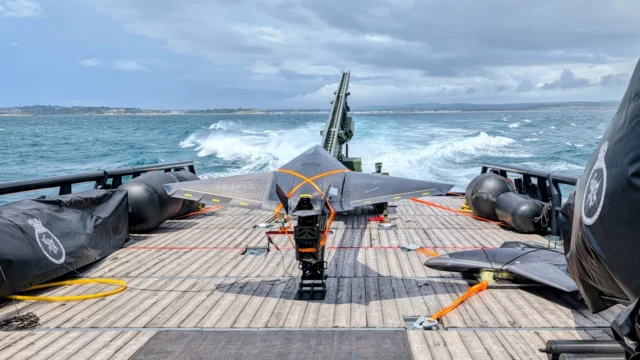
The proposed Arrowhead 60 would be considerably larger and more capable than the small explosive-laden boats associated with the war in Ukraine.
“When you talk about drones, everybody in their mind sees some little flying quadcopter,” Hine said. “Then, if you go into the maritime space, when you say drone, you see a speedboat. These are 60 metres long. These are big things. You will notice them.”
Each ocean-going vessel would carry as many as four 40ft containers, with their contents selected according to the mission.
“The person isn’t really in charge of the platform, because the platform is autonomous,” Hine explained. “The person is in charge of the capability on the platform.”
It’s an important nuance of ‘autonomy’ that, regardless of technical advances, humans should always be in charge. While the ship will navigate and avoid obstacles independently, humans aboard the command vessel will supervise its mission systems and retain control over decisions involving weapons.
“The idea that these things are just going to run around the ocean doing their own thing independently is just not happening,” Hine said. “Some kind of human in the loop has to take place.”
Artificial intelligence could reduce the number of operators required by processing information and presenting recommendations, but Hine insisted that it would not remove human responsibility.
“All that AI will do is process the information more quickly to give the person making the decision the decision more quickly,” he said. “They will still have to take the decision.”
Opening ARMOR Force to industry
Babcock wants the mission containers and their interfaces to remain open to other suppliers rather than limiting ARMOR Force to equipment developed in-house.
“The whole point of the box is I want to get to a catalogue whereby I have a box that does just about anything you want to do, from medical through to destroying stuff,” Hine said.
The modular approach could allow the same capability to move between domains. A containerised counter-UAS system, for example, could operate aboard an uncrewed ship, beside an airport or from a vehicle on land.
“If I create a counter-UAS system in a box, I can either put it on a ship to do counter-UAS for self-defence, or how about I put it next to an airport?” Hine said. “Or I put it in a truck and send it to a battlefield.”
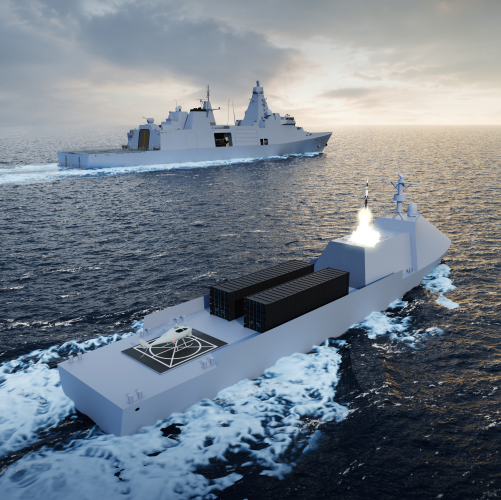
Babcock will work with SMEs to develop many of the containerised payloads, while its partnership with US shipbuilder HII will underpin the vessels and their autonomy architecture.
HII’s 150ft Romulus 150 and Babcock’s 60-metre Arrowhead 60 are being developed for different national standards but are intended to share autonomy software and common space, weight and power interfaces.
“A capability in a box that is developed in the US will go on a UK platform and vice versa,” Hine said. “You suddenly get the ability to move all of these things around in a much more sophisticated way.”
Initial demonstrations are expected to take place in the US because the US Navy’s procurement programme is further advanced. Babcock subsequently plans to build its own uncrewed vessel through self-funded research and development.
A fleet concept with export ambitions
ARMOR Force is also central to Babcock’s ambitions beyond the Royal Navy. Hine said the company is presenting the concept in Denmark and New Zealand and expects to offer it to Chile.
Rather than exporting a fixed British product, Babcock wants partner countries to contribute their own containerised capabilities and potentially build elements of the force domestically.
“Think of it a bit like the F-35 programme, but not as complicated and not as expensive,” Hine said. “It allows nations to bring their expertise and capabilities quickly to bear in a containerised form.”
Success would also help Babcock maintain work at Rosyth as the existing Type 31 programme approaches completion.
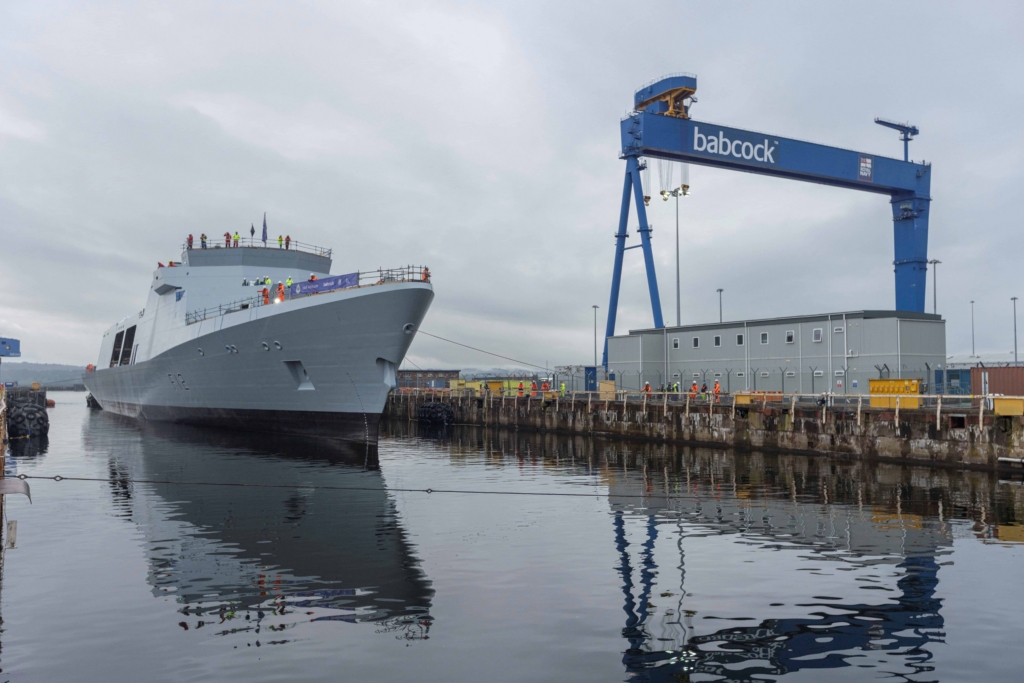
“If I was successful in a number of these areas, I can fill the yard in Rosyth for 15 or 20 years with work,” Hine said. “That has got to be good for the yard, good for Scotland and good for UK plc.”
ARMOR Force remains a Babcock proposal rather than a selected Royal Navy programme. But Dstl’s disclosure shows that the operational thinking behind a connected force of crewed and uncrewed systems is already being tested.
The question is therefore shifting from whether the Royal Navy wants a Hybrid Navy to which combination of ships, autonomous systems and industrial partnerships will deliver it.
Sign up for our newsletter and get our latest content in your inbox.
Similar Reads



Sign up for our newsletter. Select all sectors relevant to you.
Related