

DIP decoded: How the Defence Investment Plan will reshape the Royal Navy


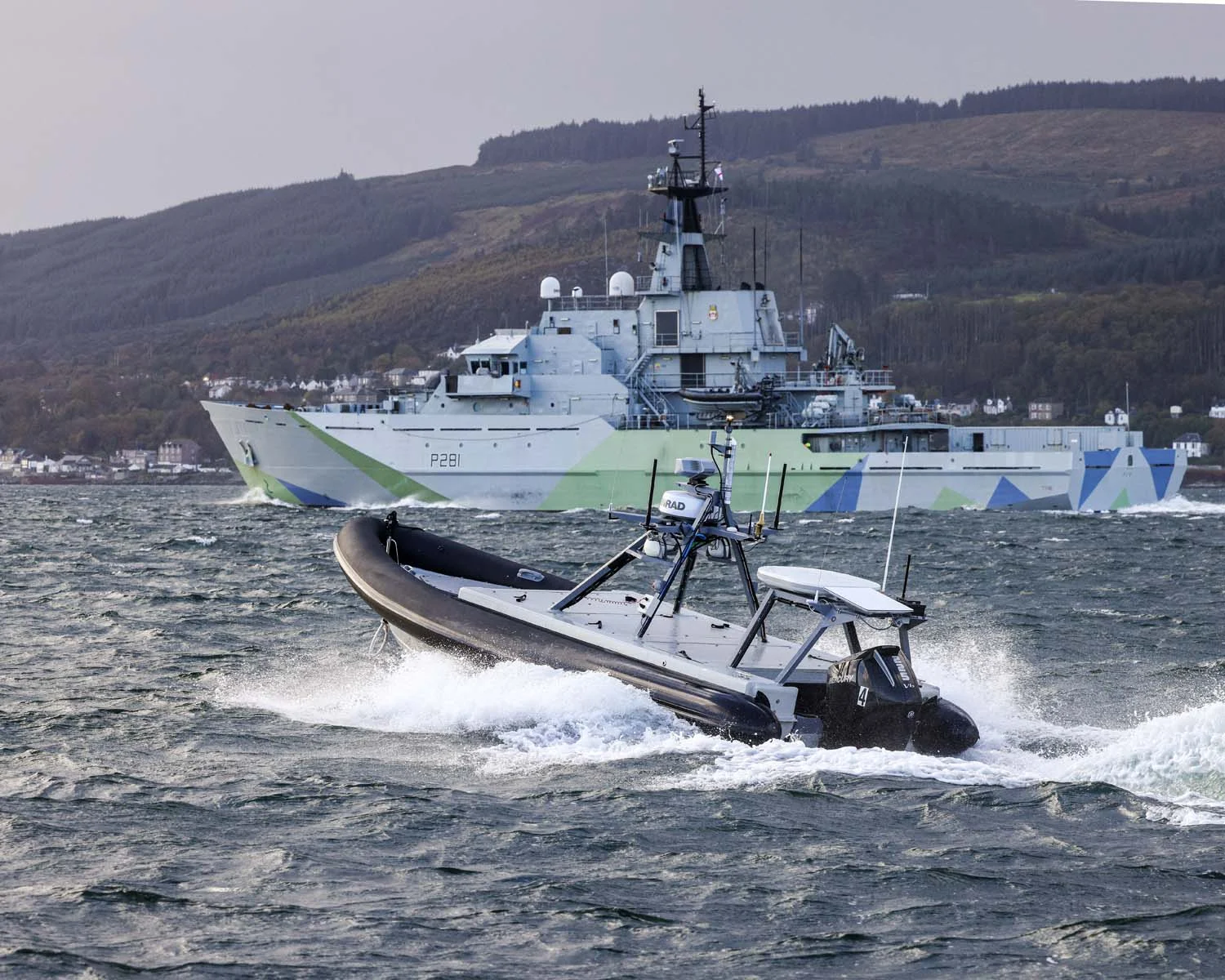
The Royal Navy emerges from the Defence Investment Plan (DIP) with more than just a larger budget. It leaves with a different blueprint for how Britain intends to project maritime power over the coming decades.
While the Strategic Defence Review (SDR) outlined the direction of travel last year, the DIP provides the funding and timelines behind that vision.
Taken together, they show a service that is moving away from relying solely on traditional warships towards a force built around nuclear deterrence, autonomous systems, resilient infrastructure and closer integration with industry.
For shipbuilders, dockyards and suppliers, the significance lies not simply in the value of the investment but in the long-term certainty it provides.
From submarines and naval bases to future autonomous vessels, the plan commits the Government to programmes that will shape Britain’s maritime industrial base well into the 2040s.
Nuclear deterrence remains the Royal Navy’s top priority
The clearest priority is the UK’s nuclear enterprise.
Between 2026 and 2030, the DIP allocates around £63 billion across the Defence Nuclear Enterprise, including funding for submarines, warheads, nuclear fuels and specialist skills.
The package includes £47 billion for the nuclear enterprise itself, £13 billion for the UK’s nuclear warhead programme, £1.7 billion for defence nuclear fuels and £290 million to sustain the specialist workforce needed to support the enterprise.
Together, these programmes are expected to account for up to a quarter of the Ministry of Defence’s budget during the period.
The investment underlines that the continuous at-sea deterrent remains the Royal Navy’s foremost capability and one of the Government’s highest defence priorities.
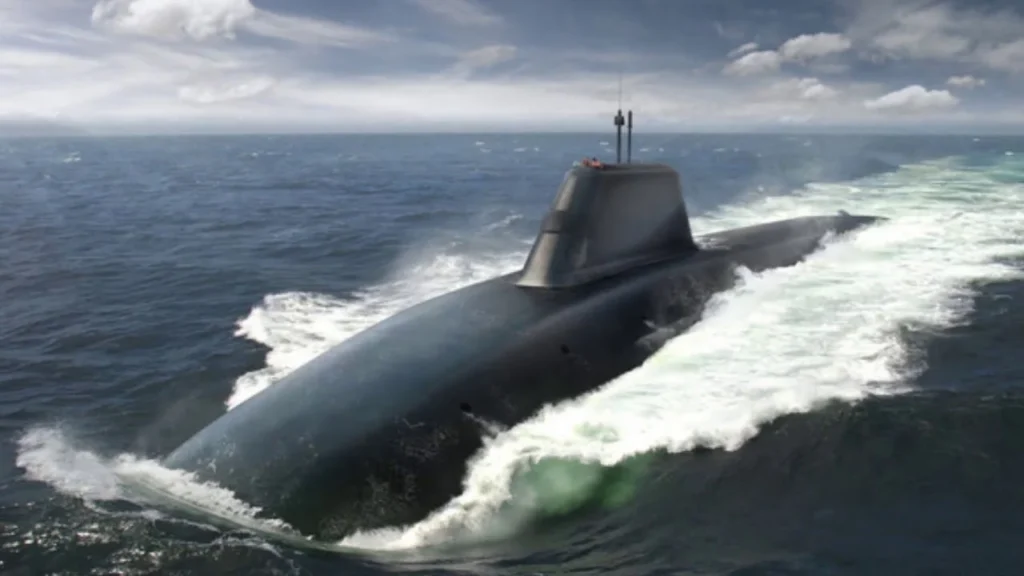
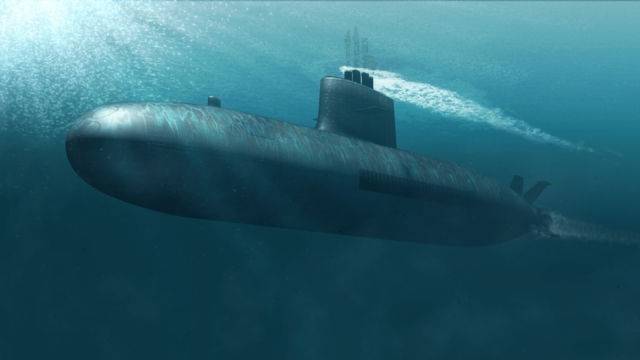
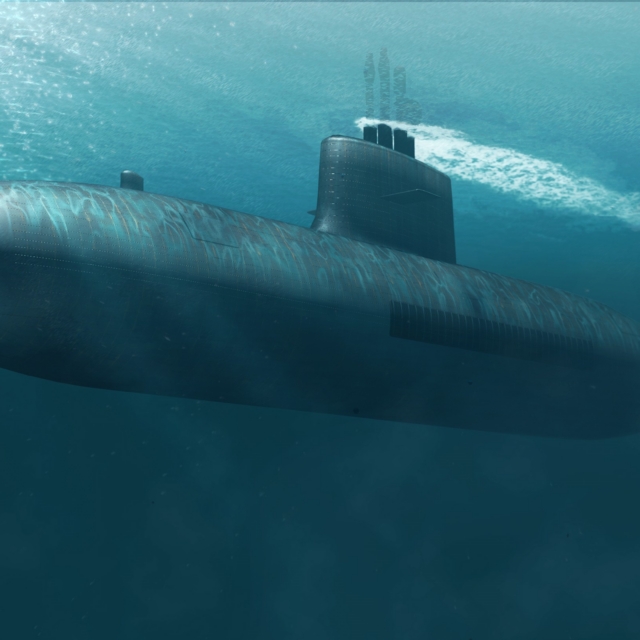
Construction continues on the four Dreadnought-class ballistic missile submarines, while the plan confirms the UK’s intention to build up to 12 SSN-AUKUS attack submarines under the trilateral partnership with Australia and the United States.
According to the DIP, steel will be cut on the first SSN-AUKUS boat next year, even before the final Astute-class submarine, HMS Achilles, is completed.
That overlap is more than a production milestone. It is intended to maintain a continuous workload across the submarine enterprise, avoiding the boom-and-bust cycle that has previously affected Britain’s submarine industrial base.
The plan also confirms that work will begin on defining the successor to the Dreadnought class.
Although the first boat has yet to enter operational service, the lifespan of Britain’s strategic deterrent means planning for its eventual replacement cannot be deferred for another decade.
Naval bases become part of Britain’s deterrent
The investment extends well beyond the submarines themselves.
In one of the biggest naval base upgrades for more than 45 years, the Government has committed £26 billion over the next decade through Project Royal Oak to modernise the infrastructure that supports the fleet.
The commitment recognises that naval capability depends as much on shipyards, maintenance facilities and support infrastructure as it does on the vessels at sea.
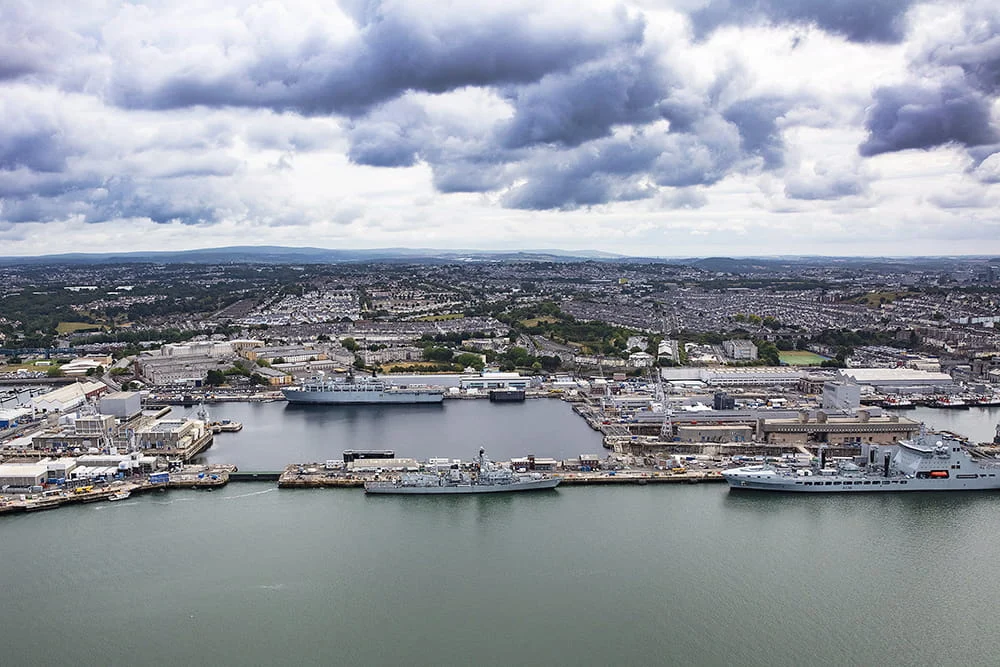
Major work is planned across the UK’s principal naval bases, including HMNB Clyde, Devonport and Portsmouth, alongside investment in Faslane, home to Britain’s submarine force.
The DIP also confirms continued investment in Project EUSTON, including three new floating dry docks to support submarine maintenance and improve resilience across the naval support network.
The emphasis on infrastructure reflects a broader shift in defence planning. Rather than viewing dockyards purely as support facilities, the Government increasingly treats them as strategic assets that enable continuous submarine operations and the long-term availability of the fleet.
Hybrid Navy plans reshape future warship design
Perhaps the most significant operational change in the DIP is the move towards a Hybrid Navy, where crewed warships operate alongside autonomous surface, underwater and air systems.
The new approach will replace plans for a Type 83 destroyer, which was in its early design phase as part of the Future Air Dominance System project.
The Government has allocated at least £1.3 billion over the next four years to begin developing the capability. Rather than replacing major warships outright, the Royal Navy intends to use uncrewed systems to extend surveillance, improve missile defence and increase striking power while reducing risk to personnel.
At the centre of that vision is the Common Combat Vessel (CCV), a new class of warship planned to replace the Type 45 destroyers from the mid-2030s.
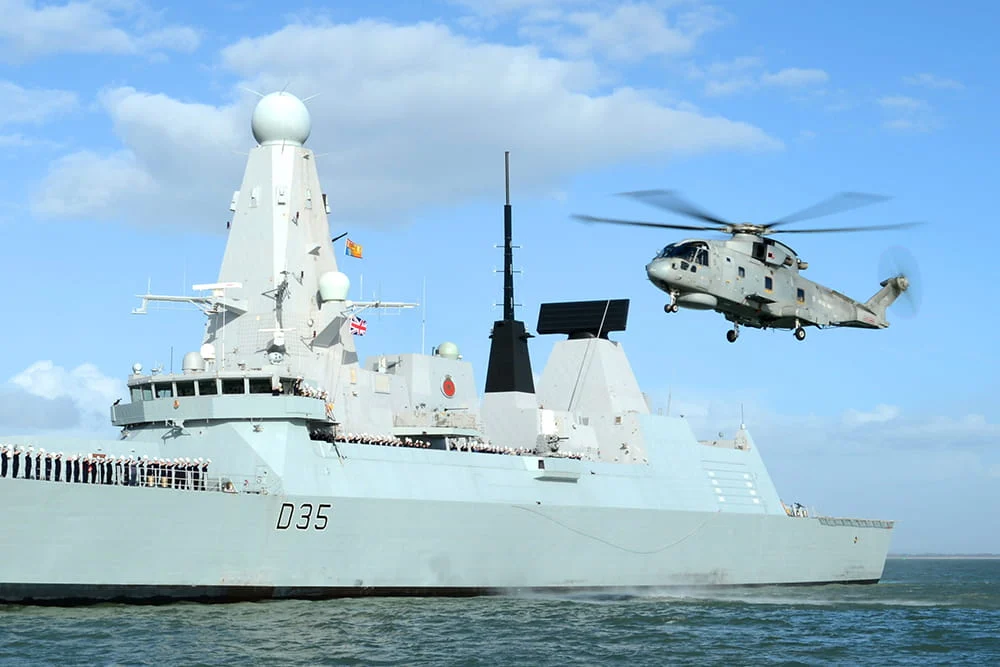
The Ministry of Defence expects at least six vessels to enter service, acting as command ships within a wider network of autonomous platforms.
“From the early 2030s we will bring a new Hybrid Navy Maritime Air Defence system into service. It will comprise uncrewed missile (Type 91) and sensor (Type 94) platforms that will be distributed throughout our Maritime Task Groups, with a new Common Combat Vessel as the central brain, connecting and controlling the uncrewed elements. This system will eventually replace our Type 45 Destroyers, which are due to retire from 2035,” the DIP said.
Plans are also underway to upgrade the Type 45 destroyers to deliver an initial ballistic missile defence capability by 2028. Around £490 million is planned for directed-energy weapons, including the delivery of the DragonFire system on the Type 45 destroyers from 2027.
Supporting the future fleet will be four new families of uncrewed systems. These include underwater vehicles for anti-submarine warfare and seabed surveillance, autonomous missile platforms and uncrewed sensor vessels designed to strengthen the Navy’s ability to monitor and protect the North Atlantic.
Together, they form the backbone of the Royal Navy’s Atlantic Bastion, Atlantic Shield and Atlantic Strike concepts.
Atlantic Bastion targets Russian underwater activity
Atlantic Bastion places the UK at the forefront of a technological revolution in naval warfare, combining autonomous surface and underwater vessels and cutting-edge digital infrastructure with world-class warships and patrol aircraft.
Launched in December 2025, Atlantic Bastion will create an advanced hybrid naval force to defend the UK and NATO allies against evolving threats.
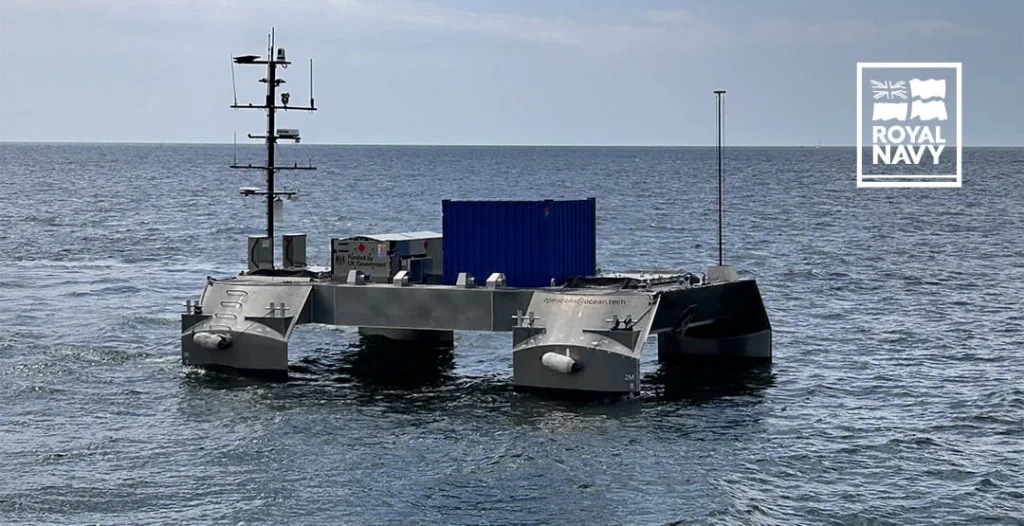
“We will spend an additional £1.5bn over the next four years to support this effort. It will enable the UK to find, track and, if required, act against adversaries with unprecedented effectiveness across vast areas of ocean,” the Government plan noted.
The programme is a direct response to an increase in Russian underwater activity, including the activities of the Russian spy ship Yantar and covert GUGI submarines around UK waters, recently exposed by the Ministry of Defence.
Project Pantheon moves carriers towards uncrewed airpower
The carrier force is also expected to evolve.
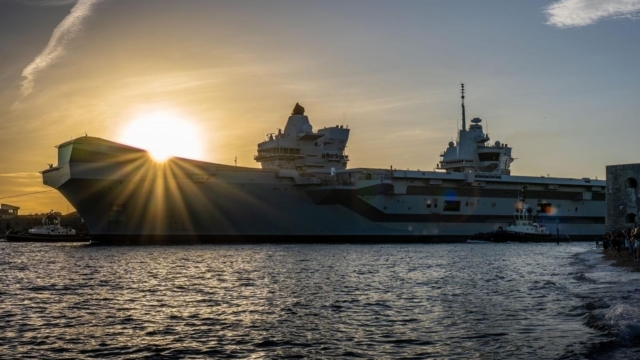
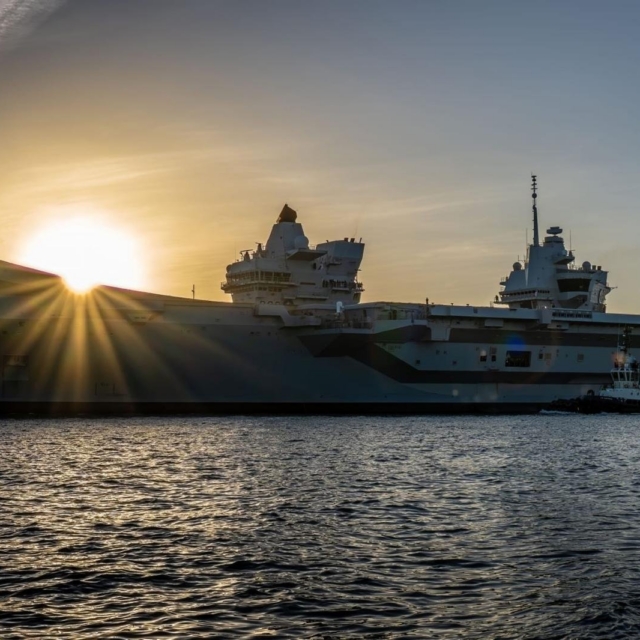
Under Project Pantheon, the Queen Elizabeth-class carriers will progressively integrate jet-powered uncrewed aircraft alongside F-35B Lightning II fighters, giving commanders greater flexibility in surveillance, electronic warfare and strike missions.
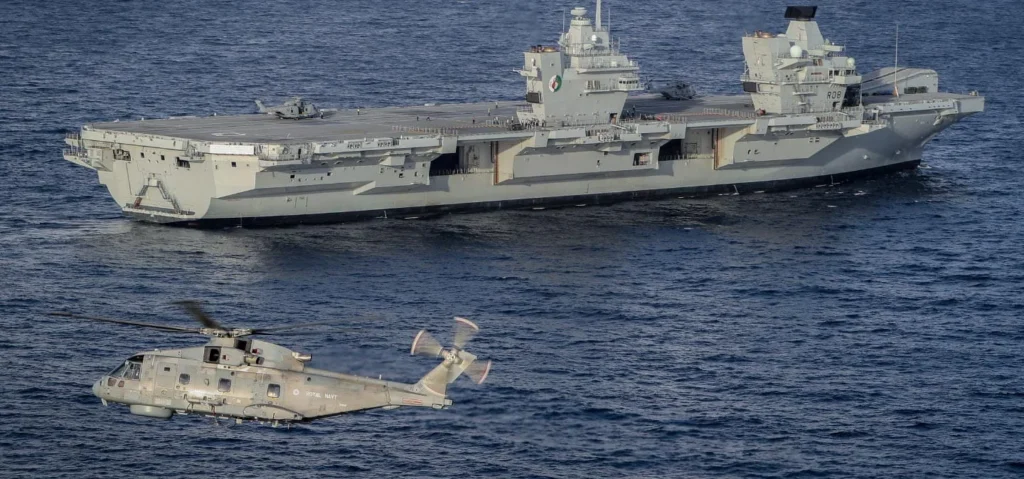
Almost £250 million has been allocated for Project Pantheon, including the development of autonomous systems to start building a Hybrid Carrier Air Wing and trials of jet-powered drones to work alongside the F-35B force under Project Vanquish.
“This will create a Hybrid Carrier Air Wing, alongside increasingly autonomous rotorcraft operating off escort vessels,” the DIP said.
Royal Marines and Arctic operations receive new funding
The DIP noted that the Multi-Role Strike Ship (MRSS) programme was too complex and did not reflect the UK Commando Force now being pursued.
As a result, the Government is pivoting to explore opportunities with the Netherlands-led Amphibious Transport Ship programme.
“HMS Protector, the UK’s ice patrol ship, has given sterling service to the Royal Navy and we will replace her with a more modern variant to maintain this essential presence and support Government activities in the Arctic and around the British Antarctic Territory,” the Government said in its DIP.
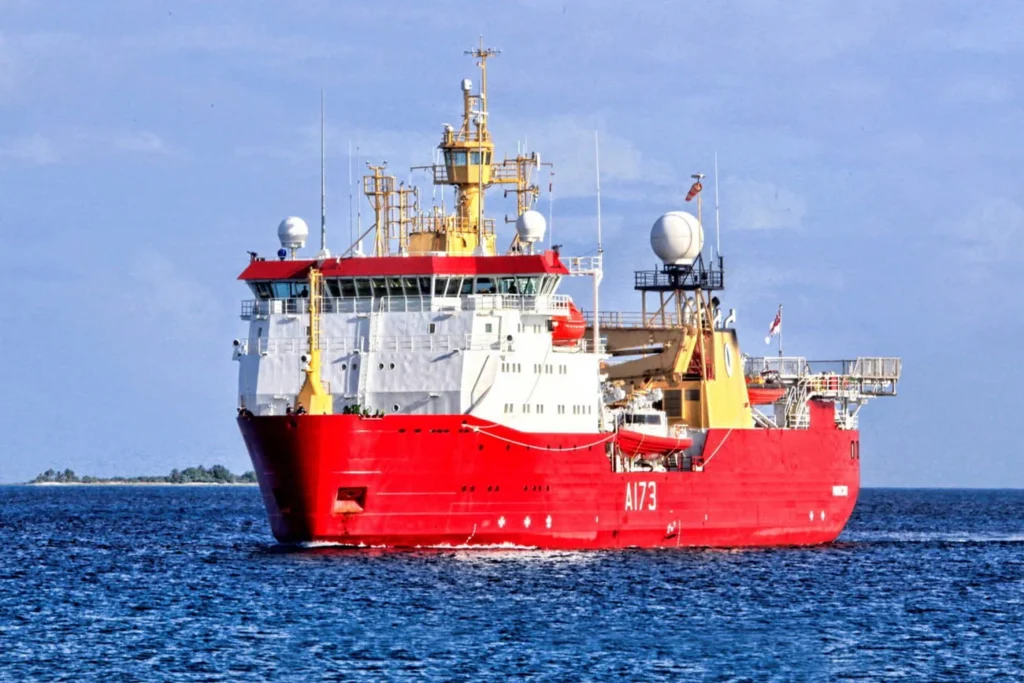
A further £100 million of new investment will support the transformation of the UK Commando Force into a warfighting formation focused on the High North, reflecting the region’s growing importance. The Government is also aiming to increase the number of Royal Marines regularly deployed in the region.
Arctic-capable Viking amphibious vehicles are also being replaced by the Future All-Terrain Vehicle. The DIP said the programme is on contract to deliver 60 vehicles by March 2028, with trials and testing complete and platforms arriving this year.
Between 2030 and 2035, the Government plans to invest at least £32 billion in new maritime capabilities to meet the vision set out in the 2025 SDR.
“We will fully integrate autonomous underwater, surface and airborne capabilities with Royal Navy crewed platforms and those of our NATO allies,” the plan said.
Type 26 and Type 31 shipbuilding pipeline continues
Alongside future concepts, the DIP confirms continued investment in today’s fleet.
Funding remains in place for all eight Type 26 frigates, while £4.1 billion has been allocated over the next four years to keep construction on track.
The Government has also reaffirmed its ambition to build a combined fleet of 13 Type 26 frigates with Norway, extending work on HM Naval Base Clyde well into the next decade.
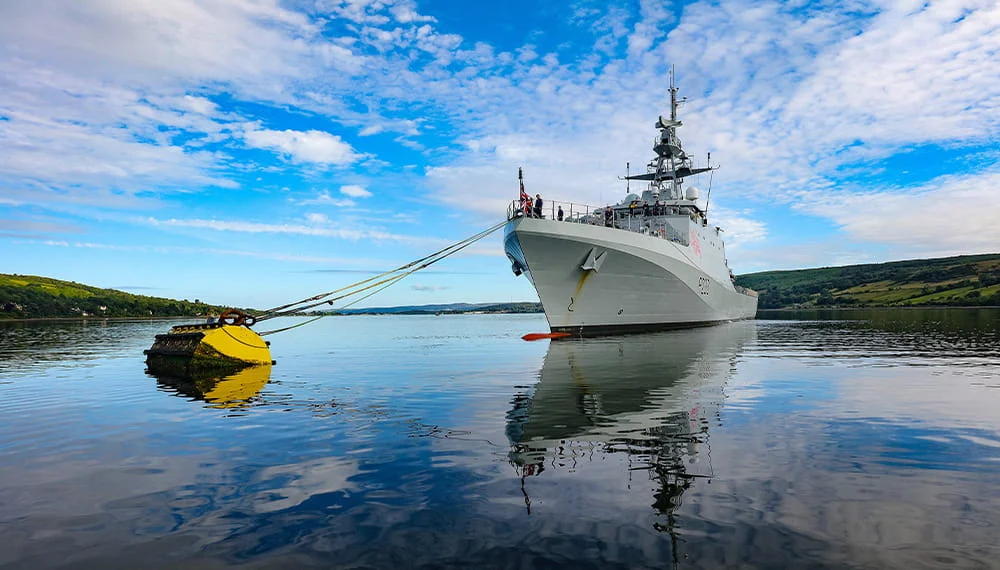
The continued investment will help build a combined fleet of frigates to hunt Russian submarines in the North Atlantic. This is described as the biggest British warship deal in history and the centrepiece of the Lunna House Agreement.
“Scotland’s shipyards on the Clyde will be full for years to come, thanks to our historic frigate deal with Norway,” the plan said.
The programme also provides £1.6 billion to continue construction of five Type 31 frigates and Fleet Solid Support ships, alongside funding to equip the class with Mk 41 vertical launch systems and the Naval Strike Missile, significantly strengthening its offensive capability.
Defence Investment Plan gives the maritime industry long-term visibility
The DIP gives shipbuilders, equipment manufacturers and suppliers something the sector has often lacked: visibility.
For companies involved in submarines, combat systems, autonomous technologies, naval infrastructure and sustainment, the document sets out a programme stretching well beyond the current Spending Review.
It also reinforces the Government’s intention to grow sovereign capability, support defence exports and expand opportunities for smaller companies developing autonomous systems, sensors, artificial intelligence and underwater technologies.
Leonardo UK said the plan recognises the growing role of autonomy in future naval operations, pointing to programmes such as the Proteus autonomous helicopter, maritime sensor integration and the DragonFire laser weapon as technologies aligned with the Royal Navy’s future hybrid force.
The immediate headlines around the Defence Investment Plan focused on higher defence spending. For the Royal Navy, however, the more significant shift lies in how that money will be used.
Nuclear deterrence remains the foundation, but the fleet that emerges over the next decade will increasingly combine submarines, frigates and aircraft with autonomous systems operating above, on and beneath the sea.
For British industry, delivering that transformation will be as important as building the ships themselves.
Sign up for our newsletter and get our latest content in your inbox.
Similar Reads


Sign up for our newsletter. Select all sectors relevant to you.
Related