UK commits £255m to prepare Ukraine for Saab Gripen E fighters


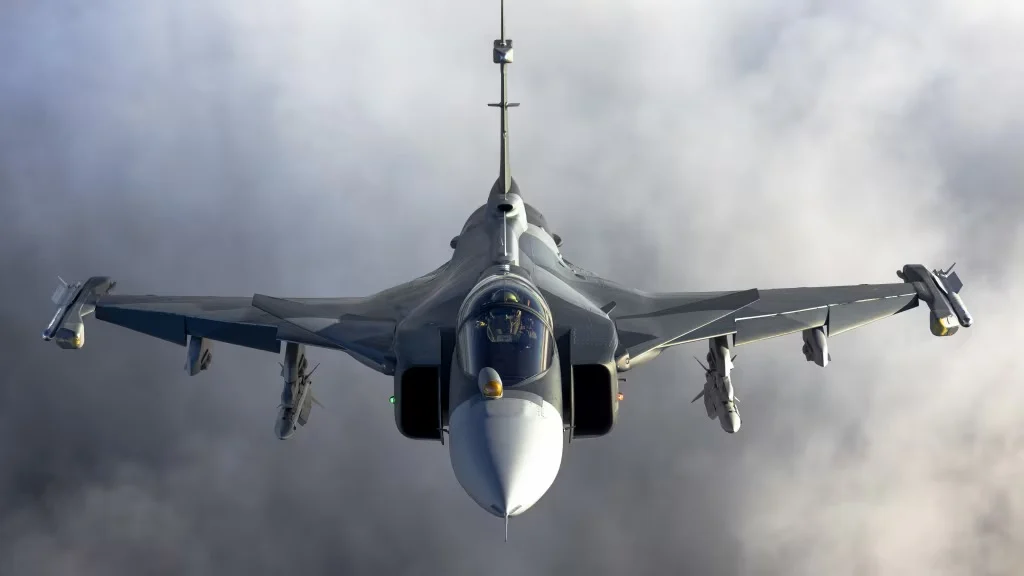
Britain has committed €300 million (£255 million) to help Ukraine field a squadron of Swedish-built Saab Gripen E fighter aircraft, linking one of its largest recent military assistance packages to both Ukraine’s long-term air force modernisation and continued investment in the UK’s defence industrial base.
Announced during Prime Minister Keir Starmer’s visit to Kyiv on 16 July, the funding will support Ukraine’s introduction of 16 Gripen E fighters by 2029 under a separate procurement programme agreed with Sweden last month.
Rather than financing the aircraft themselves, the British package covers pilot and engineer training, simulators, spare parts and the logistics required to bring the new fleet into operational service.
The investment also supports approximately 5,000 jobs across more than 50 UK companies that contribute to the global Gripen programme, highlighting London’s growing emphasis on using defence exports and military assistance to reinforce domestic industrial capacity while supporting Ukraine.
Gripen programme marks another step in Ukraine’s air force modernisation
The announcement follows Saab’s contract signed in June to deliver 16 new-build Gripen E fighters to Ukraine in a deal valued at approximately $2.5 billion, funded through European Union support. Deliveries are expected to begin in 2029.
Gripen will become the latest Western combat aircraft to enter Ukrainian service alongside F-16s supplied by Belgium, Denmark and the Netherlands and Mirage 2000 fighters provided by France.
The addition of the Swedish aircraft will further reduce Ukraine’s dependence on ageing Soviet-designed MiG-29, Su-27, Su-24 and Su-25 fleets.
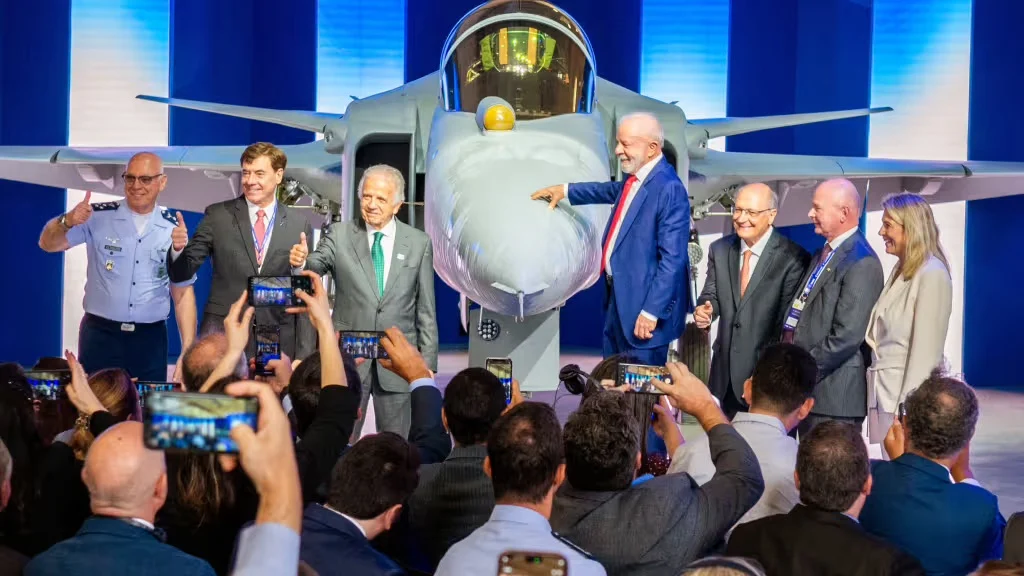
The aircraft has long been viewed by defence analysts as well-suited to Ukraine’s operational environment because of its ability to operate from dispersed and austere locations, its relatively small ground crew requirements and compatibility with advanced weapons such as the MBDA Meteor beyond-visual-range air-to-air missile.
The UK Government said the package would help Ukraine build a modern air force capable of defending against continuing Russian missile and drone attacks while improving interoperability with NATO air forces. Gripen aircraft have previously operated alongside Royal Air Force fighters during NATO’s air policing mission in Poland.
Starmer said the investment would “help put advanced Gripen fighter jets in Ukrainian skies,” strengthening Ukraine’s ability to defend itself while supporting skilled employment across Britain.
Defence Secretary Dan Jarvis added: “These fighter jets will help give Ukraine the air power needed to deter Putin, and this investment supports thousands of good jobs across our nation.”
British industry plays a significant role in the Gripen programme
Although manufactured by Sweden’s Saab, the Gripen programme has substantial British industrial participation.
According to the UK Ministry of Defence, British companies contribute up to 30% of each Gripen aircraft, with suppliers including Saab UK in Fareham and Leonardo UK in Edinburgh forming part of the programme’s wider industrial network.
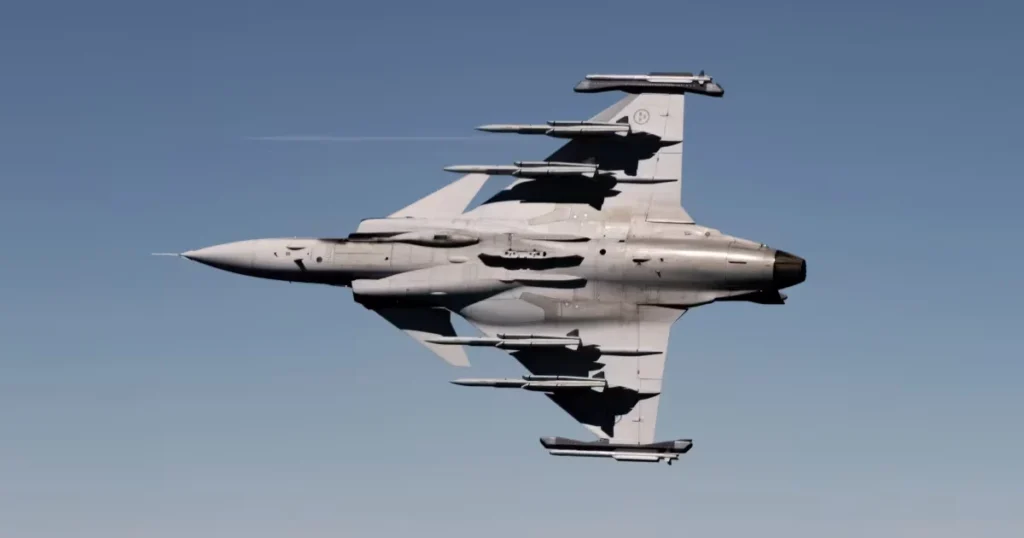
The government argues that continued investment in programmes such as Gripen supports high-value manufacturing jobs while preserving specialist aerospace and defence capabilities that also contribute to future military programmes.
The announcement also forms part of Britain’s broader commitment to provide £3 billion (approximately $4 billion) in annual military assistance to Ukraine while co-leading the Ukraine Defence Contact Group with Germany.
Artillery barrel deliveries underline Britain’s wider industrial strategy
The Gripen announcement came as the first British-manufactured artillery barrels were delivered to Ukraine under a separate £61 million (about $85 million) contract awarded to BAE Systems and produced by Sheffield Forgemasters.
The programme marks the return of forged artillery barrel production to Britain for the first time in almost two decades. The first four barrels have already been shipped to Ukraine as development units, with Sheffield Forgemasters currently producing eight forgings each month.
The contract supports hundreds of highly skilled jobs in Sheffield while benefiting more than 60 companies across the wider UK supply chain.
It also forms part of a wider £1.3 billion (about $1.75 billion) Ministry of Defence recapitalisation programme aimed at rebuilding sovereign steelmaking capacity for defence production.
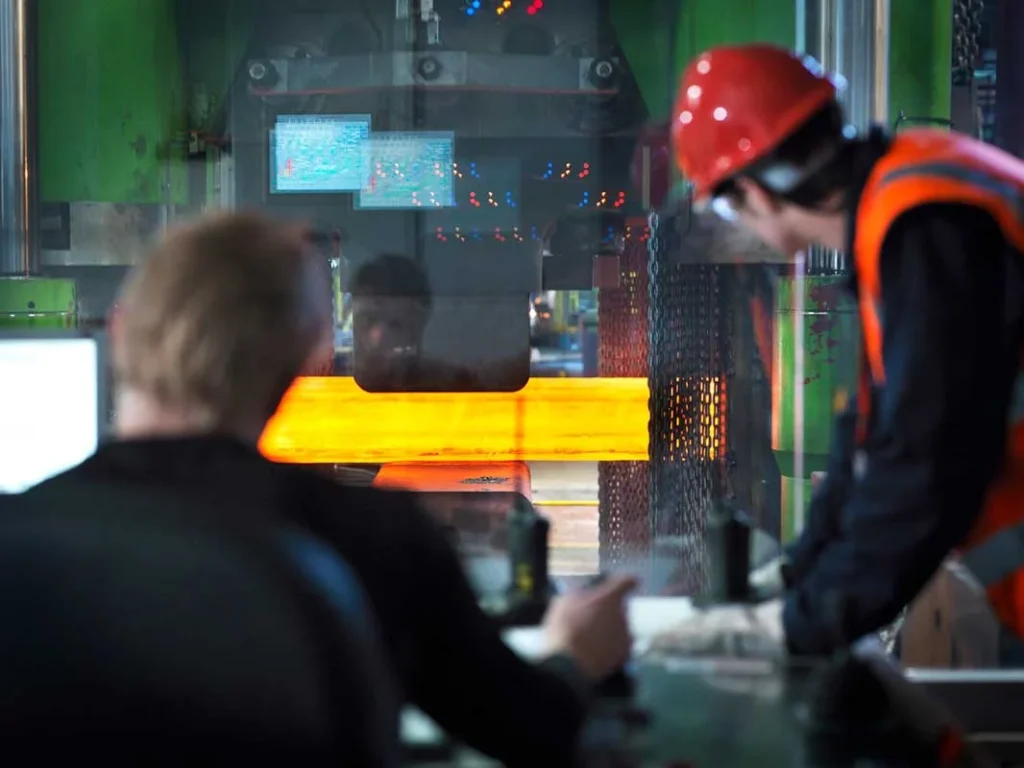
During a visit to Sheffield Forgemasters, Jarvis said the programme demonstrated how defence investment could simultaneously strengthen Britain’s industrial base and support Ukraine’s battlefield requirements.
“Our Defence Investment Plan, backed by £298 billion, is delivering greater national security for our nation and our allies, and opportunities for people across the UK,” he said.
Taken together, the Gripen support package and the return of artillery barrel production illustrate a broader shift in British defence policy.
Rather than treating military assistance and industrial investment as separate priorities, the government is increasingly linking support for Ukraine with programmes designed to rebuild sovereign manufacturing capability and sustain critical defence supply chains at home.
Sign up for our newsletter and get our latest content in your inbox.
Similar Reads

Sign up for our newsletter. Select all sectors relevant to you.
Related