World’s first pilot facility converts non-recyclable waste plastic to SAF
A major breakthrough in tackling both waste plastic and aviation emissions has been marked with the opening of the world’s first waste plastics to Sustainable Aviation Fuel (SAF) pilot facility.


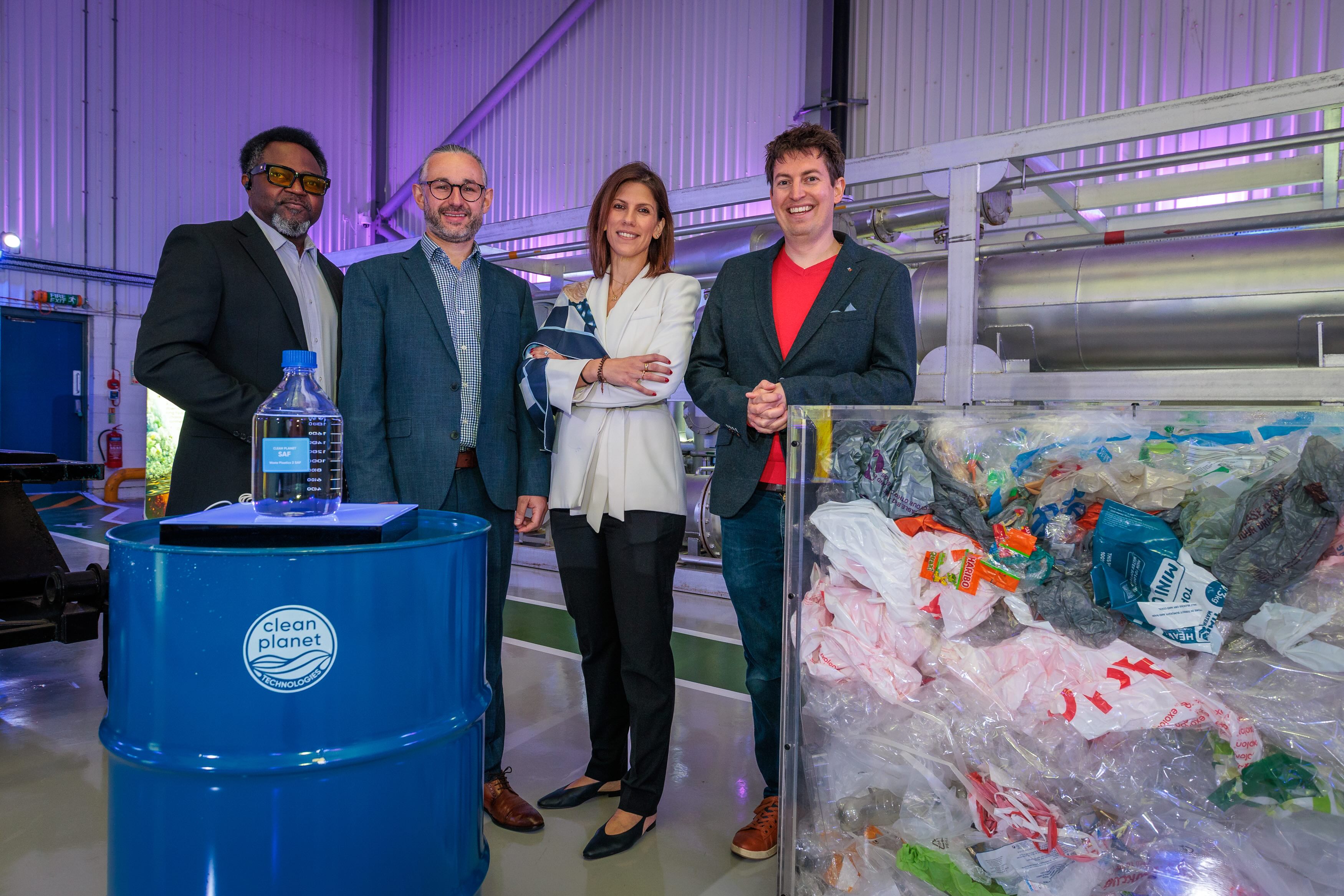
Above: (left to right) Dr Andrew Odjo, CEO at Clean Planet Technologies, Matthew Jee, Director of the UK SAF Clearing House, Dr Katerina Garyfalou, Chief Operating Officer at Clean Planet Technologies and Bertie Stephens, CEO of Clean Planet Group with examples of the waste plastic that is turned into Sustainable Aviation Fuel (SAF).
Courtesy Clean Planet Technologies


Dedicated to converting hard-to-recycle waste plastics into SAF, the new Sustainability Innovation Centre is based at Discovery Park in Sandwich, Kent and is operated by Clean Planet Technologies. The Centre is set up to research and develop new technologies to deal with non-recyclable plastic waste, beginning with conversion into jet fuel.

The UK creates five million tonnes of waste plastics each year, 80% of which cannot be recycled, such as carrier bags and food packaging film. Globally the world’s commercial aircraft consume between seven and eight million barrels of jet fuel per day, equivalent to 7-8% of total global daily oil demand.

Dr Andrew Odjo, Chief Executive Officer at Clean Planet Technologies, said: “Our process first heats the waste plastic with a chemical reaction to turn it into a liquid, rather than burning it. This is then treated with our patented process to remove impurities and create SAF that meets stringent commercial aviation specifications.

“Every day, around 100,000 commercial flights operate globally while approximately 30,000 tonnes of plastic enters the ocean. That’s the equivalent of us dumping 2,000 garbage trucks full of plastic into the world’s oceans, rivers and lakes every single day. Our pilot facility will demonstrate this waste can be turned into a premium product with a quantifiable commercial demand, as well as reducing the lifecycle carbon footprint of the aviation industry. We monitor how much energy the process uses and overall, it cuts the lifecycle greenhouse gas emissions by more than 70% compared to traditional fossil jet fuel.

“With currently less than 1% of global aviation fuel produced from sustainable sources, the scale of the environmental opportunity presented by our technology means the opening of our facility is an important step towards the UK’s ambition to support sustainable aviation.”

The pilot facility plays a critical role in bridging innovation and commercial development, integrating several stages into one single, controlled system optimised to transform hard-to-recycle plastics into SAF. It has been designed to support fuel and feedstock testing, validation and progression through the American Society for Testing and Materials (ASTM) qualification process, with financial support already in place from the Department for Transport-funded UK SAF Clearing House.

Dr Katerina Garyfalou, Chief Operating Officer at Clean Planet Technologies, added: “The Sustainability Innovation Centre is set up to demonstrate our patented waste-plastics-to-SAF process at pilot scale, supporting fuel testing, validation and progression.

“The important thing is that our pilot facility will support the growth of others, helping the UK to meet its SAF mandate. UK government policy to decarbonise aviation fuel states that 2% of UK jet fuel demand must be SAF, increasing to 10% in 2030 and 22% in 2040.”

The key steps of the process are:

  1. Shredding: Waste plastics are pre-processed and shredded to a uniform size.
  2. Pyrolysis: The material is fed into one of the centre’s two pyrolysis units, with the largest capable of processing up to one ton of plastic per day. In this oxygen-free environment, the plastics are thermocatalytically converted into a synthetic crude oil. This melts the plastic, rather than burning it.
  3. Purification: Impurities and contaminants in the synthetic crude oil are removed.
  4. Distillation: The pyrolysis oil is transferred to a distillation unit, where it is separated into relevant fractions and optimised for upgrading into higher-value fuels.
  5. Upgrading: The fractions are then processed through Clean Planet Technologies’ patented hydroprocessing system, which uses hydrogen to further remove impurities and transform the properties of the product to meet stringent SAF specifications.
  6. SAF product: The resulting ultra-clean, ultra-low sulphur fuel suitable for aviation use is sent for testing, blending and evaluation as part of the ASTM qualification pathway as SAF.
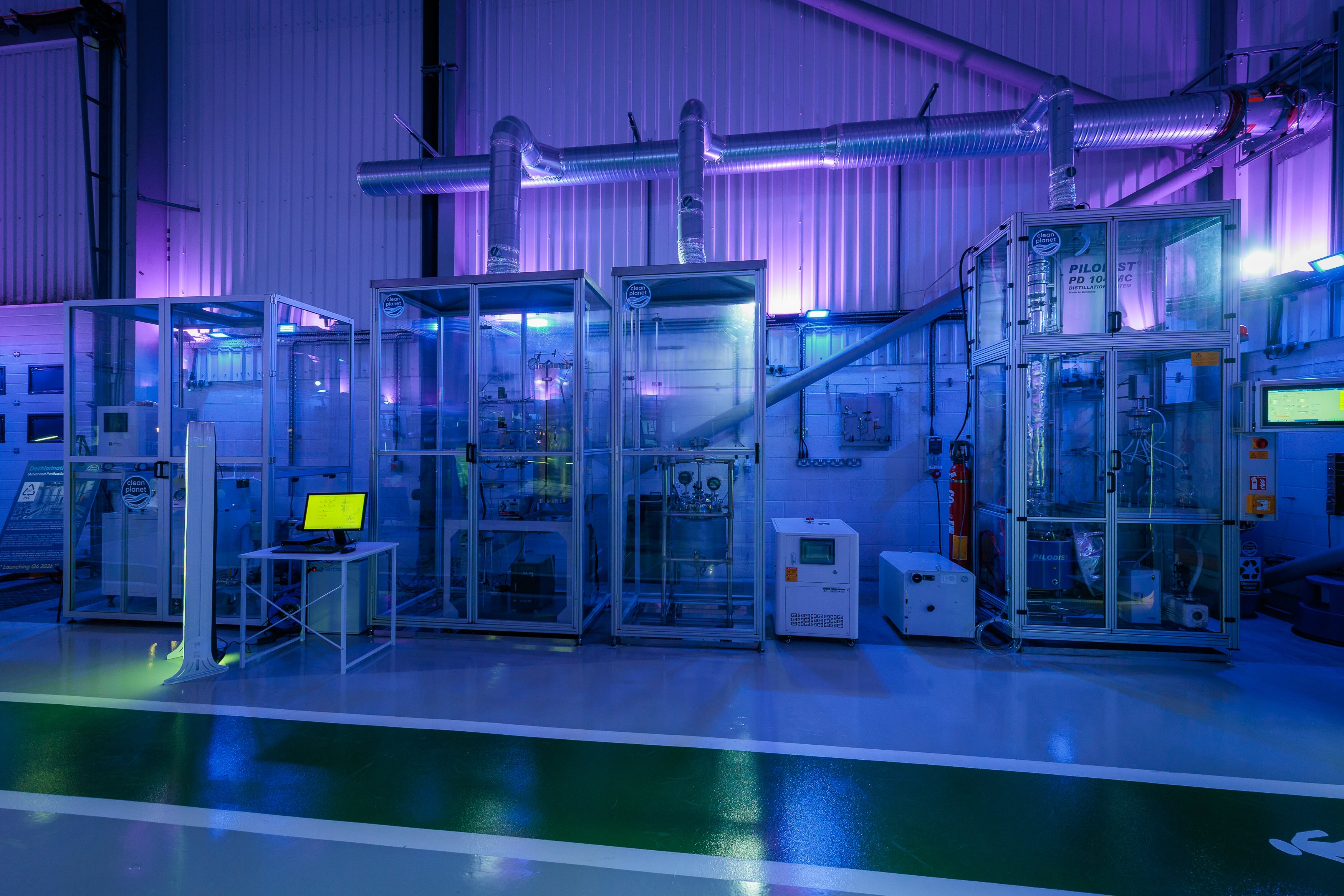


Above: A selection of technology inside the pilot facility.
Courtesy Clean Planet Technologies


The fundamentals of the process (pyrolysis, purification, distillation and hydroprocessing) are all technologies which are currently used independently at commercial scale, meaning scaling up the process is not a challenge.

Clean Planet Group was founded in 2018 by Dr Andrew Odjo, Adel Louertatani, Bertie Stephens and Fernando Diamond. CEO Bertie Stephens said: “Our pilot facility addresses two strategic challenges simultaneously: plastic waste management and aviation decarbonisation. By converting non-recyclable plastics – materials that would otherwise have gone to landfill or been incinerated – into low-carbon aviation fuel, the facility supports both circular economy objectives and the reduction of lifecycle greenhouse gas emissions."

Related

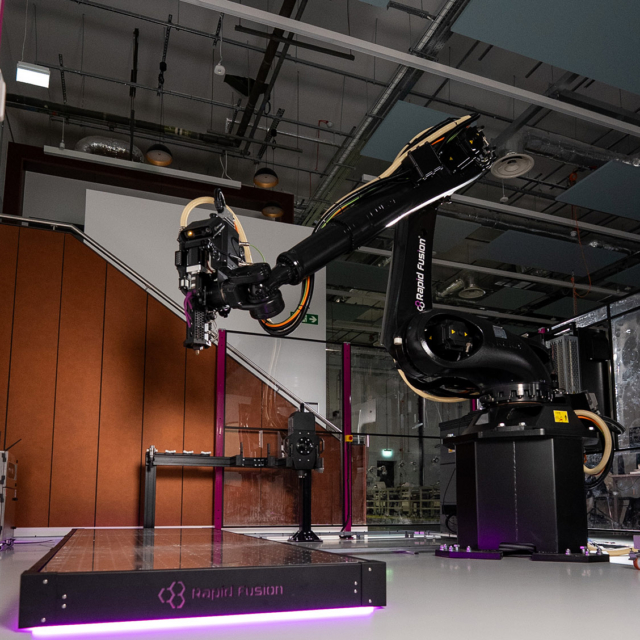
Rapid Fusion installs robotic cell at Kingston University
Zeus Robotic Cell into the Faculty of Engineering, Computing and the Environment at Kingston University
Rapid Fusion installs robotic cell at Kingston University
With its installation of a Zeus Robotic Cell into the Faculty of Engineering, Computing and the Environment at Kingston University, Rapid Fusion has enabled staff and students to print, scan and mill in one solution, teaching students the latest additive manufacturing solutions and helping tackle the real skills gap in the UK for robotics and 3D printing experts.
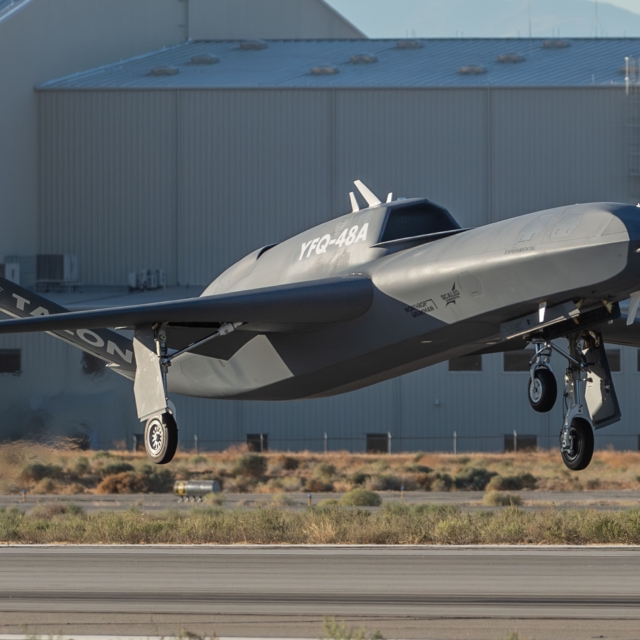
Royal Navy to launch Northrop Grumman’s Talon Blue CCA from aircraft carrier in 2027
Northrop Grumman's YFQ-48A Talon Blue CCA demonstrator takes off from the Mojave Air and Space Port in California to undertake its first autonomous flight on 3 October 2026. Image: Northrop Grumman
Royal Navy to launch Northrop Grumman’s Talon Blue CCA from aircraft carrier in 2027
Northrop Grumman’s YFQ-48A Talon Blue will demonstrate autonomous carrier-based air operations aboard a Queen Elizabeth-class ‘flattop’ as part of trials planned for 2027 under Project Vanquish.
Aerospace Defence

11 Nov 2026

Eaton to support Dassault’s next-gen Falcon 10X on path to certification
Dassault Aviation’s Falcon 10X ultra-long-range business jet.
Eaton to support Dassault’s next-gen Falcon 10X on path to certification
Building on a long-standing collaboration, Eaton is to provide hydraulic and fuel system technologies for Dassault’s next-generation Falcon 10X business jet, supporting its fuel-efficiency and performance objectives.
Aerospace Member News

11 Nov 2026

Ready for war in 1,000 days? Peers demand faster contracts and stronger UK industry
British Army
Ready for war in 1,000 days? Peers demand faster contracts and stronger UK industry
A House of Lords inquiry warns that spending pledges will not deliver military readiness without faster procurement, sustained production and skilled workers. Speaking to Advance, Baroness Hayter says government and industry must change how they work together.
Defence Insights

11 Nov 2026

UK insists military bases are safe as US aircraft leave RAF Mildenhall
USAF KC-135R on ground at RAF Mildenhall on 28-07-26 [USAF - Senior Airman Aidan Martinez Rosiere
UK insists military bases are safe as US aircraft leave RAF Mildenhall
At least 10 KC-135 refuelling aircraft left RAF Mildenhall in Suffolk on Monday, according to commercial flight-tracking data.
Defence

11 Nov 2026

Rapid Fusion installs robotic cell at Kingston University
Zeus Robotic Cell into the Faculty of Engineering, Computing and the Environment at Kingston University
Rapid Fusion installs robotic cell at Kingston University
With its installation of a Zeus Robotic Cell into the Faculty of Engineering, Computing and the Environment at Kingston University, Rapid Fusion has enabled staff and students to print, scan and mill in one solution, teaching students the latest additive manufacturing solutions and helping tackle the real skills gap in the UK for robotics and 3D printing experts.
UK military satellite Titania reaches orbit as MoD trials space-threat sensors
Titania Satellite
UK military satellite Titania reaches orbit as MoD trials space-threat sensors
The UK's second ISTARI military satellite, Titania, reaches orbit as trials launch for a three-site sensor network to monitor potential threats to spacecraft.
Defence Space

9 Nov 2026

Leicester’s National Space Centre Discovery Team wins Sir Arthur Clarke Award
National Space Centre Discovery Team wins Sir Arthur Clarke Award
Leicester’s National Space Centre Discovery Team wins Sir Arthur Clarke Award
Following delivery of its education and outreach initiatives across the UK to inspire the next generation of scientists, engineers and space explorers, the National Space Centre's Discovery Team has gained national recognition by winning a prestigious Sir Arthur Clarke Award.
Member News Space

5 Nov 2026

Astroscale and OHB to collaborate on space security
Astroscale and OHB sign MoU
Astroscale and OHB to collaborate on space security
Following ratification of the Kensington Treaty in October, Astroscale and OHB have signed an MoU to enhance cooperation between the UK, Germany and Japan towards protecting critical infrastructure in space, whilst supporting the safe, sustainable and responsible use of the orbital environment.
Lord Coaker calls for greater UK resilience against cyberattacks and infrastructure threats
Defence Talks podcast episode - Lord Coaker
Lord Coaker calls for greater UK resilience against cyberattacks and infrastructure threats
Speaking in a special Remembrance Day podcast, Lord Coaker paid tribute to those who serve while highlighting the need to strengthen UK preparedness against growing security threats.
Defence Security

11 Nov 2026

Fire Service College demos contribution to UK national resilience
Fire Service College (FSC) demo
Fire Service College demos contribution to UK national resilience
The historic Fire Service College training facility in Gloucestershire recently demonstrated how it combines immersive virtual reality, realistic incident scenarios and specialist expertise to prepare British and allied emergency responders, to support UK resilience.
Member News Security

11 Nov 2026

Royal Navy moves to deter Russian undersea threats with new ‘Atlantic Net’ investment
Image via Royal Navy
Royal Navy moves to deter Russian undersea threats with new ‘Atlantic Net’ investment
A £90m investment in autonomous maritime technology will bolster the Royal Navy’s surveillance capabilities while deterring Russian submarines and safeguarding critical seabed infrastructure in the North Atlantic.
Defence Security

11 Nov 2026