BMT partners with BAE Systems on Anzac Class Designer Support Contract
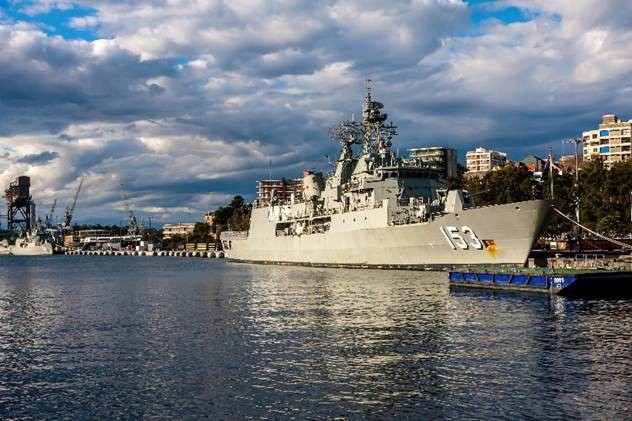
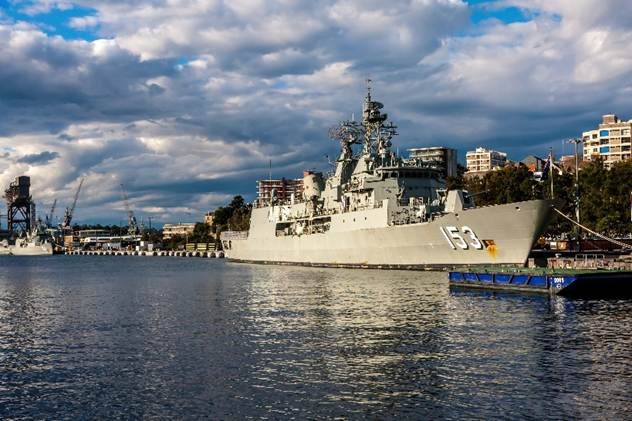
BMT has announced it will be engaging with BAE Systems Australia, the prime contractor for the Design Support Contract (DSC) supporting the Royal Australian Navy’s Anzac class frigates.
The relationship reflects a deliberate alignment between two organisations with shared strategic intent and complementary capability, supporting the Navy’s sustainment objectives through disciplined engineering and mature industry collaboration.
BMT’s Defence strategy is anchored in three core service tenets: ship design, systems assurance, and autonomy. These capabilities underpin more than 30 years of continuous involvement with the Anzac class, spanning original design authority, major upgrades, and in-service support, and extend across a broader Australian naval portfolio – including patrol boats, Collins class submarines, Guided Missile Destroyer (DDG) ships, Hunter-class frigates, amphibious platforms such as Landing Ship Dock (LSD) and Landing Helicopter Dock (LHD), support for RAN fleet communications via the Maritime Warfighter Network with Boeing and innovative ship design like the scalable CAIMEN family of landing craft to enhance littoral amphibious operations.
“We thank BAE Systems Australia for recognising the depth of BMT’s naval engineering capability and for the mature, best-for-customer approach they have brought to this programme,” said Graeme Nayler, Regional Business Director, Asia-Pacific, BMT.
“Their willingness to align complementary capabilities and focus on what delivers the strongest outcome for the Navy is exactly what an effective industry collaboration should look like, aligning with Australia’s Defence Strategy priorities for assured, resilient sovereign capability across platforms from submarines to amphibious operations.”
The Designer Support Contract reinforces BMT’s approach to aligning with primes and shipbuilders that value technical discipline, clear accountability, and complementary roles.
BMT’s Australian naval capability has been further strengthened through the 2024 acquisition of Australian Maritime Technologies (AMT), expanding specialist expertise in Anzac class upgrades for both the Australian and New Zealand navies.
Through sustained investment in ship design, systems assurance, and autonomy, and by aligning with like-minded industry partners, BMT continues to elevate its contribution to Australia’s naval enterprise, focused on delivery, resilience, and outcomes.
The UK Civil Aviation Authority has launched a consultation on a new information management system to enable secure data exchange between crewed and uncrewed aircraft.
Britain and Germany have launched an industrial tech corridor to strengthen manufacturing partnerships, with defence and aerospace among the sectors set to benefit.
A new industry report finds aviation has one of the UK's widest gender pay gaps, with women still underrepresented in the technical, operational and leadership roles that drive career progression.
The agreement establishes a foundation for deeper cooperation between Saab and GKN Aerospace to strengthen the propulsion capabilities of the Gripen E/F engine.
A new submarine course conducted by BMT specialists, aims to build awareness, knowledge, skills and interest across Canada's growing submarine enterprise.
As HMS Queen Elizabeth pays her first visit to Belfast, the Royal Navy's flagship is trialling a new all-day dining model designed to give sailors greater flexibility, improve wellbeing and modernise life at sea.
In a project co-funded by the European Space Agency Business Applications and Space Solutions (ESA BASS) and supported by the UK Space Agency, Excelerate Technology will build and demonstrate how space-enabled assets can provide innovative safety and security solutions, including protection of Critical National Infrastructure (CNI) at a site in the UK.
As Europe prepares to return to the Moon, British-developed LEIA LiDAR technology will help ESA's Argonaut lander autonomously identify safe touchdown zones on the lunar surface.
A new generation of OneWeb spacecraft is heading for launch, helping Eutelsat sustain and expand its low Earth orbit connectivity network for governments, businesses and institutions worldwide.
The UK Government and UKRI are investing £54 million in biosecurity research to tackle antimicrobial resistance, improve disease outbreak preparedness, develop next-generation vaccines and strengthen protection against emerging biological threats.
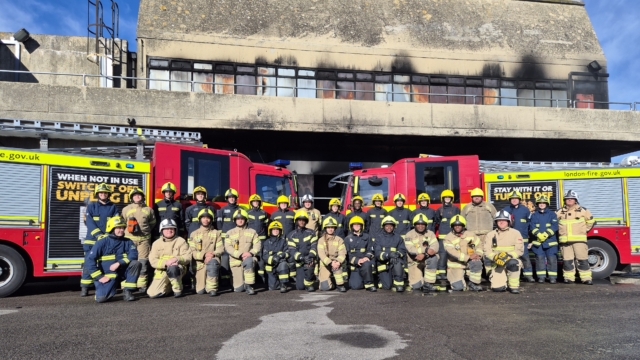
Continuing its longstanding support for London Fire Brigade’s Fire Cadets, Securitas UK has given 16 young people practical training at its ninth annual firefighting weekend, held at the Capita Fire Service College in Moreton-in-Marsh.
A new counter-terrorism capability developed by Edinburgh-based Cyacomb can help investigators rapidly identify known terrorist material on digital devices, as online radicalisation creates new challenges for law enforcement services.