New helicopter capability delivered to British Army in Brunei
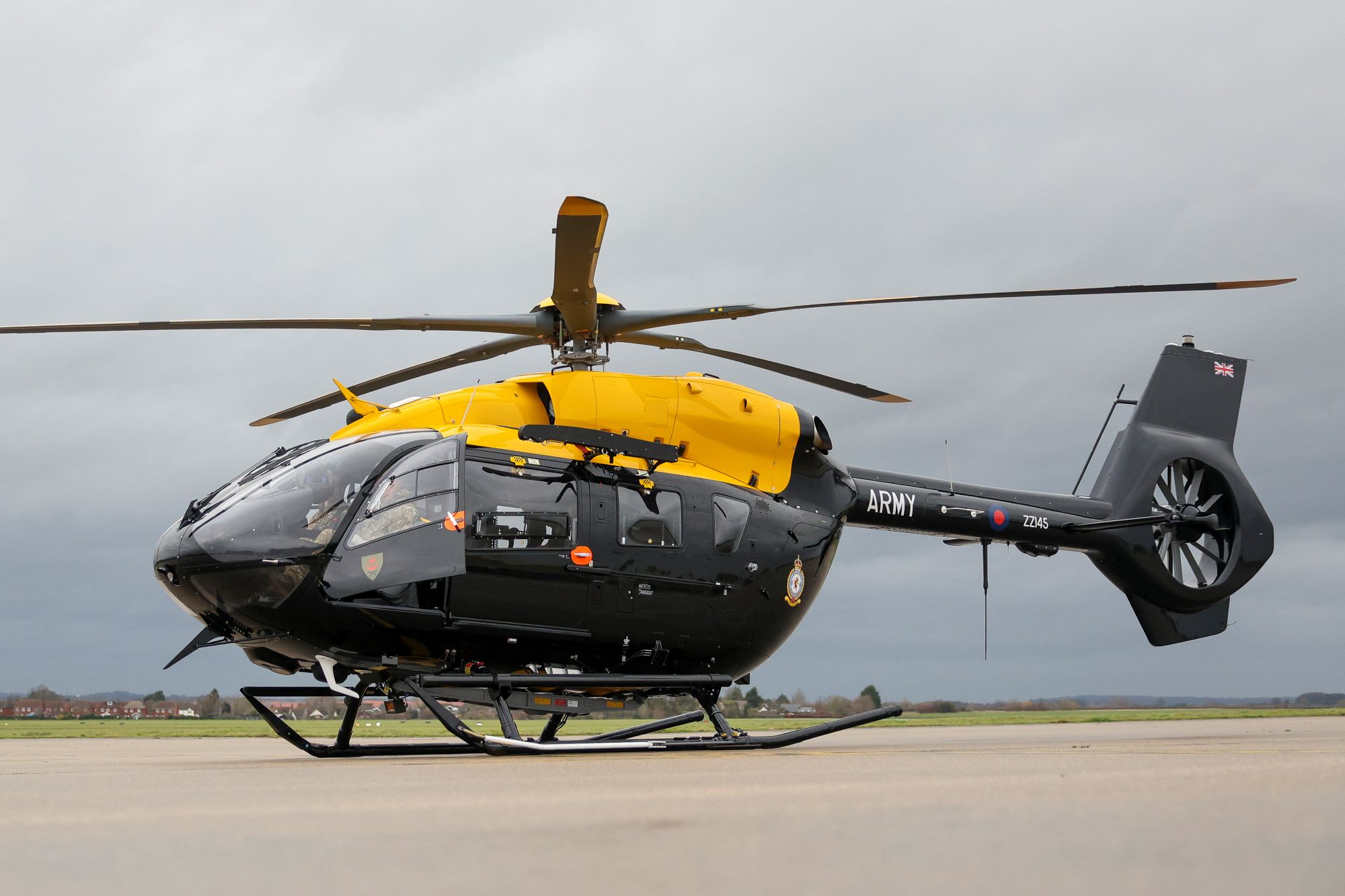
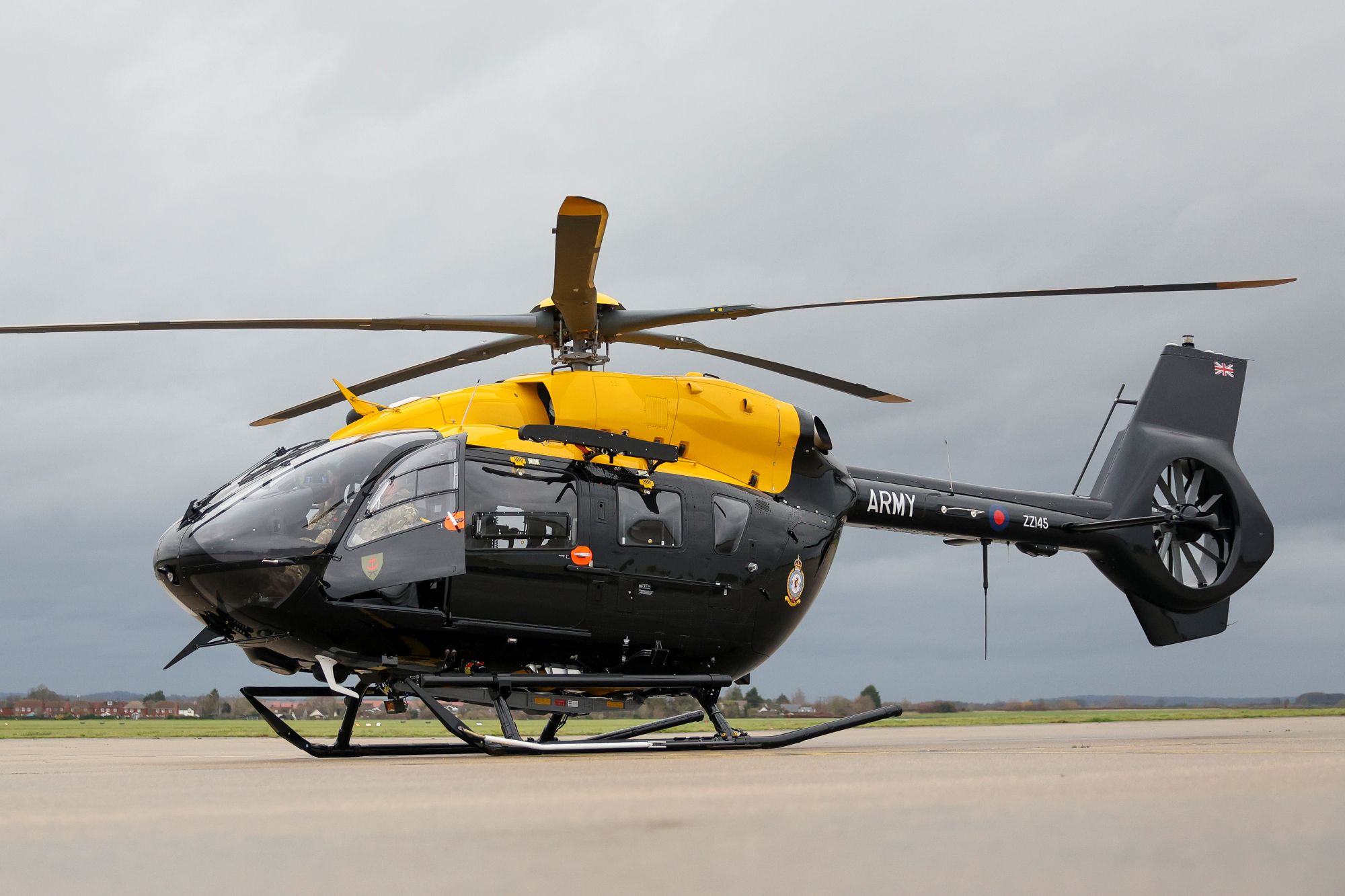
Two Airbus Helicopters UK (Airbus) H145 Jupiter HC Mk2 helicopters have been delivered to the British Army in Brunei as part of a £148 million MOD programme marking the start of their journey as modern, reliable capability for operations.
The significant milestone in one of Defence’s fastest-moving recent procurement programmes with this delivery taking place in just two years. The two aircraft now in Brunei will be used for jungle training, operated by 667 Squadron Army Air Corps, to fulfil the requirements previously carried out by the retired Puma HC2s.
The Jupiter HC Mk2 will be responsible for a wide range of essential tasks in Brunei’s demanding jungle training environment including medical evacuation, troop transport, underslung load tasks, firefighting, intelligence surveillance and reconnaissance, and general aviation support.
This delivery represents the latest stage of the contract for six helicopters to serve the Army Air Corps in Brunei and the RAF’s 84 Squadron in Cyprus, supporting 250 UK jobs at Airbus in Oxfordshire. A £33.6M support and service contract for the helicopters was also announced with Airbus in December, supporting 30 UK jobs, including eight UK personnel deployed to Brunei to maintain the aircraft.
Mark Langrill, Director Rotary Wing and Uncrewed Air Systems at the National Armaments Director (NAD) Group, said: "Getting these aircraft to Brunei on this timescale has taken genuine commitment from everyone involved – our MOD team, colleagues in the Army and RAF, and the team at Airbus Helicopters UK. We’ve demonstrated that accelerated acquisition can work, and we’ve done it in a way that delivers real capability to the front line while supporting UK industry. Seeing these aircraft begin operational training is a proud moment for the whole programme."
The programme has been delivered through close collaboration between the NAD Group, the Army, the RAF and Airbus Helicopters UK and reflects the strength of the UK’s Defence industrial base.
Gp Capt J Brooks, Senior Responsible Owner said: “The rapid delivery of this programme demonstrates the ability to deliver a modern and reliable capability that provides value for money to Defence. Despite the inherent challenges associated with rapid procurement in aviation we will safely deliver a capability that meets Defence’s requirements. This can only be achieved by the collaborative efforts of everyone across the MOD and support from Industry.”
The Jupiter HC Mk2 also advances the UK’s Defence Rotary Wing Strategy, which aims to rationalise helicopter types across the fleet and increase commonality – reducing complexity, improving interoperability and driving down whole-life costs.
Crews in Brunei will now build on the experiences of those that have operated the helicopters in the UK over the last four months. All six helicopters are expected to be in-theatre by the end of 2026.
The UK Civil Aviation Authority has launched a consultation on a new information management system to enable secure data exchange between crewed and uncrewed aircraft.
Britain and Germany have launched an industrial tech corridor to strengthen manufacturing partnerships, with defence and aerospace among the sectors set to benefit.
A new industry report finds aviation has one of the UK's widest gender pay gaps, with women still underrepresented in the technical, operational and leadership roles that drive career progression.
The agreement establishes a foundation for deeper cooperation between Saab and GKN Aerospace to strengthen the propulsion capabilities of the Gripen E/F engine.
A new submarine course conducted by BMT specialists, aims to build awareness, knowledge, skills and interest across Canada's growing submarine enterprise.
As HMS Queen Elizabeth pays her first visit to Belfast, the Royal Navy's flagship is trialling a new all-day dining model designed to give sailors greater flexibility, improve wellbeing and modernise life at sea.
In a project co-funded by the European Space Agency Business Applications and Space Solutions (ESA BASS) and supported by the UK Space Agency, Excelerate Technology will build and demonstrate how space-enabled assets can provide innovative safety and security solutions, including protection of Critical National Infrastructure (CNI) at a site in the UK.
As Europe prepares to return to the Moon, British-developed LEIA LiDAR technology will help ESA's Argonaut lander autonomously identify safe touchdown zones on the lunar surface.
A new generation of OneWeb spacecraft is heading for launch, helping Eutelsat sustain and expand its low Earth orbit connectivity network for governments, businesses and institutions worldwide.
The UK Government and UKRI are investing £54 million in biosecurity research to tackle antimicrobial resistance, improve disease outbreak preparedness, develop next-generation vaccines and strengthen protection against emerging biological threats.
Continuing its longstanding support for London Fire Brigade’s Fire Cadets, Securitas UK has given 16 young people practical training at its ninth annual firefighting weekend, held at the Capita Fire Service College in Moreton-in-Marsh.
A new counter-terrorism capability developed by Edinburgh-based Cyacomb can help investigators rapidly identify known terrorist material on digital devices, as online radicalisation creates new challenges for law enforcement services.